

Uhhhhhh … yeah … and after we read Two Corinthians, we talk about World War Eye Eye …
Image found on CBC News. Follow the link; it’s worth it. 😉
In general, the two topics that evoke the most passionate responses on the Voices page tend to be religion and politics … which just happen to be two topics on which you can almost never sway someone’s opinion … not that it stops people from trying. (C’mon, though, switch up those arguments every once in a while!)
For some of us, it’s words. I’m always surprised at the response to my ruminations on words and grammar, and the most recent column on Lake Superior State University’s “banished words” list prompted a mini-flood to my mailbox. For those I haven’t answered, I’m very sorry; the fluffy one has restricted my ability to answer more than a couple a day … and he doesn’t even come to work with me!
Dr. Stephen Sorsby is facing a bit of a crisis, thanks to me: “Your recent discussion of using the word ‘so’ to start sentences was enlightening but destructive to my speech patterns. It has suddenly become far too common for me to start a topic with, ‘So, if we did it … dammit!! … If we did this …’
“My only consolation is that I have shared your thought with several others, so [appropriate use] now at least the distress is shared!”

Listen to Captain Picard, and ignore those word-banishers!
Image from memegenerator.
To that I say “Mwahahahahahaaa!” (You have no idea how much I’ve wanted to use that in a column …)
It’s like when you get an earworm; the best way to get rid of it is to share it, especially if that earworm happens to be something by Barry Manilow or Justin Bieber (nope, I’m neither a fanilow nor a belieber). If you’re gonna give me an earworm, make it something I wouldn’t be embarrassed to be caught singing … “Copacabana” is not it.
Of course, it was the nominators of the words list that had such a problem with “so.” I’m a bit impish in regards to usage of the word, as John McPherson was in an email: “So there! (I understand ‘so’ has made the latest list of bad words that irritate some big wigs so I will just try to use it more often.)”

I was cranky early on, and just got crankier and more mischievous.
A man after my own heart … if I didn’t know better, I’d say he was a little sister (but maybe he’s a little brother), what with that urge to cause a little trouble. And like me, he’s also a bit annoyed at the overuse of “passed” or “passed away” rather than “died,” quipping, “I suppose we will eventually have to use the acronym PAIA instead of KIA.” Oh, please, no … I just can’t deal with another acronym …
Renée Hunter, like me, is irritated by the incorrect use of terms like “civil rights,” in this particular instance from a reader in a Carolyn Hax column referring to an adult adoptee’s right to know of his parentage, which the reader called “civil rights.” “From its origin in the Latin,” Renée wrote, “I believe the word “civil” means—or once meant—something pertaining to being a citizen of a country. In other words, a “civil right” is a right that it is the government’s responsibility to recognize. I hear the phrase “civil rights” used incorrectly all the time, as if the government is responsible for all human rights.”
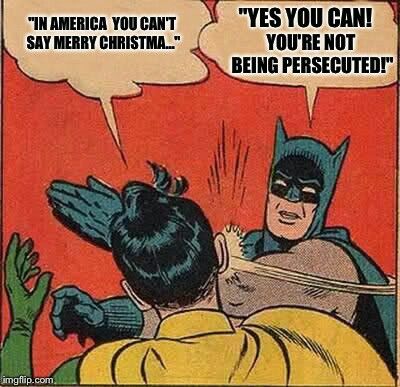
Robin, listen to Batman … and buy a dictionary.
Image found on Pinterest.
As pointed out by another reader, Ken Miller, “surplus or imprecise wording does indeed dumb down the art of effective discourse, whether verbal or written.” In Renée’s example and others, definitions for things like “civil rights” (or “war,” “persecution,” etc.) are sometimes loosened so much that the original meaning is nearly worthless in aiding understanding.
But that makes it so much easier to make something out of nothing so you can get some attention. (Cue the toddler tugging on Mom’s skirt while barking “Mom … Mom … Mom … Mom …”)
Ken also has a distinct aversion for “a myriad of,” and I don’t blame him at all. As an editor, I’m constantly having to tighten copy, and unnecessary words are first to go. While grammarians will tell you either usage is fine since “myriad” is both a noun and an adjective, many of us concerned with news-hole space tend to prefer “myriad reasons” (adjective) over “a myriad of reasons” (noun) unless it doesn’t fit the tone of the piece.
Besides, our staff isn’t paid by the word, so there is really no need to pad … unless the intent is to annoy the editor.
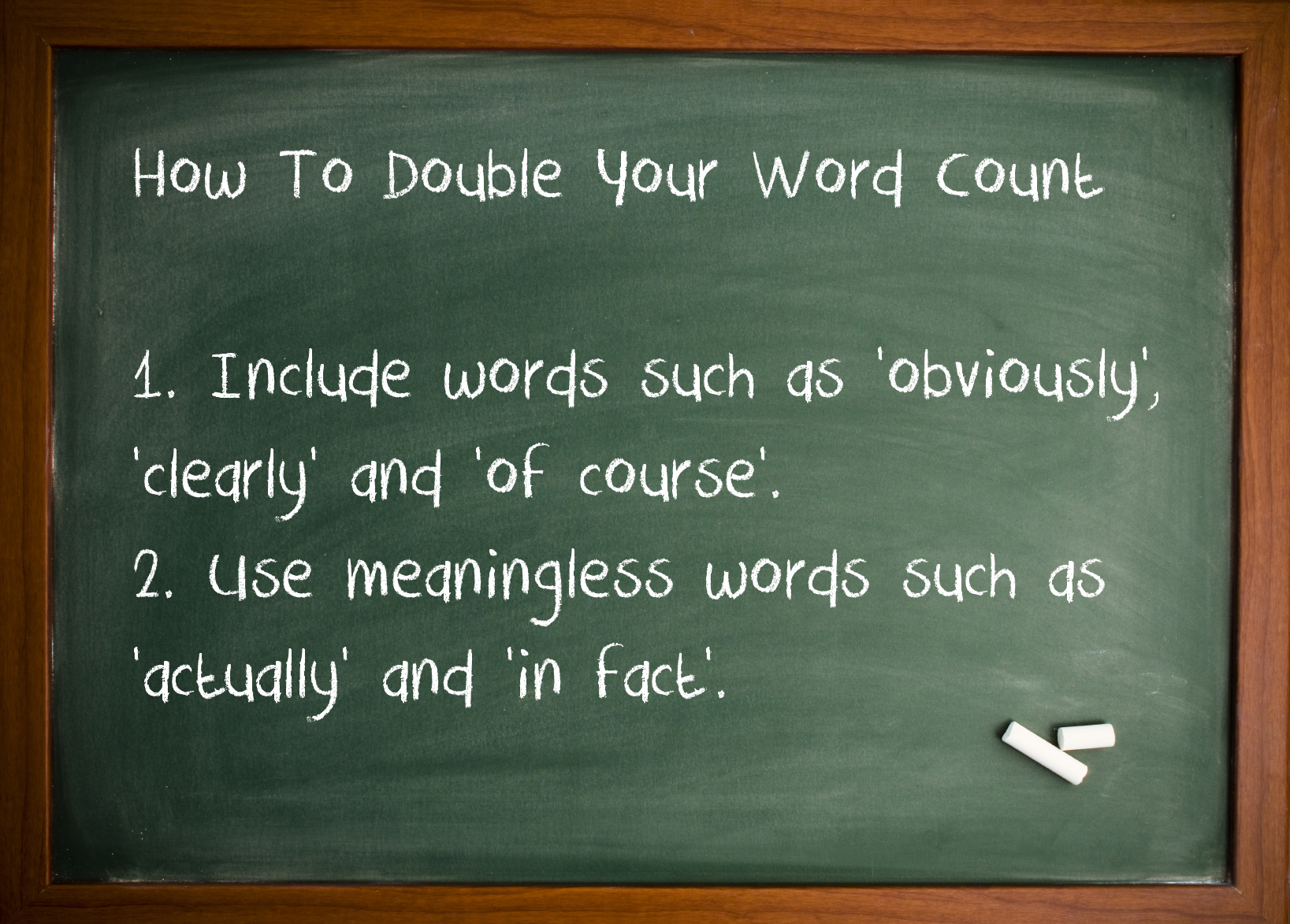
I guess we need one of them there “sarcasm”signs …
Image found on themightierpen.
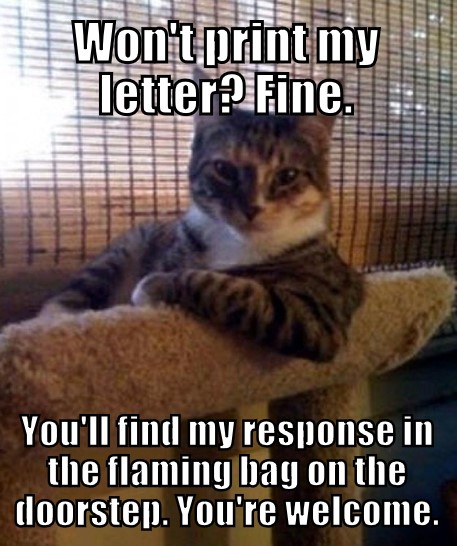 I’ll have more of your least-favorite words in the coming weeks, as well as some that always bring a grin. For now, though, a few reminders on letters.
We can’t print everything we receive, and some things are automatically excluded in most cases:
Ø Complaints about specific businesses, neighbors, etc.; if it’s something you should be reporting to a lawyer, police or the Better Business Bureau, we probably can’t use it.
Ø Letters commenting on open criminal investigations or other legal cases; if it’s a general letter about the case, fine, but saying that a specific someone should be charged or convicted … not flying.
Ø Calling someone a criminal who has not been convicted of said crime (in many cases not even charged); that’s a little thing called libel, and we don’t much like lawsuits in the news game.
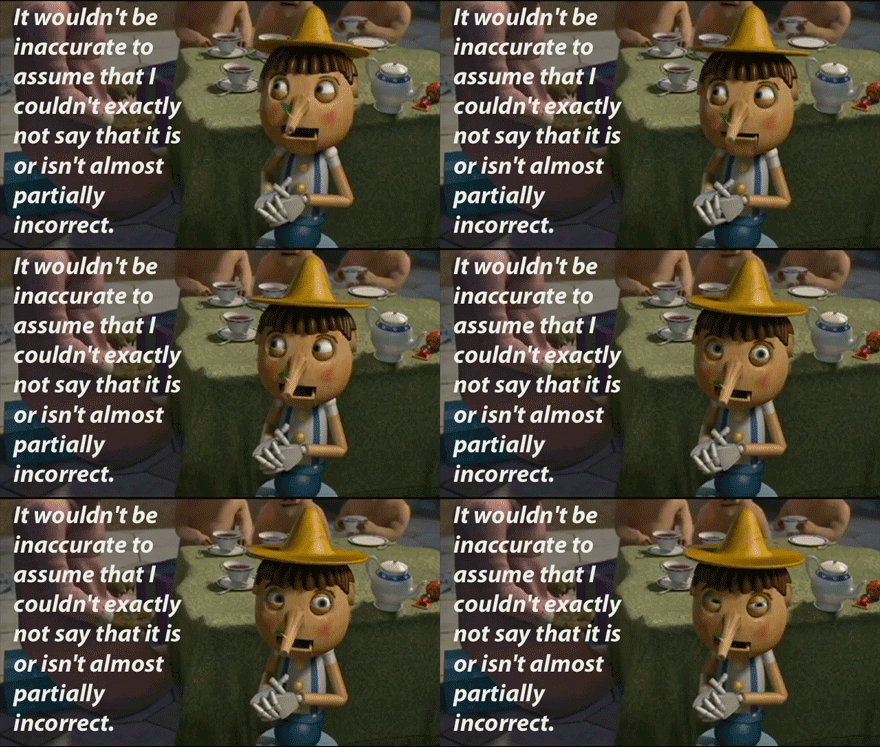
You get it, right?
GIF found on weheartit.
Ø Email forwards, debunked rumors, etc.; sometimes these are just fanciful tales, and sometimes they’re wholesale lies. If it’s been proved false by a reputable fact-checker (one using original sources), we won’t print it. And no, just because you don’t agree with it doesn’t mean it’s false. You may believe the absolute worst about Donald Trump or Hillary Clinton, but if you state something as fact that isn’t really, don’t be surprised when it doesn’t print.
Remember, please, to approach letters and columns as opinion first. Facts are used much of the time to back up opinion, which might include hypothetical scenarios, and that’s OK. Hiding falsehoods in opinion … not so much.
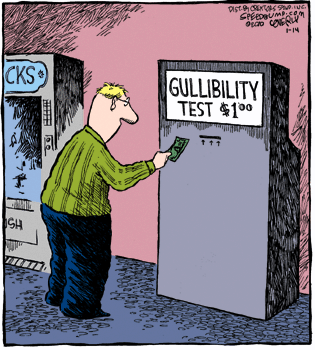
… or you can just send the money directly to me!
Speed Bump comic by Dave Coverly.
I know this is a hard concept for the single-source “news” consumers, but opinion and fact aren’t the same thing.
I’m thinking there should be a support/rehabilitation group for those confused by the distinction.
Perhaps … Debunking Utterly Maniacal Bulls*** (DUMB)?
 Serenity is a fuzzy belly