
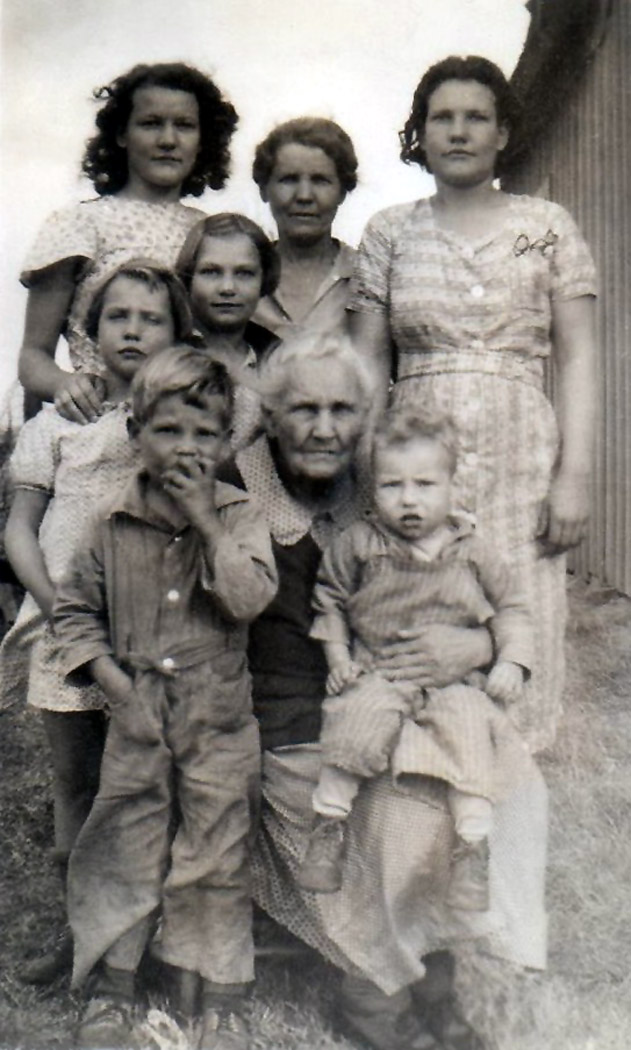
That’s Nanny Opal in the back on the right with her mom, grandma, three of her sisters, and her two brothers.
On this day in 1918, my grandmother, Opal Gressett Terrell, was born in Texas.
Her seventh birthday (by which time she and her family had moved to Arkansas in a covered wagon) marked the first publication of what would become a legend in literary and journalism circles.
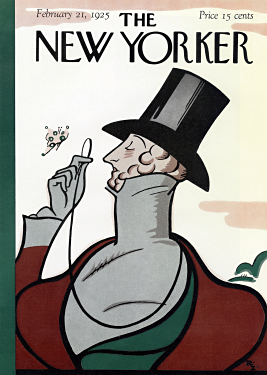
Eustace Tilley graces the very first issue of The New Yorker.
Image found on Wikimedia Commons.
It took a while for The New Yorker to really start hitting its stride. “The New Yorker was launched as a gossipy, facetious weekly for in-the-know Manhattanites, a sort of Jazz Age Spy,” wrote Louis Menard in 2005 in a story on Eustace Tilley, the caricature, drawn by art director Rea Irvin, on that first issue’s cover. Tilley got his name, Menard wrote, in a series of humor pieces by Corey Ford, meant to run on the pages that had no advertising.
“Advertisers were not buying because they were not sure what The New Yorker was. Neither were the editors. The second issue ran a mock apology for the first. ‘There didn’t seem to be much indication of purpose and we felt sort of naked in our apparent aimlessness,’ the magazine confessed.”
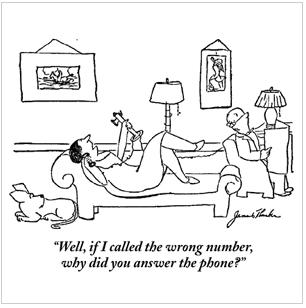
It’s a good question …
Cartoon by James Thurber.
Things picked up, though, Menard wrote, and in 1926, E.B. White joined up, followed the next year by James Thurber. Now the magazine founded by Harold Ross and his wife Jane Grant that has hosted such luminaries as Charles Addams, Roald Dahl, Truman Capote, Shirley Jackson and Robert Benchley is 91. It’s made it through some rocky patches, and still looks pretty good for its age.
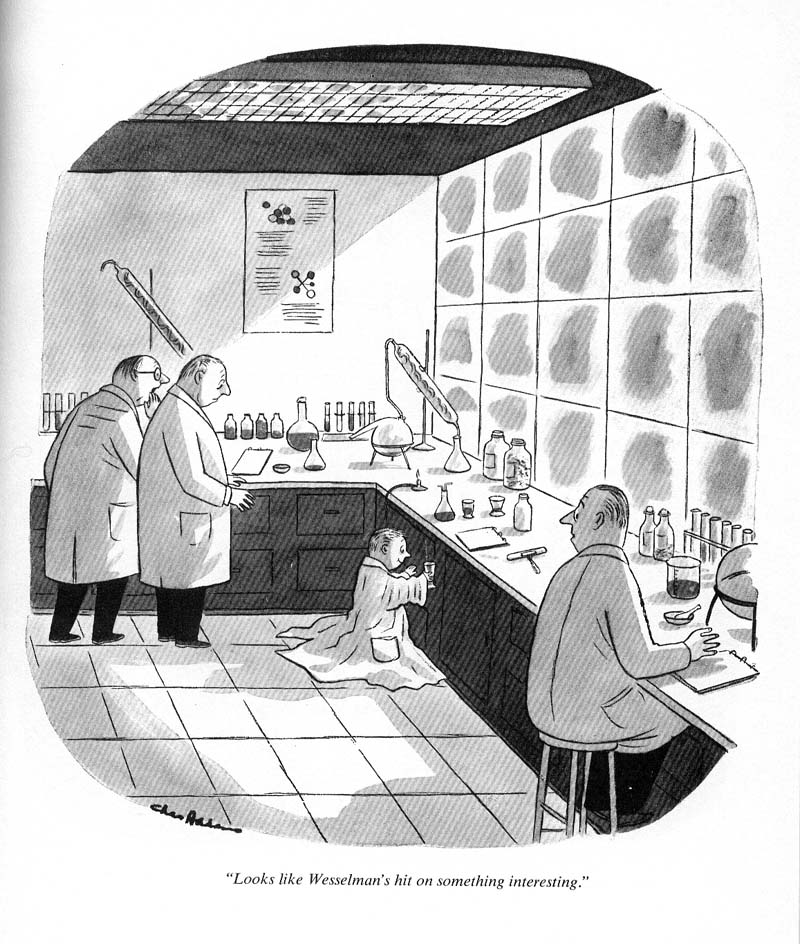
Bottle that for me, please.
Cartoon by Charles Addams.

That’s … pretty much all the candidates this year …
Cartoon by Christopher Weyant.
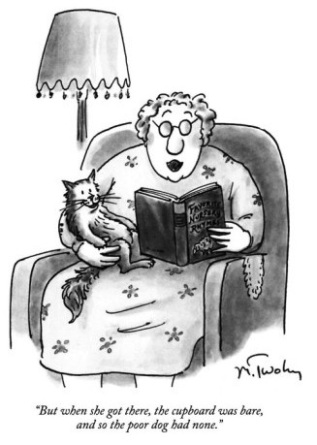
The kitty’s so happy!
Cartoon by Mike Twohy.
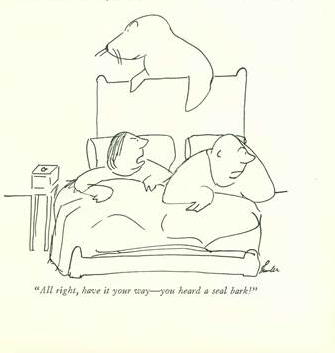
That would explain the rubber ball and the fishy smell too …
Cartoon by James Thurber.
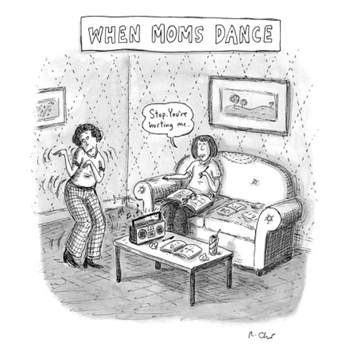
Pretty much my happy dance there …
Cartoon by Roz Chast.
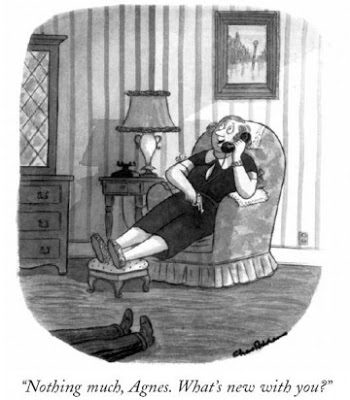
Nope, nothing goin’ on at all!
Cartoon by Charles Addams.
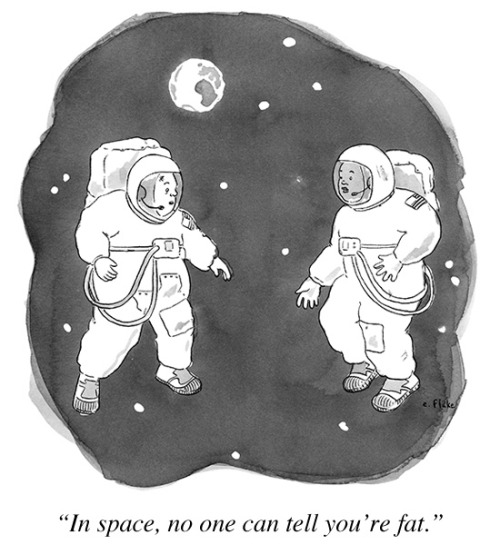
… and that’s why I wanna be an astronaut!
Cartoon by Emily Flake.
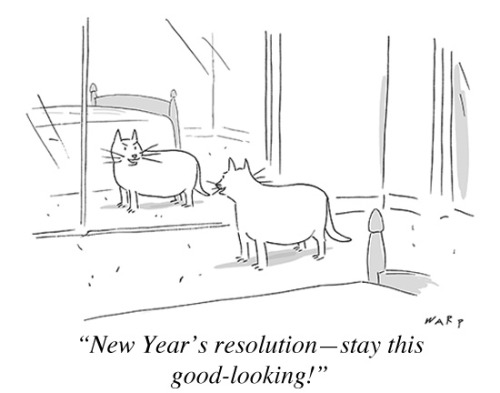
Oh, you don’t even have to try, kitty!
Cartoon by Kim Warp.
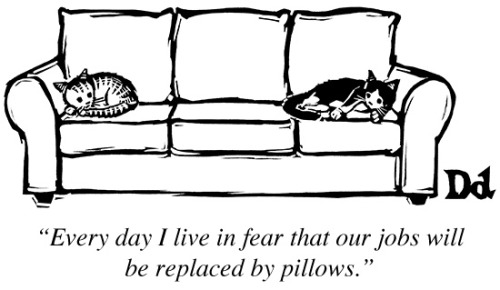
Luke already is a pillow … a fluffy, FLUFFY pillow.
Cartoon by Drew Dernavich.
 Serenity is a fuzzy belly