
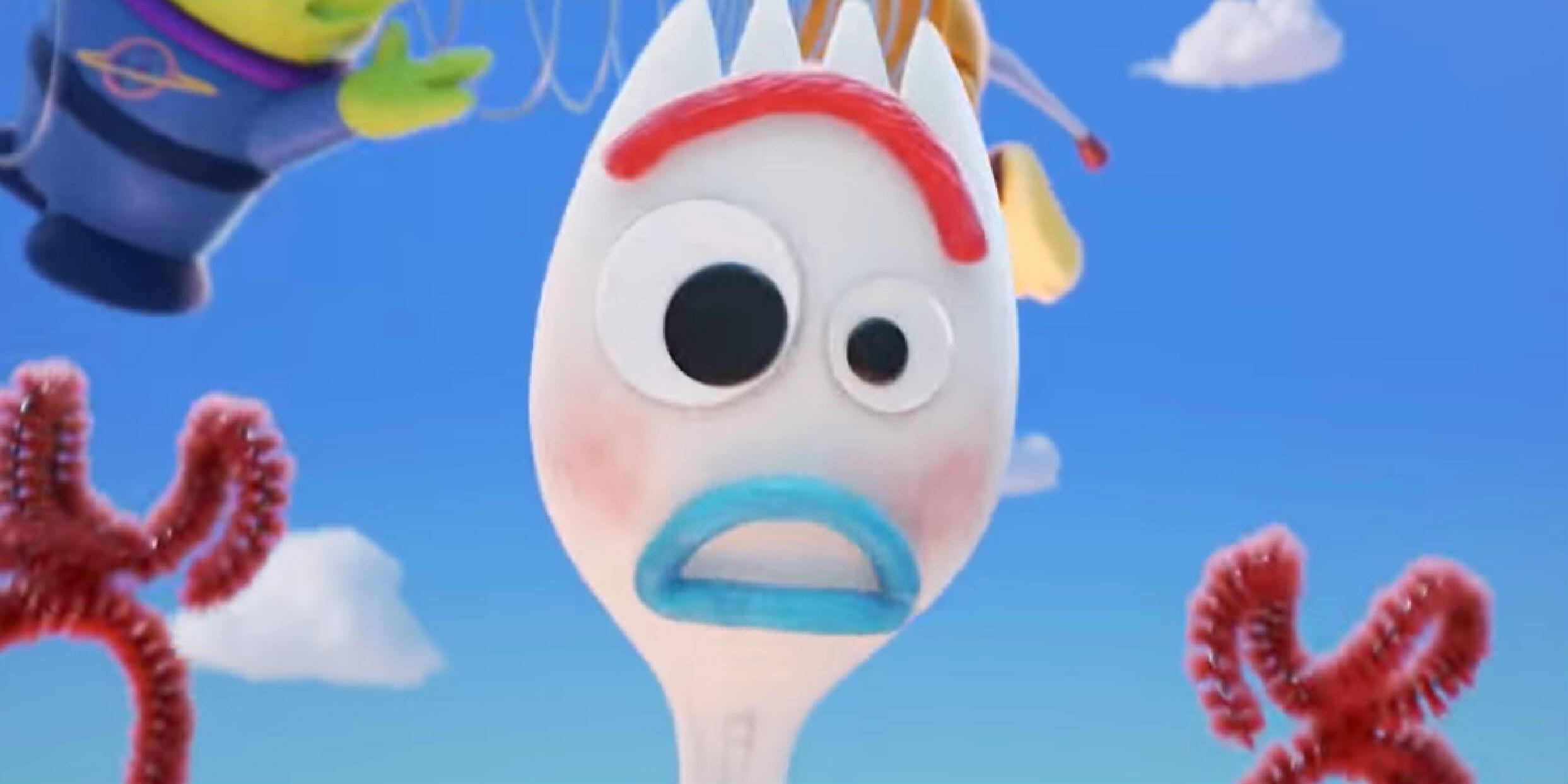
OK, I haven’t seen the movie, but it appears to me that Forky was upcycled.
Image found on The Daily Dot.
A little over a month ago, I wrote about the first “Word of the Year,” released by Cambridge Dictionary—“upcycling.” Now that December is in full swing, a couple of others have weighed in, and … it’s kind of depressing.
Dictionary.com name-dropped Toy Story 4’s Forky, a spork who struggled to be a toy, in its Word of the Year post, saying, “his dilemma actually speaks to a broader theme of threat and crisis reflected not only in culture and news, but also in our dictionary work throughout this year. High-stakes events around the world involving climate change, gun violence, and democratic institutions were some of the top news stories. And words about these events, from ‘polar vortex’ to ‘stochastic terrorism’ to ‘exonerate,’ were top searches and trends on Dictionary.com.
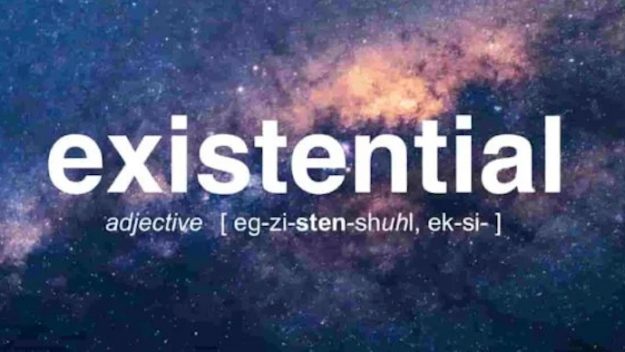
But what does it all mean???
Image found on geek.com.
“Notable among searches was ‘existential,’ which we’ve chosen as our Word of the Year for 2019. It captures a sense of grappling with the survival—literally and figuratively—of our planet, our loved ones, our ways of life. … But ‘existential’ also inspires us to ask big questions about who we are and what our purpose is in the face of our various challenges—and it reminds us that we can make choices about our lives in how we answer those questions.”
Yep, just what I want from my dictionary: an existential crisis. It’s not like I don’t have enough of those on my own.
Dictionary.com defines existential as “of or relating to existence” (a sense that entered English in the late 1600s), and “concerned with the nature of human existence as determined by the individual’s freely made choices” (a sense first recorded in the early 1900s).
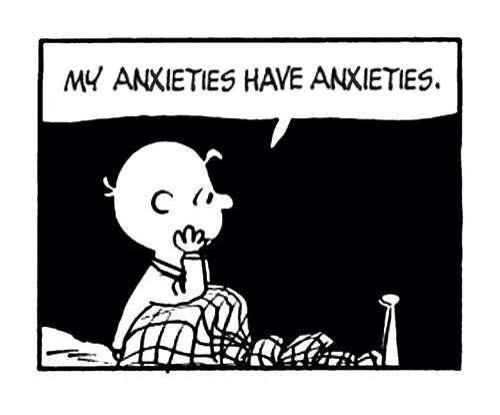
Been there, Charlie Brown … I live there.
Peanuts panel by Charles Schulz found on Medium.
I haven’t had to think about my college philosophy class in years (and my professor with the lazy eye that made it hard to know who he was calling on), and now the dictionary is bringing it all back. I do think a lot about what my life means, but I have no urge to dive into Sartre and Kierkegaard to try to explain my angst. I can only be so nerdy, and I choose to concentrate on word-nerdiness. And yeah, a wee bit of sci-fi geekery.
Incidents throughout 2019, including fires in the Amazon and Hurricane Dorian, caused spikes in searches for “existential,” wrote Dictionary.com, but “for all the feeling of doom and gloom in 2019, existential was also a surprising and welcome bright spot in popular culture this year. It shows how we are using existential humor to address our pressing predicaments.”
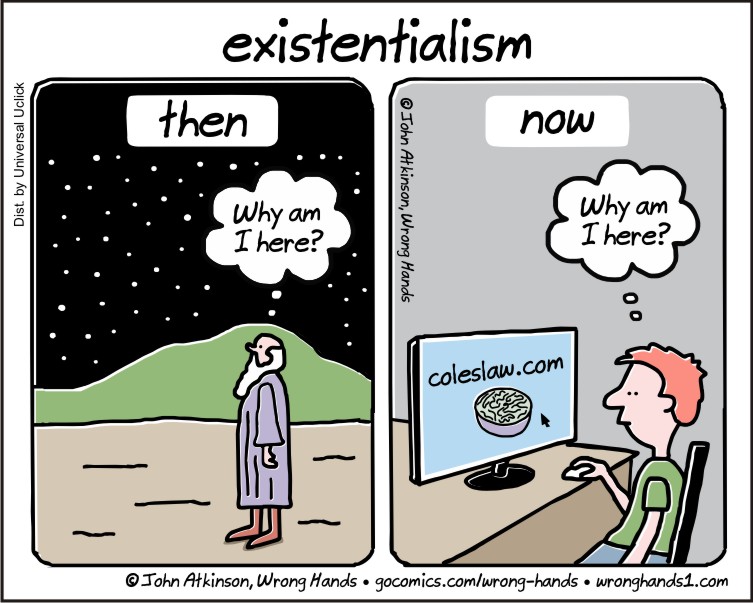
I find myself asking the same question after spending very long on the Twitter page of He Who Doesn’t Deserve to be Named.
Wrong Hands comic by John Atkinson.
That humor included Forky, as well as NBC’s The Good Place and Amazon Prime’s Good Omens, both of which are highly entertaining while also imparting a little philosophical knowledge. Plus there was the unintentional humor of a group of protesters demanding that Netflix remove the satirical Good Omens from its library, contending that it promoted evil. Kinda hard for Netflix to do that with a show it had nothing to do with, sooo …
Besides, God clearly has a sense of humor. Have you looked at a platypus lately? It looks like something put together by a committee … or a deity distracted by how absurdly adorable otters and quokkas are.
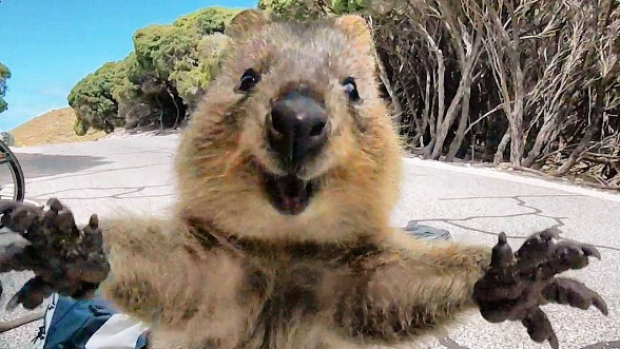
Who wouldn’t be distracted? I don’t ordinarily do this, but …. squeeeeeee!
Image found on Traveller.
Oxford also released its word of the year, and it’s related to existential in many ways, not the least of which was climate activist Greta Thunberg’s recent appearances, including a speech to Congress on Sept. 18 in which she said, “I have a dream that the people in power, as well as the media, start treating this crisis like the existential emergency it is.”
The Oxford Dictionaries blog notes: “The Oxford Word of the Year is a word or expression shown through usage evidence to reflect the ethos, mood, or preoccupations of the passing year, and have lasting potential as a term of cultural significance.” The expression that did that for 2019, it said, was “climate emergency.”
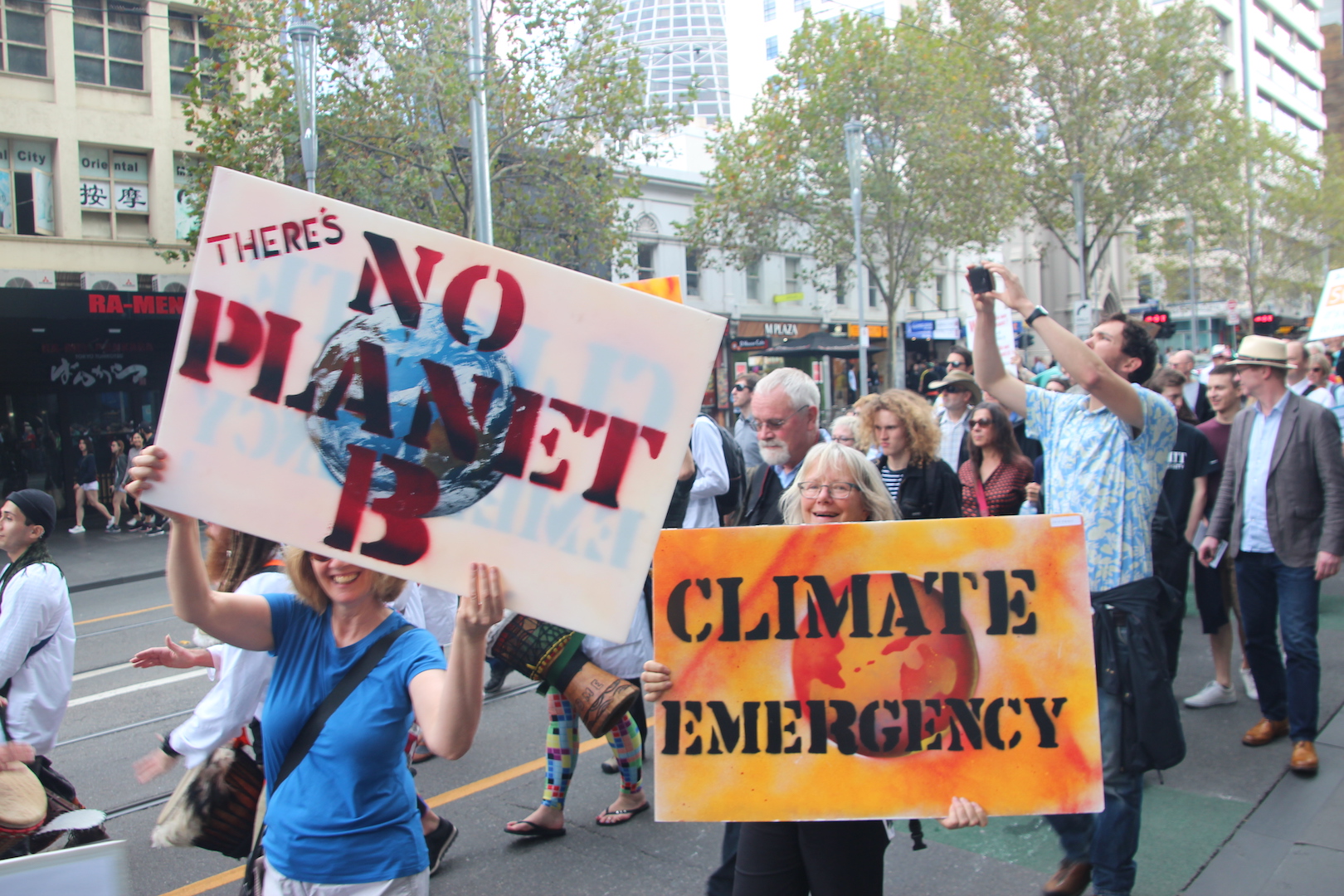
But it’s all hysterics, according to all the non-scientist “experts” who get their talking points from their political party (because knowledge is evil, doncha know).
Image found on Miami Beach Times.
“This year,” Oxford wrote, “heightened public awareness of climate science and the myriad implications for communities around the world has generated enormous discussion of what the UN Secretary-General has called ‘the defining issue of our time.’ But it is not just this upsurge in conversation that has caught our attention. Our research reveals a demonstrable escalation in the language people are using to articulate information and ideas concerning the climate.”
The blog noted that the term hasn’t been without controversy, as some people have questioned its validity in describing the state of the environment, and others have worried about the implications of declarations of climate emergency (as thousands of scientists did in a report released last month).
Sounds like an existential crisis to me. And as I said, I’m full up.
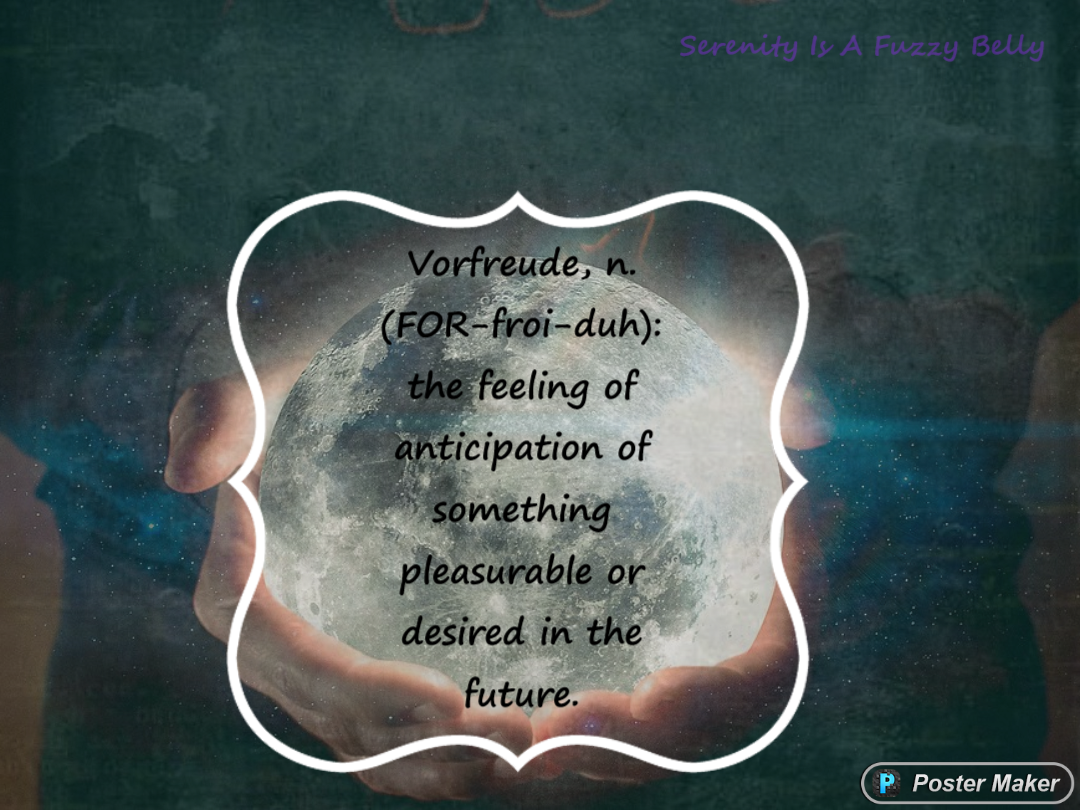
This describes the feeling of logophiles toward the end of the year when all the Word of the Year announcements start.
As I wrote this, Merriam-Webster announced its Word of the Year (more on that next week, and thank you, Merriam-Webster, for making me have to pull my column back for revision), and we’re inching ever closer to the time when Lake Superior State University releases its list of words that deserve banishment from the English language (crossing my fingers for its’ … please, please, please!).
Don’t forget, I still want to know what words have made you happy this year, and which ones made you growl deep in your throat anytime someone dared speak them. Let me know in the comments under my column on the newspaper’s website, in the comments below here, or by emailing me at blooper@adgnewsroom.com.
As far as what made me happy this year, I’m loving that Oxford finally added “bampot” (meaning an idiot or fool) to the dictionary this year. The Scottish insult has been around at least since 1962.
Very little makes me happier than hearing a Scot say words like “bampot” (one of the reasons I watch Outlander is the Scottish accents). Add chocolate and cats, and I can retire happy.
Not that I can afford to at the moment. And there’s that existential crisis again.
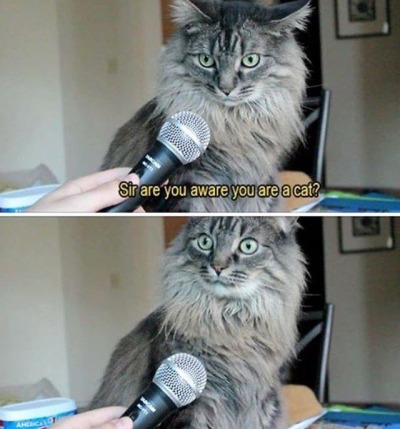
I know how ya feel, buddy.
Image found on Tumblr.
 Serenity is a fuzzy belly
On the assumption that we actually exist . . .
LikeLike
We may just be figments of some other being’s imagination!
LikeLike
Someone jokingly told me that I was imaginary because my last name is a color. They said I was a Pigment of their imagination.
LikeLike
I’m green with envy over that joke. 😏
LikeLike
What happens if the person dreaming us wakes up. At least Trump would disappear.
LikeLike
Commence pinching now!!!
LikeLike
My late father earned his master of science degree by doing research into the history of climate change. He disapproved of all of these people who were alarmists concerning climate change. My father thought climate change was inevitable and part of the natural cycle of our weather. He said we needed to figure out how to adjust to the changes in our climate. Politically, socially, and economically my late father was to the left hand side of the Democratic Party.
LikeLike
Dang radical. 😉 My dad was the opposite, and my mom was liberal. Compared to him, mama was a radical, I guess.
LikeLike
Thanks to the research my father did, he was worried that everyone would run out of fresh water soon. He believed that everyone else used too much water all of the time.
LikeLike