
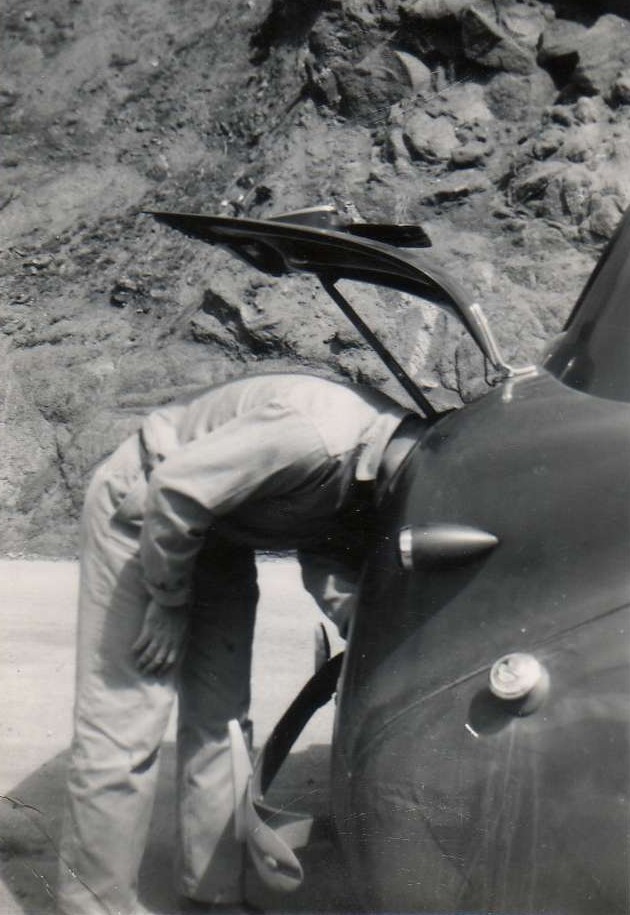
My grandpa was a funny man. He could tell a story that would have you giggling by the second sentence because you knew there was going to be a great payoff (my brother Corey takes after him in that manner; ask him how he handles telemarketers). He was kind to all, and forthcoming when asked a question, but Lord help you if you wanted to challenge him on his knowledge of the Bible.
But he, like a lot of veterans of his generation, rarely talked about his experiences during World War II.
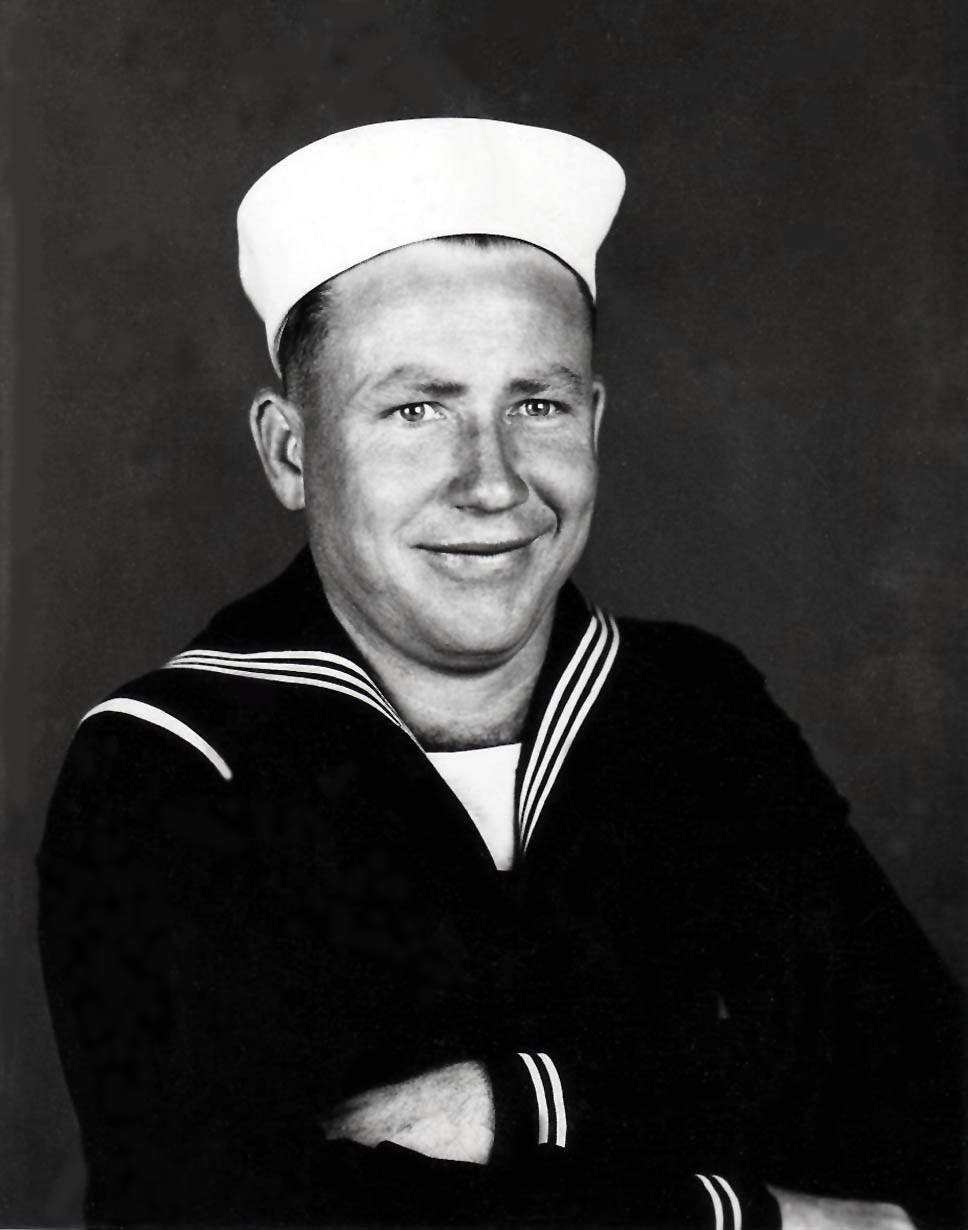
Grover Pinkney Terrell was stationed as a fireman first class on the hospital ship USS Hope (AH-7) in the Pacific (although a handwritten ledger of crew members records him as C.P., rather than G.P. Terrell). A few years after he died in 2003, my brothers and I found a small notebook in a cache of foreign bills and coins Grandpa had saved from various ports (mostly Japan, the Philippines and Australia, if I remember correctly). In that notebook, we found a spare accounting of events on the ship, including a few close calls; even with those few words, though, it felt like he was there with us. It made me miss him all the more.
I wish there had been more than that small amount of writing so that I could understand more of what he and his compatriots went through, both at war and after returning home.

The Hope, along with the USS Comfort and USS Mercy, was crewed and commanded by the U.S. Navy, but staffed with Army medical personnel, and was intended primarily for evacuation and transport of wounded soldiers. While hospital ships were ostensibly off-limits for attack, many were fired upon, and some sunk. Toward the end of World War II at Okinawa, the Comfort was crippled by a kamikaze attack that plunged into the surgical unit and instantly killed six nurses, four surgeons and seven patients, according to History.com. A total of 30 people died on the ship in the attack.
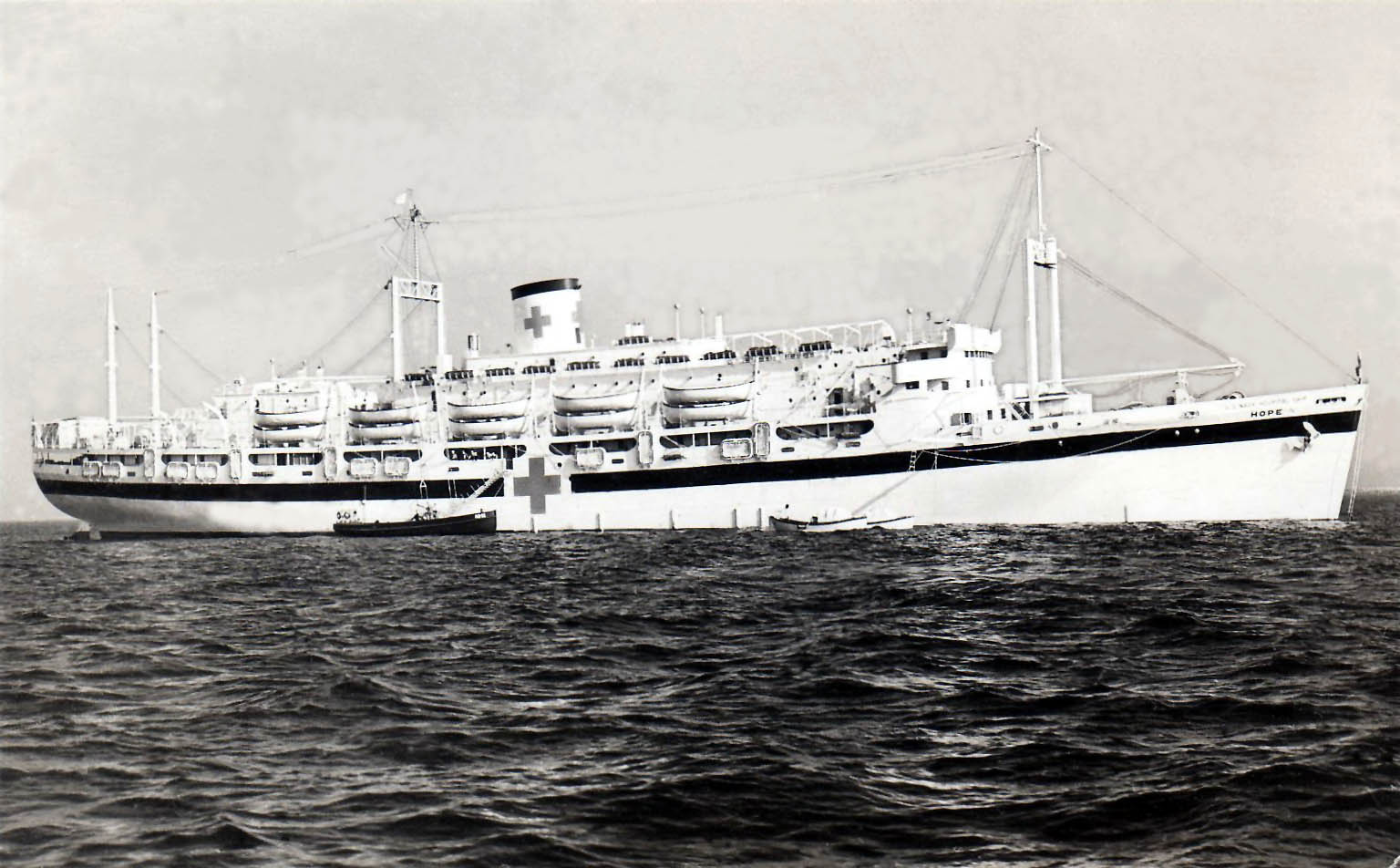
The Hope spent much of its time ferrying sailors and the wounded from other ships or ports to military hospitals, and like the Comfort, it too was attacked multiple times, though each attack failed, usually just missing the ship. Because of that, the Navy crew called her “The Lucky 7.”
And it was lucky for me because Grandpa came home to instill a strong sense of morality in his kids and grandkids, as well as a love for humor and good old-fashioned fun.
I wish he were still here so I could get one of those great big hugs from him and just hear him laugh again. Still, I know I’m lucky. My grandpa got to raise his two kids, watch one join the Navy as well (my uncle C.L., serving on the USS John F. Kennedy), and have grandchildren who are, for the most part, rather delightful, impish, and more than a little hard-headed, just like their granddad. We’re kinda funny too.

A lot of people have lost family members to war through the years. Those service men and women can no longer wrap their arms around their loved ones and tell them they love them. They missed out on seeing children and grandchildren grow up and sharing all the joys and pain that come with that. Some children might have known a parent only as someone in a faded photograph whose memory with those who knew them evaporated more every day.
For them, we remember all who have served in the military.
In writing this column, I found quite a few quotes that seem more than apropos now in the confusion we find ourselves in. One quote in particular, from Bob Hope, struck me. The entertainer who toured to visit troops in every U.S. conflict from World War II to the Persian Gulf war wrote in “I Never Left Home”:
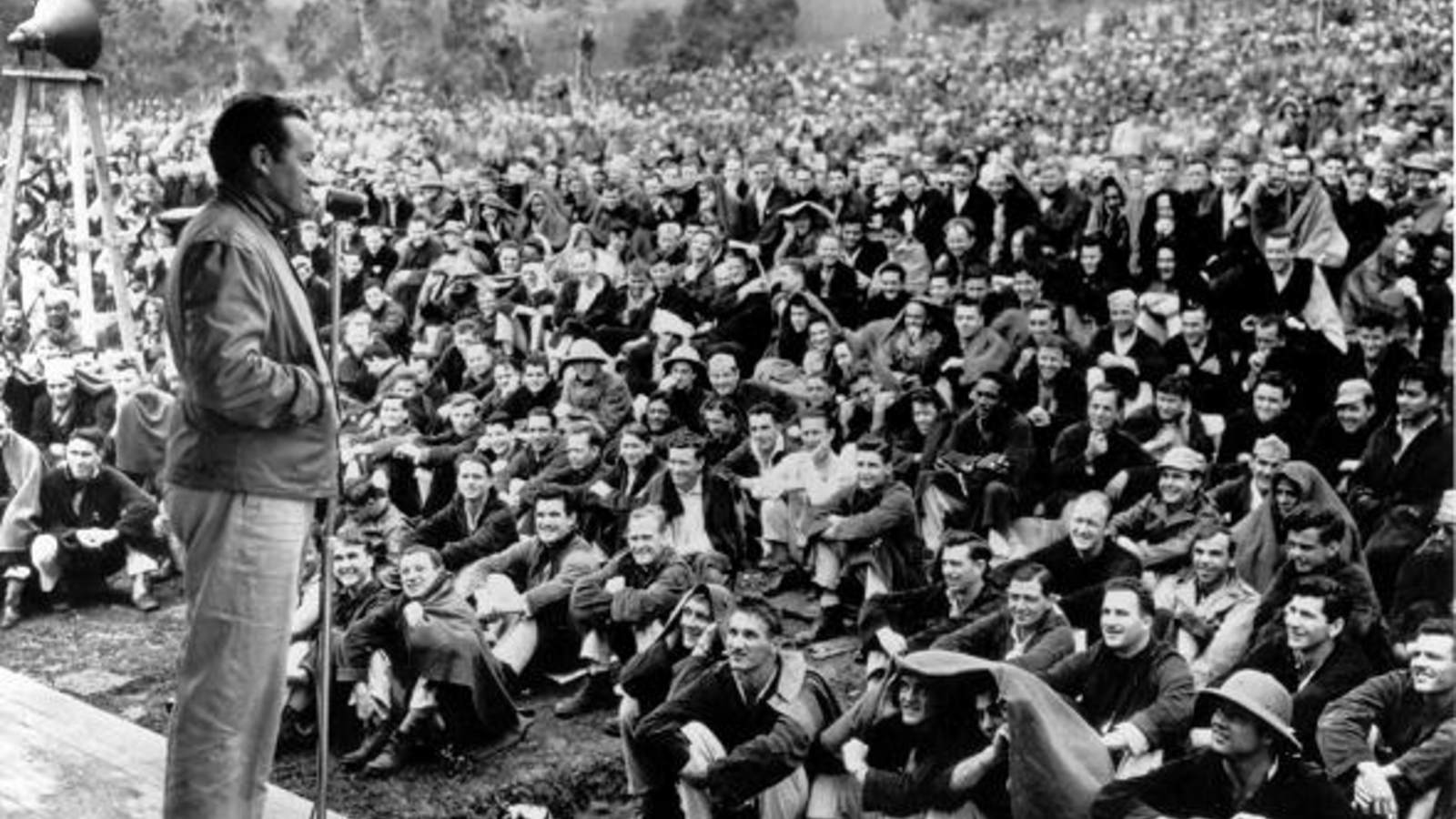
“I saw your sons and your husbands, your brothers and your sweethearts. I saw how they worked, played, fought, and lived. I saw some of them die. I saw more courage, more good humor in the face of discomfort, more love in an era of hate, and more devotion to duty than could exist under tyranny.”
“I Never Left Home,” Bob Hope, 1944.
Would that we could all remember and embody that spirit now, instead of just retreating to our echo chambers because the truth hurts.
As John F. Kennedy wrote in his 1963 Thanksgiving proclamation just before his death: “As we express our gratitude, we must never forget that the highest appreciation is not to utter words, but to live by them.”
Our veterans deserve at least that from us. And perhaps a return to a reality that is far less contentious.
 Serenity is a fuzzy belly
I don’t like to talk about my military experience because I hate the sight of people’s eyes glazing over as they keep looking at their watches. But for those veterans with more somber reasons for silence, I offer sincere sympathy and gratitude for their service.
It is widely believed among some that Veterans Day was scheduled on November 11th to give Marines a chance to sober up from the November 10th Marine Corps birthday.
Semper Fi.
LikeLike
Thank you for your service, my dear friend. ❤️
LikeLike
My father was a Marine Corps veteran of World War Two. He never did tell me that Veterans Day was deliberately scheduled on November eleventh so the Marines could sober up from celebrating on the day before.
LikeLike
🤣
LikeLike
Speaking of knowing someone (a parent or someone else) as only a faded photograph, have you ever heard the song “No Man’s Land” (otherwise known as “Green Fields Of France) by Eric Bogle?
“Or are you a stranger without even a name?
Forever enshrined behind some old glass pane
In an old photograph torn, tattered, and stained
And faded to yellow in a brown leather frame.”
The one time that Bogle performed here in May 1995, I was lucky enough to be in the audience so I could listen to him perform this song.
LikeLike