
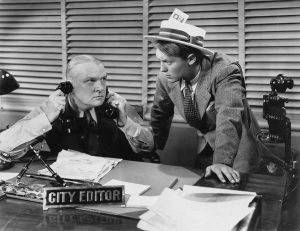
More than half of my career has been spent on the news side of journalism, so I’m a bit of a zealot when it comes to the difference between facts and opinion (yeah, even though I started in broadcast; I know what some of you think of broadcast).
In college, professors like Dr. Joel Gambill in communications law and ethics, Dr. Mary Jackson-Pitts in broadcast news and Jennifer Rogers (a recently deceased wonderful friend and mentor) in numerous production classes ensured we all knew the difference between news and opinion. Though the Fairness Doctrine was gone by then (and never applied to cable programming), we got to know intimately the reasoning behind it.
I ultimately didn’t stay long with broadcast news (that first job out of college matters, folks, especially if you get a bad boss) and returned to my first love, print, starting all over with my first job at the paper as a news clerk. In that capacity, one of my tasks was to field calls from readers (bit of a horror for an introvert, really, but you do what you have to) and try to get them to the appropriate person.

That wasn’t easy. Why? Because so many people who called didn’t seem to know the difference (or just didn’t care) between the various things that appeared in the paper, often using terms like “letter,” “ad,” editorial,” “column” and “news story/article” interchangeably. By the time they got to the clerks’ desk, they’d often been transferred multiple times because they couldn’t make it clear what they wanted, and so they were usually frustrated. That made two of us (then you had the people who called to settle bar bets or who called after hours complaining that their paper hadn’t been delivered and that no one was in customer service, and then argue with the clerk that it’s day and not night).
Much of that comes down to growing media illiteracy. While we have a wide range of media available to us, we’re not being taught how to assess those outlets and track down sources. In some instances, we’re being taught (or, more likely, told) what to think, not how to think, and we accept it because it’s easier. That’s not good for anyone.
Lack of media literacy isn’t a new problem, but it seems to me it’s gotten significantly worse in the past several years. Whether that’s because of social media, political opportunism, insufficient training in media literacy in school, or whatever, it means that those of us in the media have a tough row to hoe.
When even college-educated people are using newspaper terms interchangeably, we have a problem. Letters, columns, editorials, news stories and ads are all different, and conflating them helps no one but those who use misinformation/disinformation to further their goals.
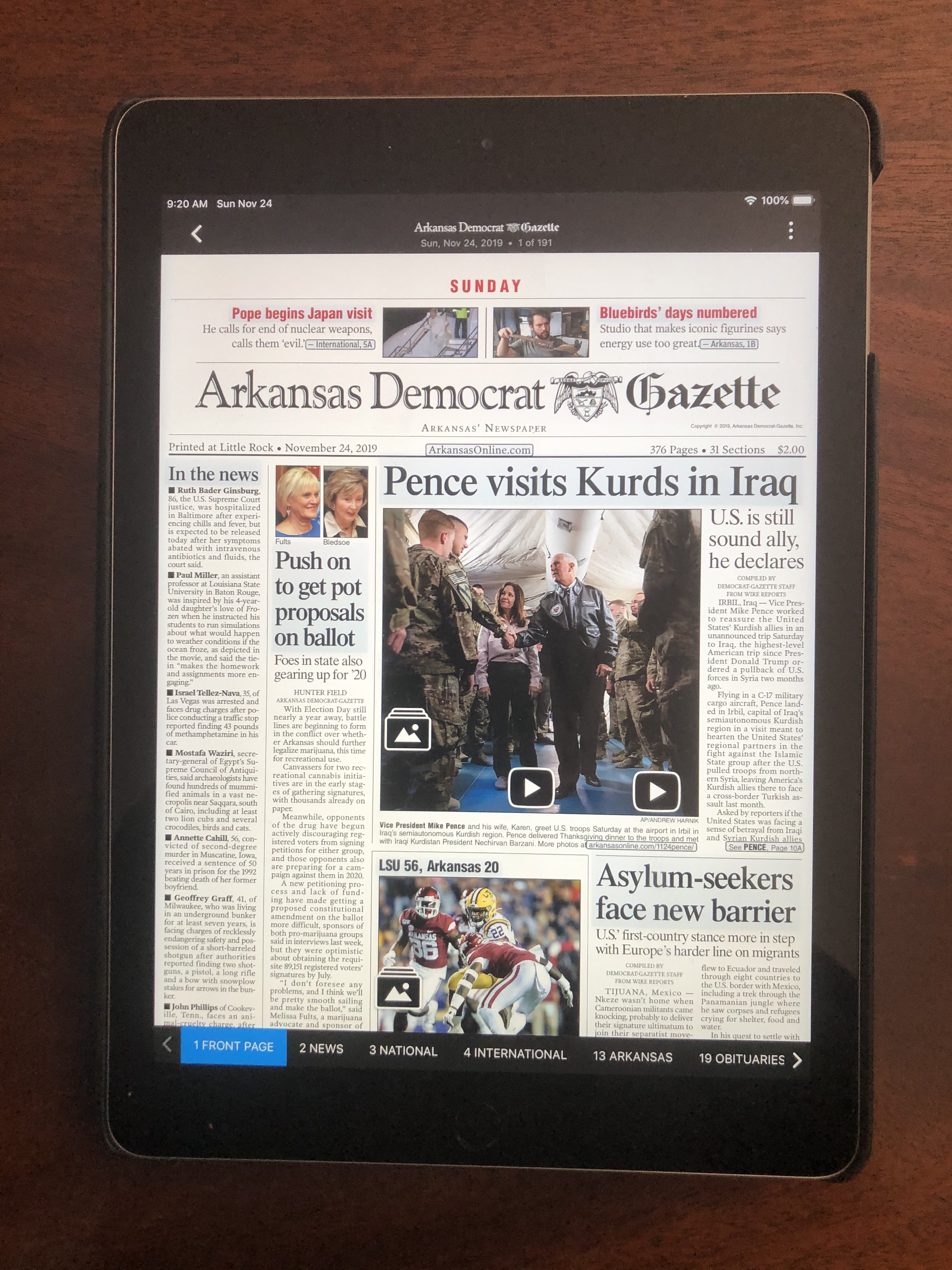
Let’s define a few terms first, and remember that in the Arkansas Democrat-Gazette and on its website, opinion is clearly marked (we do that for a reason, ya know).
- Editorial: The opinion of the newspaper, usually unsigned, which appears on the editorial page. (Side note: HR classifies the entire newsroom as editorial, which doesn’t help matters, but that’s referring to the broader definition of editorial, “relating to the commissioning or preparing of material for publication,” which is what we do. The news side, though, produces news and the opinion side produces opinion. Still, it means that anything marked editorial in the mailroom comes to us when it often should go to someone else.)
- Letter to the editor: Something from someone not affiliated with the newspaper, which may include both facts and opinion; the opinion belongs to the writer alone.
- Column: Either guest or staff, it may include both facts and opinion; the opinion belongs to the writer alone. May also be called an essay, analysis or review.
- Ad: A paid advertisement; if there’s something that looks like a news story that is labeled an advertisement, that means it’s an ad, not a story.
- News story/article: Something written by a reporter recounting facts on specific things; that may include quotes from people expressing their opinions about an issue, but that doesn’t make the story opinion. And yes, there will always be some things excluded from the articles because editors have to make stories comprehensible, and the more things included not directly related to the story, the more incomprehensible they become. Nobody’s gonna read that; besides, no matter what, someone will always find fault.
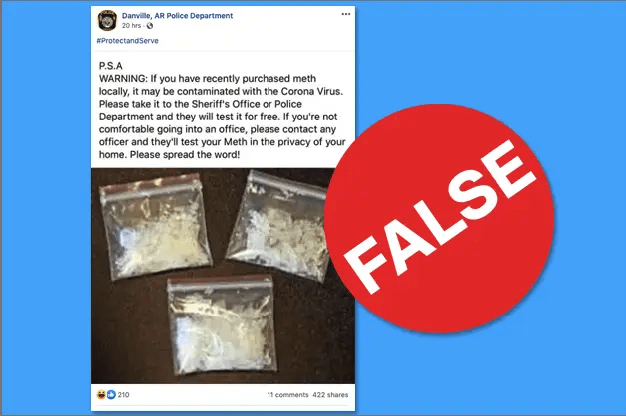
I would hope that most people know that they should double- and triple-check things found on social media and other places before spreading them around, but I know that’s not happening nearly as much as it should. Every day I see way too many hoaxes spread on Twitter and Facebook, and it’s disheartening.
Friend Sarah Kinsey, a longtime debunker (is it any wonder we’re friends?), told me of some of her adventures in media illiteracy.
“In the mid-1990s, probably around 1997, I received a forwarded email from a friend that warned about dirty needles being left in ball pits. I was immediately skeptical because I hadn’t heard about this seemingly imminent danger from the media, which at that time was the Topeka Capital-Journal and network news programs. The email mentioned the Houston Chronicle, so I checked its website. Apparently, I wasn’t the only one trying to verify the ‘needles in ball pit’ story because the website had a notice that said the email was a hoax.

“I replied to my friend to let her know that the story was a hoax and gave her my source. Verifying chain email became second nature to me. I researched the baby Internet to make sure I didn’t pass along erroneous information, and I also gladly educated my friends and family when they inadvertently forwarded a hoax. Looking back, I’m not sure everyone appreciated the enthusiasm with which I debunked a forwarded email.
“At the time I began my hoax debunking quest, I didn’t know about the term media literacy, but I learned about Snopes.com, which became a useful resource for me. I also discovered that going to the primary source (another term I didn’t learn until much later) cited by Snopes gave me more credibility when I tried to convince someone that the email they forwarded was untrue. …
“The friend who forwarded me the email was skeptical about the story being a hoax, although I told her about the Houston Chronicle statement. I still can’t understand why someone would trust a random email over a newspaper statement, but distrust of the media has been going on for decades.”
Some of that is on media outlets that haven’t made as much of an effort to be careful about their reporting and to be transparent, as well as news consumers who haven’t been as discerning as they could be. It makes it that much easier for unscrupulous outlets to take advantage of the tendency of people to seek out what comforts them and reflects their beliefs regardless of truth (and seriously, never ever click on the clickbait, no matter how enticing it may look or how interesting the headline may sound; not only is it unlikely to be true, the sites they link to might expose you to hackers, viruses, etc).

There are several groups out there, beyond fact-checking sites, dedicated to teaching people how to identify misinformation and disinformation and providing resources for educators, including the News Literacy Project, Media Literacy Now and Common Sense Media. Encouraging media literacy isn’t indoctrination; it’s simply giving kids (and adults) the tools they need to become responsible news consumers and content creators, and to think for themselves.
I encourage readers to familiarize themselves with efforts such as theirs, and to educate themselves on misinformation. The lies may be comforting, but better media literacy will help us sort out the lies from the truth.
Maybe then we could get back to living in the same reality. If you think we already are, I invite you to take a look at coverage, for one, of the Martha’s Vineyard incident, and especially columns by pundits on both sides of the aisle. This is not sustainable.
I need some Vitamin C(harlie).
 Serenity is a fuzzy belly