
Everyone needs an editor.
I can assure you that for every story of a writer done wrong by an editor, there are at least three editors over in the corner raging and cursing a long list of writers who don’t spell-check or fact-check, don’t know versus and verses (and other homonym sets) mean different things and, worse yet, don’t take kindly to being edited.
Over the years I’ve dealt with just about every type of writer one could imagine. Back when I was on the night copy desk editing news stories, I was usually the one who dealt with a certain reporter because others didn’t want to; the writer rechecking his story after it had been line-edited annoyed those who just wanted to move copy. I didn’t mind, though, because the reporter just wanted to make sure that nothing that had been changed made the story incorrect. A particular turn of phrase wasn’t the worry; whether readers understood the story and got accurate information was. Very rarely did that reporter have to have a correction run. Writers like that (and I’ve worked with a few) are extremely conscientious and good to have on staff of a newspaper if you want to have a good reputation.
Another writer, on the other hand, was hostile to editing, and there was an unwritten directive that that particular writer was to be only lightly edited. That person had to run more corrections than most. Professional writers have the benefit of professional editors; it’s unwise to waste that resource.
A good editor does more than just check grammar and spelling, but will push the writer to do better. On the news side, it’s important to make sure the writer didn’t bury the lede, has checked all facts, and has kept his or her opinion out of the story. On the opinion side, there’s more leeway, but it should still be clear when the writer is expressing opinion, especially if they write reported opinion, as John Brummett does. Fact-checking is no less important here in opinion than in news, though that might be difficult to see if you read too many hyperpartisan pundits who are syndicated nationally.
We don’t do these jobs for our amusement (though it happens; we’re a weird lot sometimes), but to serve readers and cast the writer in the best possible light. We’re not the enemy, but rather your odd friend who’ll probably be off in a room with your cat if you invite them to a party (I know it’s not just me). In that vein, some tips for writing from an editor:
✍️ Be open to editing.
No one’s work is perfect, so if you send something to a newspaper with the directive not to edit it (or not to edit it without approval of every edit, which with short staffs is unlikely to happen), odds are it won’t be printed. I can’t think of any submission over the nearly 12 years I’ve been on the opinion side of things that didn’t improve with editing (though I’m sure some letter-writers would disagree), even something as simple as a comma in the right place. (Remember, commas save lives: Let’s eat Grandma! OR Let’s eat, Grandma!)
👀 Read what you wrote, put it away, then don’t look at it again for a minimum of six hours.
If you don’t have an editor friend and you’re not on deadline, this trick helps you see what you wrote with an at-least-somewhat fresh set of eyes, which means you’re likely to catch something that needs correcting.
I typically write my column on Monday afternoon, then don’t look at it again till after I’ve edited Rex Nelson’s column the next day. I’ve been able to find some significant errors that way, as well as fine-tune some of the writing. Plus, at least one if not two other editors read through it as well. Sure, we’ll still miss things occasionally, but that’s life. Of course, I also find things on later reading when I’m working on the blog, and a few times they’ve been significant enough that I’ve called or messaged a designer to fix them before the state deadline. (While we’re mostly online, we do the paper as a replica edition that looks like the traditional layout; we do publish a limited number of physical copies as well as the Sunday edition, so that design aspect and its deadlines haven’t gone away.)
👩🏫 Brush up on your grammar and word use.
Editors don’t expect a perfect piece to come to them, but something riddled with spelling errors (spellchecked or not; spellcheck typically doesn’t catch correctly spelled words that are incorrect in usage, but please, at minimum, spellcheck the damn thing!), grammar errors such as wrong punctuation or misplaced modifiers (a misplaced modifier can cause more trouble than a dangling participle, such as driving around with deceased relatives; lord, the stories I could tell) and odd spacing (spaces before punctuation, line breaks where they shouldn’t be [don’t do line returns on an iPad if you’re writing a letter, please, because the software does them automatically], etc.) tells the editor you don’t really care. Clean up those issues before you submit something to give yourself a better chance of being published.
Even the people who turn in the cleanest copy slip sometimes, so never think your work is perfected. Editors like me really appreciate the kind of writer that knows that.
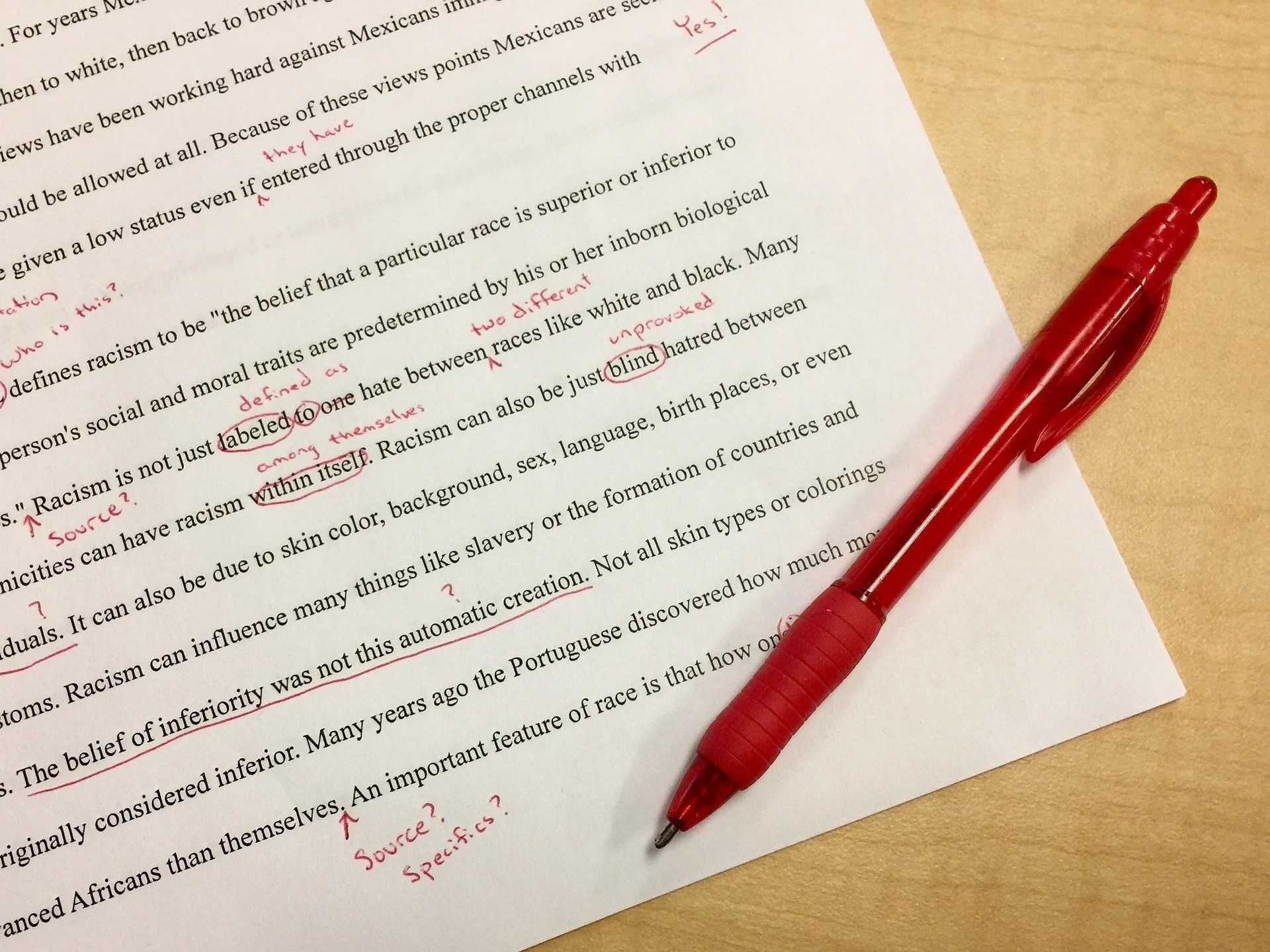
🪓 Kill your darlings.
No, this has nothing to do with abortion, and if you think it does, whoa, are you in the wrong place. This is advice that is heard more often by fiction writers, a directive to get rid of unnecessary storylines, characters, etc., for the story’s own good. But all writers, fiction and nonfiction, have little habits in our writing that can hold it back, and we should be willing to sacrifice them for the greater good. I’m a little too enamored of parentheticals (duh, but c’mon, they’re fun and useful, especially since there’s no actual sarcasm font … yet). Some writers have some phrase they consider their trademark, or a favorite quote or novel excerpt they like to trot out. But there are times when the reader gets to one of those darlings and says, “Oh, lord, not this again.”
Literary devices are very useful, but when writers lean on them too much, it makes it a slog to get through whatever they’ve written, and it all starts to sound the same. For example, use alliteration sparingly; I’ve been guilty of that, but I tend to use it mostly in two- to three-word headlines. Whole paragraphs of it … ugh, painful … might remind the reader of Peter Piper and his peck of pickled peppers (don’t get me started on this, because a peck is measure of dry volume …). Moderation goes a long way. The same thing goes for using cliches; if you just have to use them, which you don’t really, more than likely, use them in an unexpected way and, still, sparingly.
✂️ Make the cut.
More than likely, you have a lot of unnecessary words, phrases and sentences in your writing, which is one more reason for giving yourself at least a few hours before looking at it again. Maybe you’re repeating yourself. Maybe you’re over-writing in an effort to fill space or to make yourself sound more lofty than you are. When writing opinion for a newspaper, for example, be yourself, and write conversationally; leave the stiffness for specific styles like business communication or literary writing. You don’t need to use every adjective and adverb, or pepper your writing with $10 words, especially if you’re writing for something with limitations on the number of words. A letter to the editor or a guest column is not your master’s thesis or that grade-school essay on what you did over the summer. Fill the space with useful information, not rhetorical flourishes that do little but add to the word count; if they don’t advance your argument in the space given, cut them.
🗣️ Read your writing out loud.
This would be the “sounds right” rule, and it’s one I learned when I was studying broadcast news. I look at writing as if it’s a road: If it sounds natural and flows smoothly as you’re reading it, that’s good; if something makes you stumble, you’ve hit a pothole, which means it might need a rewrite.
Sort of like my life sometimes.

🍽🍽🍽🍽🍽
Last week I posted something on Facebook about having tried Trader Joe’s arepas con queso, and inadvertently started a big discussion about the merits of sugar in some things. I’m of the school that doesn’t like sugar in cornbread or savory arepas … arepas meant to be sweet (I really want to try chocolate arepas or the caramelized apple ones from the site where I got my basic cheese arepa recipe) and corn muffins are another matter entirely.
But there are more things that bug people in certain areas about food than that. I’d love to hear from you on what food or kitchen/eating habit lets you know someone isn’t from around here (wherever you are). If you’re in the American South, do they put sugar in cornbread or (gasp) put cast-iron skillets in the dishwasher? Do they grimace at the mention of red-eye gravy or wilted lettuce? Do they, God forbid, serve unsweet tea? (I don’t drink iced tea at all anymore, after a bad experience with sun tea in my teens, but I’m still Southern, by God.) Let me know at blooper@adgnewsroom.com or by commenting down below, and I may quote you in a future column.
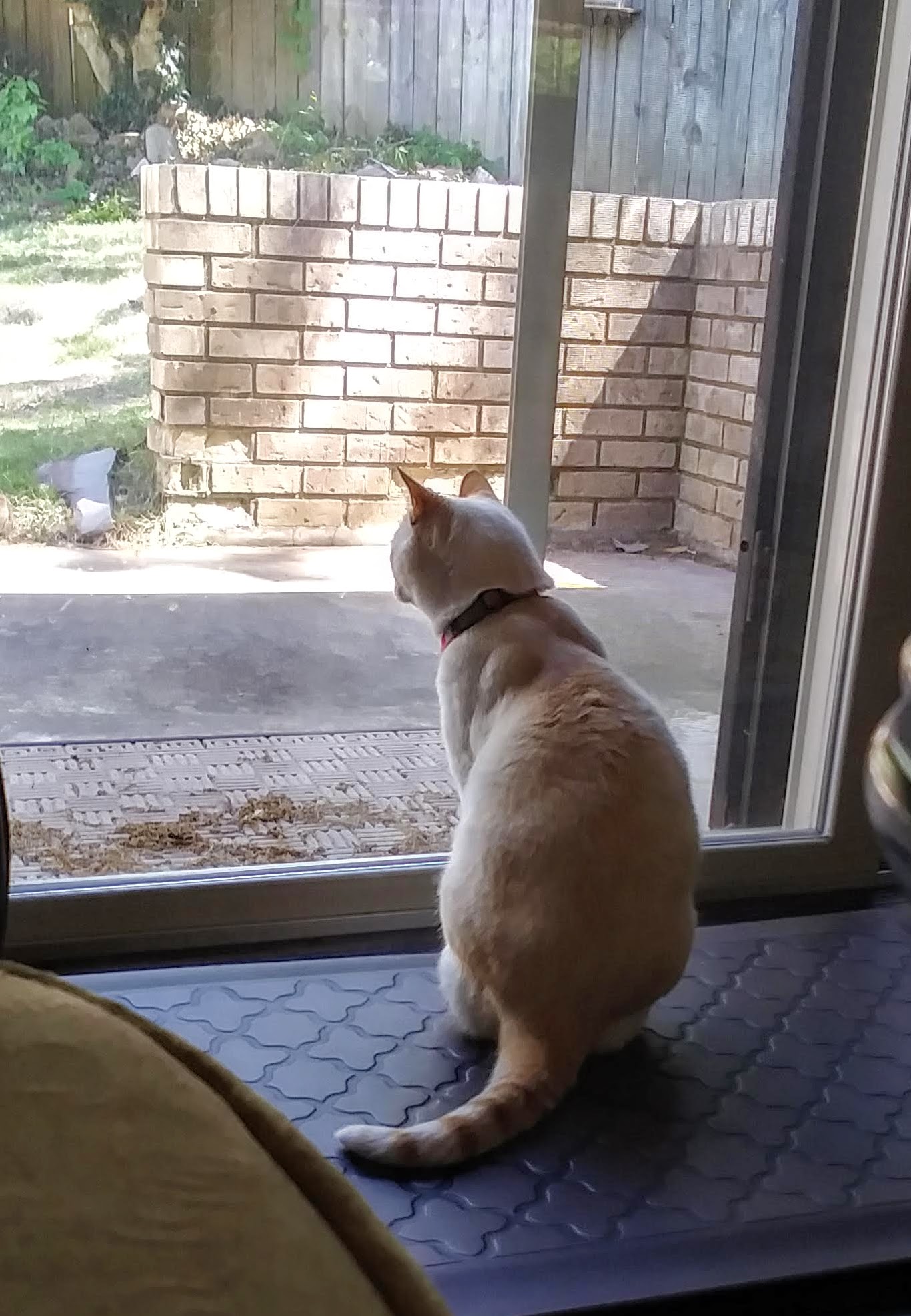
 Serenity is a fuzzy belly
OMG, you started off with the verses-versus thing. It drives me crazy and being a fan of local newscasts, I hear it almost every day. It gets even worse when somebody says something like “it’s me verse you.” Then you quoted my “Let’s eat Grandma” t-shirt.” You’re on a roll.
Different writers have different ideas about editors. I had an editor-in-chief whose writing I kept on a pedestal, but he wanted me to really get into it every month. I did, with great trepidation, and he always thanked me profusely. Old style gentleman — he’d greet me by kidding the back of my extended hand and kept my candy jar full of Jelly Bellies. Then there was the old biddy who wrote something about golf that I corrected and I thought she was going to wrap a 4-iron around my neck. She was right because by gosh she was a golfer! I was right because I was the editor. I won. We editors must take our victories where we find them.
Chicken-flavored or not, I imagine Charlie would enjoy that robin.
LikeLiked by 2 people
I have a writer who has never once used versus, but verses, yep, all the frickin’ time. He also doesn’t spell-check. 🙄 There are others, though, who more than make up for him.
LikeLiked by 1 person
Over the past fifty years of writing and revising college textbooks, I have developed the greatest respect for the editors who saved my okole (nice Hawaiian word) more than once. Now and then, however, we all missed something.
I wanted to have a table of random numbers in my first textbook, and since I was teaching myself computer programming, I decided I could create one rather than buying it from someone. After a little trial and error, I printed out a camera-ready table for publication in the book.
Once the book was published and distributed, we began receiving letters from professors. “My students have asked a question I can’t answer: why doesn’t the table of random numbers have any 9s in it?” My first attempt contained no 0s and the correction to my program created a problem at the other end. My suggestion was that we print an errata sheet filed with 9s and an instruction to “insert at random.” Instead, we bought a table from American Chemical or some such.
LikeLiked by 1 person
If we didn’t miss something occasionally, we wouldn’t be human. But we still do better than a machine would.
LikeLiked by 1 person
I wonder, have you ever been tempted to edit a George Will column? How does he do? I admire his stuff, dictionary in hand, but it requires a serious reduction in reading speed.
LikeLiked by 2 people
We haven’t used Will very much if at all over the past decade that I can remember, but his writing is pretty clear of errors, if sometimes a bit too high-minded for casual reading. We do use Bret Stephens a lot, and he’s more accessible. There are other writers, though, who aren’t served well by their syndicate editors, and they’re painful to read.
LikeLiked by 2 people
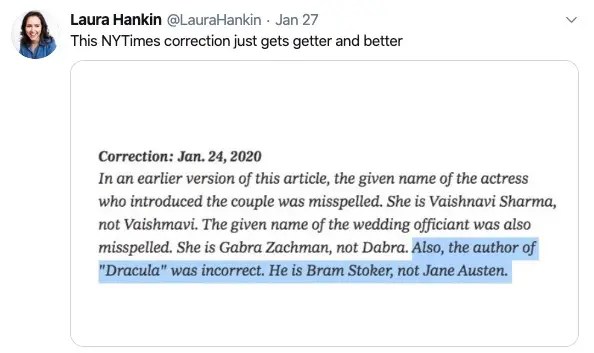
I thought the author of “Dracula” was Bram Austen the husband of Jane Stoker? Or maybe the author was Jane Stoker and her husband Bram Austen took all of the credit for writing this book?
LikeLiked by 1 person
Brenda so you think you are weird? I have been told a few times that I am weird because I like to spend my free time slaving over a cold piano but I do need to practice occasionally.
LikeLiked by 1 person
Commas save lives? That is true. If you want to save your life, comma to the hospital or the church or both.
LikeLiked by 1 person
Just don’t try to eat Grandma.
LikeLiked by 1 person
Driving around with deceased relatives? I know there are some really strange and unusual people in this world but that seems to be really far out and just plain crazy to me.
LikeLiked by 1 person
Brenda your editorial tips for writers are equally applicable to writing and making arrangements of hymns to play for church services–speaking from my own experience.
LikeLiked by 1 person