
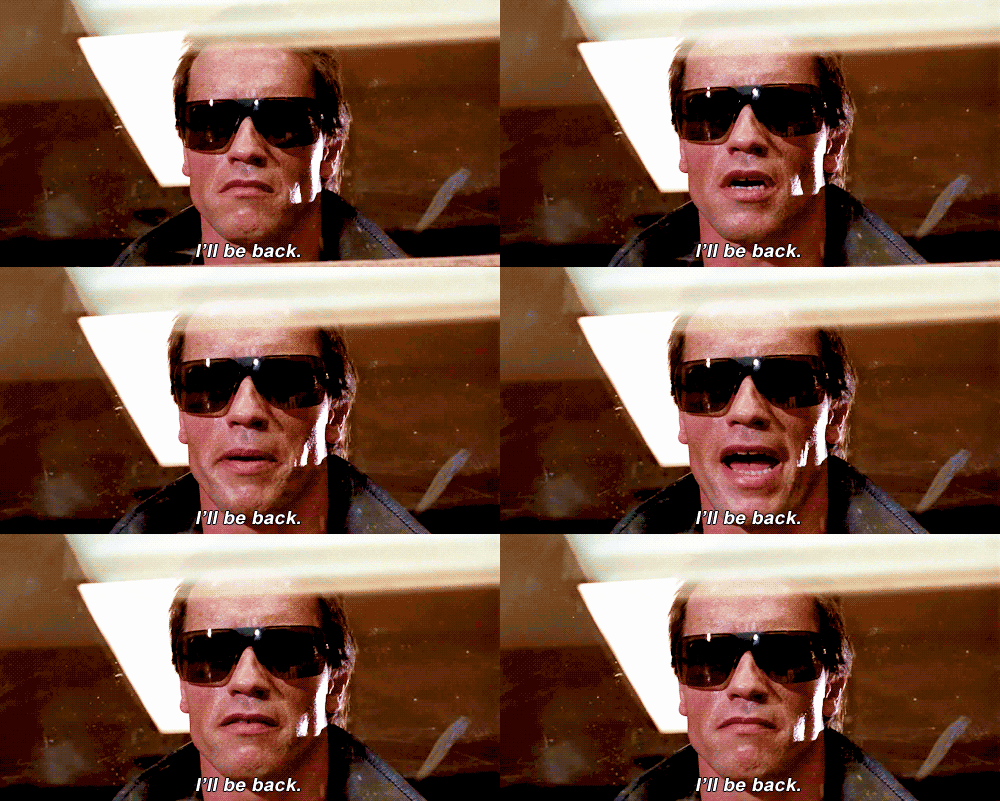
Every so often, I feel like I’m living in the “Terminator” universe. Not so much because life is grim (and no, I don’t believe unstoppable cyborgs are after me; they have better things to do with their time). It’s mostly because someone will point out something like ChatGPT or Boston Dynamics’ robotic dog Spot and I’ll feel like Skynet isn’t an impossibility.
I really have to stop watching movies about robots and/or artificial intelligence rising up against humans. Is it my fault that so many of them are so good? (Yes, “Terminator” peaked with its second movie, but there are so many great, or at least very entertaining, movies in this particular oeuvre.)
But do I really need to worry that the Collins English Dictionary chose “AI” as its word of the year? Maybe a little. Some of this AI is getting sassy, and that’s my job.
Collins has been publishing dictionaries in Glasgow, Scotland, since 1824, but didn’t publish the Collins English Dictionary until 1979, which “attempted to provide comprehensive coverage of English in a single volume, while also being the first major British dictionary to include entries for people and places,” according to its website (collinsdictionary.com). Before that, it mostly focused on illustrated dictionaries, pronouncing dictionaries, and foreign-language dictionaries. Its website launched in 2007.
Its dictionaries come from the Collins Corpus, an analytical database with over 20 billion English words. “It contains written material from websites, newspapers, magazines and books published around the world, and spoken material from radio, TV and everyday conversations. New data is fed into the Corpus every month, to help the Collins dictionary editors identify new words and meanings from the moment they are first used,” reports the website.
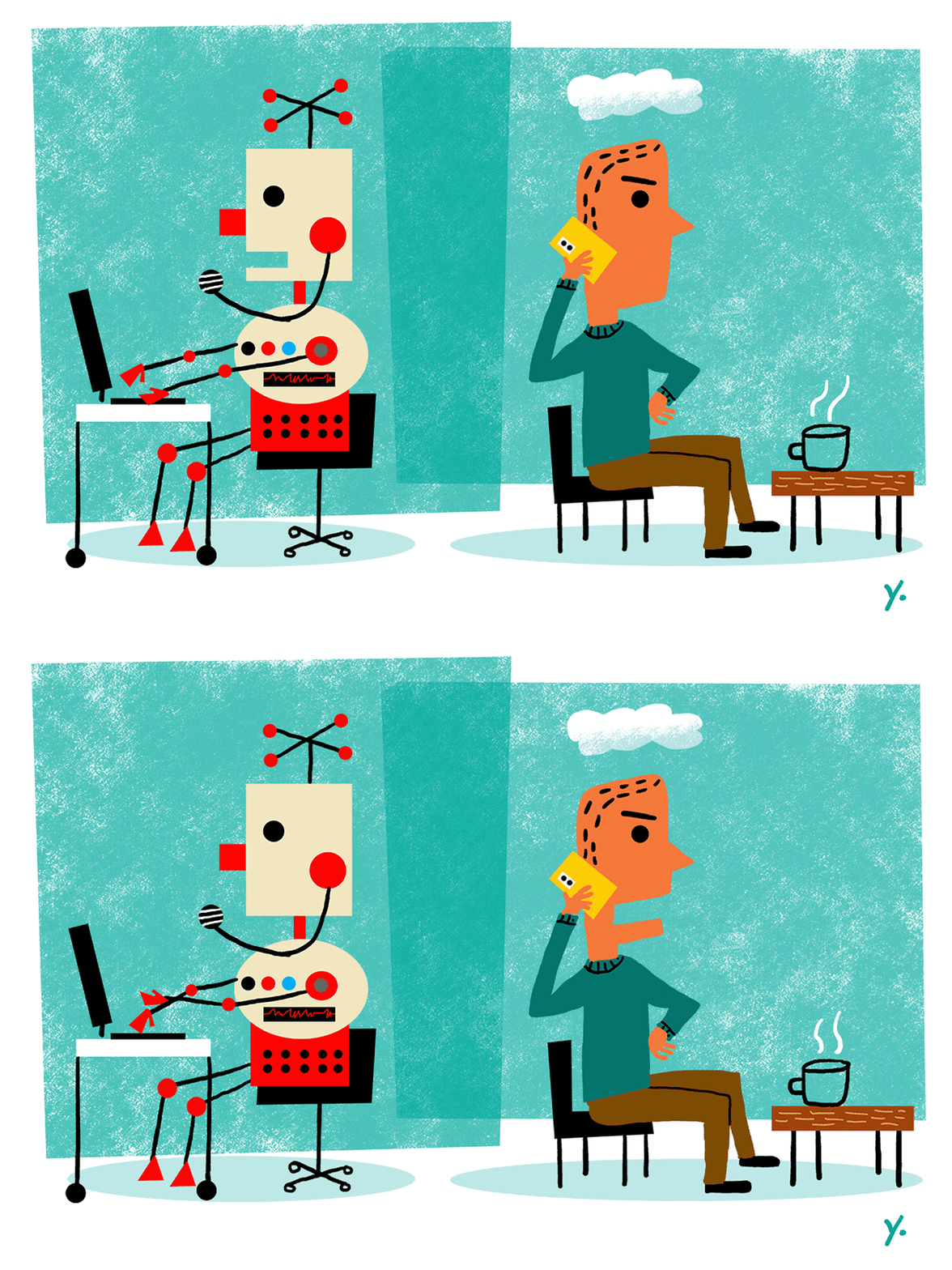
Which means it shouldn’t be at all surprising that AI, the abbreviation for artificial intelligence, would be its word of the year, when so much of this year has been consumed by news about AI, which has been used in programs like ChatGPT to do everything from holding a simple conversation to writing articles (it shouldn’t quit its day job just yet) to creating art (if you can call it that; I prefer my art from something with a soul). AI was even used to extract John Lennon vocals from an old cassette recording to create The Beatles’ “Now and Then,” which I probably would like better had I only heard it before watching the official video (the bits with insertions of the lads dancing weirdly didn’t really fit the tone).
Collins managing director Alex Beecroft said, “We know that AI has been a big focus this year in the way that it has developed and has quickly become as ubiquitous and embedded in our lives as email, streaming or any other once futuristic, now everyday, technology.”
The BBC even asked ChatGPT for comment on the announcement (because that’s a thing we do now): “AI’s selection as the word of the year by Collins Dictionary reflects the profound impact of artificial intelligence on our rapidly evolving world, where innovation and transformation are driven by the power of algorithms and data.”
Ooooh, algorithms. I’m all a-tingle. Maybe one day the social media algorithms will stop showing me ads for steaks and countless T-shirts photoshopped onto the body of a famous person. But good call on those rug-cleaning videos. They’re oddly calming, as are those wood-turning videos. So hypnotic …
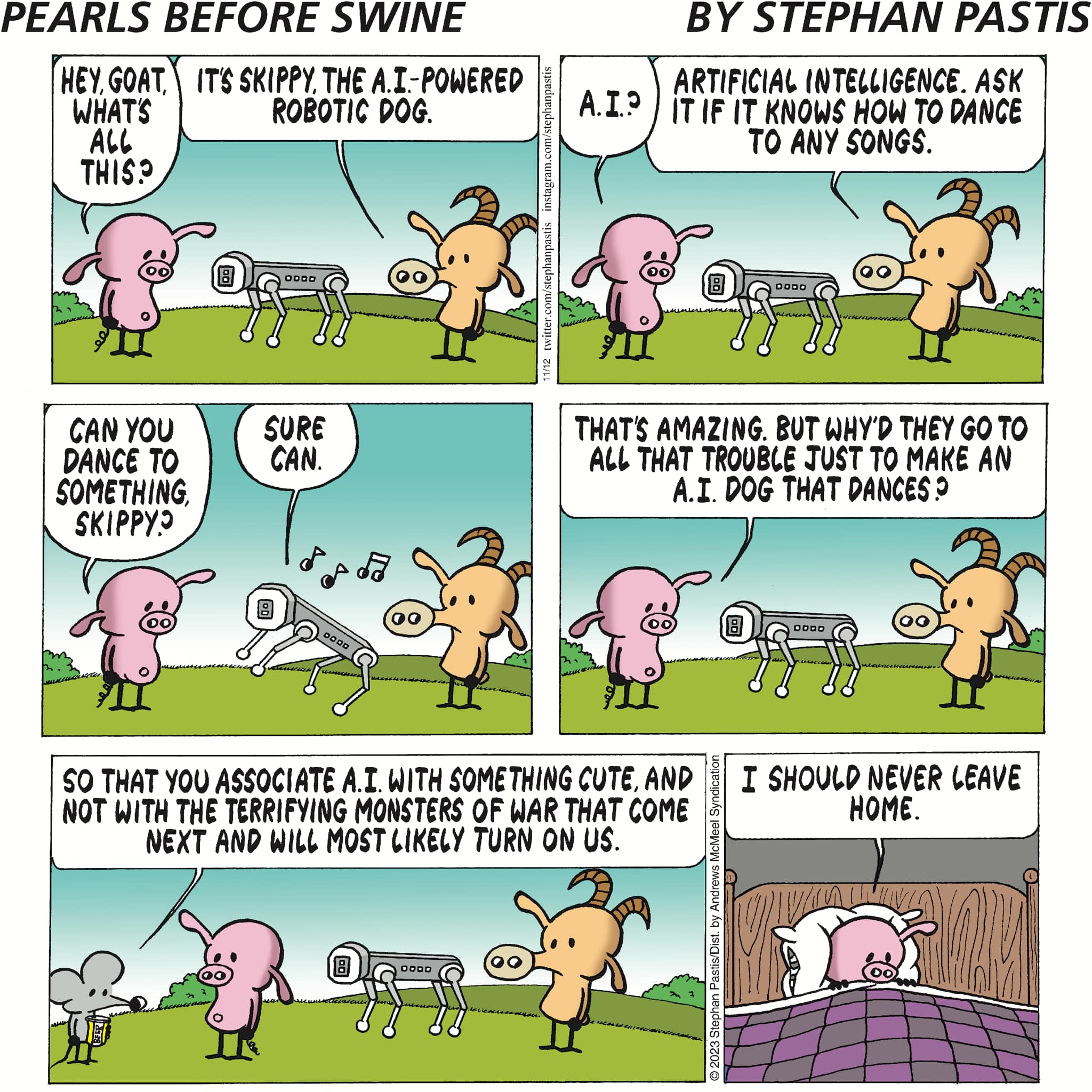
On its blog, Collins says: “The revolutionary AI-powered language model burst into the public consciousness in late 2022, wowing us with its ability to mimic natural human speech. It could do much more than that, actually–need copy for a presentation tomorrow morning? No problem. A recipe for dinner using only what you’ve got left in the cupboard? Done. And while people were understandably fascinated, they also started to get a bit anxious. If computers were suddenly experts in that most human of domains, language, what next? Cue an explosion of debate, scrutiny, and prediction, and more than enough justification for Collins’ 2023 Word of the Year: AI.
“Collins defines artificial intelligence, for which AI is the now-familiar abbreviation, as ‘the modelling of human mental functions by computer programs.’ This rather captures the profound nature of challenge facing us. Can machines really become human-like? And how will that pan out for our species?”
Well, thank you for that scary thought. Now I really am starting to worry about Skynet.

On the short list at Collins this year were words like “de-influencing,” in which influencers (gag) warn followers away from certain products, and “ultra-processed foods,” which are manufactured with complex industrial methods, often using ingredients of little nutritional value. “Greedflation,” the belief that businesses making large price hikes do so to boost their profits, also made the list; little wonder with so many companies reporting record profits.
Also on the list was “nepo baby,” which, the Collins blog notes, Gwyneth Paltrow has called an “ugly moniker.” As a nepo baby is someone whose career is believed to have been made possible largely because of famous parents, and Paltrow’s parents are actress Blythe Danner and director Bruce Paltrow, take that with as many grains of salt as you need.
Some Brit-specific words and phrases, such as “Bazball” (a more energetic form of cricket named after England Test coach Brendon “Baz” McCullum) and “ULEZ” (the acronym for ultra-low-emission zone; Londoners who drive a polluting vehicle into the city must pay a charge since only vehicles with very low emissions are allowed), also made the list, as well as “debanking” (a bank closing a customer’s account; Nigel Farage helped make this a thing after he claimed his account was closed because of his political beliefs, and probably never considered it’s his personality rather than his politics that might put people off).
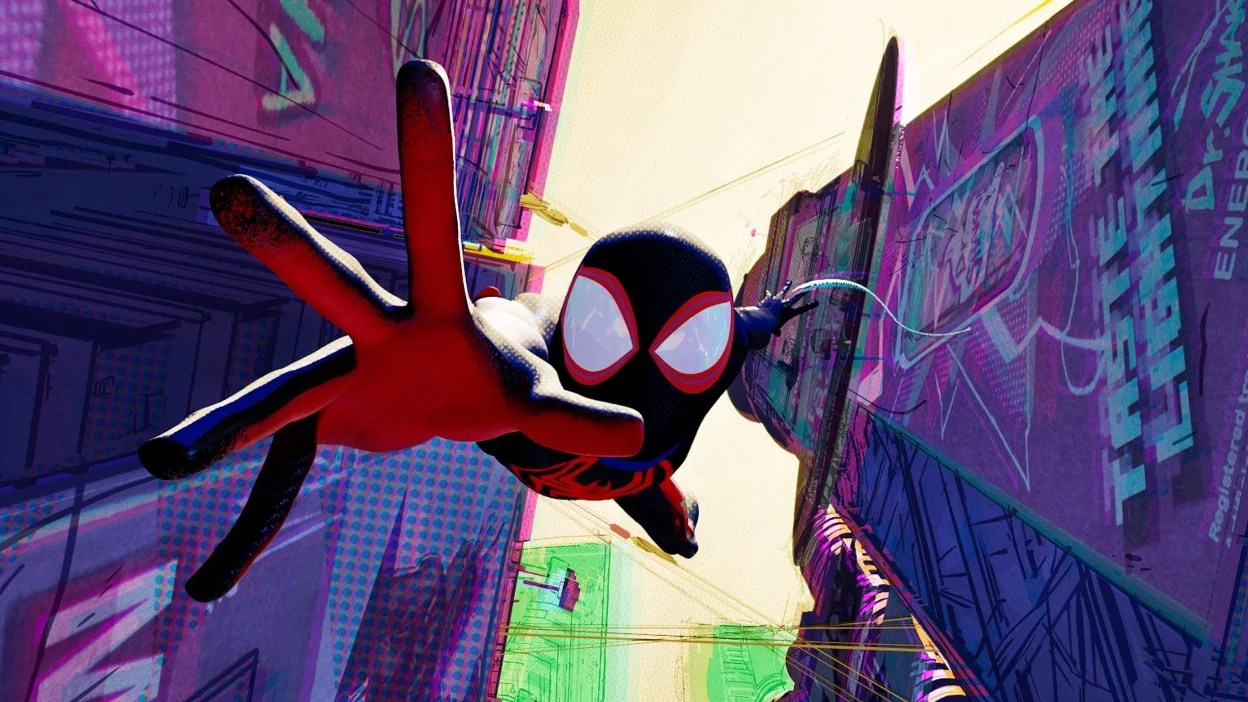
“Canon event,” another phrase on the shortlist, is something familiar to a lot of nerds like me who in addition to words might have a bit of an obsession with certain books and movies, especially those involving characters with rich back-stories. Collins defines it as “an event that is essential to the formation of an individual’s character or identity.” Canon in literature is a set of texts considered to be authoritative (like, say, the original Spider-Man comics; go with me on this). A canon event is that moment in time that made Tony Stark become Iron Man, or Peter Parker Spider-Man (or Miles Morales Spider-Man, since the term gained currency because of “Spider-Man: Across the Spiderverse”), or that made Fox Mulder join the FBI to investigate UFOs; change that event, and they don’t become who they were meant to be. (Yes, I’m a sci-fi/fantasy nerd. I’m OK with that.)
For mine, you might want to blame my mom for introducing me to great authors and directors early on. If not for that, who knows where I might have ended up?
Maybe trolling and armchair column-writing on the Internet …

 Serenity is a fuzzy belly