

What happens when you let the public vote on a shortlist of words for word of the year?
“Rizz.”
Oxford University Press announced the Oxford English Dictionary word of the year last week, noting, “2023 marked the era of personal—and professional—PR. And what does it take to command attention? A whole lot of charisma, or the shortened form, ‘rizz.’
“Pertaining to someone’s ability to attract another person through style, charm, or attractiveness, this term is from the middle part of the word ‘charisma’ … . Use of the word as recorded in our corpus has increased dramatically in 2023, with a peak in June 2023, when actor Tom Holland was asked in a widely reported interview about his ‘rizz,’ to which he answered, ‘I have no rizz whatsoever, I have limited rizz.’”
I don’t know about that. I think the actor has a lot more rizz than he thinks he does. He comes off as such a sweet and endearing guy in interviews and as Spider-Man. Plus, he’s a dancer! (He can also play creepy; I have “The Crowded Room” in my AppleTV queue but haven’t watched it just yet. Holland decided to take a year off from acting after finishing it because of the mental toll it took on him.)
But before that BuzzFeed interview, reported Sarah Kuta of Smithsonian Magazine, “The term first arose from gaming and Internet culture, with YouTube and Twitch streamer Kai Cenat popularizing it in 2021, according to USA Today’s Olivia Munson.”
About 30,000 people voted to winnow the shortlist created by Oxford lexicographers from terms that surged in popularity over the course of the year, and from the finalists the dictionary picked the winner. That process last year (the first year it was chosen by the public) resulted in “goblin mode”—“a type of behavior which is unapologetically self-indulgent, lazy, slovenly or greedy, typically in a way that rejects social norms or expectations”—being named word of the year. This time using match-ups of words in the shortlist, like “rizz” versus “beige flag,” with people voting between them to create the finalist list.
Casper Grathwohl, president of Oxford Languages’ dictionary division, said, “One of the reasons [rizz is] moving from being a niche social media phrase into the mainstream is, it’s just fun to say. When it comes off your tongue, there’s a little bit of joy that comes with it,” reported Jennifer Schuessler of The New York Times. There’s also the fact that it’s one of those rare formations that come from the middle of an existing word, like fridge and flu.
Speaking as a word nerd, one of my favorite things about words is being fun to say—like persnickety, codswallop, flummox, tump, etc.—but I just don’t know about “rizz” yet.
“The selection, according to Oxford, is meant ‘to reflect the ethos, mood or preoccupations’ of the preceding year, while also having ‘potential as a term of lasting cultural significance,’” Schuessler wrote.
Really? Rizz? Maybe it’s the Gen X in me looking down on those Gen Z whippersnappers (another word that’s fun to say), but I don’t see it.
(Side note: Thanks to a Gen Z therapist, I’m considering doing something on generational slang … suggestions?)
But wait … the Collins (AI), Cambridge (hallucinate) and Merriam-Webster (authentic) picks all had ties to artificial intelligence. Why not Oxford?
There was an AI-related word among the finalists, but as the public voted, it didn’t draw the same amount of attention as rizz. Apparently it has limited rizz as well. “Prompt,” “an instruction given to an artificial intelligence program, algorithm, etc., which determines or influences the content it generates,” made it to the final round but was beaten out.

“Words relating to AI have been particularly prominent in the corpus data this year, with use of the word ‘prompt’ in contexts that relate to AI increasing hugely this year from very little use in our corpus before 2022,” wrote the dictionary in its announcement. “As AI systems have spread to business, education, creative contexts, and elsewhere, more people have developed the skills needed to use them effectively and, in some cases, becoming specialized as ‘prompt engineers.’”
Like with “hallucinate” and “authentic,” this is a new sense of an older word. Because, and I can’t believe I constantly have to bring this up, language evolves. (Please, please, stop with the redefinition conspiracy theory about “vaccine.” I’m begging you! All vaccines work to provoke an immune response to teach your body how to react to a virus. As technology advances, so will the ways vaccines may do that.)

But another term almost beat rizz for top honors this year: Swiftie. “[I]t’s hard to think of this year without thinking about fandom culture and Taylor Swift, who dominated headlines with her record-breaking tour, movie deal, and billionaire empire,” wrote Oxford.
“The term ‘Swiftie,’ meaning ‘an enthusiastic fan of the singer Taylor Swift,’ seems to date from the late noughties and has been gradually growing in prominence. The word was more than 10 times more common in September 2023 than a year before in September 2022, with a noticeable uptick in the use of the word likely related to coverage of Swift’s highly successful Eras tour.”
I’ll admit I’m not a Swiftie, though I do admire much of what she’s been able to accomplish (like increasing voter registration and standing up for creatives and women). And I do have to admit that I love her bluegrass-tinged “Mean,” probably because I can easily identify with it.
“Situationship,” referring to a romantic or sexual relationship not considered to be formal or established, was the remaining finalist. “2023 saw us re-evaluating how we connect with one another and the words we use to describe our relationships—and how some of those relationships defy convention,” Oxford wrote.
“Etymologically, ‘situationship’ is a blend of ‘situation’ and ‘relationship.’ Blending is a notable source of new words in English, particularly when words are coined self-consciously to describe a new phenomenon. A term popularized by social media and modern dating shows, the term seems to have been coined in the late noughties or early 2010s and refers to a romantic or sexual relationship that is not considered to be formal or established, sometimes one that’s outside society’s conventions.
“The word captures the uncertainty and lack of formalization that many people feel about their relationships. Its usage has been growing steadily in frequency showing that the term has certainly resonated with people.”
But not me. I’m pretty boring.
Among the shortlist terms was “beige flag”—boring or lacking originality or having a trait that’s very characteristic of them but is neither good nor bad, just meh—pretty much the opposite of rizz, and likely a good description of me.
Joining “beige flag” on the shortlist:
de-influencing: The practice of discouraging people from buying particular products, or of encouraging people to reduce their consumption of material goods, esp. via social media. The word was a finalist on Collins’ list as well.
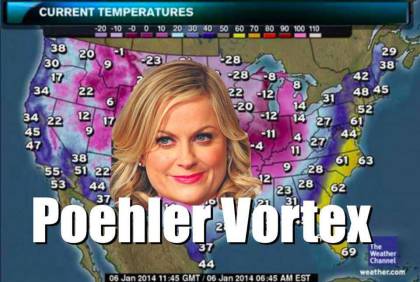
heat dome: A persistent high-pressure weather system over a particular geographic area, which traps a mass of hot air below it. The term is apparently this year’s “polar vortex” (which landed on a lot of lists in 2014, including the Banished Words List).
parasocial: Designating a relationship characterized by the one-sided, unreciprocated sense of intimacy felt by a viewer, fan, or follower for a well-known or prominent figure (typically a media celebrity), in which the follower or fan comes to feel (falsely) that they know the celebrity as a friend.
Geez, it’s like people don’t believe I’m close personal friends with Ed Sheeran and Dolly Parton!
🙅♀️🙅♀️🙅♀️🙅♀️🙅♀️
While you ponder rizz and if you have it, remember that the Lake Superior State University Banished Words List is due to be released at the end of the year. Tell me what words and phrases you would love to toss out with the Christmas tree this year (I wouldn’t be surprised if rizz is one of them). Email me at blooper@adgnewsroom.com, or leave a comment below.

 Serenity is a fuzzy belly
Once again, no one has acknowledged my favorite word: bull-pucky. (In fact, I had to struggle through auto-correct to use the term just now.) Since no one else uses it, it’s possible that I created it. Wow, look as my rizz-meter rise. (BTW, auto-correct didn’t like ‘rizz’ either, so maybe there’s hope.)
LikeLiked by 1 person
My grandpa used to say that, which was about as close as he usually got to cussing. He was a sailor in the war, but didn’t cuss like one. My grandma, born in Texas, did. 🤣
LikeLike
In terms of who uses bull pucky, The Urban Dictionary says: A polite way to dismiss or reject something without having to say bullshit. Typically used by parents, teachers, adventurous clergy, and youth guidance counselors.
Also, it was spoken in a 1997 episode of South Park. So you’re not alone in using it!!
LikeLiked by 1 person
Well, damn. There goes my rizz. Thanks, Bruce.
LikeLike
Yes, I definitely live in an urban cave because half the words mentioned in these dictionary releases are totally unfamiliar to me. I’ve never seen or heard them before now. As for generational slang, I nominate “swell,” resurrected in the current commercial jingle: “Jardiance is really swell …” I cringe every time I hear it and wonder “how old is the person who wrote that line?” “Swell” goes back to what, the 40s? The 20s?
LikeLiked by 1 person
I love word-play. I wasn’t naughty in the noughties, but can’t help but admire the coinage. Original with you, Brenda?
LikeLiked by 1 person
I think the Brits are the primary users of “noughties”; at least that’s where I see it most often.
LikeLiked by 1 person
Aha! It does sound British somehow, maybe like part of a soccer score. Merriam Webster didn’t recognize it.
LikeLiked by 1 person