
It’s the most wonderful time of the year … for word nerds, anyway. (And people who like temperatures in the 50s and 60s at Christmas.)
Not only do we have all these lovely “word of the year” announcements, we also have the Lake Superior State University Banished Words list coming up. Sure, we’re word lovers, but there are limits, especially when certain words are perpetually misused and/or overused.
For me, they’re typically terms used ad nauseam in political talking points. Longtime readers know my distaste for politics, at least as practiced over the past few decades, but if it’s possible, the political talking points have become more inane, more out of touch with reality, and far less original.
I could point out about the time this happened, but it wouldn’t do any good.
Case in point: “Status quo,” usually preceded by “failing” or “broken.” Because it’s a talking point, no evidence is deemed necessary (which is very useful when you don’t have any readily at hand, or evidence that what you propose to fix it has any actual worth other than scoring political points; just talk about the failing status quo in schools and prisons, then bully anyone who challenges you, saying it’s them, not you, playing politics).
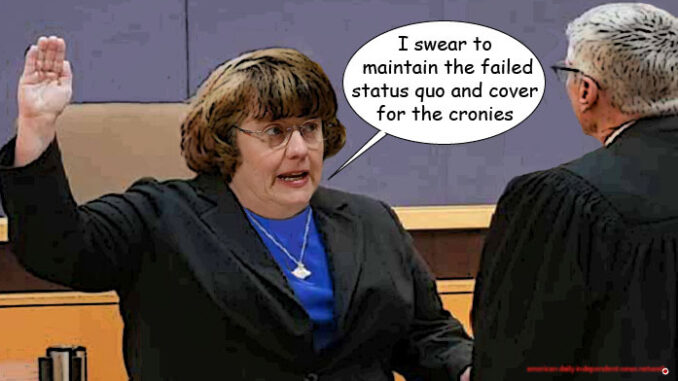
Why bother researching an issue when you can just use a ready-made talking point that says nothing but signals to true believers that you’re on their side and implies that the other side has no plan but to continue the status quo? Just make sure you imply that it’s your side, not the other, that’s “normal” and that the culture war is being waged by the other side (apparently just by existing and acknowledging the existence of others who don’t fit a certain mold; it’s certainly not trying to control libraries and schools so that only your version of reality is taught, or banning the use of certain words in government documents that typically aren’t in government documents).
I’m not the only one not crazy about political talking points. Denton Tumbleson wrote of what he’d like to see banished: “Woke (I’m not sure what it means and I don’t know where it comes from and I suspect the person who uses it isn’t sure either but obviously enjoys saying it) [and] radical left. (Apparently I fit into this category because my governor often uses it to describe a class of citizens she despises but represents like me. It’s a derogatory phrase that has no redeeming value.”
Same. I do know what woke means, but the people who rail about being woke typically don’t (safe to say they’re probably not word nerds). Radical left now apparently means everyone left of the far right (so I guess I’m part of it too). I know a lot of Republicans who’ve been blasted by certain political figures for not supporting their actually radical (far right) ideas about government, the U.S. and culture in general, so I guess they’re radical leftists too.
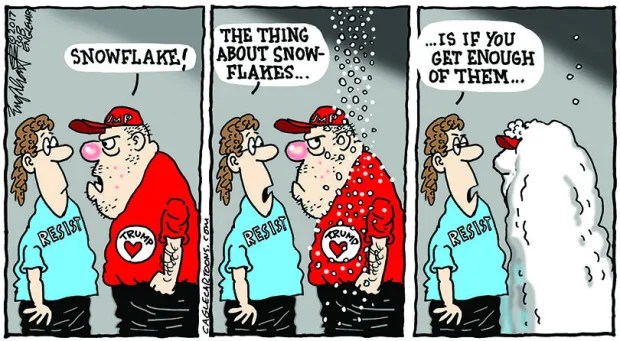
Along similar lines, Tracy De Jong wrote, “I’d like to throw out snowflake except for the white, cold kind.” Agreed, especially since the people who use this insult the most seem to be the ones most offended by … well … everything that doesn’t fit into their worldview. Cheerios featured a biracial family in an ad? The nerve! Dylan Mulvaney posted about Bud Light sending her cans with her face on them to celebrate a year after her transistion? OMG!!!
Y’all know how much I don’t like to quote Taylor Swift, but … you need to calm down. People who don’t look, believe and act just like you exist, and they have every right to. Don’t bother them, and they won’t bother you.
Ed Tabler, like me, wishes “the media would stop referring to those political events as ‘debates’ when they are nowhere near the dictionary definition of a debate, but closer to WWE bunkhouse brawls.”
I’m not sure the WWE would want to claim those things either; they somehow manage to be more boring and less classy.
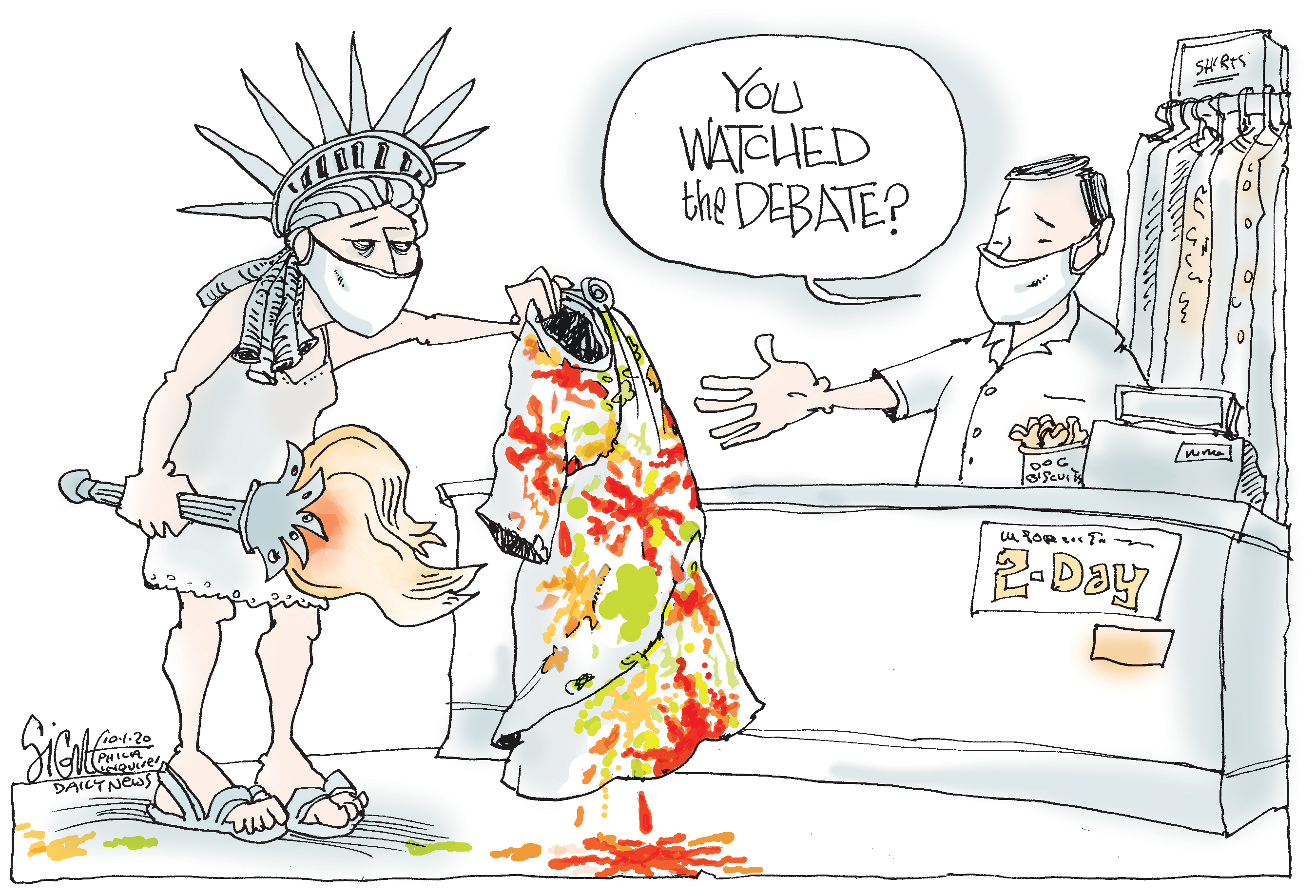
I only won one debate in competition in my life (I really hated debate, but couldn’t stand the arrogance of my opponent; I’m not good at extemporaneous speaking, but I powered through with determination, lesson being don’t tick me off), and it was nothing like what the “debates” are now, especially since we needed to cite sources and actually know the topic in-depth enough that we could pull those citations on the fly. Standing up on the dais, repeating talking points and tossing out insults like confetti is no substitute for cogent points backed by good research.
Ed also said, “the thing that really irritates me is when people, especially news people who should know better, say ‘try and do something’ when they mean ‘try to do something.’”
I get it. I’m constantly having to correct that phrase, sometimes in my own writing (this is why I don’t look at my column after I’ve finished the first draft for a minimum of three or four hours if not overnight; it’s easier to catch mistakes when you have some distance from them).
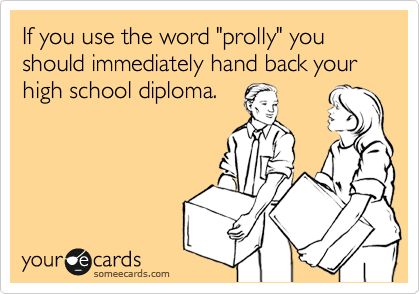
A reader who prefers to remain anonymous wrote, “I hate when I see ‘prolly’ instead of probably. If I was reading a resume of someone and they used that word, I would think they are too lazy to spell correctly, so why would I hire someone who may be too lazy to do a job they are seeking!”
Probably isn’t the only word that gets shortened in an annoying way. “No problem, pronounced ‘No prom’ has irritated me for at least 30 years,” wrote Darlene Emison. “I’m not sure exactly when it started being used in place of ‘You’re welcome,’ but my skin crawls every time I hear it. When a server brings my drink, I say ‘Thank you,’ and they say ‘No prom.’ I always want to say, ‘It shouldn’t be a problem, it’s your job.’ I guess there is nothing that can be done about it, other than complain.”
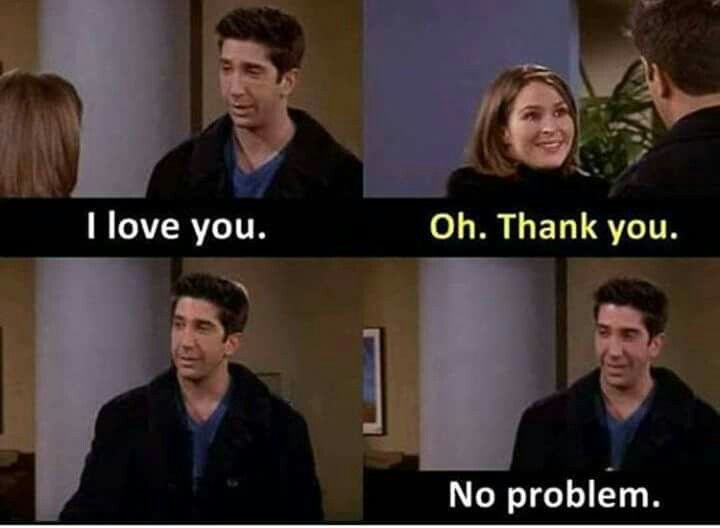
Irv Slate had a similar reaction to its use in place of “you’re welcome.” Around here, though, you might also hear “you welcome,” which sounds to me like nails on a chalkboard. “No problem” doesn’t bother me as much as that.
Darlene taught high school speech, drama and English, and said, “one day in class when a student said ‘No prom’ to me, I started yelling, ‘What, we’re not having a prom this year? Why not?’ They all started getting upset and talking about it, and I just let them go on for a few minutes before I explained. They learned the lesson that day, but it didn’t last long.”
My English teacher cousin Mary (RIP), who cried when we read “Beowulf” in senior English and used to tell us to make sure to put the “em-PHAS-is on the correct syl-LAB-le,” would have been so proud.
Other readers contributed words and phrases that irritate, annoy and befuddle. Rick Massey isn’t a fan of the singular they/them. “My objection isn’t anti-woke, it’s that using a plural pronoun for singular is highly confusing.” He used as an example a sentence that might be in a news story: “A dangerous prisoner escaped Pulaski County jail today and the sheriff has yet to find them,” noting, “Wait, what? How many prisoners escaped?”
True, they/them can be confusing, but it’s also been in use as a singular pronoun for hundreds of years. I think I’m more irritated by the use of it when referring to something like Twitter/X or Nike. Despite what the Supreme Court ruled in Citizens United, corporations aren’t people, but things, and “it” is the proper term (one of the few things I’m actually a grammar grouch about).
Friend Joe O’Brien would like to heave “existential threat” overboard, and I can’t blame him because it’s been so overused lately. Angela Gatteys, meanwhile, would like to ban “yada yada.” (That “Seinfeld” episode is hilarious, though.)
Gary Wheeler says the use of “that’s a really good question” in response to a question makes his skin crawl (mine too, a bit, since it’s usually a delaying tactic and often politicians will talk around it). Similarly, Kent Davis would like to catapult “begged the question” as so many people misuse it.
Kent had many other words and phrases up for contention, including “utilize” instead of “use,” and “harvest” instead of “kill” (as in deer hunting) or “cut down” in relation to mature trees, saying that “one “harvests” only what one plants. Further, planting a hundred of seedlings does not begin to replace a mature tree.”
He’s also no fan of “tool box,” “as in, ‘They used all the tools in the ‘tool box’ to achieve a peaceful settlement.” (Hit the negotiator in the head with a wrench?)”
Well, that’s one way to end negotiations. Not the best way, but a way.
Personally, I’d recommend a kitten break before continuing negotiations. Who wouldn’t be in a better mood and more willing to compromise after that?
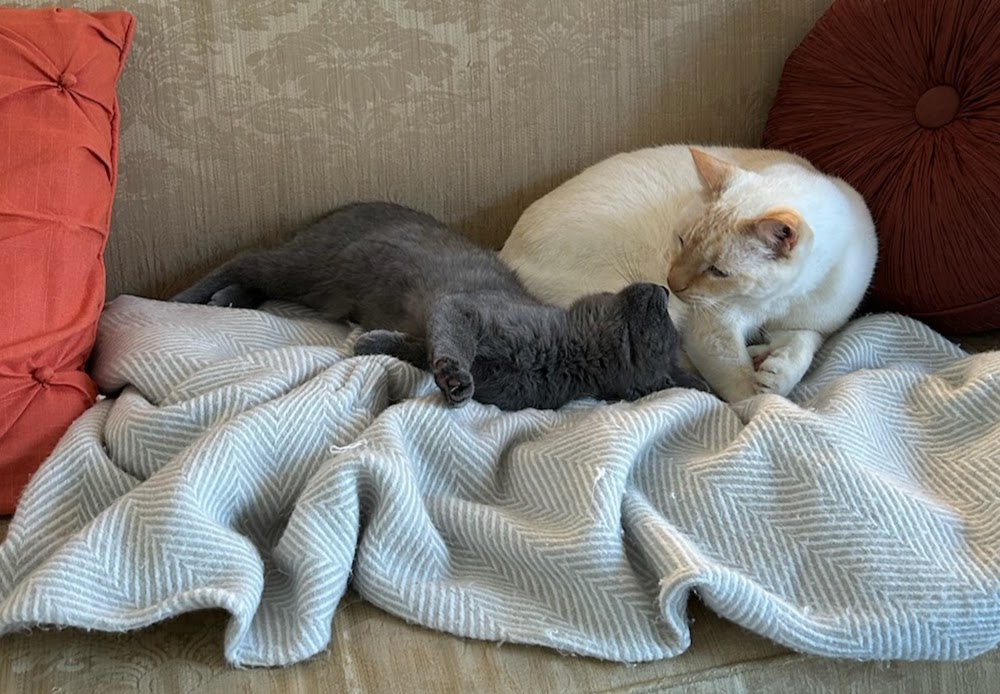
 Serenity is a fuzzy belly
Your column today is especially fun to read, even at 2:30 a.m. Thanks for the lift!
LikeLiked by 1 person
Thanks, Bruce! Here it is, nearly 6 p.m., and I’m finally getting to the comments. Busy day.
LikeLike
I’ve read ministers reporting anti-woke “Christians” saying Jesus was wrong or at least out of date. ‘Woke’ appears the word of choice for those who can’t spell empathetic.
LikeLiked by 1 person
Seems so … or “what Jesus really would do.”
LikeLike
I suspect that if Jesus was still alive today, He would surprise all of us by doing something none of us would expect Him to do.
LikeLiked by 1 person
I can and have discussed misused words at great length. My longstanding “favorite” is masectomy instead of “mastectomy.” I hear it from women who’ve had the procedure and I see it in ads from health organizations that provide the procedure. It’s absolutely inexcusable in both instances or any instance. The other is the widely spread and rapidly growing misuse of “verse” for “versus,” “vs.” etc. I won’t bore you with the many variations.
LikeLiked by 1 person
I have written extensively about versus and verses, as there is a certain someone who always uses verses. Another only recently realized that “nay,” not “neigh,” is correct when you mean “no.” Baby steps! 🤣
LikeLike