


Some interesting discussion came about from last week’s column about ensuring that cited quotes are accurate, both in their content and in to whom they’re assigned.
Besides the usual “Kilmar Abrego Garcia received due process” spiel (again, due process relates case by case, not per person; the person in question received due process in a 2019 court hearing, resulting in a withholding order forbidding his deportation to El Salvador and allowing him to legally live and work in the U.S., but did not receive due process more recently when being deported to the one place he couldn’t go due to Barrio 18 targeting his family’s pupusa business), someone actually sorta paid attention to what the column was about.
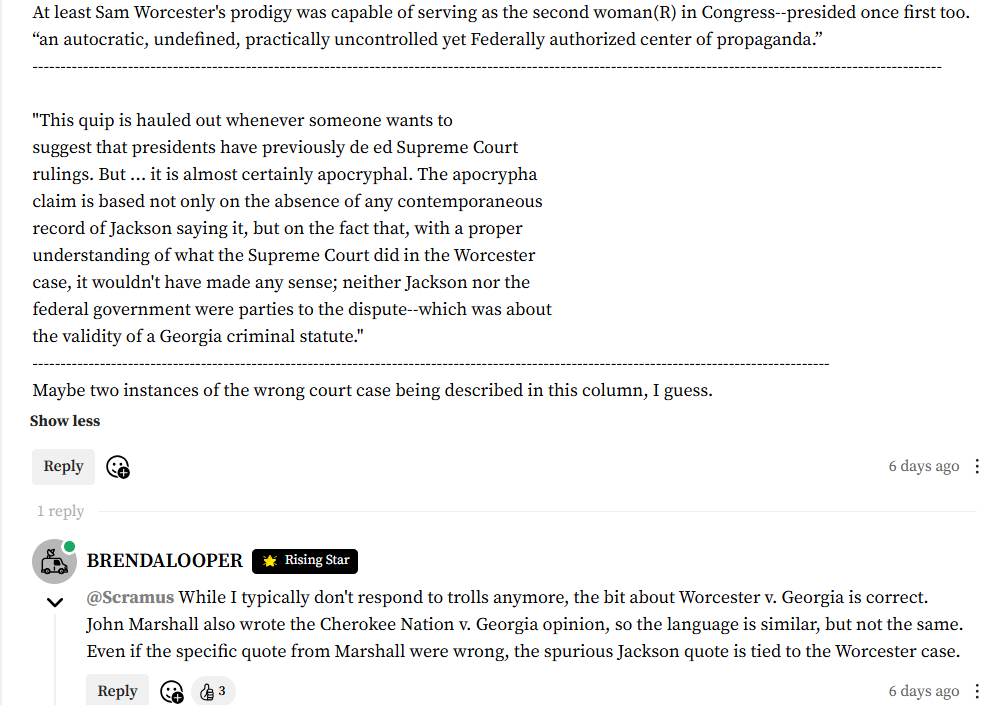
Unfortunately, he admitted he used Grok AI to formulate his comment, linking Chief Justice John Marshall’s quote to a different case. (He also posted content and a link to the Tennessee Star, a right-wing website, saying that the order said he couldn’t be deported to his native Guatemala [there’s what appears to be a mistaken reference to conditions in Guatemala low in the ruling; all other references to his homeland are to El Salvador], but he was born in San Salvador, according to the order … that’s a whole other ball of wax.)
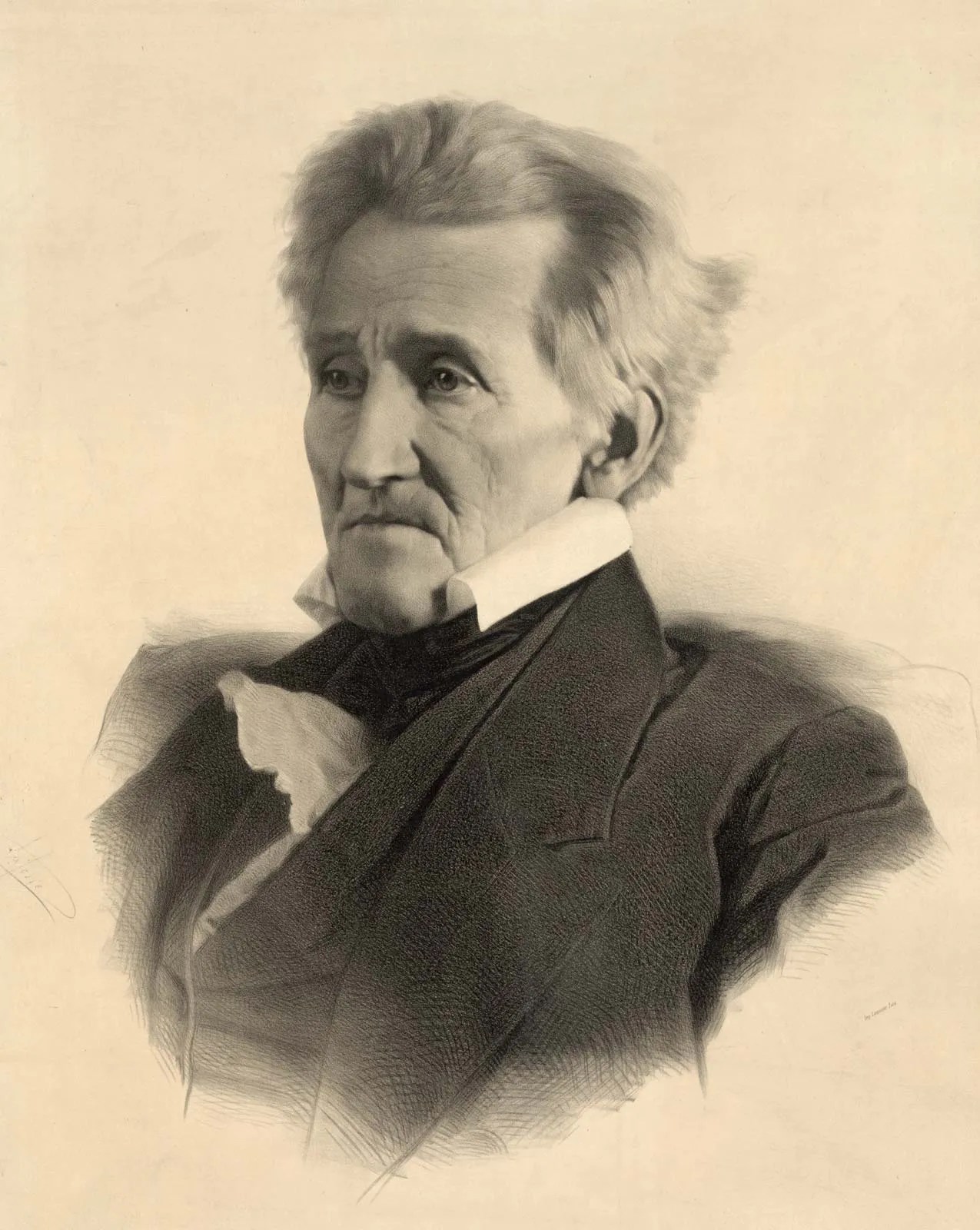
Marshall wrote the majority opinion in three cases involving Native Americans, known as the Marshall Trilogy, and in at least the last two, Cherokee Nation v. Georgia in 1831 and Worcester v. Georgia in 1832, he used similar wording (we all do it) when referring to Cherokee sovereignty, but not the same wording. However, the apocryphal quote attributed to Andrew Jackson at the center of the column was tied to the Worcester ruling, as I noted in my response, and as have many legal scholars.
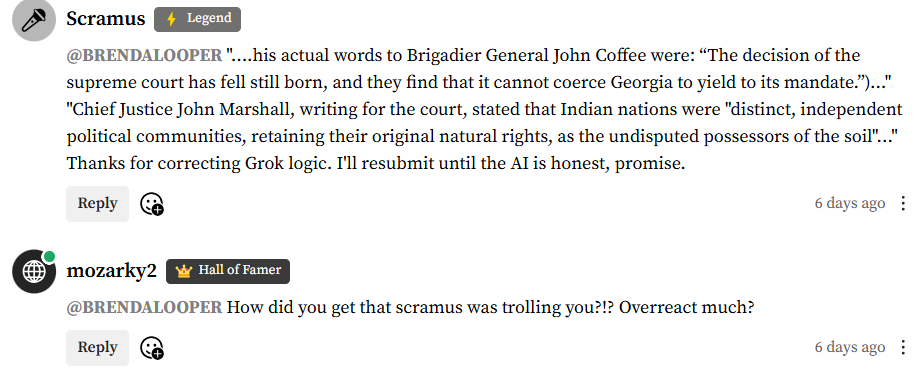
I don’t usually respond to trolls on the newspaper’s site or elsewhere, but I hate leaving something inaccurate about my writing hanging out like that.
(One of the resident trolls leapt to the defense of his fellow, posting, “How did you get that scramus was trolling you?!? Overreact much?” Sigh. A troll is defined by behavior; if it’s a near-constant display of trolling, you qualify as a troll regardless of what you’re doing at the time. You may occasionally troll someone, like Greta Thunberg sometimes does with certain public figures, but if that’s not your sole way of operating, you’re not really a troll. It also helps if you’re willing to stand behind what you say using your own name and reputation. Don’t want to be called a troll? Eschew anonymity and don’t consistently post offensive, off-topic rants or other things meant to disrupt or hijack the conversation. You are your actions.)

The issue here isn’t taking issue with the accuracy of quotes; that’s something we should do instinctively to ensure that truth spreads further than misinformation. It’s the use of artificial intelligence to do the work for you.
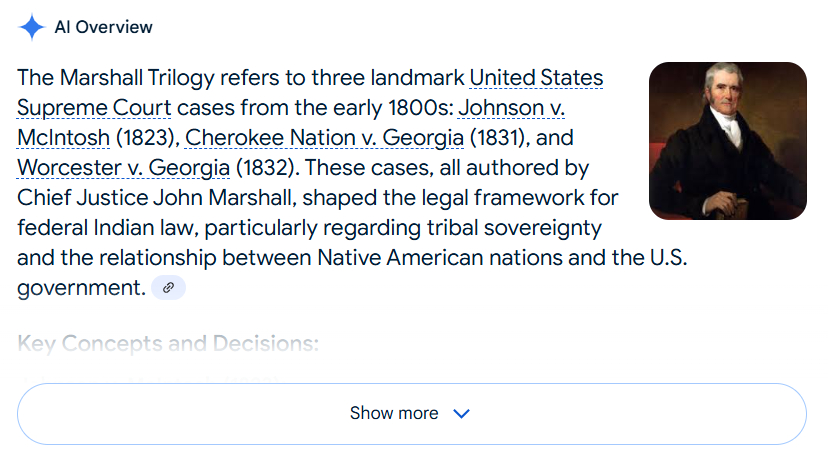
Yeah, I know it’s easy, especially when Google gives you an “AI overview” as the top result. When I entered what the troll had written, I got a result that the AI attributed to the earlier Georgia case, but when I entered just the quoted clause, it came back as Worcester (which a dive into the opinion on Justia, linked above, showed to be correct). Side note: As I redid the searches to screenshot them for you, Google’s AI had corrected itself, so it’s learning. Grok AI … considering the cesspool that is X and the amount of misinformation prevalent there, well, I just wouldn’t trust it.
As I said last week, research can be a slog; sometimes you can be led down blind alleys, but finding your way out is part of the fun (have I mentioned lately that I’m a big honkin’ nerd?).
Using AI to do your thinking for you is akin to plagiarism in that it’s intellectual dishonesty, and shouldn’t be accepted (many schools are still developing policies on the use of generative AI in schoolwork, and Inside Higher Ed reports that three in 10 students are unclear on when they can use it).

As I caution people in the use of Wikipedia as a primary source, AI should be considered at most a jumping-off point. It hasn’t developed enough to be treated otherwise (reading some AI-written obits should tell you enough), and the accuracy varies platform to platform, partially because of the data used to teach the AI. And let’s not forget that AI has the tendency to hallucinate, adding misleading or downright false information (let’s not forget the trouble lawyers have had with AI inventing fake case law).
The fact that depending on how a question is phrased you might get two or more different answers should give you pause (which is likely due to algorithmic bias from scraping data from biased news sources, social media platforms or politically skewed websites, according to DigitalDefynd). Sure, use it, but don’t forget to follow up by seeking out the primary sources to see if the answer you were given is correct. You will have to do at least some of the work.
Remember, the point of education is to teach people how to think, not what to think, and thinking takes some work.
We nerds can’t be the only ones reading court opinions, linguistic essays and sociological journal articles. Right? Right?
Another reader appears to have misunderstood the point of last week’s column, taking away that I thought Jackson’s defiance of the Supreme Court wasn’t true. While historians may argue about his not enforcing the ruling in Worcester, the court didn’t explicitly call for federal intervention, so it’s debatable whether actual defiance was shown.
What I was cautioning wasn’t true was the specific quote attributed to Jackson, likely a paraphrase of a comment in a letter he wrote to a friend rather than an actual quote.
Like the reader, I too am convinced that Jackson was sympathetic to Georgia’s intent to drive Native Americans from the state. His having signed the Indian Removal Act, as well as other actions, give credence to that belief.
As I said about trolls, you are your actions, and his spoke loudly.
 Serenity is a fuzzy belly