
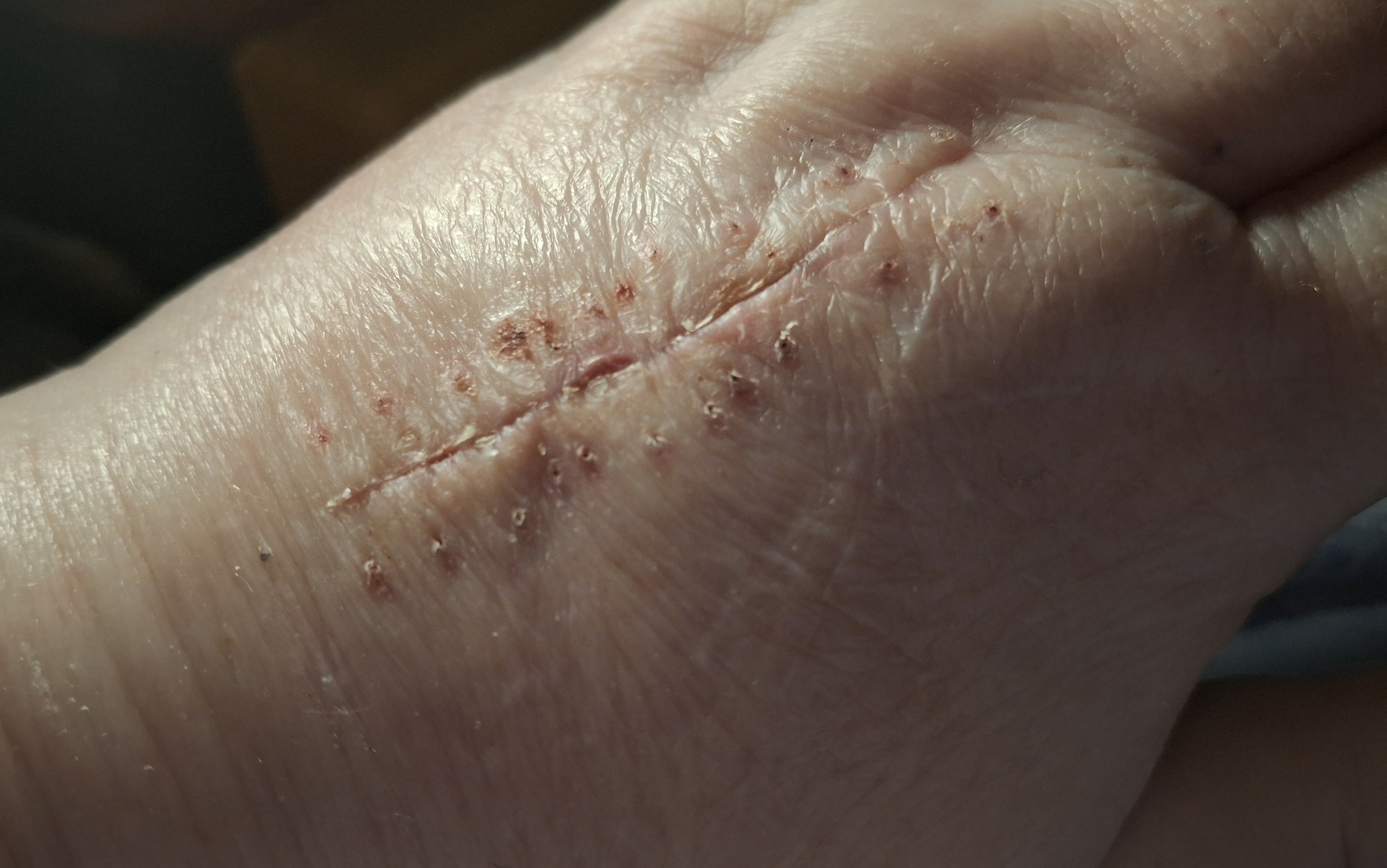
The past week has been busier than usual for me, between getting my car up and running again now that I’m cleared to drive (hallelujah! freedom!), getting staples out of my arm, making appointments for other health checks, plus taking care of the Voices page. I’m sure I slept somewhere in there, though I can’t guarantee that I ate healthily (I keep healthy-ish snacks around in case I can’t stop to go heat up a meal … hey, Reese’s eggs have protein!).
All that busy-ness means that I haven’t been all that communicative. I’ve responded to some emails, but left others for later. Today’s column is in response to one of those emails from last week.
Carl Grimes of Benton wrote: “Brenda, You read like a fun person.
“Please enumerate the rights that are in danger for the group of marginalized groups you referenced in your column about celebrating our own day.”
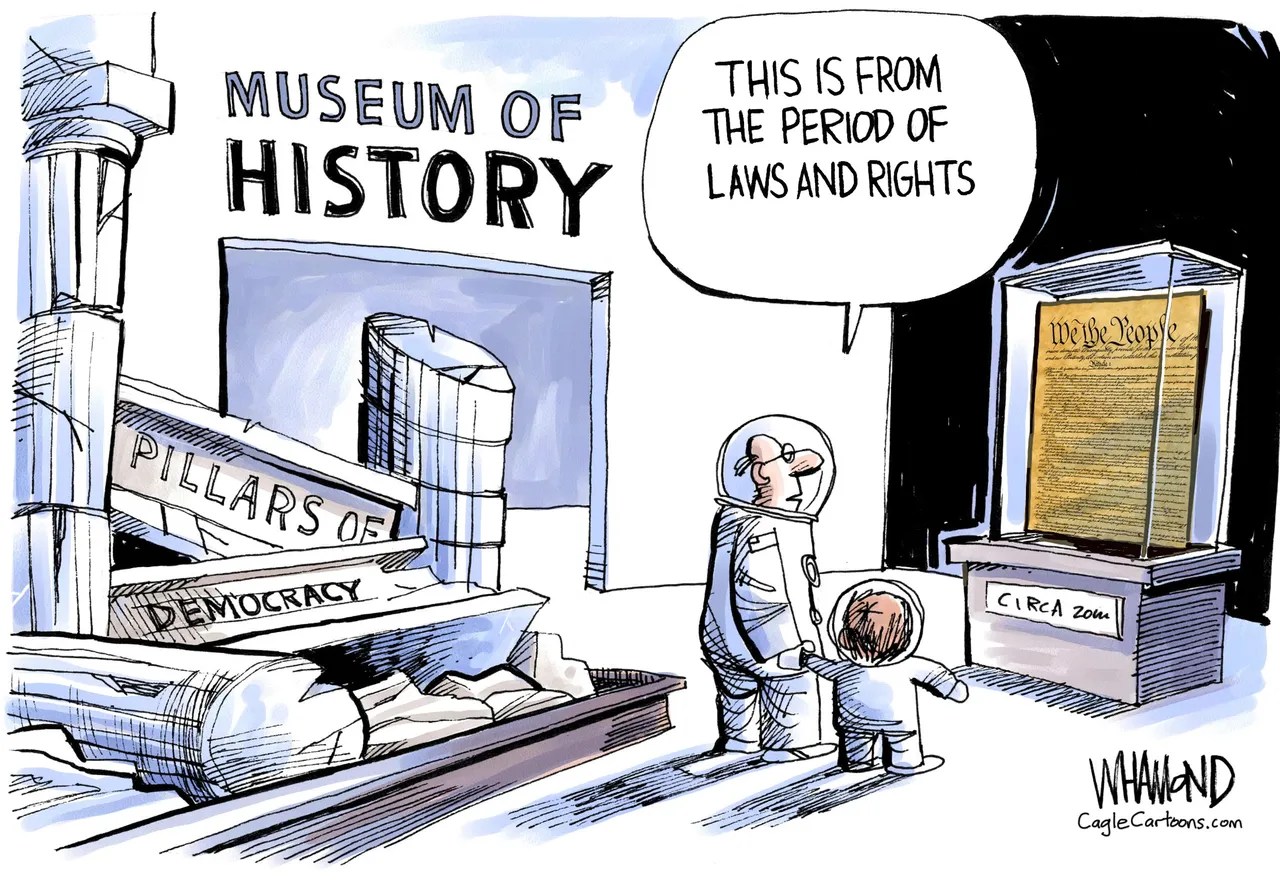
Thanks, Carl, for reading, and for writing! And yep, I’m a fun person, as long as I’m not dealing with trolls and other assholes. (I’m sure you’re neither.) It would take a lot more space (and time) than I have to enumerate those rights, but I’ll share some of the more pressing ones here. I apologize to those readers who’d prefer no politics from me (I’m with you!), but we’re living in extraordinary times.
Recall if you will that I’m a longtime independent, never having been a member of any political party, and my beliefs are all over the map, though I’m conservative on most fiscal issues and liberal on most social issues. I scoff at culture wars since they usually seem ginned up to take voters’ eyes off other matters. However, the culture wars this time around are bearing teeth (which means we have to be even more aware of what they may be diverting our attention from).
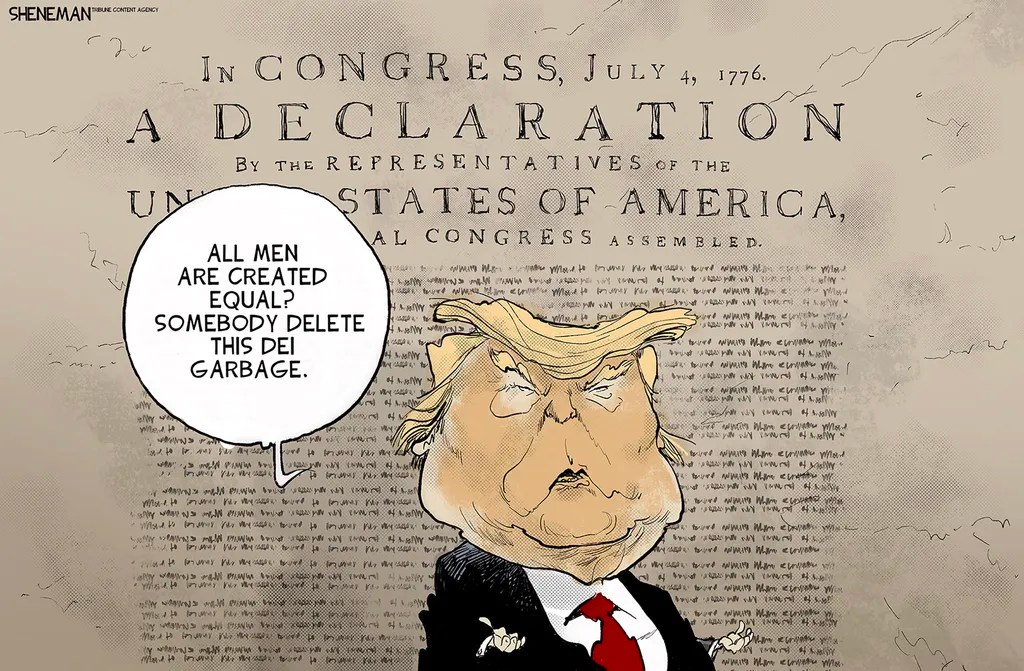
Attacks on diversity, equity and inclusion (DEI) affect more than just women and people of color, but also those with disabilities. DEI, despite the propaganda that’s spread about it, isn’t reverse discrimination, and isn’t about hiring an unqualified (be that a woman, a person of color, LGBTQ+, disabled or whatever) person over a qualified white man. It’s about ensuring that all people with similar qualifications, regardless of their sex, gender, sexual orientation, race, religion and other categories, have equal opportunity. (I would make a joke about Bubba next door, but I think he’s just been nominated to a Cabinet-level position. The current Cabinet is most definitely not stacked with meritorious individuals.)
It’s about recognizing that some communities have historically faced institutional barriers (racial redlining originating in the 1920s and 1930s, financial services denied for many women until the 1970s, etc.) that kept them from accessing resources and services, and from full participation in their communities. And it’s about recognizing that not everyone is able-bodied, but that doesn’t mean they can’t do many of the same things, maybe even better, that able-bodied people can, so accommodations should be made so they can participate (wheelchair accessibility, for one thing).
Let’s not even get into how many states and the federal government are trying to whitewash history being taught in schools … because it will really piss me off and I’ll never finish this post (but of course, white men are completely blameless in that women, the LGBTQ+ community and people of color have had to fight for what they should have already been afforded on the basis of being citizens, right, so there’s no need to learn about things like Black Wall Street, redlining, women’s suffrage, discriminatory educational and systemic barriers, etc.).
While no federal laws have changed yet regarding DEI, state lawmakers across the nation have introduced more than 106 anti-DEI bills since the Supreme Court’s affirmative action ruling in 2023, according to the American Civil Liberties Union. And executive orders from the president have taken aim at DEI initiatives and civil rights protections. We still have decades of legal precedent, but in this new atmosphere, nothing is assured.
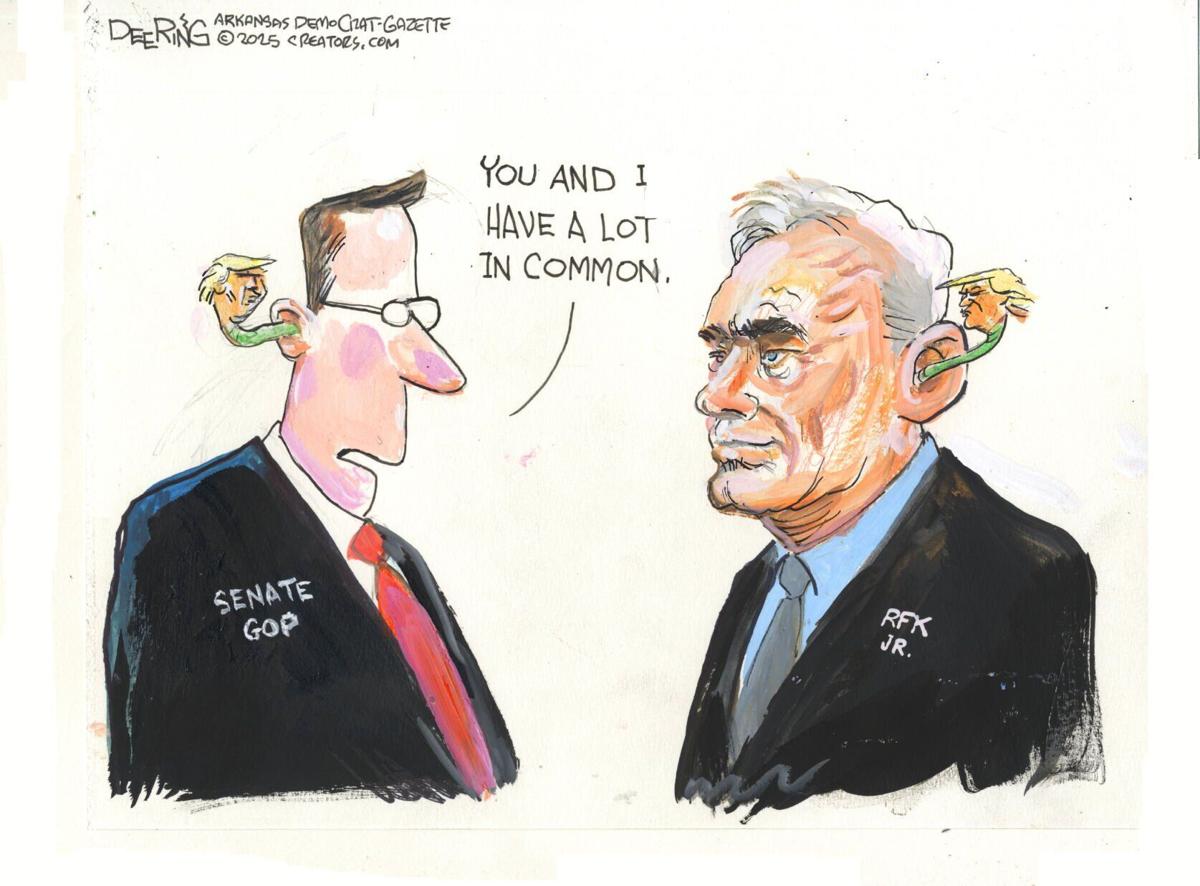
The Civil Rights Act of 1964, Title IX, Americans with Disabilities Act and other anti-discrimination laws are the legal foundation of DEI. If they are cut down, we’ll all be affected, whether you think you will or not.
That means that sometime in the near future, building codes may no longer require accessibility; so long, curb cuts, wider doors and halls, and ramps in public buildings. Already, Texas v. Becerra threatens 504 plans for students with disabilities.
It also means that lesser-qualified people will again be given job preference because they’re white, likely male, Christian and straight if the more-qualified people aren’t (if lesser-qualified people are hired, how is that merit?). It means that the chance to serve in the military or in other security roles will be denied to those who are qualified (even over-qualified) but excluded because of factors such as gender or sexual orientation.
That’s the broad picture since DEI touches on so many things related to marginalized communities, but there are other specific threats (and more than I’ll get into here).
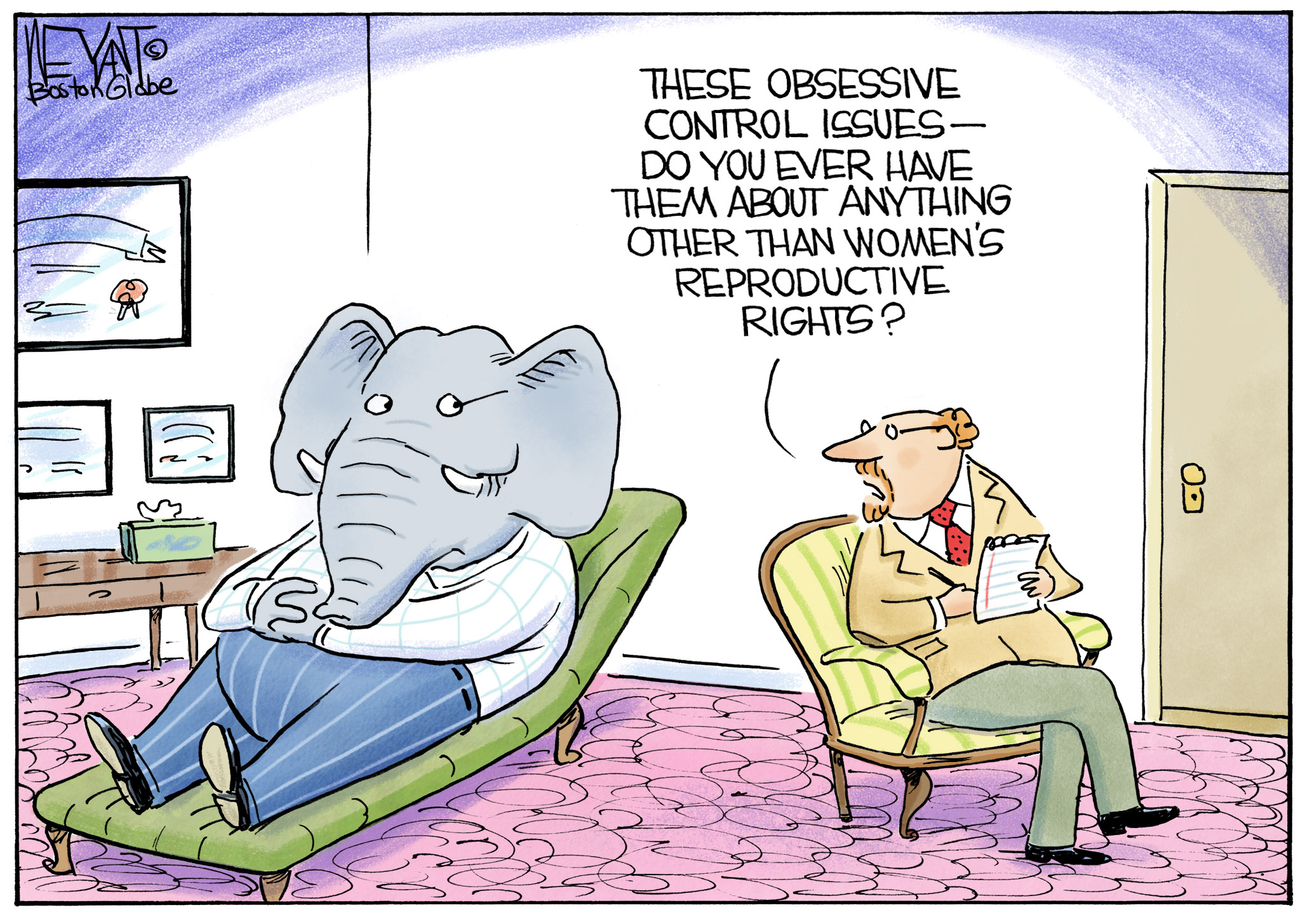
Women in many states have little say in their reproductive choices, especially as so many legislators (mostly men) have decided medical knowledge is less important than misleading narratives about women and pregnancy, making doctors afraid to do their jobs in states with strenuous abortion bans (as of November, at least three Texas women had died, attributed to delays in miscarriage care, and two more in Georgia, according to the Texas Tribune and ProPublica).
Under the guise of protecting women, trans women (though generally not trans men) are under attack, with bathroom bills again gaining steam (despite the lack of reliable data supporting the claim that trans women pose a threat to cisgender women in single-sex spaces; transgender people are more likely to be victims of violence than perpetrators), and gender-affirming care in danger, all on the basis that some people think transitioning is something done on a lark rather than after years of therapy and preparation (and if you really think gender-affirming therapy is just for transgender people, c’mon …). Additionally, reports are emerging that cisgender women who don’t meet certain feminine ideals have begun to be targeted (if you’re really tall or androgynous, you may be accosted/accused of being trans/fired).
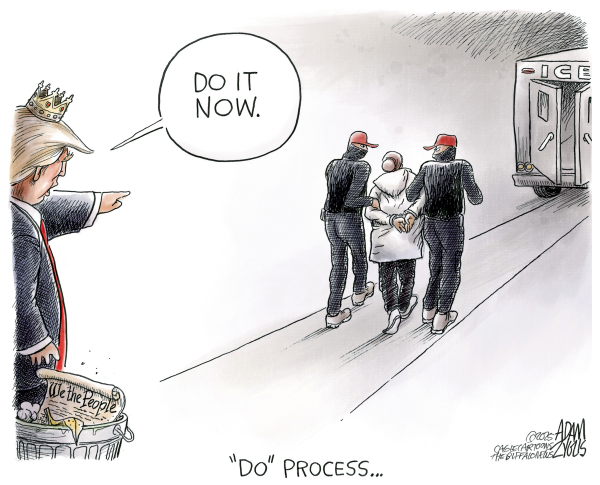
And while everyone should want the deportation of criminal aliens, deporting legal immigrants with no criminal records who’ve worked within the system for decades deportation protection orders, or those who have tattoos unrelated to gang activity, should give one pause.
Pausing for thought would be a good thing where much of this is concerned. It’s a lot easier and cheaper in the long run to do things right than to just do them quickly, especially if the logic doesn’t hold water.
Or we can keep putting unqualified people in charge of things that will ultimately cost us thousands of jobs, trillions of taxpayer dollars, and quite possibly many innocent lives. I mean, it’s working out well so far, right?

 Serenity is a fuzzy belly
I like the description of the Trump DEI is DonJr, Eric, and Ivanka.
And your saying you belong to no political party brings to mind the great Groucho Marx comment: “I wouldn’t want to belong to a club that would have me as a member.”
LikeLiked by 3 people
You make me recall Will Rogers comment on that, “I’m not a member of any organized political party, I’m a Democrat.” That’s never been more true than now, eh?
LikeLiked by 2 people
Where does Boo shop for those hip-hugger boots?
LikeLiked by 2 people
CatPants, I believe. 🤣
LikeLiked by 1 person
I am glad to read that your arm is healing and getting better.
LikeLiked by 1 person
Brenda this is your blog and you should be able to post whatever you want to say about any subject even including politics.
LikeLiked by 1 person
Would someone whose first name is “Merit” be a good example of a MERITorious person? Yes I did have the pleasure of working with a future doctor-in-training at my job at a hospital whose first name was “Merit”.
LikeLike
One of the nurses whom I work with is deaf and must wear hearing aids at work. The hospital where we work issued this woman a special telephone with an attachment similar to her hearing aids so she can call people and talk on her iPhone just like people who are not deaf. Since this woman is smart and a good worker, we are glad the hospital hired her.
LikeLiked by 1 person
As I have said before, there is always going to be “Diversity”. You cannot legislate it out of existence.
LikeLike
Instead of putting unqualified people in charge of various government departments, maybe we should put our pets such as Boo the Warehouse Cat or dogs in charge? I am sure that a certain Golden Retriever who lived with me until he died a few years ago would do a better job than some of the sorry excuses for human beings who have mistakenly been put in charge.
LikeLike