
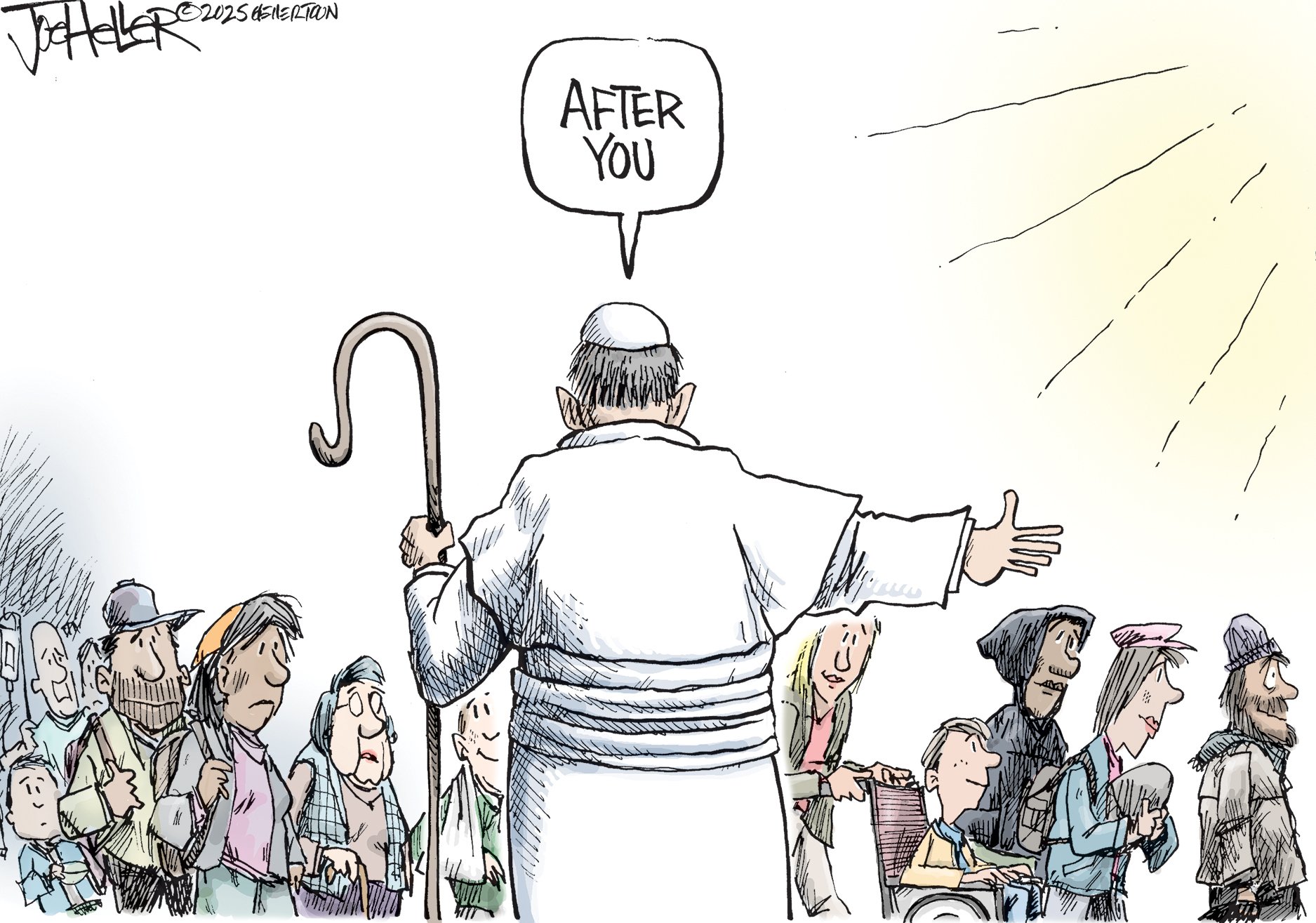
It’s been an eventful few days, with Easter (spent with friends again amid the threat of severe storms), the death of Pope Francis (rest in peace), Earth Day, and a lot of misleading statements about the case of Kilmar Abrego Garcia and his deportation to El Salvador, for which he had a court order protecting him from being sent (anywhere else, fine, but not El Salvador).
But that’s not what I want to talk about today, other than to remind that everyone in the United States, just by virtue of being on our soil, is entitled to due process, which Abrego Garcia nor any of the other recent deportees apparently received before their abrupt removal (if you want to deport someone who is a member of a terrorist group, you must prove membership in court first). Citizenship is not a prerequisite for such protection in a supposedly democratic society such as ours, and no amount of obfuscation will change that. It’s not the person who matters in cases like this (though Abrego Garcia’s MS-13 membership has never been proven), but the rule of law, and that means due process must be given, and on the present case (not cases in the past that are immaterial). Legal analyst and former U.S. attorney Joyce White Vance noted on her Substack “Civil Discourse”: “These cases are about making sure that, American citizen or not, criminal or not, peoples’ right to have the day in court that the Constitution guarantees them is honored. That’s all. But it’s everything.”
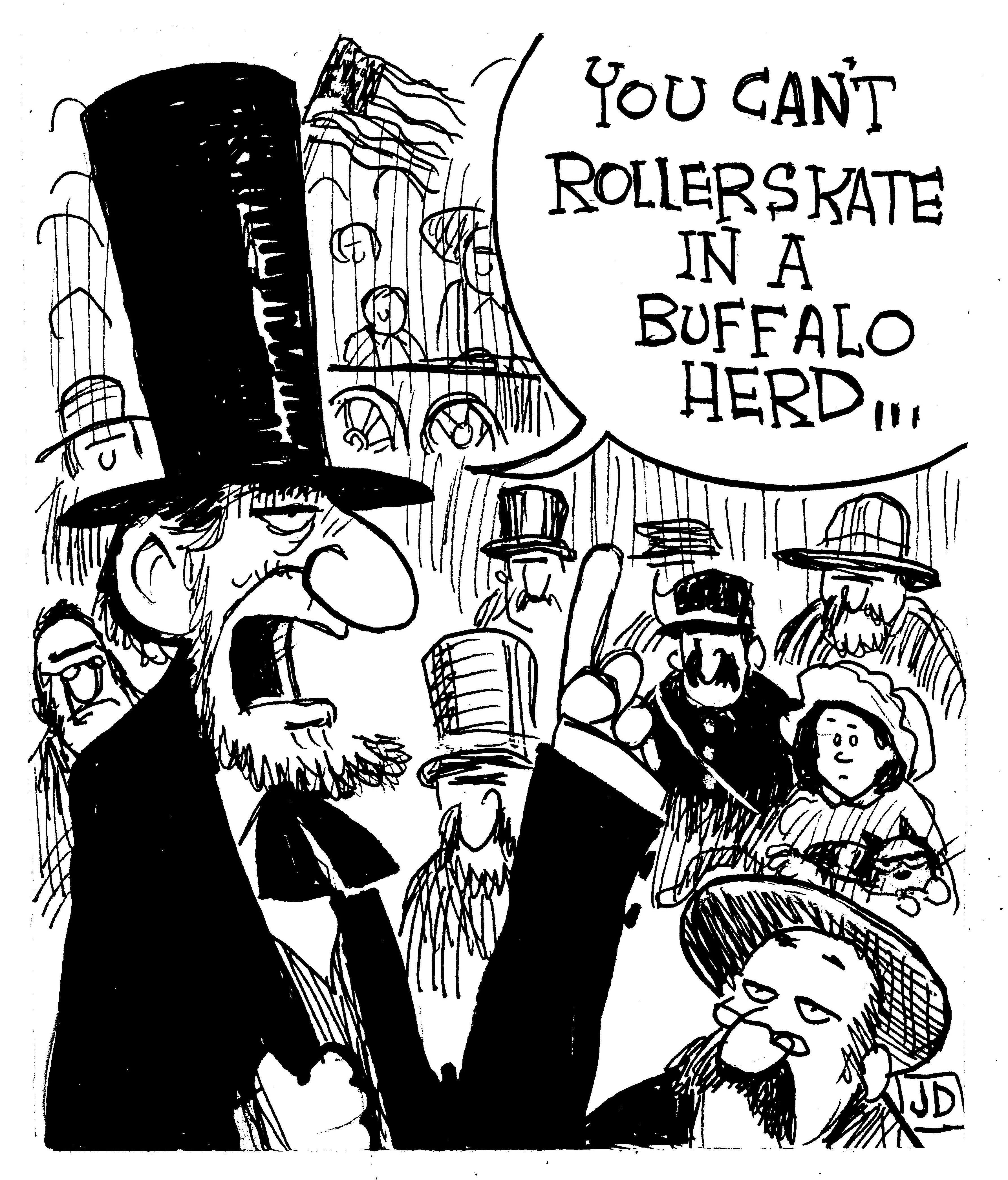
Instead, I want to talk about something I’ve held forth on many times before, but it bears repeating: Be very cautious of quotes that seem too perfect for your purposes.
To be fair, the quote in question at the moment—“John Marshall has made his decision, now let him enforce it.”—has been used in multiple news stories, analyses and opinion pieces comparing President Donald Trump’s actions regarding the Supreme Court’s order on Abrego Garcia and another president who defied a Supreme Court order, Andrew Jackson. However, the quote is likely apocryphal, having first appeared about 20 years after Jackson’s death. (Hey, Andrew, leave that speechifying-after-death thing to people like Abraham Lincoln, George Washington, Thomas Jefferson and Mark Twain!)
In the 1832 case of Worcester v. Georgia, Tim Alan Garrison of Portland State University wrote for the New Georgia Encyclopedia, Chief Justice Marshall “wrote that the Indian nations were ‘distinct, independent political communities retaining their original natural rights’ and that the United States had acknowledged as much in several treaties with the Cherokees. Although it had surrendered sovereign powers in those treaties with the United States, he wrote, the Cherokee Nation remained a separate, sovereign nation with a legitimate title to its national territory. Marshall harshly rebuked Georgia for its actions and declared that the Cherokees possessed the right to live free from the state’s trespasses.”
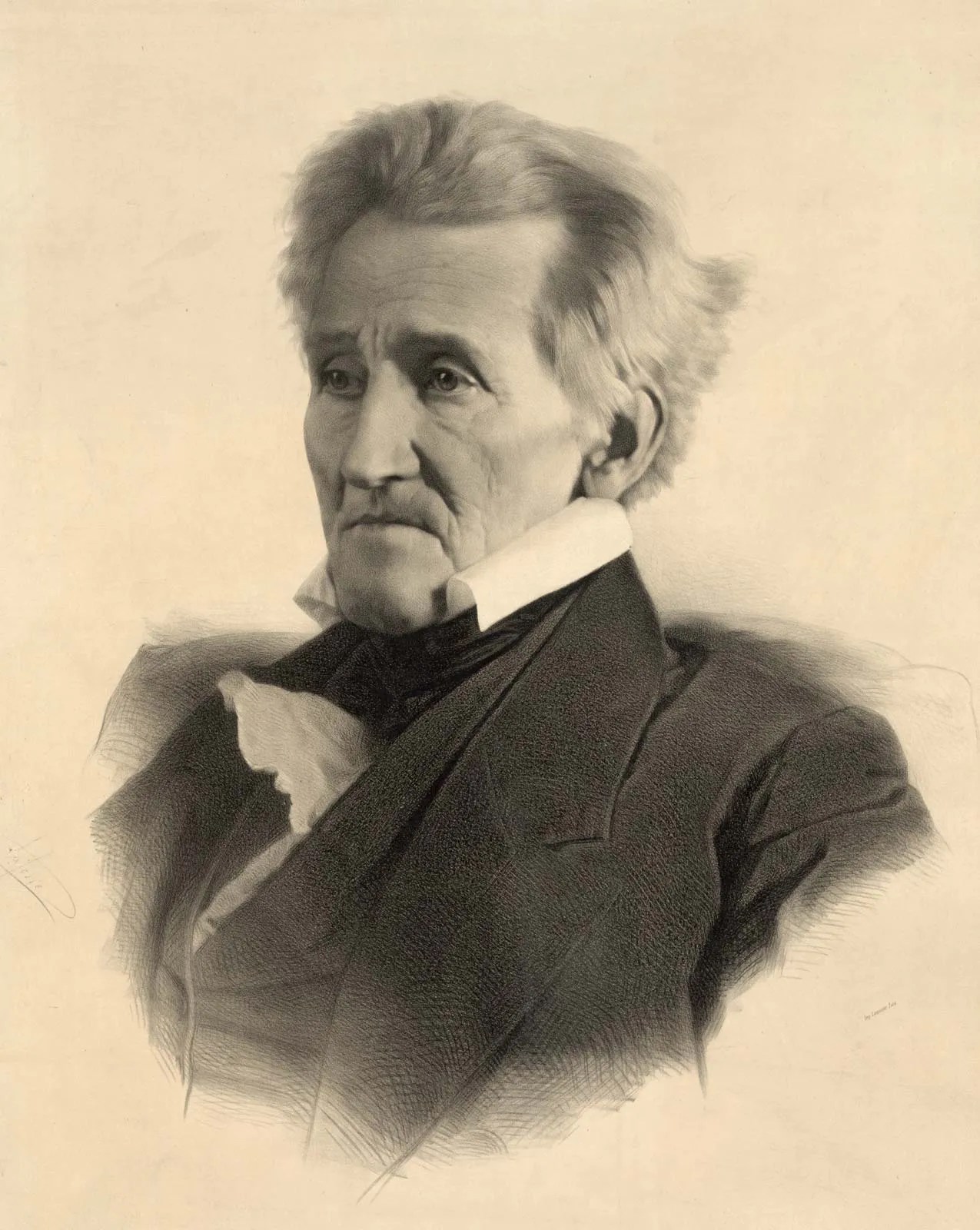
Georgia ignored the ruling, and Jackson didn’t enforce it, instead calling on the Cherokees to relocate or accede to Georgia’s rules. The Presidential History Blog wrote in September 2023: “According to historian Robert Remini, Jackson never said [the enforcement quote]. Remini notes that the quote first appeared in Horace Greeley’s ‘The American Conflict’ in 1864. The quote probably comes from something Jackson wrote about the case in a letter to John Coffee: ‘The decision of the Supreme Court has fell still born, and they find that they cannot coerce Georgia to yield to its mandate.’ The federal government was not a party to the suit and so there was no order for Jackson to enforce. The court did not ask federal marshals to carry out the decision.”
Of course, that also brings up the separation of powers and checks and balances that are vital to the workings of our government, created so that no one part of the government could become too powerful. Each branch—executive, legislative and judicial—has its own duties (executive enforces laws, legislative makes laws, judicial interprets laws), and each acts as a check on the other two co-equal branches. Ignoring rulings made by federal courts including the Supreme Court is folly; allowing and even cheering on a president to break the law simply because he doesn’t agree with it doesn’t bode well for the future of our nation.

Legal scholar Steve Vladeck wrote last month on his Substack “One First”: “This quip is hauled out whenever someone wants to suggest that presidents have previously defied Supreme Court rulings. But … it is almost certainly apocryphal. The apocrypha claim is based not only on the absence of any contemporaneous record of Jackson saying it, but on the fact that, with a proper understanding of what the Supreme Court did in the Worcester case, it wouldn’t have made any sense; neither Jackson nor the federal government were parties to the dispute—which was about the validity of a Georgia criminal statute.
“Jackson was certainly one of the players in the broader context surrounding the Worcester decision. And in an April 1832 letter to his close friend John Coffee, he wrote about the difficulty the Court’s decision in Worcester had encountered on remand. But attempts to hold Worcester out as an example of presidential defiance of the Supreme Court can’t be reconciled with either the historical record or common sense.”
Wait a minute … is he suggesting that context, logic and a modicum of knowledge of the law are important? Next he’ll be saying that Abraham Lincoln didn’t say that thing about quotes on the Internet. For shame!
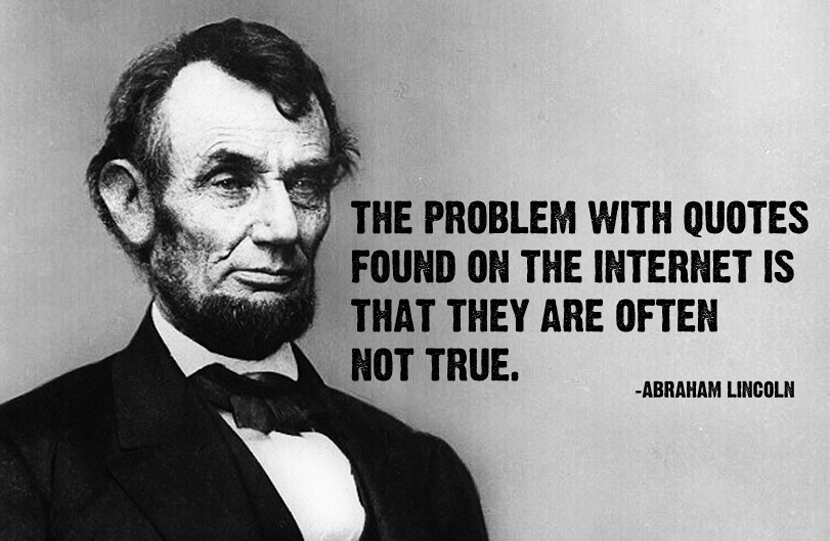
So what happens if you use an apocryphal quote in a letter or op-ed? If you acknowledge its provenance, probably nothing as long as it’s relevant to the subject. If not, it will be edited out as long as the entire piece is not predicated on it (in that case, the whole thing will be tossed).
Research is your friend, even when it’s a hard slog, and it makes you a more credible voice. I know … credibility … whoda thunk it? You might find out that not only what you were told Alexander Hamilton said in The Federalist Papers wasn’t what he said (yes, the same person who offered the spurious Jackson quote also said Hamilton said courts could be defunded or ignored), but that the Constitution protects more than citizens in the U.S.
Plus it makes you a lot less likely to be smacked upside the head by the ghost of a dead politician/public figure who’s tired of people putting words in their mouth.
Let me tell you: Thomas Jefferson is not amused.
 Serenity is a fuzzy belly
Imagine how Republicans in Congress would have reacted if President Biden had done any of the stupid and illegal things Trump has done. I’m certain that even Democrats in Congress would have objected. It is way past time to throw him out. Then insist that Vance obey the law.
LikeLiked by 2 people
I was working on Easter Sunday. When we heard that there was a Tornado Warning, we had to move all of our patients out into the hall away from the windows. And then move the patients back in after the Warning expired.
LikeLiked by 1 person
“Checks and balances.” How quaint. Once upon a time I believed those things existed. Obviously the current administration does not.
LikeLiked by 2 people
What we now have is government by impulse. Even as I write this, the NYSE is swooning over reports the Greatest One is reconsidering his tariff decisions (I won’t call them policy, that word is reserved for something with permanence.) No progress can be made under this condition.
LikeLiked by 2 people
When the Pope was sick and in the hospital earlier this year, I made the mistake of asking my infamous former sister-in-law if she was praying for him. She said no he is the leader of a false religion and she was not going to pray for him because he is not a Christian. Now that he is dead, she probably believes that he didn’t go to Heaven because he was not “Saved” and rescued from his false religion before he died. Like too many other people, she believes that our current Fearful And Faithless Leader in the White House is the Messiah who will lead the United States to the Promised Land. So far as she is concerned, this “Fearless Leader” has a perfect right to break the laws and not follow the law because they are the laws of man and not the laws of God which are in her version of the Bible. She is one of these people who mistakenly believes that the United States was originally intended to be a so-called “Christian Nation”.
LikeLiked by 1 person
Earth Day was my third and youngest sister’s birthday. Yes I did wish her Happy Birthday.
LikeLiked by 1 person
Our current Fearful And Faithless Leader’s behavior reminds me of a song by the late John Mose Allison, Jr.: “Your Mind Is On Vacation While Your Mouth Is Working Overtime”.
LikeLike