
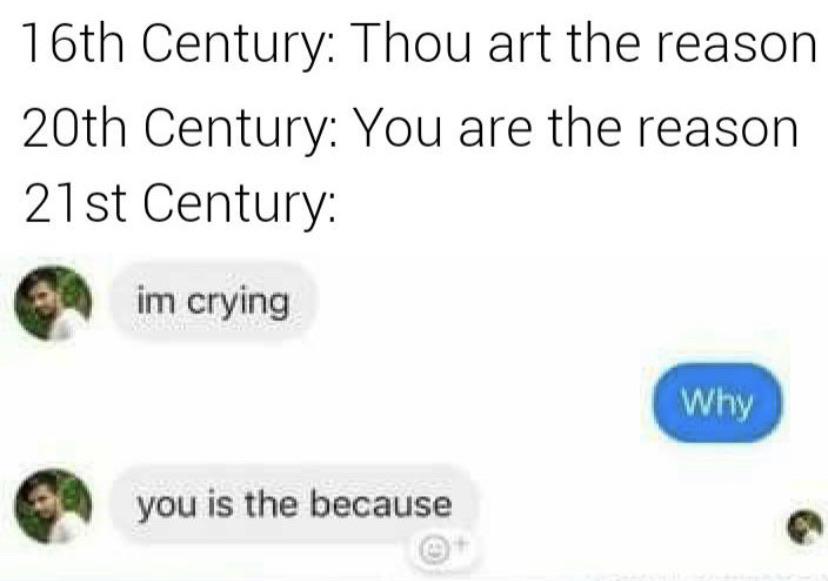
Language, as I’ve often written, evolves over time. It’s mostly a natural process, and dictionaries record those changes once they become significant enough. It happens a little more often now than it used to since Internet editions are much easier to update, but it still only happens after much deliberation and evidence of a shift in meaning. (There’s the occasional time when events appear to show a sudden change in the definition, but that’s not often since there’s a whole collection of examples that are used by linguists to determine if a change is merited. Remember also that dictionaries are descriptive rather than prescriptive; they record how words are used, not how they should be used. Linguists and grammarians are not necessarily the same thing.)
I don’t have a problem with the evolution of language. Recall that the meanings for “awesome” and “terrific,” for example, are much-changed from their original meanings (awesome once meant terror, dread, or awe; terrific originally meant causing terror or frightening).
What I do have a problem with is trying to force a change of meaning for ideological purposes.
Make no mistake; parties across the spectrum are guilty of this. George Orwell, in his 1946 essay “Politics and the English Language,” wrote, “Political language—and with variations this is true of all political parties, from Conservatives to Anarchists—is designed to make lies sound truthful and murder respectable, and to give an appearance of solidity to pure wind.”
Spencer Klavan wrote in the essay “Why Tyrants Redefine Words” in the Claremont Institute’s American Mind in December 2019: “There is a reason why those who lust after power set about redefining, rather than simply eschewing, the words which properly belong to free men and women. It is because concepts like ‘democracy’ and ‘liberty,’ if rightly used, command a reverence that arises naturally from their true meanings. Freedom and popular sovereignty are self-evidently good and noble things, triumphs of the human spirit which socialism seeks to crush. Since totalitarians cannot produce such triumphs, they must ape them, using the cover of falsely redefined words to lend themselves an air of undeserved gravity. If this has not started to sound to you like the identitarian left, you are not paying close enough attention.”
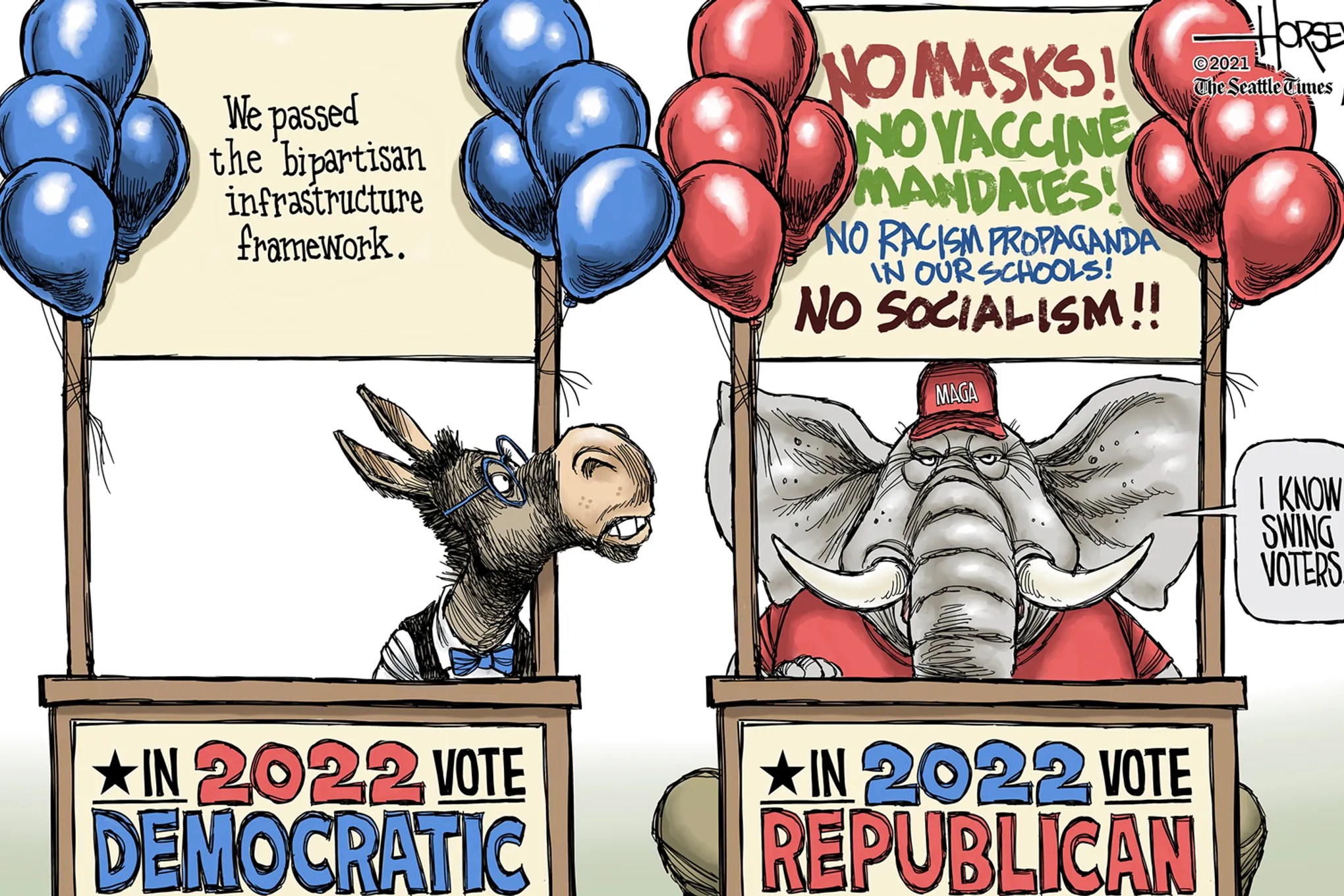
Perhaps, but I’d argue that the modern right (not so much the old-school Republicans whose party left them behind, but the MAGA ones, many of whom call themselves conservative without even a hint of irony) has been far more successful at redefining words for their purposes. None have been quite so successful as conservative activist Christopher Rufo.
Rufo is most famous for shifting the conversation around critical race theory, which few likely recall is a framework developed by legal scholars in the 1970s and ’80s to examine how race and racism shaped public policy (such as redlining), and as an academic study is generally confined to college sociology and law students.
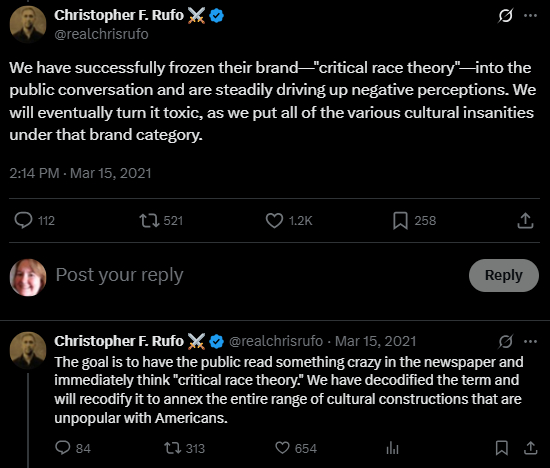
Rufo, though, so broadened the topic that basically anything he doesn’t like qualifies, crowing on X/Twitter in March 2021, “We have successfully frozen their brand—‘critical race theory’—into the public conversation and are steadily driving up negative perceptions. We will eventually turn it toxic, as we put all of the various cultural insanities under that brand category. The goal is to have the public read something crazy in the newspaper and immediately think ‘critical race theory.’ We have decodified the term and will recodify it to annex the entire range of cultural constructions that are unpopular with Americans.”
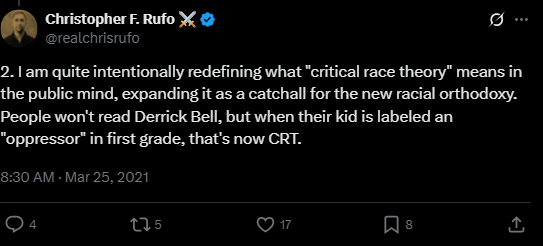
Later that same month, he tweeted: “I am quite intentionally redefining what “critical race theory” means in the public mind, expanding it as a catchall for the new racial orthodoxy. People won’t read Derrick Bell, but when their kid is labeled an ‘oppressor’ in first grade, that’s now CRT.”
There is little doubt that Rufo succeeded in his intention, as even the mention of CRT is enough to start eyes rolling at the idea that anyone takes it seriously anymore. More’s the pity, as it is a worthy academic endeavor to study the things that marginalized parts of our population to make sure they don’t happen again. Rufo’s now carrying water for Ron DeSantis in his fight against “woke” universities.
The same has been done for terms like “diversity, equity and inclusion” (usually referred to as DEI so as to not have to say what part they disagree with), with the slur “DEI hire” meant to imply, apparently, that anyone other than a white male is likely unqualified. DEI programs instead aim to level the playing field for all qualified applicants, basing decisions on actual merit. (I’m a fan of the idea of blind recruitment, as it puts the emphasis on qualifications.)
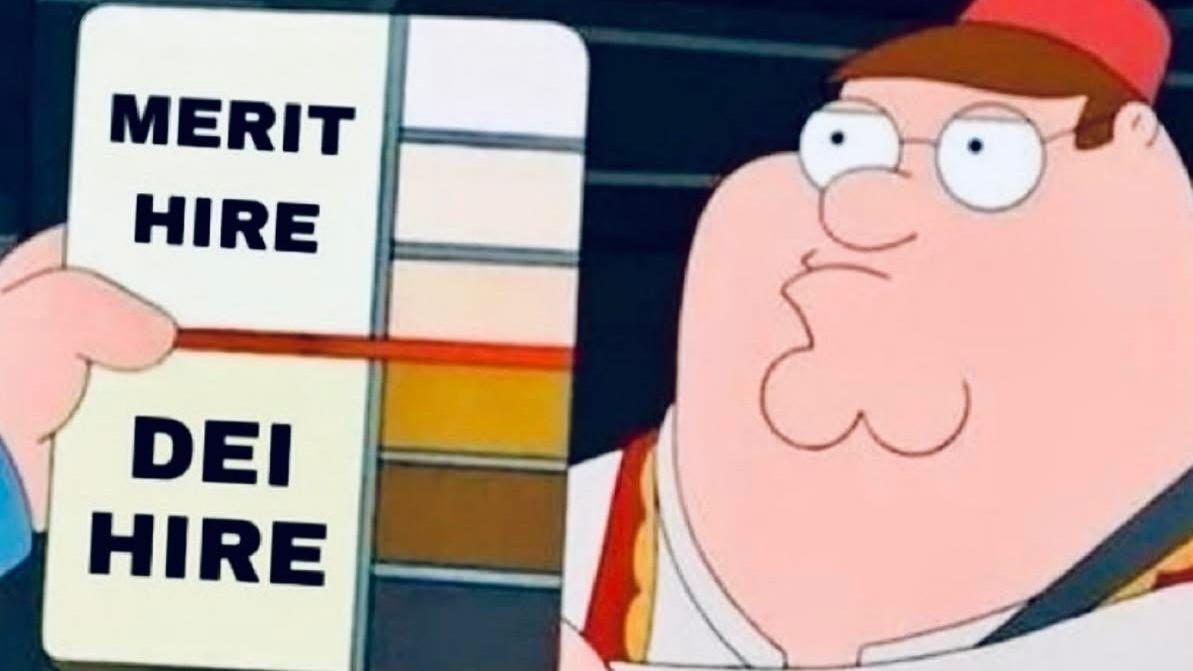
In December in The Antagonist, Arturo Dominguez wrote of DEI, which applies not only to ethnic and religious minorities and women, but to a whole range of people, and not just in hiring, “It’s meant to play on an individual’s strengths rather than focus on their weaknesses. This does not mean hiring people who are unqualified based on race … . For example, if you have seniors in your workforce, you focus their employment on what they can do rather than what they cannot do physically. The idea of DEI was about creating a more inclusive and just society.”
Of course there are those who proudly deem people like Kamala Harris and others as “DEI hires” on the basis of what one columnist likes to call “pigment and plumbing.” 🙄
When you’re part of a population that historically has been discriminated against, it’s easy to see why such efforts are needed. If you’ve never had to face such discrimination, it’s easy to dismiss and mock the need.
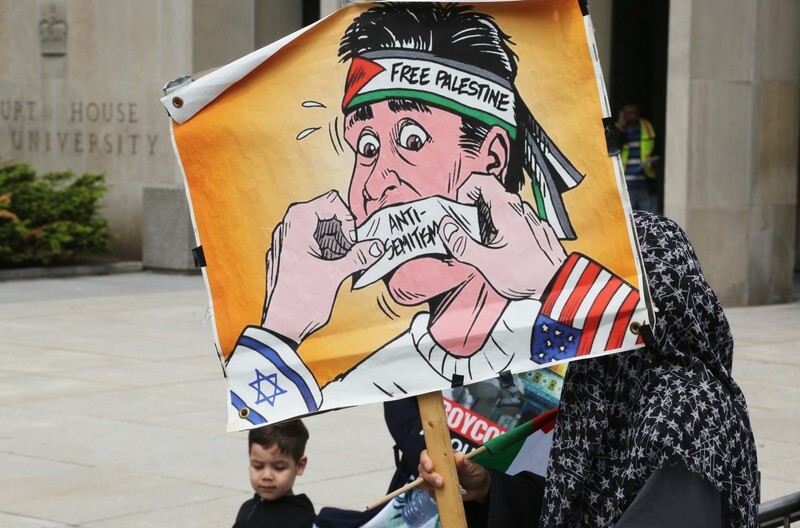
Even words like antisemitism (hostility, prejudice or discrimination against Jews), which you wouldn’t think could be twisted has now come to mean for certain people animus toward the nation/leaders of Israel. One can be against the actions of Benjamin Netanyahu and the military leaders who carry out his orders in Gaza and still not be antisemitic. You can also support the people of Palestine without supporting Hamas (and thus not be antisemitic). We live in a world that is full of shades of gray.
Ebenezer Baldwin Bowles commented on my blog post last week: “The word that comes to mind is “Sanctuary,” as in a monastery is a sanctuary for the weary and the oppressed, while “Sanctuary City” is a derogatory dismissal of legitimacy—as well as a threat from D.C. to do wrong to the evil sanctuary metropolis … threat, of course, from the nutheads on the right side of present ideological jargon.
“Personally, we all need a bit of sanctuary now ‘n’ then.”

Ebenezer’s right, of course, as sanctuary has a typically positive connotation (I often find sanctuary in the company of cats, friends, and/or “Doctor Who” episodes) that allows you to rest and refresh yourself for whatever lies ahead. The derogatory use of the term “sanctuary city” is meant to imply lawlessness, when that’s not really the case; a 2017 study by University of New Mexico political science professor Loren Collingwood found no correlation between sanctuary policies and crime. A 2022 study by Marta Ascherio found that property and violent crime rates actually decreased in sanctuary cities versus non-sanctuary cities. She wrote: “I theorize that this occurs because sanctuary practices encourage immigrant political integration, have positive spillover effects to non-immigrant Latinx communities, and increase social harmony.” [her emphasis]
Because those cities are taking “sanctuary” at its nonpoliticized meaning, perhaps, and placing emphasis in policing not on federal matters (which immigration is) but on local crime? I mean …
Klavan included his translation of a passage from Thucydides’ “History of the Peloponnesian War” in his piece for American Mind: “They even changed the agreed-upon meanings of words to the opposite of the right ones. Rash impudence was called ‘courageous loyalty’; careful deliberation, ‘specious cowardice’… . Getting revenge was considered better than never being wronged in the first place … . The cause of all this was hunger for power motivated by greed and ambition.”
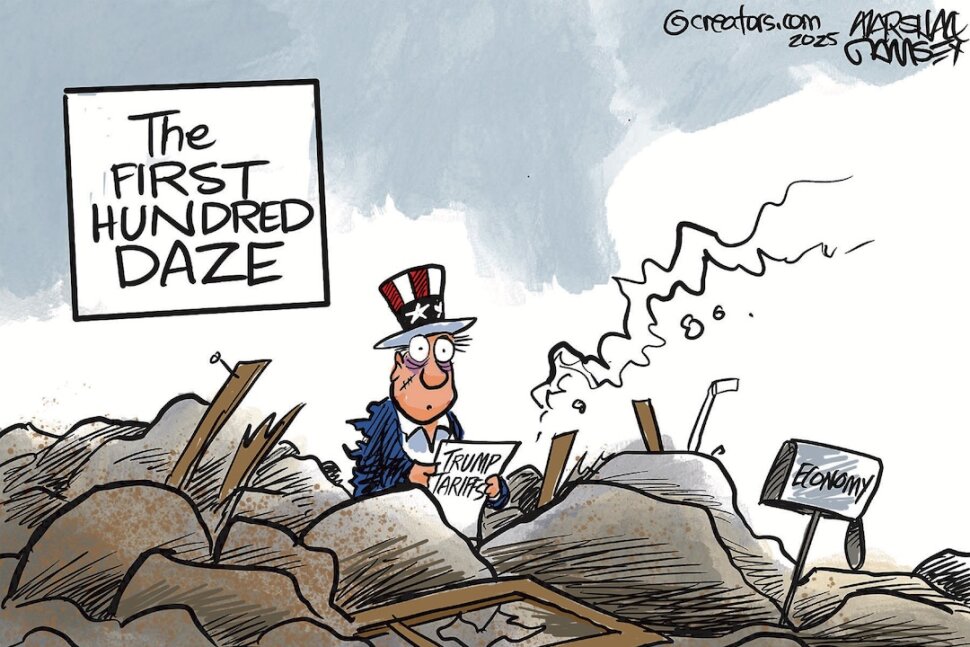
Ummmm … that actually sounds like a certain president in office right now.
Though Klavan intended to indict the left in his piece, it’s clear that redefining words for ideologies’ needs is common across the spectrum. In terms of logical fallacies, redefining words can make your position easier to defend (which is the coward’s way). And wherever the redefining originates, it should be resisted; if words mean different things for different parties, how are we ever expected to communicate?
Maybe that’s the point.

 Serenity is a fuzzy belly