

Man … can everybody just calm down? Sheesh.
And let’s do one more thing, m’kay? Don’t depend on social media for your news.
Social media blew up the whole Croissanterie thing into something political when it wasn’t really (and encouraged people who’ve never been to the restaurant or even live anywhere near here to leave scathing reviews; at least eat something there before you review, and please don’t bogart tables during the lunch rush). Comments on Facebook posts by the restaurant (not about the incident) and anyone reporting on it were crazed, with most of the commenters appearing to have never been there, basing their comments on hyperpartisan “news” online.
Good freakin’ lord.
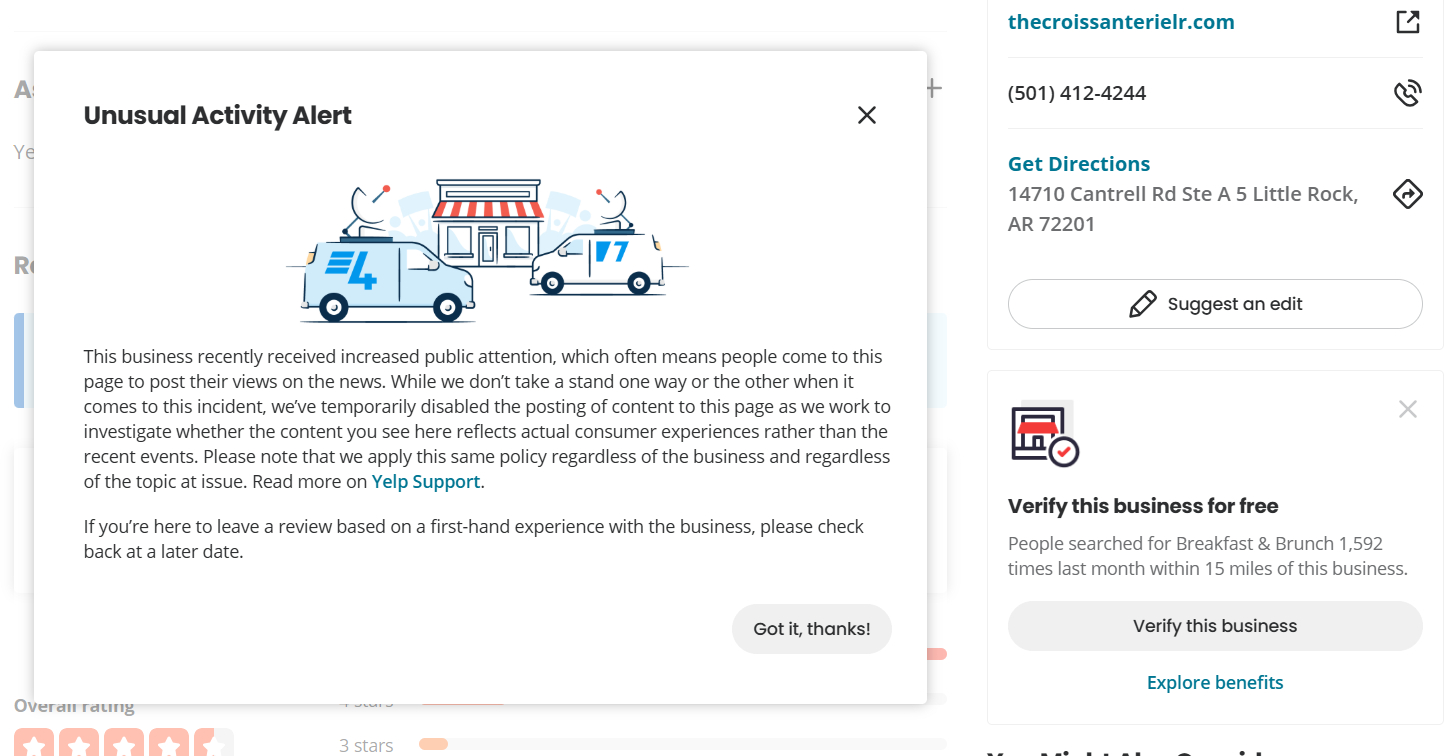
Social media, even in its relatively short history, has long spread misinformation about news events, vaccines, and any number of other things that can be inherently dangerous, which we saw as it was happening every day during the pandemic.
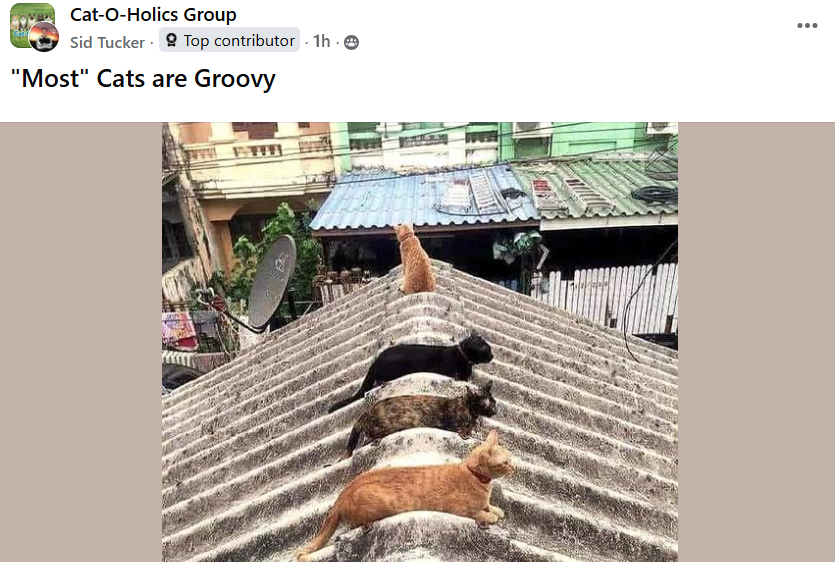
But social media isn’t all bad. It can bring the world together, which can be important when friends and family scatter around the globe (I have friends in many nations and across the country, especially from college and work, a bestie who just moved to another state 😭, and family scattered mostly in the Mid-South, but also in places like California). It can help a lot when crowdfunding is needed for medical or other reasons (too much in a wealthy nation, but that’s another story), or when you need to find a specific item or a missing person or pet. There are a lot of groups I belong to on Facebook and elsewhere that never fail to pick me up when I’m down, especially those related to the Internet’s greatest resource: adorable cats.
But I would never consider influencers or hyperpartisan sites to be good sources of news. So many health influencers endanger the lives of their followers with “facts” that medical science has proved are not factual (if you must follow health influencers, you’re much better off following actual doctors, nutritionists, and the like rather than those selling supplements, promoting extreme diets or fearmongering). Hyperpartisan sites across the spectrum create their own heroes and villains, usually by omitting parts of the story and sometimes just making things up. Add that to the unfortunate tendency of some people to read things into situations/stories/columns/blog posts/etc. that just aren’t there, and you get an awful lot of people with rage bubbling out all over. (Two of the worst cases I encountered last week of people reading things into statements involving The Croissanterie that weren’t there were lawyers, one of whom I know personally, which worries me greatly.)
Who would I trust? Actual news reporters and organizations that check their facts before going live, the better to prevent legal action and/or harassment (it can take time for the full story to emerge, and mistakes are still made, but responsible outlets/reporters make it right as soon as possible). I say that because it’s happened before in cases of crowdsourcing police searches for suspects (not really a good idea, especially if the people searching are like me and tend to get a bit obsessive), as in the Boston Marathon Bombing. Student Sunil Tripathi, who disappeared March 16, 2013, was falsely accused of the crime on a subreddit about the bombing after the FBI published photos of the suspects, and people began harassing his family. Tripathi, however, apparently committed suicide by drowning the same day he disappeared, which obviously meant he couldn’t have done the bombing on April 15; his decomposed body was found April 23.

Better media literacy would definitely help keep things on a more even keel, but it seems it may be a tall order in the current atmosphere. Still, a few tips:
🤬 Be wary of coverage from blatantly partisan outlets. The Daily Wire (run by conservative pundit Ben Shapiro) was one of the first outlets to pick up the Sanders story (non-story, more like, but in a 24/7/365 environment, well …), and the governor’s social media post included the story, which had the lede, “It’s the Red Hen all over again,” alluding to the 2018 incident where she was asked to leave that restaurant. Ignore that the situations aren’t the same (and to those crowing that the Red Hen went out of business, not quite; the owners closed that restaurant in 2023 and launched a new successful restaurant in the same location in 2024); the governor and her party finished their lunch, had paid, and were chatting at two tables during lunch rush in a small restaurant that depends on being able to flip tables for new customers, and that in fact posts a 90-minute limit at each table. It didn’t help that one employee posted a message to her days later on social media, which some are using as proof that it was political (they’re also twisting what the owners said in their statement after the story became public, likely because of, I believe, a member of the governor’s staff tipping off Shapiro’s site, which was what the owners were responding to, such as the claim that people felt “threatened”).
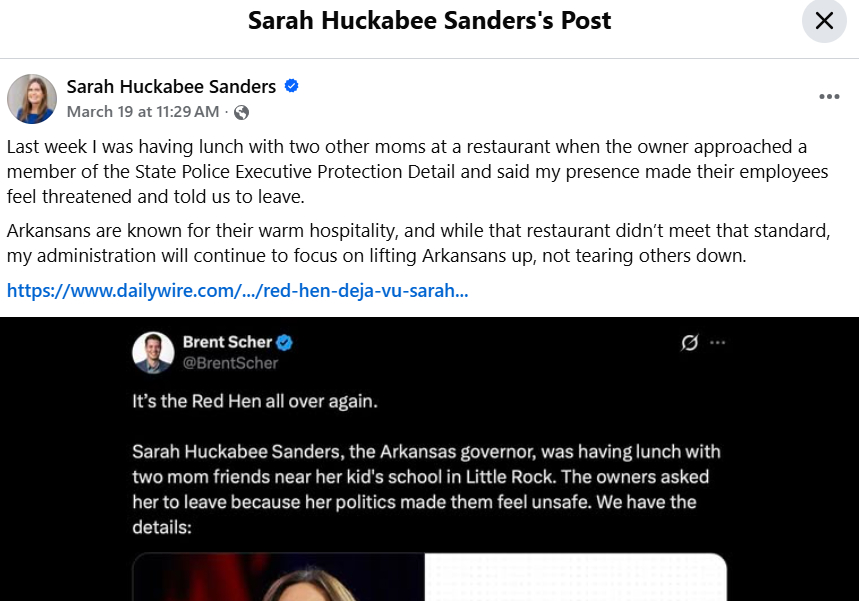
What matters is that stories like this make small-business owners the villains and harbingers of evil. Painting one side as good and the other as evil is part of what got us into this mess we’re in now. If the framing feels like an “us versus them” narrative, you might want to look elsewhere. And if the timing seems more than a little coincidental (in this case, the governor is running for re-election, and has a new book coming out in the fall), don’t be afraid to be skeptical, especially if the story is being most promoted by hyperpartisans.
✍️ If the writer’s opinion is in a news story, it’s not a news story. To be clear, including someone’s opinion (not that of the writer) does not negate the news value, as expert and witness statements are needed to put events in perspective, but the writer inserting his or her own opinion should only happen in opinion/analysis pieces, and be clearly marked as such. And stop expecting EVERYTHING to be in a news story (or column), because not everything is relevant (the people complaining about this have the tendency to have never written and/or edited for a living). While some publications are digital-only, many are hybrids and still operate on the concept of news holes, meaning that there’s a certain amount of space that we fill. No one really wants to read a wall of text. They want the story told as completely as possible, with context, and in an engaging way. Not everyone is capable of working in journalism, but good lord, does everyone have an opinion on it.
📱 Coming back to my initial point: Don’t depend on social media for news. While people do share actual fact-checked news articles on social media, they also share hot takes, hyperpartisan caterwauling and straight-up mis/disinformation. Places like Democratic Underground, Daily Wire, Facebook and other sites are not known for straight news, and shouldn’t be your primary source.
If I’m looking for a quick pick-me-up for my mood, you might find me on social media in one of several Facebook groups, or on Threads, where we tend to pick each other up rather than put each other down. That’s a proper use of social media.
Stirring up rage based on misinformation, hyperpartisan rancor and PR spin … not so much. We have enough hostility in the world that’s usually based on not having the whole story.
Know where you can get the fuller story? Try newspapers, for one.
 Serenity is a fuzzy belly