
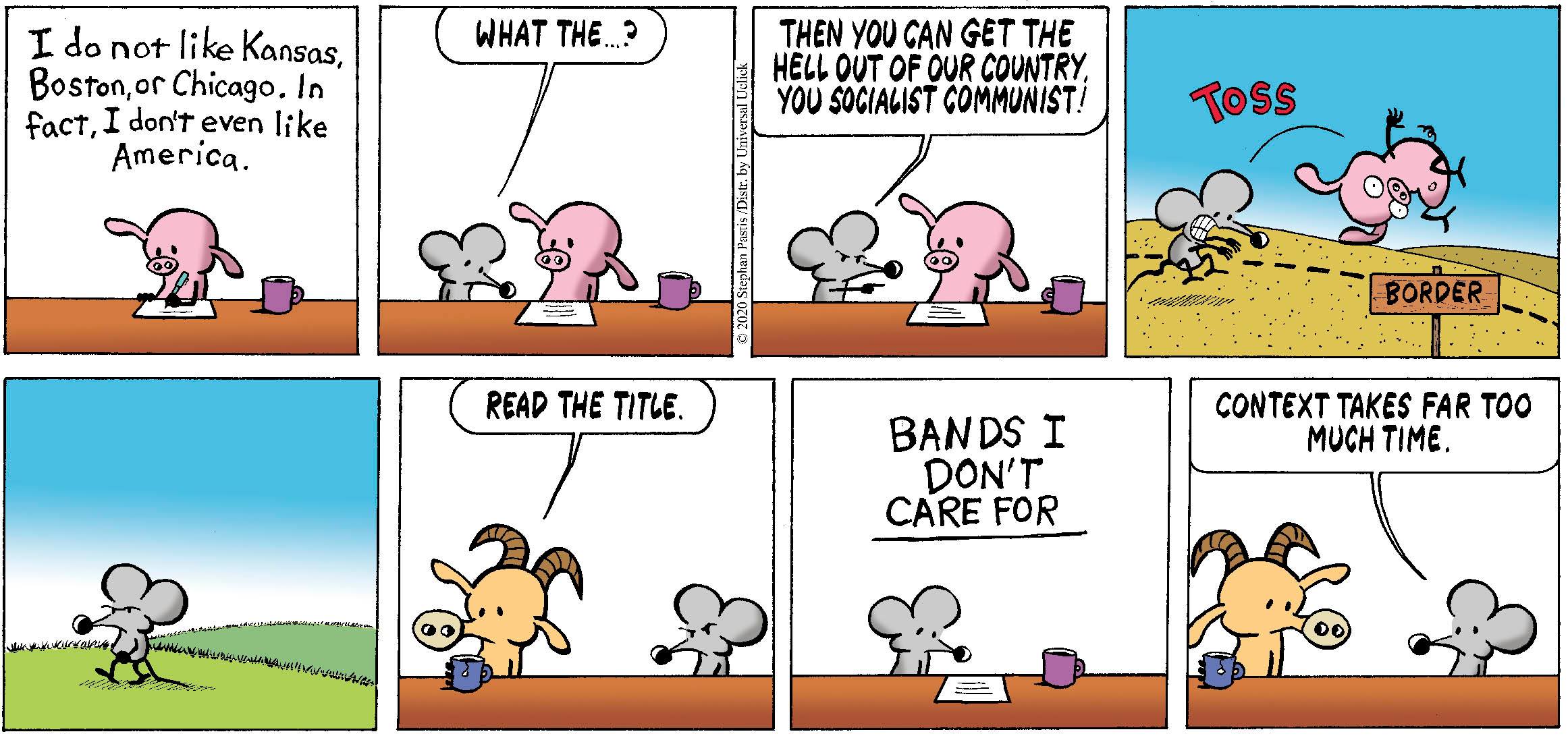
Those who know me well know I despise politics as practiced today, which is why I don’t identify with any party. A lot of that is because we were spoiled for riches, politics-wise, when I was a kid.
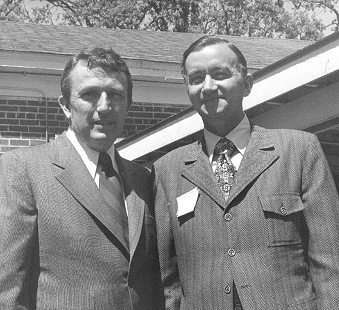
We still had some bad eggs, but we had far more actual public servants then who were willing and able to negotiate to get things done for the benefit of the most people. The first negative ad I remember, against John Paul Hammerschmidt, made me determined to ensure that my mom was voting for Hammerschmidt, who before he retired served 13 terms as Arkansas’ 3rd District U.S. representative. (That earworm will never leave my head, dang it, even though I’ve never been able to find an audio file of it. I was beginning to think I’d imagined it till I came across this blog post. Hammerschmidt was big on Arkansas 4-H, so there were a lot of us who really looked up to him.)
I needn’t have worried since she tended to base her votes on how incumbents had served their constituents in office (and Hammerschmidt was a hard worker for Arkansas), or new candidates based on their policy proposals. She paid attention.
Though she was a Democrat, it wasn’t until much later in her life that she would vote a straight Democratic ticket. The reason was simple: She couldn’t abide what the Republican Party had become (we can thank Donald Trump for turning her completely away from any Republican).
As a general rule, I don’t advocate voting a straight ticket because that implies you haven’t done the research needed to make an informed choice. I’d be lying, though, if I said it’s not sometimes necessary.
I understand the attraction for using political parties as a guideline for choosing candidates, but considering that most people are an amalgamation of beliefs that evolve over time, the idea that someone representing one party or another holds only those beliefs condoned by the party is ridiculous. I seriously doubt Hammerschmidt would have foreseen the day when his party was represented by the likes of Marjorie Taylor Greene, Matt Gaetz and Lauren Boebert (he likely would be called a RINO today, and maybe run out on a rail like Liz Cheney). I’m sure Dale Bumpers would have been bemused by self-proclaimed socialist Bernie Sanders being called a Democrat (he’s officially independent, but caucuses with Democrats).

It’s just easy to assume that everyone with a D or an R behind their names is the same. It doesn’t matter, then, if they have no policy proposals fleshed out, because they’ll do whatever the party thinks is best or at least hate the same people you hate. Never mind that nuance exists, that no issue is truly binary, and that members of the same party can disagree on issues. And by the way, whatever your party says about the other party’s beliefs is most likely flat-out wrong or at minimum exaggerated.
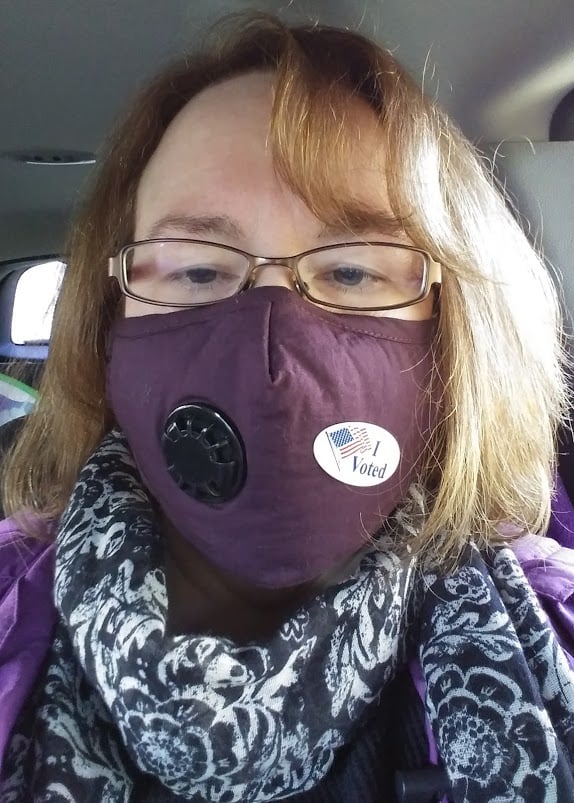
I’ll be masked up and voting sometime in the next few weeks (early voting in Arkansas opens Oct. 24). Before I vote, though, I’ll make sure I know who and what I’m voting for. And considering that hyperpartisan poll-watchers are being deployed, I’ll probably brush up on my election law and how the process of counting works as well. If only the poll-watchers and count “witnesses” would do the same.
I would hope most people have done their due diligence, which I believe would lead them to understand that the four ballot issues are no good, for various reasons, one of which would be that at least two of them would take away power from the people and invest far too much of it in the Legislature (the three legislative referrals this time around are especially heinous, and the one citizen-referred issue allowed is badly flawed). The UA Cooperative Extension Service website is a great source for neutral information on the ballot issues, and our own Gwen Faulkenberry also recently did a stellar analysis of the issues.
I also hope that they’ll be making their decisions on elective offices based on the people running, not the parties. Have incumbents done enough to merit staying in office? Have new candidates made their policies and positions clear, as well as made clear their relevant experience? (I actually had a friend from high school tell me that if people voted for a certain candidate, that would mean that candidate is qualified for the position, despite having no experience or knowledge that would, in normal times, be expected of a successful candidate. Sigh.) Have they campaigned on solutions and positivity, or on negativity and fear of the other? Are they actually running for the office they’ve signed up for, or are they setting their sights elsewhere and running against people not even in the race? (I mean, really, if you’re running a local/state race, run on local/state issues, not national ones; you’ll have little if any impact on those national issues.)
Sure, it takes more work to be an informed voter, but I think we’re worth that bit of research that goes beyond whatever a party label might imply.
Homework can be fun, y’all!
I know not everyone is as big a nerd as I am. (But wouldn’t that be fun? No? Just me?) Still, I fantasize every once in a while that we have a system where the people actually do rule, as the Arkansas motto, Regnat Populus, implies.
They research issues and candidates and make their decisions based on the positive things the candidate or ballot issue will do for the people at large. Ballots don’t have party affiliations on them because they don’t matter. There might even be ranked-choice voting, which would also require research on the part of the voter (yea, research!). And the Electoral College might finally become truly representative, with all states awarding votes for president proportionally instead of winner-take-all.
But I know that’s not going to happen. There is too much in the current system that works in the parties’ favor. Why ensure that all eligible voters can actually vote, or that they will endeavor to do research that might not work to a party’s advantage (damn those people trying to increase turnout and get more eligible voters registered; it’s better for us if those people stay home)? That’s just crazy!
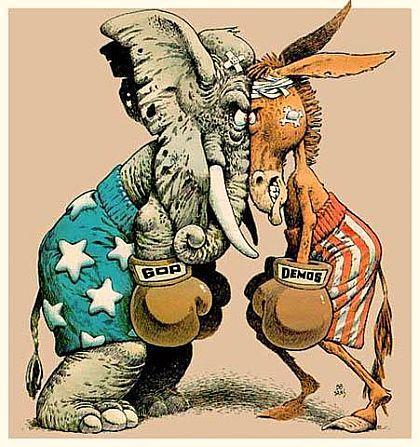
It’s much easier to simply demonize opponents and heed hackneyed stereotypes of Democrats and Republicans (which in a lot of cases don’t actually resemble the parties as they exist today; don’t get me started on the people who cannot be convinced that today’s GOP and Democrats aren’t the same as the were in 1860). Some are even so afraid of words that they try to redefine what the country is (for the record, it’s a hybrid democratic republic, neither pure democracy nor pure republic; Alexander Hamilton called it a representative democracy).
That’s what we do: Take the easy way so we don’t have to do that awful thinking. It’s our right as ’Muricans, ya know.
Change is hard. Why do something that’s hard?
I dunno. Maybe because it’s the right and smart thing to do?
😭😭😭😭😭
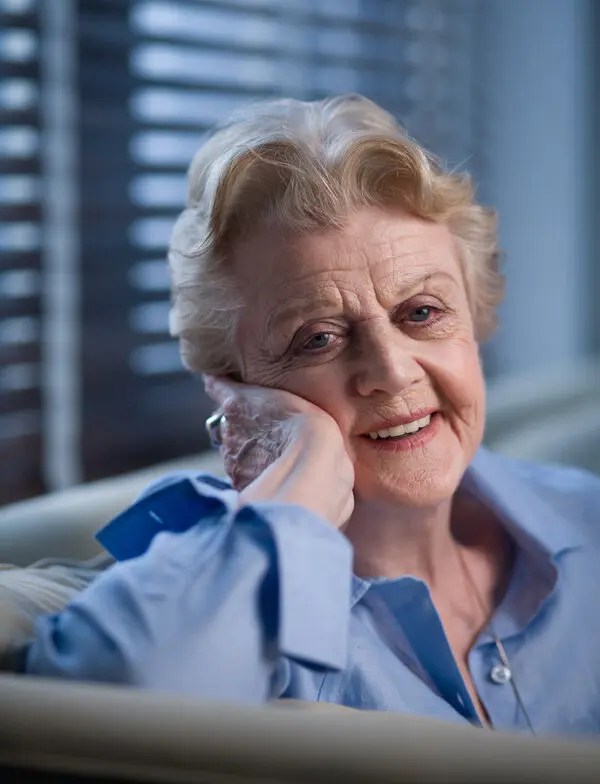
I have to pay homage here to a marvel who is no longer with us. I can’t really remember a time when I wasn’t watching something with Dame Angela Lansbury in it, and I’ve still only scratched the surface of her filmography. I always loved her acting (“The Manchurian Candidate” is a prime example), but it was musicals where I first fell for her charm, even when she played baddies (though I guess in the end her character in “The Harvey Girls” had a heart of gold; unfortunately, her singing voice was dubbed in that movie because her voice was deemed unsuitable for a saloon singer). Her Mrs. Lovett in the original “Sweeney Todd” on Broadway set the standard for that character, and her Mrs. Potts in “Beauty and the Beast” is the definitive version (sorry, Emma Thompson). Her last stage performance in London was at 88 in 2014 in a revival of Noel Coward’s “Blithe Spirit,” and, at 91, she had her last New York stage appearance in a staged reading of “The Chalk Garden.” Her last movie role was a cameo (Stephen Sondheim also made an appearance, in what was his last cameo as well) in “Glass Onion: A Knives Out Mystery,” which premiered in Toronto in September and is to be a November limited release before landing on Netflix in December.
In 2018, she had a cameo in “Mary Poppins Returns” as the Balloon Lady, and it is that song that I’m leaving you with today: “Nowhere To Go But Up.” (I tried finding something other than the lyric video, but couldn’t, sorry.) Angela Lansbury almost made it to 97 before dying Tuesday. Her talent made our lives brighter, and she will be missed.
 Serenity is a fuzzy belly