
When I was a kid, there was a spot at the edge of our yard where I’d sometimes curl up and read a book. It was near one corner of the property, with a little opening between the Bridal Wreath spirea along one side and a tree (not sure what it was now) next to a fairy rose bush. In the summer, there would be honeysuckle dangling from a small tree on the corner, and I would settle in with a good book, and sometimes our cat Sharon (the best mouser ever). Mama had planted purple bearded irises there, but it soon grew too shady for them (not for me, though).
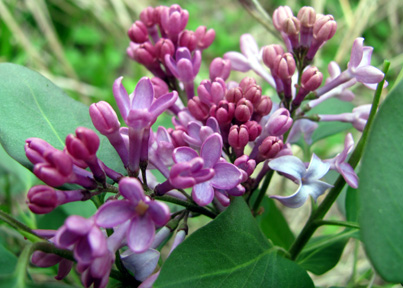
Some of my best memories of childhood involved plants. To this day, white spirea, flowering quince and lilac take me back to simpler times, and the days I’d cut branches of the bushes for Decoration Day at our cemetery or just cut a bunch of lilacs for Mama (those and hyacinths were here favorite). I’ll always look fondly on daffodils, remembering that the corner of the pasture across the road was usually teeming with them in early spring. And those wood hyacinths in shades of pink and purple that stood between the clothes line and the strawberry bed always made happy.
I’ll eventually get around to getting similar plants to the ones I grew up loving in my yard. But they’re not going to have the same meaning to me as cuttings from the originals, now long-gone, would have.
I was reminded of that when I read Sean Clancy’s story Sunday in the Arkansas Democrat-Gazette about the death of the Clinton Presidential Center’s Anne Frank tree propagated from one of the horse chestnuts from the original tree that stood outside the window of the secret annex in Amsterdam where Anne and her family hid for more than two years from the Nazis.

On Feb. 23, 1944, Anne wrote in her diary, “From my favorite spot on the floor, I look up at the blue sky and the bare chestnut tree on whose branches little raindrops shine, appearing like silver, and at the seagulls and other birds as they glide on the wind. As long as this exists, and I may live to see it, this sunshine, the cloudless skies—while this lasts I cannot be unhappy.”
According to the Anne Frank House’s website, “During a speech in 1968 Otto Frank described his thoughts when he read Anne’s diary for the first time: ‘How could I have known how much it meant to Anne to see a patch of blue sky, to observe the seagulls as they flew, and how important the chestnut tree was for her, when I think that she never showed any interest in nature. Still, she longed for it when she felt like a bird in a cage. Only the thought of the freedom of nature gave her comfort. But she kept all those feelings to herself.’”
The original tree stood for over 170 years in the courtyard garden of 188 Keizersgracht, until August 2010 when, weakened by disease, it was felled in a storm. Five years earlier, though, with the permission of the owner, the Anne Frank House had chestnuts from the tree gathered and germinated with the intent to donate the saplings to schools named after Anne, and other groups as well, including the Clinton Center.
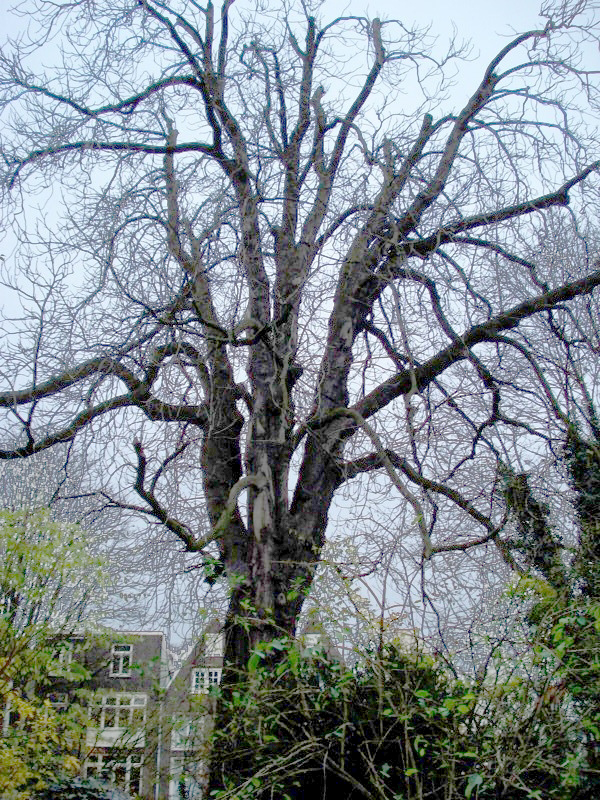
The sapling the Clinton Center received was planted in October 2015 then taken back to Good Earth Garden Center to further acclimate and mature to a point where it could thrive upon returning to the site. Another sapling was put in its place, but had to be moved to Good Earth last summer because it was struggling. Like the lilacs and spirea cuttings from home that I tried to grow here (two and a half hours south shouldn’t be that much of a difference, but …), the heat was just too much for them, and both died.
(Central High School in Little Rock also received a sapling, and it died as well. European trees just don’t do well here.)
Muriel Lederman, formerly of Little Rock but now living in Shaker Heights, Ohio, responded to that Sunday story about the tree, specifically to a suggestion in the story by Paul Minsker of Alexander. Since she no longer lives in Arkansas, I’m printing her letter here, as we reserve letter space for current residents.

“As the initiator of the Anne Frank Tree Project,” she wrote, “I find Mr. Minsker’s notion of taking a plant from his yard, having it blessed by a rabbi and using it to replace the sapling from the tree outside Anne Frank’s hiding place insulting to all who worked intensely for five years to bring the installation to the grounds of the Clinton Presidential Park. He also shows his lack of knowledge of Judaism: Jews can speak directly to God, without a rabbi’s intercession. Blessing the sapling is not what gave it its meaning.
“I would rather have the site remain empty than filled with a tree with no connection to the specific histories memorialized on the panels; things and people are gone from this Earth, but their symbolism remains intact and powerful.”
Indeed. I remember reading Anne Frank’s Diary, and this little Church of Christ kid from Arkansas was so moved by her story and her longing for the freedom that tree represented to her. A tree with no relation to the original tree upon which Anne gazed wouldn’t be the same, and wouldn’t have the same meaning within the Clinton Center installation as the original sapling, now compost.
Calista Ross, director of development at the Clinton Center, told donors in an email, “While the sapling will no longer be present, the permanent installation will continue to honor the legacy of Anne Frank and the tree she wrote about so fondly.”
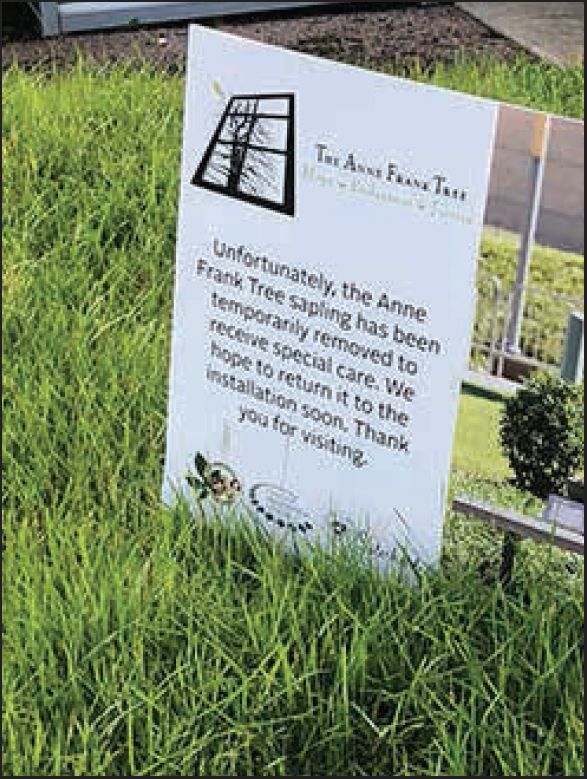
That’s really the best we could hope for in this instance. While it would be nice to have the sapling from the original tree, it just wasn’t meant to be here. It happens.
But does that mean we should replace it with a native plant? Not when it was meant as part of an installation with specific meaning that a native tree couldn’t possibly have. Save the native plants for your own yard.
🔥🔥🔥🔥🔥
In weather like this, I’m grateful to have some great friends in my life, especially the lovely, smart and talented Sarah Kinsey.
My old AC was really struggling to keep up, and she graciously offered to let me stay with her while that situation is being ironed out. (I have a new portable that’s actually a heat pump; the hard part, getting it into the bedroom, is done. Now I just have to have some free time and slightly cooler temps [because in this heat, you can’t spend too long in there] to hook it up and move the older unit, as well as the separate heater, to another room. Hopefully that will happen sooner rather than later. Fingers crossed!)
Besides her pulling me out of shell (needed at times) and the fun we’ve had (like making s’mores, for science), I also get to spend more time with Sir Charles the Nutty, and time with him is never wasted.
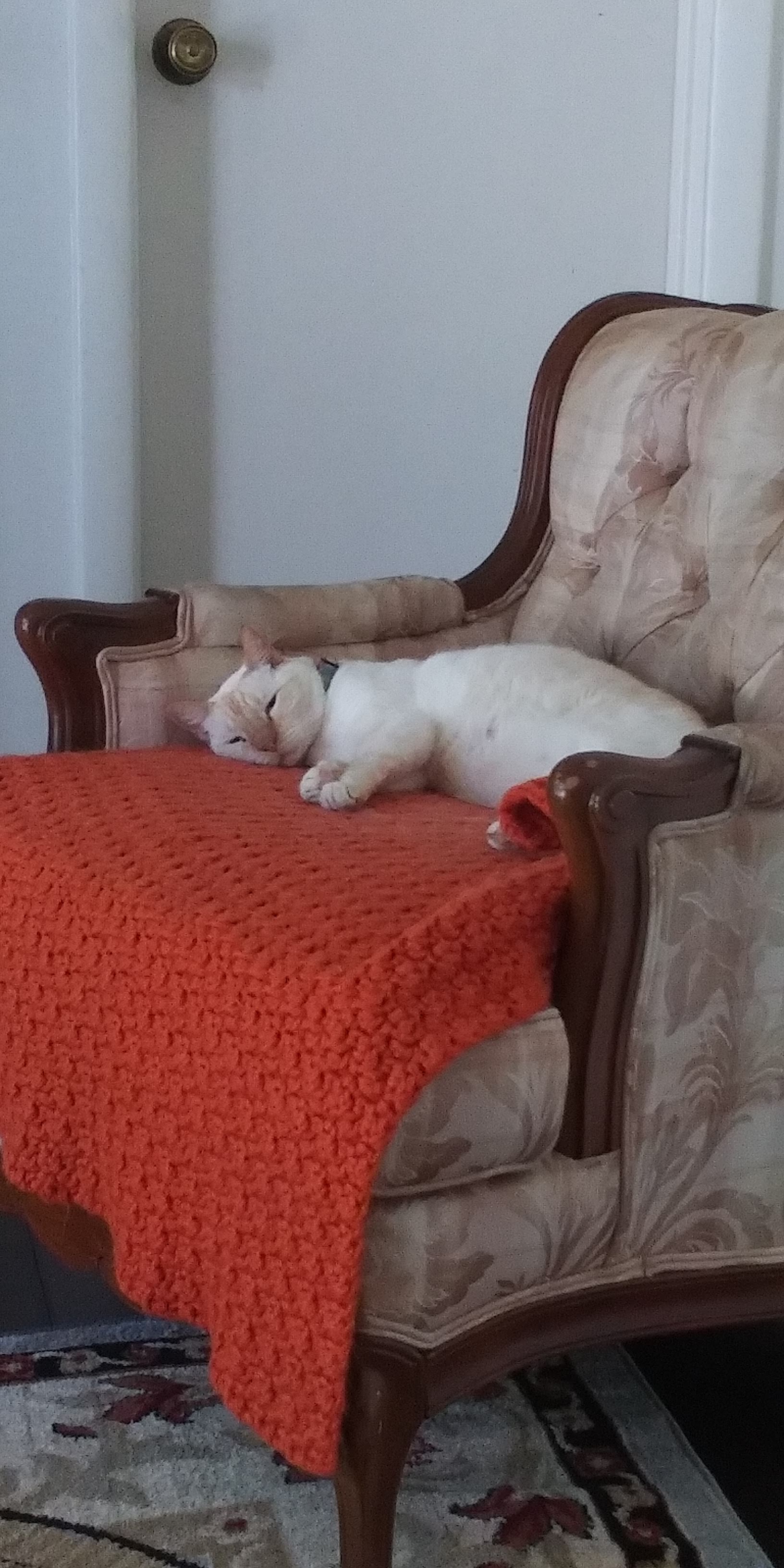
 Serenity is a fuzzy belly