
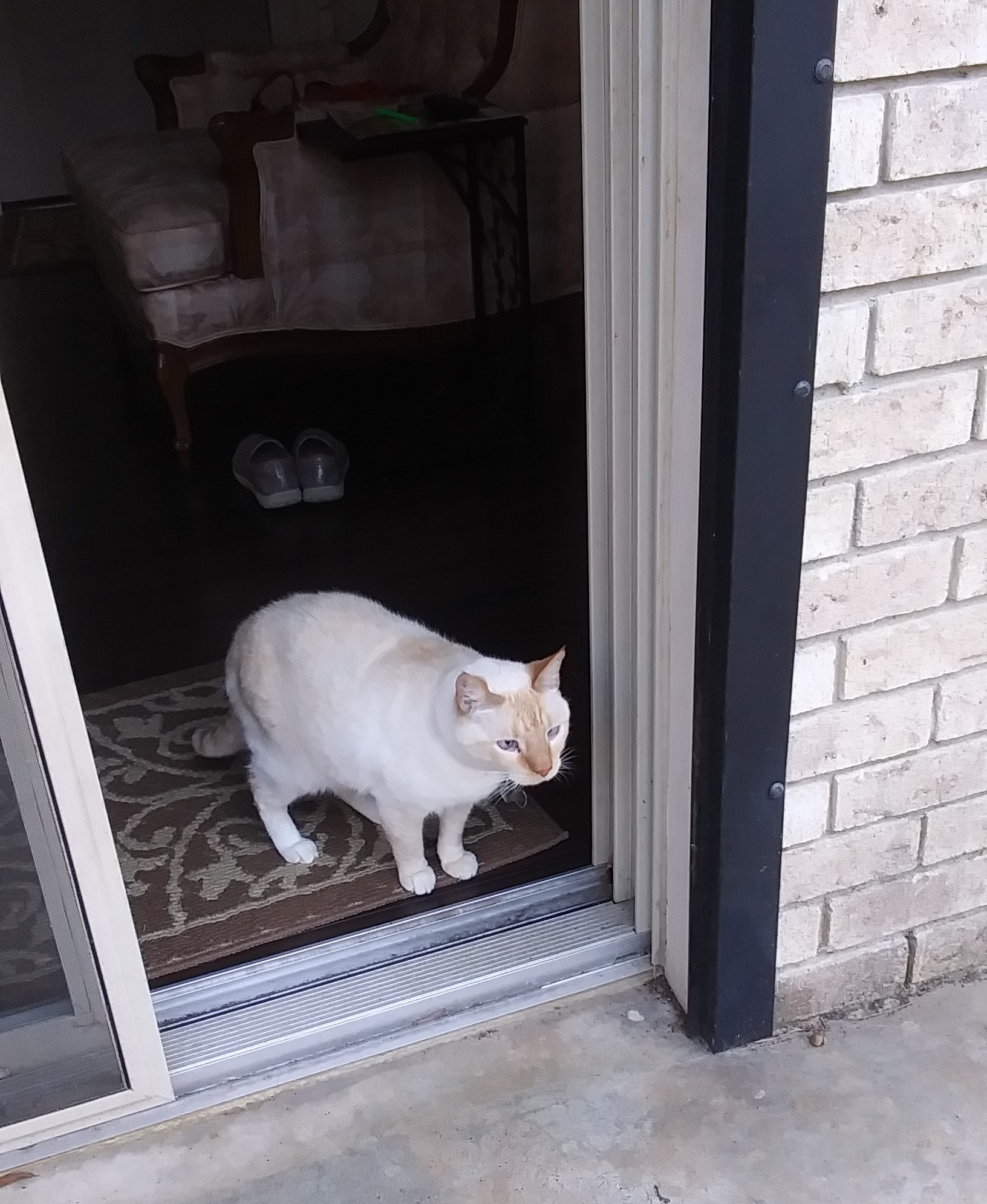
I’ve spent a lot of time recently watching my friend Sarah’s sweet and goofy cat Charlie. Charlie is quite insistent that I keep the bird feeders filled for his critter-watching time. I love to listen to his excited “eck-ecks” when Kevin the (extremely acrobatic) squirrel or Bill the blue jay (the biggest blue jay I have ever seen, and who I’ve yet to be able to get a photo of) visit the backyard.
That’s infinitely more cheering than the news from PEN America, a nonprofit advocate for freedom of expression, that 1,586 book bans had occurred in 86 school districts in 26 states between July 1, 2021, and March 31 of this year. The organization said those districts represent 2,899 schools and a combined enrollment of more than 2 million students.
Texas, Sarah’s home state, led the country with the most bans (713; the next state, Pennsylvania, had 456) on the group’s Banned Books Index; not exactly something to be proud of.
Sarah said a Washington Post article on libraries being asked to cut access to books, reprinted in the Democrat-Gazette, fired her up, and she told me Monday, referring to Arkansas, “I’m dreading the 2023 legislative session. I’m envisioning Florida-like laws in the near future.” That could cover a multitude of issues, but Florida was third on the Banned Books Index, with 204 bans (only Texas, Pennsylvania and Florida were in triple digits).
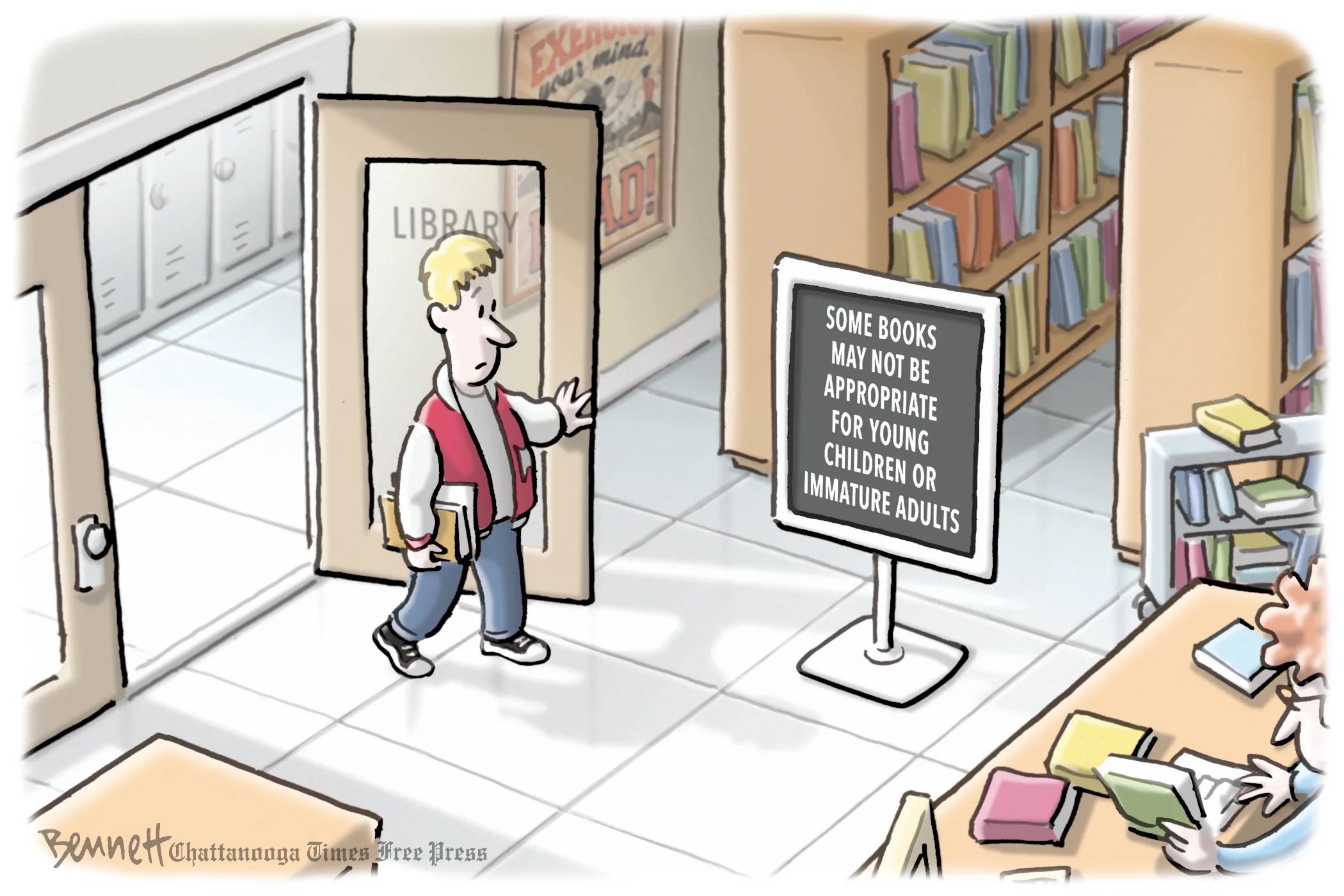
Nearly half (41 percent) of the banned books prominently featured characters of color, 33 percent featured LGBTQ characters and themes, and 22 percent directly addressed race and racism, according to PEN America. Among the 42 children’s books censored were biographies of people like Rosa Parks, Ruby Bridges, Malala Yousafzai and Cesar Chavez. Other books include Maya Angelou’s “I Know Why the Caged Bird Sings,” Isabel Allende’s “The House of the Spirits,” Margaret Atwood’s “The Handmaid’s Tale,” J.M. Barrie’s “Peter Pan,” Harper Lee’s “To Kill a Mockingbird,” and Toni Morrison’s “Beloved” and “The Bluest Eye.” Even scanning the list for a minute is enough to make you want to cry. Multiple books on puberty have also been banned, which taken in concert with hostility toward sex education in public schools and the hands-off attitude some people seem to take with their children (they don’t need to know what’s happening to them; we’ll just tell them it’s nothing to worry about), should cause concern.
Jonathan Friedman, director of PEN America’s Free Expression and Education program and lead author of the index report, said: “What is happening in this country in terms of banning books in schools is unparalleled in its frequency, intensity, and success. Because of the tactics of censors and the politicization of books we are seeing the same books removed across state lines: books about race, gender, LGBTQ+ identities and sex most often. This is an orchestrated attack on books whose subjects only recently gained a foothold on school library shelves and in classrooms. We are witnessing the erasure of topics that only recently represented progress toward inclusion.”
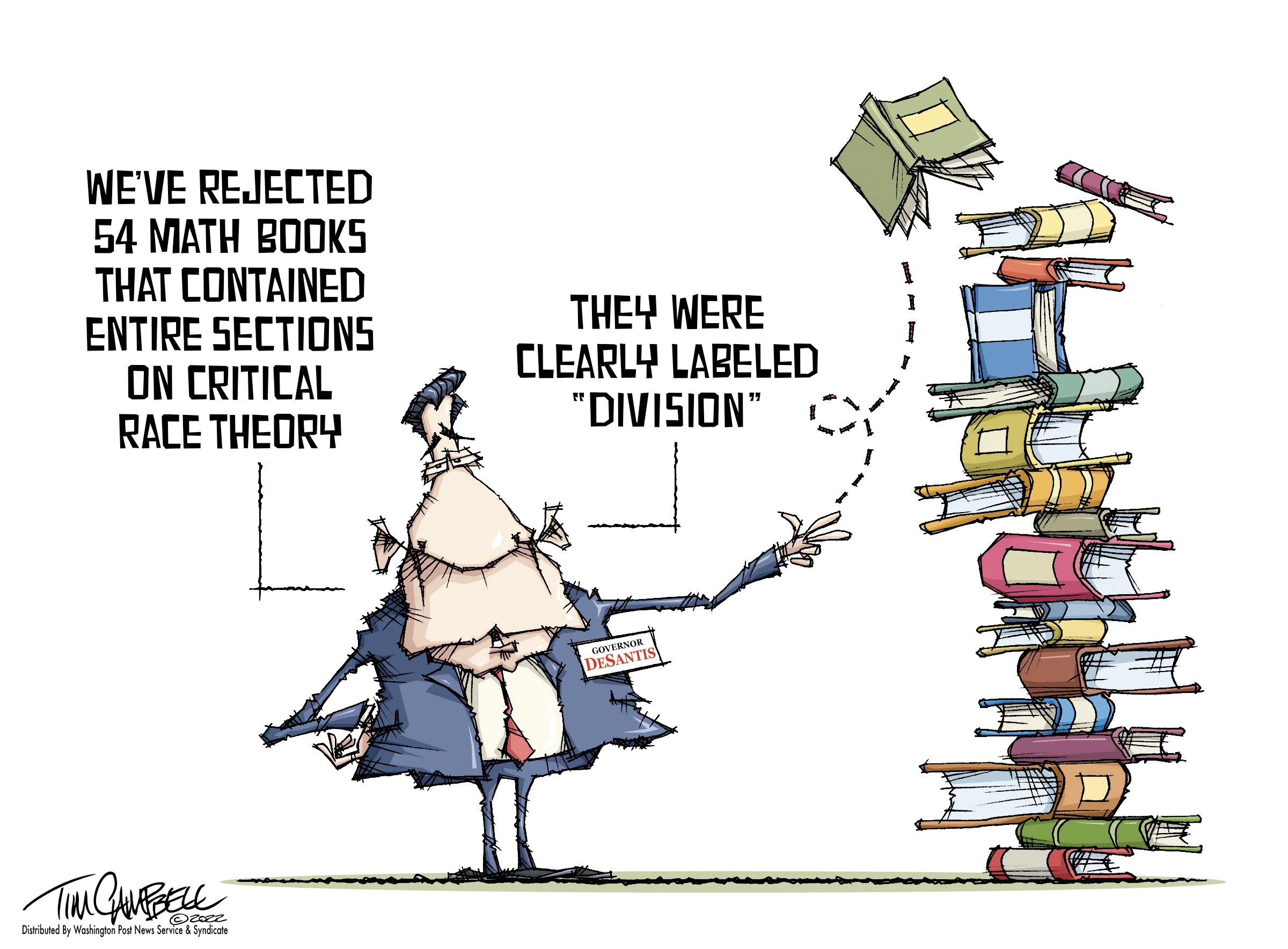
And let’s not even get started on the insane rejection of 54 math textbooks in Florida, reportedly for including critical race theory, which I would remind you is a graduate-level area of study in law school that focuses on the role of race in law. ClickOrlando.com reported, “Although education officials claim some of the textbooks were rejected because they contained references to “prohibited” topics such as Critical Race Theory, state officials did not immediately provide records specifically detailing why each of the 54 math books was barred.”
And yet they want to claim they’re being transparent. Sigh.
Censorship of books is nothing new, but the latest wave is “helped” by social media. Without people like Christopher Rufo redefining critical race theory to mean whatever about the races and/or history makes him uncomfortable, or influencers who decry anything with content they disagree with, there’d not be as much of an uproar. As George M. Johnson, author of one of the banned books, “All Boys Aren’t Blue,” noted at the March SXSW EDU conference, social media wasn’t around when Toni Morrison was being banned 30 years ago, so there was no instant reaction, reported Alyson Klein of Education Week.
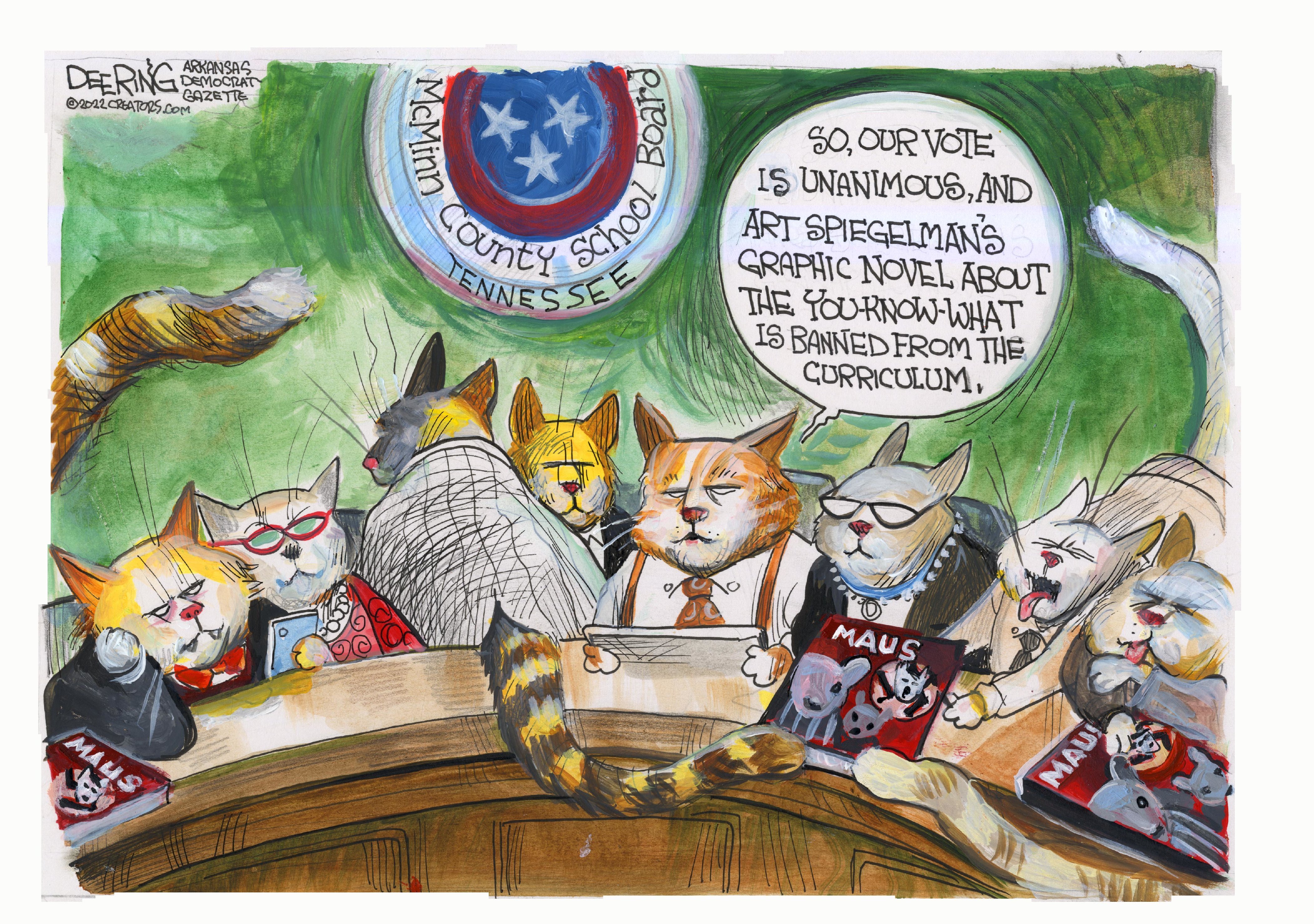
As we’ve seen, Toni Morrison is still being banned, but she’s no longer around to defend herself and her work. I can only imagine if accounts like Libs of TikTok had been around 30 years ago, feeding right-wing outrage over what’s being taught in schools (especially if it happens to involve sexuality, as apparently any sort of sex education is “grooming.” Yeesh.
Mike Hixenbaugh, investigative reporter for NBC News and a writer and host of “Southlake,” a podcast on culture wars in a small Texas city, said at the conference, “It’s the same list of books that’s going viral” while similar books remain under the radar. “There are certain books that, if the parents knew about them, they would be going after them as well. They just haven’t made it on a list.”
But social media also helps fight censorship, as do efforts like the New York Public Library’s Books for All. That initiative allows readers 13 and older to access commonly banned books through its app for free until the end of May, with no wait times or fines; ordinarily, only New Yorkers with a library card could access them. Tony Marx, president of the New York Public Library, said, “Knowledge is power; ignorance is dangerous, breeding hate and division. … Since their inception, public libraries have worked to combat these forces simply by making all perspectives and ideas accessible to all.”
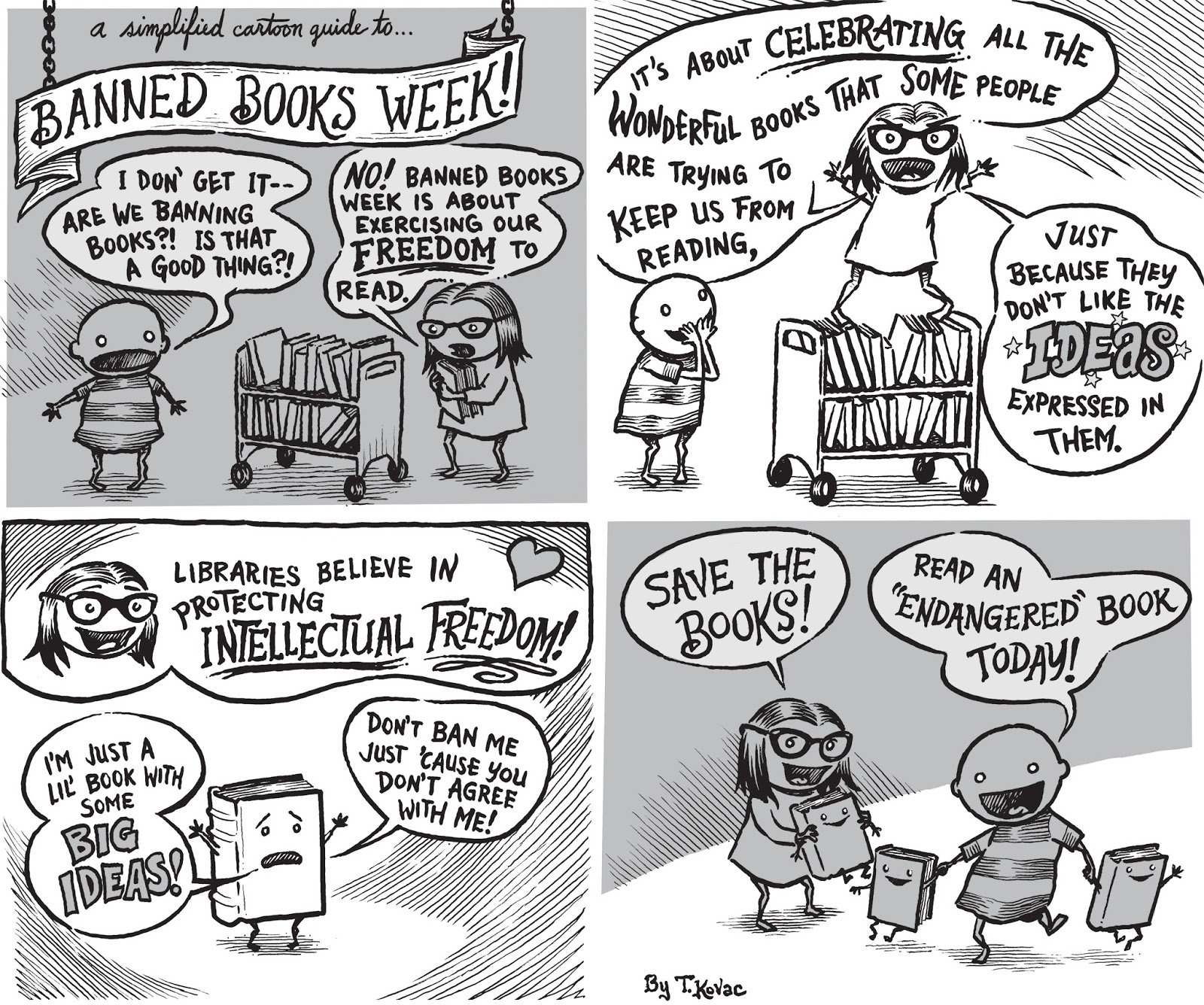
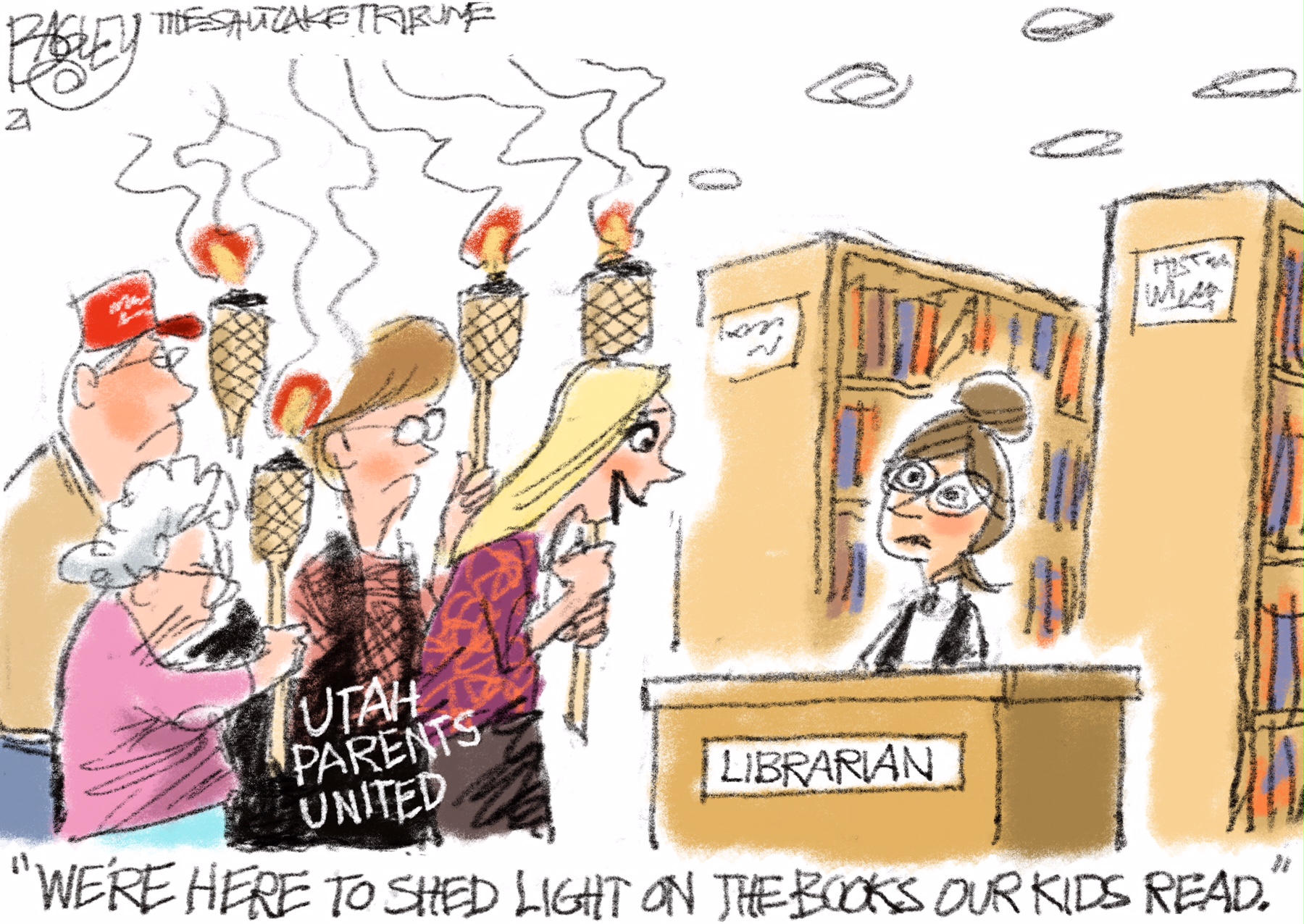
But what about parents who think no one’s kids should be able to access something they personally find objectionable in a public school library? (Does the word “public” mean nothing???)
PEN America CEO Suzanne Nossel noted: “Parents and community members deserve a voice in shaping what is taught in our schools; but the embrace of book bans as a weapon to ward off narratives that are seen as threatening represents a troubling retreat from America’s historic commitment to the First Amendment rights of students, and to reacting to speech considered objectionable with more speech, rather than censorious prohibitions. By short-circuiting rights-protective review processes, these bans raise serious concerns in terms of constitutionality, and represent an affront to the role of our public schools as vital training grounds for democratic citizenship that instill a commitment to freedom of speech and thought.”
Marx echoed those sentiments, noting in a news release about Books for All, “The library’s role is to make sure no perspective, no idea, no identity is erased. People have the right to read or not read what they want, but those books need to be available—for the teen who has questions and wants to privately find answers; for the adult who is curious about subjects for which they have no personal experience; for those who want to do their own research and make informed decisions based on fact.”
What was that ad campaign from my childhood? Oh yeah, “The More You Know.”
And suddenly I have the urge to curl up in the chair in front of the door to the backyard to watch Charlie vent his frustration at not being able to actually catch Kevin and Bill. I might grab one of those banned books while I’m at it.

 Serenity is a fuzzy belly