
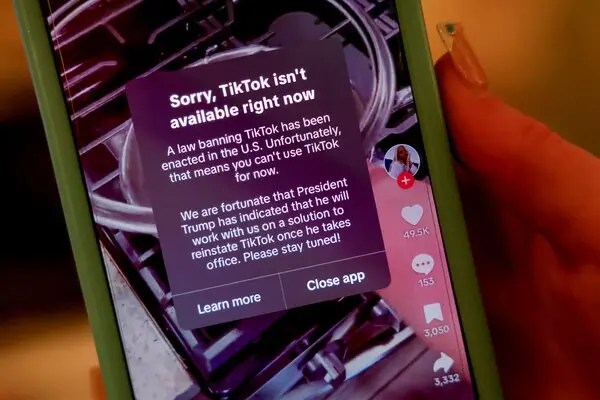
What do I think about the on-again, off-again TikTok ban? Meh. I never really got into the app.
While the idea of government deciding what social media its citizens in a supposedly free country can access is troubling (in soooo many ways), the way it’s played out in the past week has seemed, to me and many others, to be little more than political theater.
Ugh. Give me strength. And plenty of access to streaming platforms like Netflix, Disney+ and Max.
But what if the government suddenly decides that the offerings of those platforms are propaganda best kept far away from American minds? Then I’d certainly care.
Get between me and my access to “Hamilton” and “Wonka,” among others, and there will be words, and they might not be safe for sensitive ears.
And that’s the thing. Too many of us don’t care about some issues until they directly affect us (or we’ve been led to believe they will or already do based on iffy/slanted anecdotal evidence) or until some disaster, such as the Triangle Shirtwaist Factory fire, causes a reckoning.
But so many of us are taught from childhood to respect the feelings and beliefs of others, so why do we allow ourselves to be divided into partisan camps and roll our eyes at the suffering of others deemed less worthy than us?
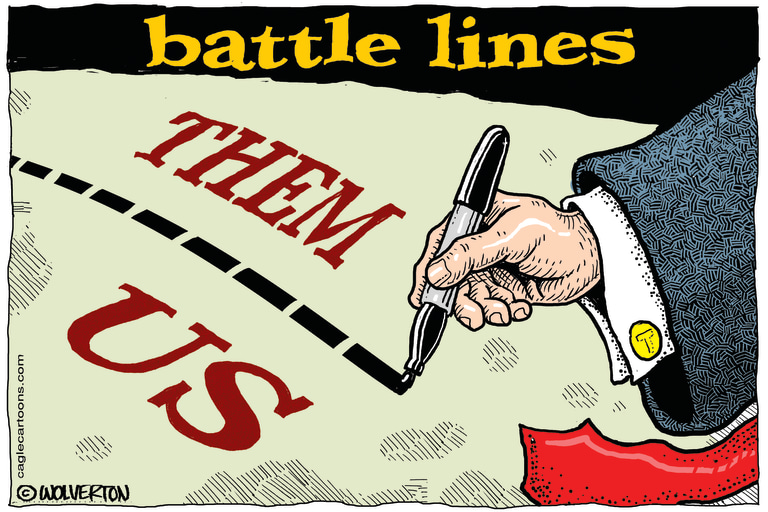
Blame evolutionary psychology, for one.
Luciano Santini, Ph.D., of Common Sense Consulting, wrote on LinkedIn in November, “From an evolutionary perspective, humans are wired to prioritize the safety and well-being of themselves and their immediate social circle. In prehistoric times, humans survived by protecting their own tribes, with little evolutionary incentive to care for those outside of their immediate group. This survival mechanism persists today in subtle ways. While modern society has evolved, our instincts remain, and we are still inclined to prioritize those closest to us.
“This doesn’t mean we lack empathy altogether. But often, our empathy doesn’t automatically extend to everyone—it’s directed at those we identify with or relate to. While someone might feel deeply for a struggling family member, that compassion can wane when they see strangers in distress, especially if they perceive that the situation does not directly impact their own lives.”
Our information environment doesn’t help; with so much coverage of tragedy, people become desensitized to others’ misfortunes (especially when misinformation from social media, lest we forget about all the “crisis actor” narratives following school mass shootings like Sandy Hook or Parkland, or from the president’s own inaugural address, are added into the mix).
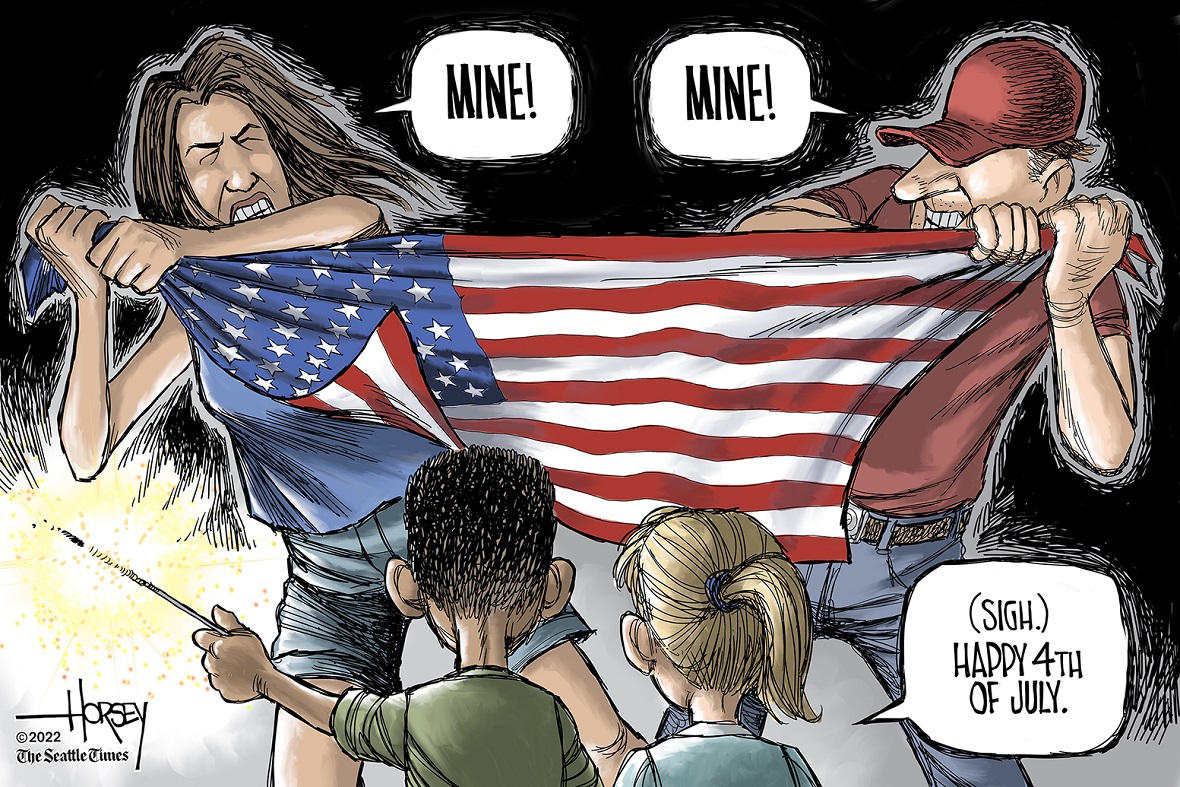
Even worse, Santini noted, “Society also has a way of creating barriers between groups, fostering an ‘us versus them’ mentality. This is seen in economic divisions, racial and cultural divides, and even generational gaps. When people view others as different or distant, they are less likely to feel connected to their experiences. A homeless person, for example, might be regarded as ‘other,’ leading people to believe that their plight is somehow unrelated to their own. This social distancing erodes empathy and prevents genuine concern from taking root.”
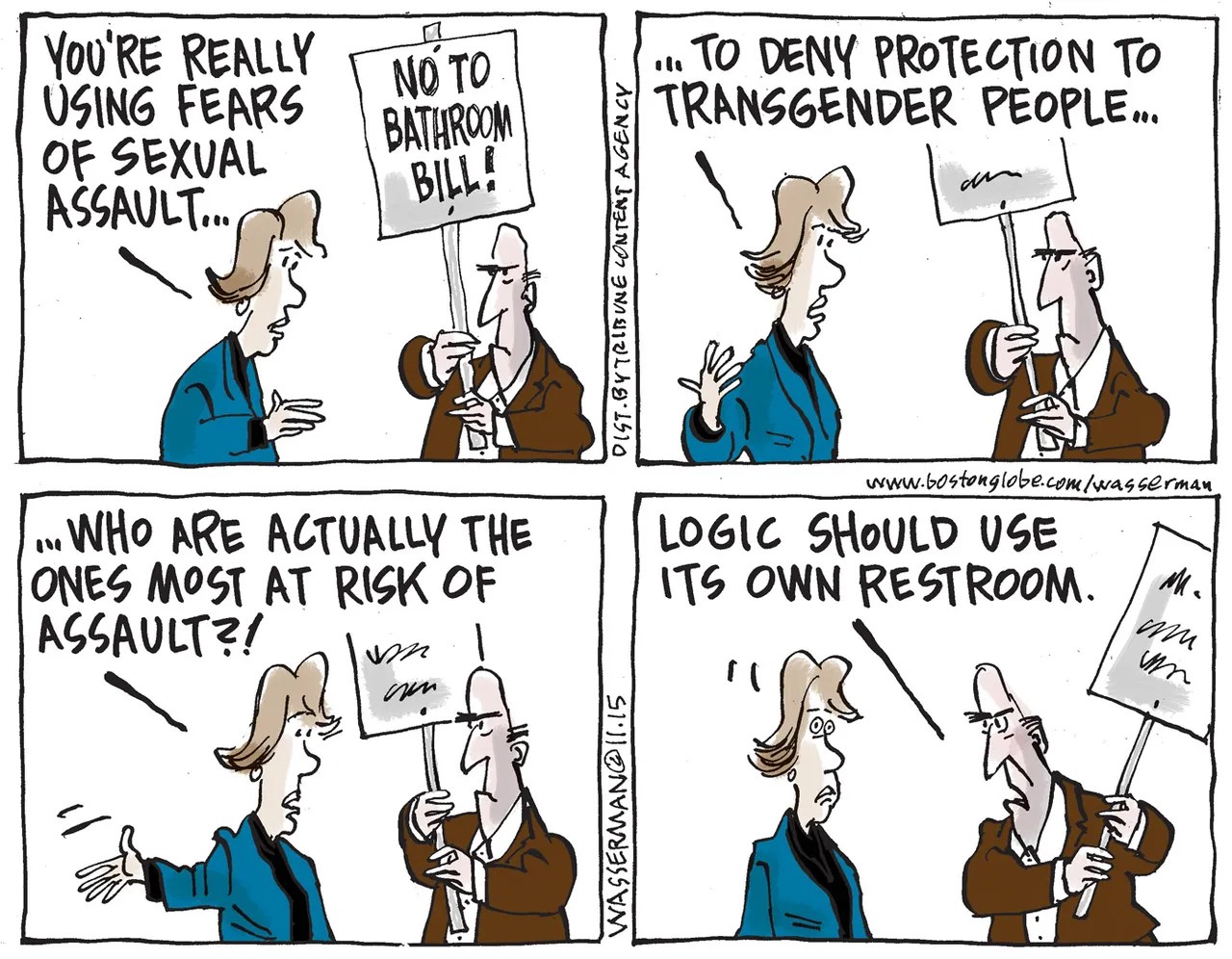
While the tendency to care only if you’re directly affected by something is partly human nature, it’s reinforced by societal structures, and often hindered by barriers such as social norms and fear. We could get into a discussion on the trans bathroom issue, or just admit that some people are a little too concerned about things that are mostly not happening (which seems to be the case on a lot of these issues … and hey, most of the time, people go to the bathroom to relieve themselves and that’s it). I admit having skin in the transgender issue, having friends and a family member who are trans, but even if I didn’t, I would probably feel the same way because they’re just good people trying to live their lives as peacefully (and legally) as possible.
Sure, I can’t discount that there are indeed some genuine jerks out there who care only for themselves and their tribe, but I have to (because I was made this way) believe that most people don’t want to be that way. I mean, seriously, who chooses to be a jerk rather than a decent human being? While I like being alone, human contact is still important to me. I feel guilty having to ask for rides to physical therapy and doctors’ appointments since I can’t drive yet (and boy, do I miss driving and the ability to just get up and go wherever I need to whenever I need to), but if I behaved like some people do (trolls, certain politicians and pundits, influencers, etc.), I’d spend an awful lot of time being left on the side of the road.
Santini suggested increasing awareness and education, encouraging community engagement, challenging stereotypes and prejudices, modeling and rewarding compassionate behavior, and reflecting on personal values and taking small steps as ways to build a more compassionate society.
Unfortunately, the people most in need of that advice want nothing to do with it. And you wonder why I sigh so much.
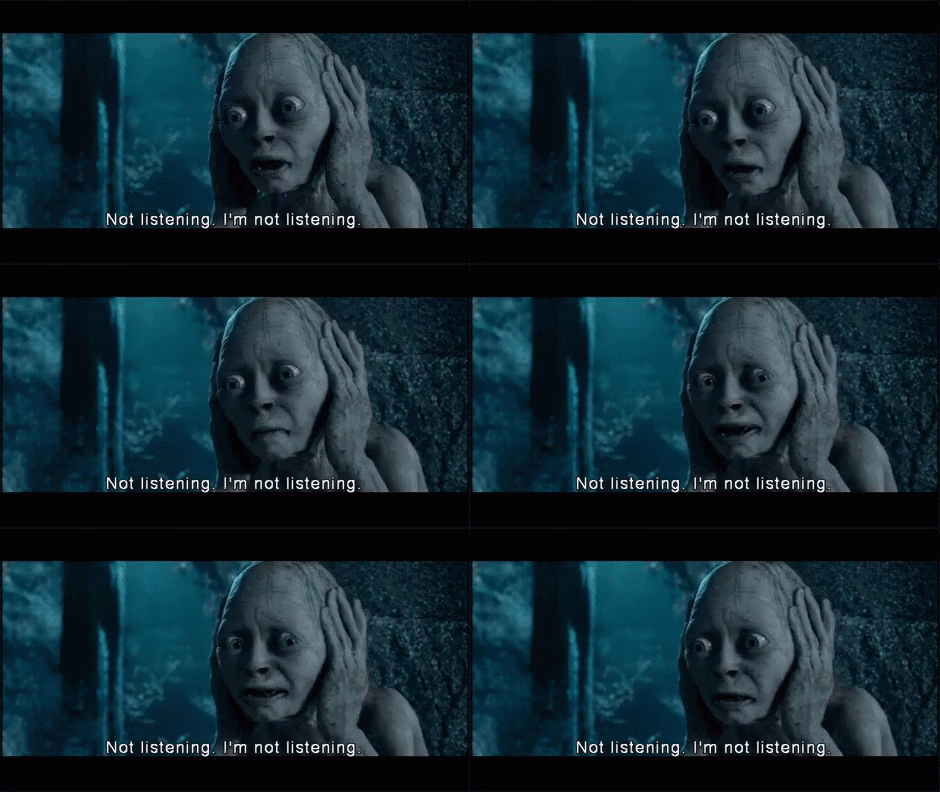
There’s still hope, though, I think. There are groups out there like Braver Angels that make an effort to build bridges and depolarize society.
In that vein, Braver Angels Arkansas is teaming with the Interfaith Center of Arkansas for a presentation on using the concept of the Golden Rule (present in many faith and social traditions) as a way to reduce the impact of extreme polarization. The free program will be at 6 p.m. Feb. 11 at the Interfaith Center at 1616 S. Spring St. in Little Rock. For more information on the presentation, email ar-coordinators@braverangels.org; for more information on the group and its programs, go to arkansas.braverangels.org or look for Braver Angels Arkansas on Facebook. If you’re outside Arkansas, check the Braver Angels website (braverangels.org) for chapters near you.
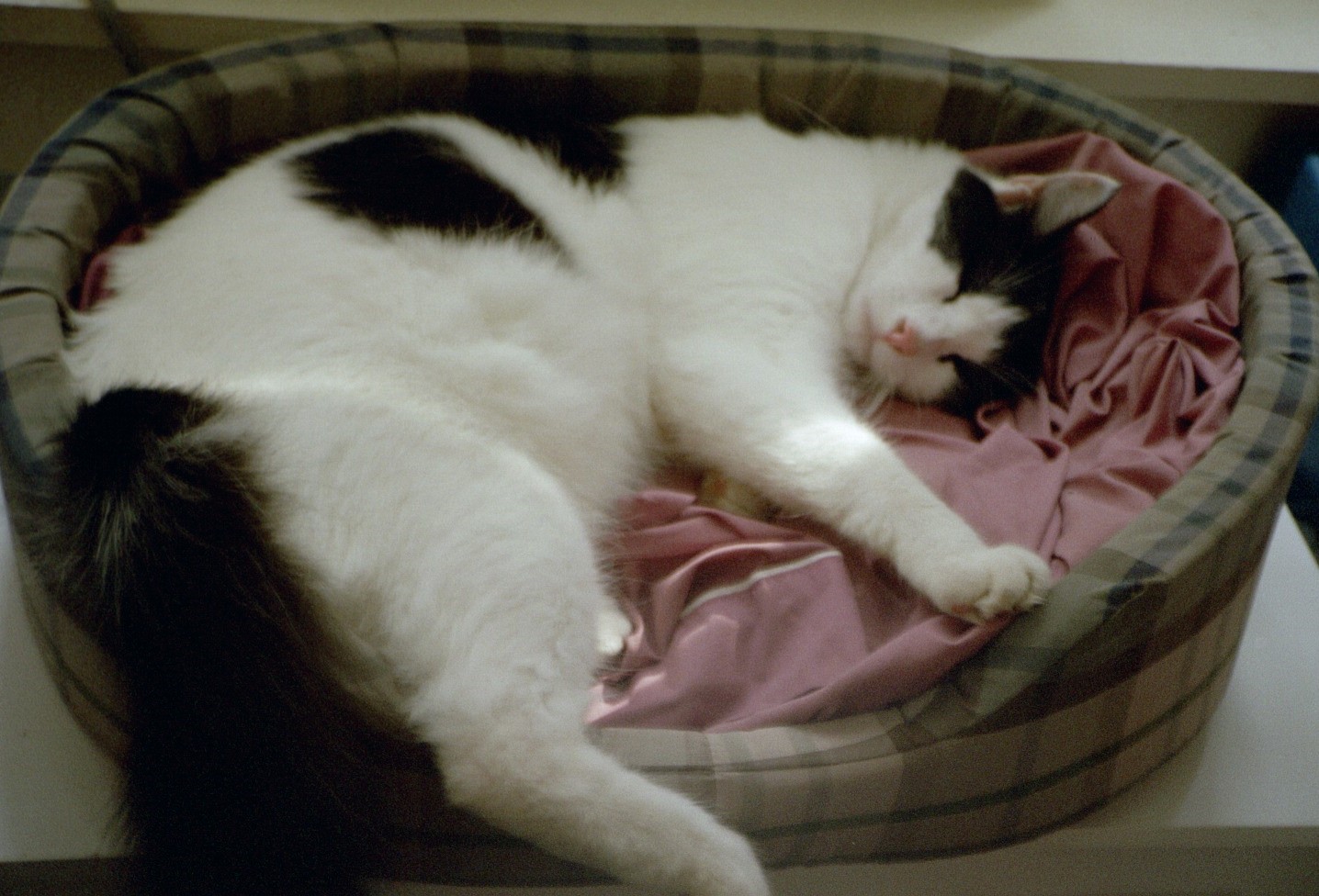
 Serenity is a fuzzy belly