
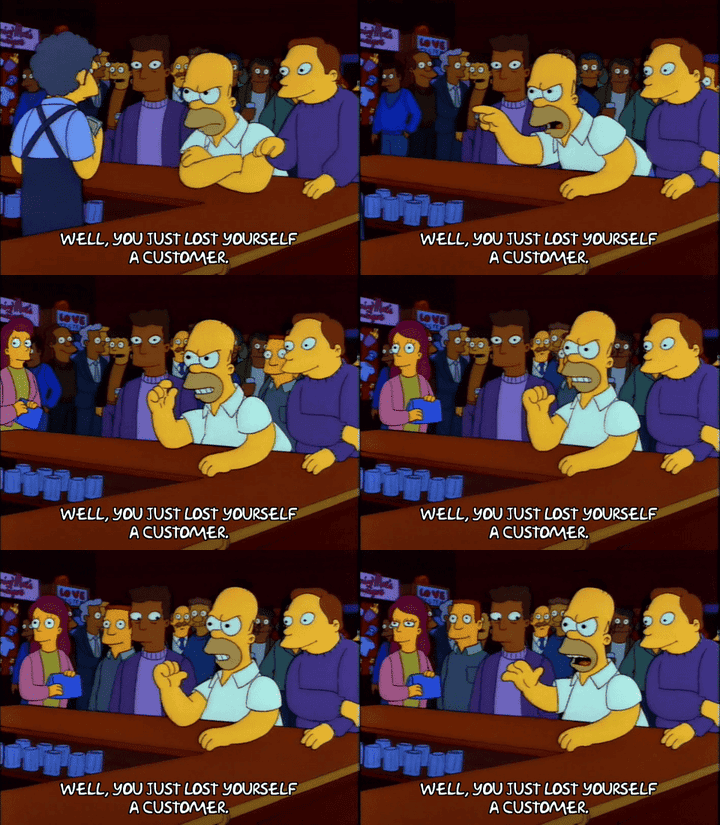
It wouldn’t be a day in modern America if there weren’t some bully saying, “But I’m a paying customer.”
Ahem. Paying for goods or services doesn’t give you carte blanche to bully staff members or other customers at a business; the owners of the business have the right to throw you out if you’re disrupting their operation. That doesn’t mean you can’t complain; however, you should do that in an appropriate manner (which is not harassing employees).
Tell that to the trolls on the newspaper’s website, and you’ll be greeted with indignation at being called trolls because of their actions, which are done in anonymity, then claims that they’re paying customers and should get to do what they want, including abusing staff and other readers, spreading misinformation, insulting others, lying about what others have said, etc. (the terms of service would beg to differ, but as they like to say, you be you, trolls).
But there’s that famous saying, “The customer is always right.” Doesn’t that mean that even the most outrageous behavior by customers should be excused?
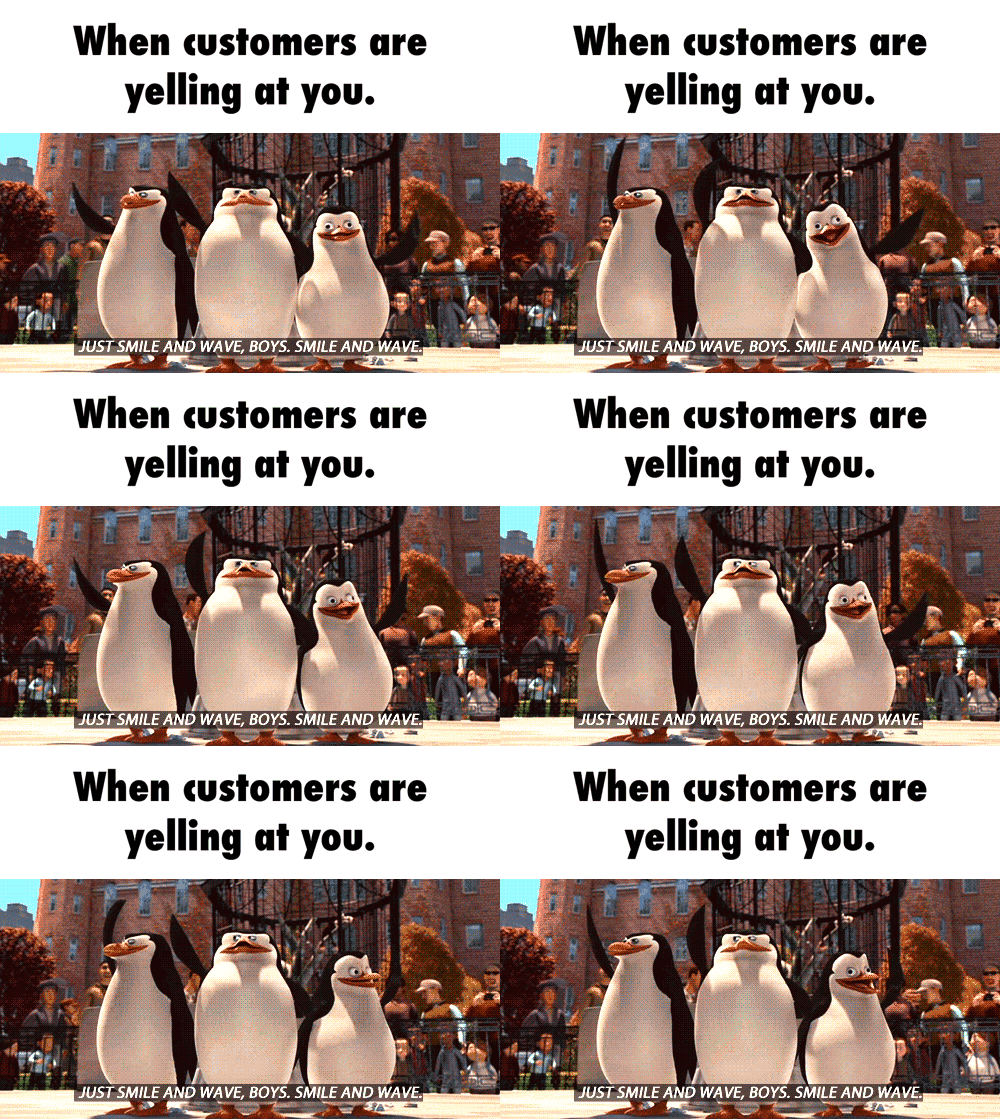
Chicago retailer Marshall Field is credited with the phrase, published in September 1905, according to Quote Investigator, but it’s not known if he coined it or heard it elsewhere. Swiss hotelier Cesar Ritz was reported in 1908 to use a similar maxim, “The customer is never wrong.”
Harry Selfridge, who worked for Field before moving to London to open his own department store, is also often credited with the phrase. When I posted a question about it on Threads, one of the replies I got, from a small-business owner who goes by khaosandkismet, was, “It’s actually a very commonly shortened quote; it’s supposed to say ‘the customer is always right in matters of taste.’ Very different vibes. I have worked in hospitality and retail, and people are crazy.”
However, Snopes, among others, found no evidence of the latter part of the phrase. In Selfridge’s 1918 “The Romance of Commerce,” though, he appeared to see some limitation to the sales philosophy: “The time has passed when an irritable customer, no matter who he or she may be, can, whether right or wrong, ride roughshod over the young man or woman behind the counter and demand his or her dismissal, and it is a good thing it is so.”
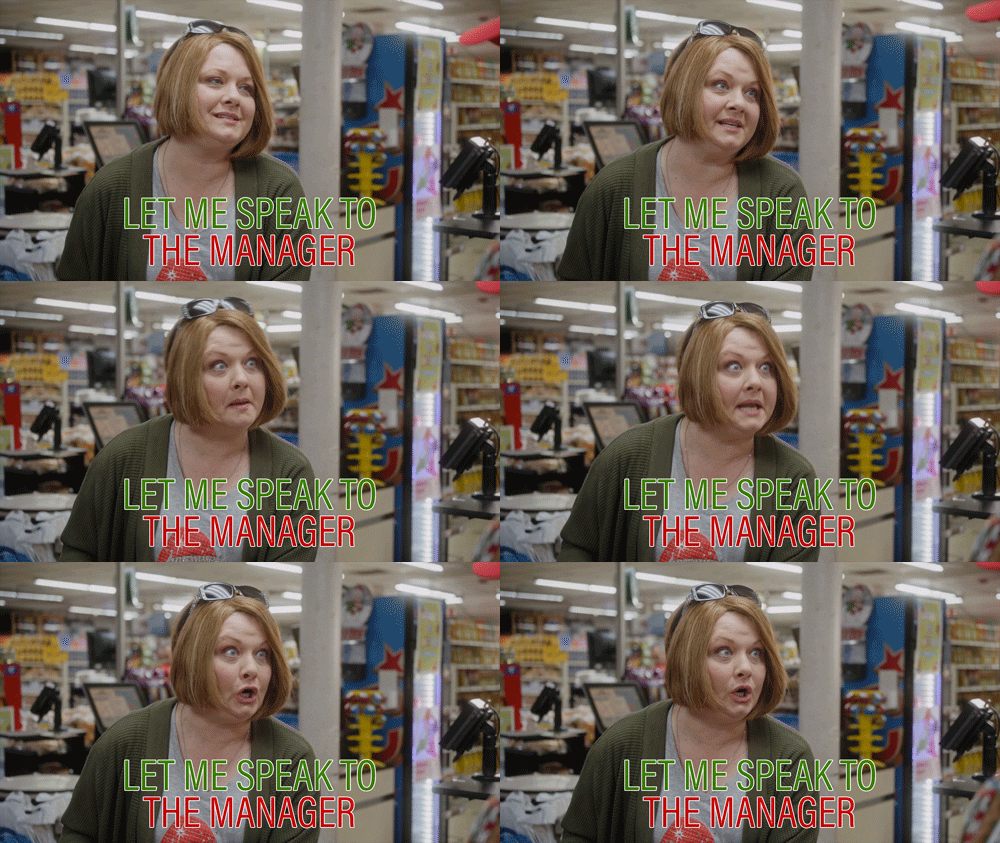
Exactly. While businesses depend on their relationship with customers, the owners have rights as well, and can bar people for any reason (though you hope it’s a good reason, like past theft convictions, past abuse/harassment, rather than “I’m not serving anyone who’s gay/super-religious/a minority”). While they do have to follow some regulations, as private businesses they have more freedom than a government agency does.
A friend (I won’t share her name because I wouldn’t want to endanger her job in any way) works for a florist and told me, “mostly where I work they aren’t outright rude, but just entitled. Like, they want me to stop what I’m doing to focus on them, which I am always nice and I help them and they are thankful. … A lot of times I ask people if they want me to put something together like a plant dressed up in a basket, etc., and they like the attention and boss me the whole way through, and then change their mind and buy what they were going to anyway.
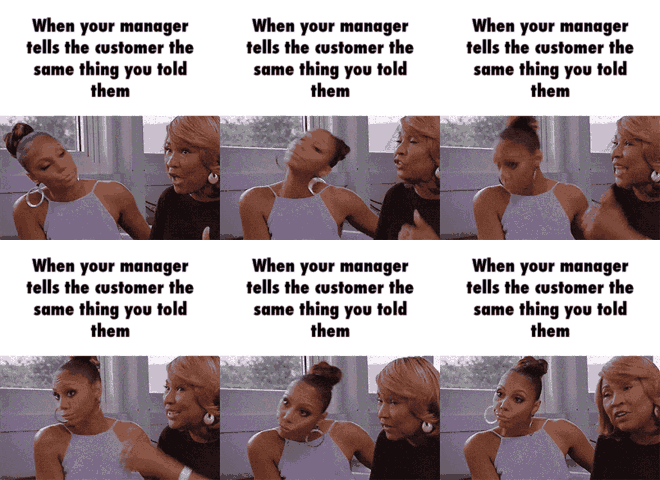
“Overall, I have noticed a lot of people are attention-starved and want someone to be kind to them as much as I want people to be kind to me. Those are my customers. Otherwise, there are tons of people who walk by and act rude or like I’m infringing on their territory. Most people appreciate you going overboard to help them, but you get burned if they are rude back.”
Yes, there are rude staff members as well in business, and they are best dealt with by management. Sally Goss of Little Rock (mom of one of my lovely fur-nieces) told me, “As a former business owner, I had to fire rude employees on several occasions after first giving them warnings to change their attitude. It made for a much more pleasant work environment once they were gone.”
I’ve had to work with some very rude, condescending and indulged people in my life, and I can tell you that the change in work environment when they’re gone is very real. It’s like you can breathe again.
I was probably considered rude by one caller during my news clerk days, who called around 8 p.m. one day, complaining that he hadn’t gotten his paper and had been calling circulation since 5 and no one would pick up (well, circulation closes at 5 p.m., soooo). I told him circulation was closed and he would have to call them back in the morning since the newsroom has no access to circulation accounts, which incensed him. We went around and around with me trying to get him to understand that it was after hours and no one at the paper could help him at that time. He finally yelled, “Are you really trying to tell me that it’s night?” At that point, I asked him if he was near a window and advised him to go look outside. He sighed heavily, and sorta growled, set the phone down (landline, ya know), and tromped to the window. Then I heard a faster, louder tromping back, then CLICK! 🤣
I don’t think he appreciated me much. I figure he took a nap, woke up and thought it was the next day, which is understandable, but still …
But what of the staff members who are merely doing their jobs and suddenly having to deal with an obstinate, entitled person who will not be assuaged by anything less than full capitulation? (Print my letter, completely unedited; give me everything I ask for, at a steep discount; etc.)
Rik Holmes, a U.K. wedding butler, host, and events professional, told me, “No, the customer is not always right, and it’s part of my job to tell them that. Did you know I can eject you from licensed premises (in the U.K.) without having to give a reason?
“I have to deal with incredible levels of entitlement, most usually ‘just one more drink.’ I tend to use the broken-record technique until they get fed up of me. At 56 years old, six feet tall and a bit stocky, it generally works! I have to ensure all my other customers are happy and my staff are safe.”
Shocking! Thinking of the impact on other customers and staff! What’s next???
And that’s what it comes down to, I think: Entitlement. Alexandros Shomper wrote on Medium in May 2024: “The dogmatic misinterpretation of ‘The customer is always right,’ without the nuance and differentiation, led to a sense of entitlement among customers. So much so, that it has dramatic negative impact on employees facing aggression, and second-class treatment.
“Nuance matters. Therefore one ought to differentiate and strike a balance between the customer being right and wrong. … It’s crucial to distinguish between adjusting one customer’s retail and hospitality experience based on feedback, and altering all customers’ experiences. The overall impact is significant and requires balancing the positive changes for one customer against potential negatives for others.”
That explains why some publications have tossed their website comment sections, either wholly or partially. (The Arkansas Democrat-Gazette shut off comments on news stories a few years back because of trolls, but left opinion-section comments up; readers can still comment on news stories on Facebook and other social media, just not on the website.) The actions of a few “customers” has made it hard for many publications to see value in them driving off those people who wanted to have constructive dialogue. They’re why we can’t have nice things.
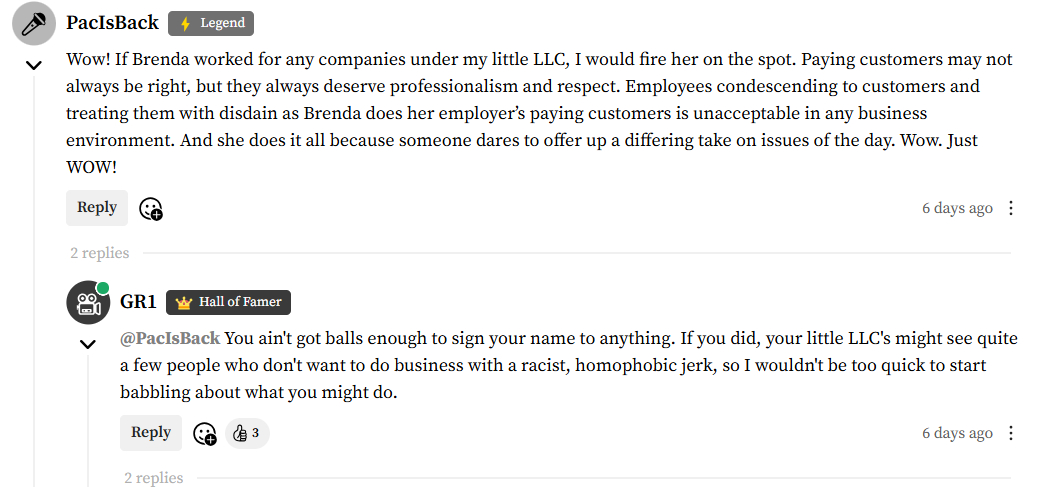
Stomper further advised, “The phrase ‘the customer is always right’ can sometimes be a lazy approach to problem-solving. You delegate your job to the customer. Rather than delving into the root of the problem and coming up with innovative solutions, businesses might simply give in to every customer demand. This might lead to short-term satisfaction, but it can also stifle innovation and growth in the long run. …
“Instead of sticking to the widely accepted question, ‘Is the customer always right?,’ a more effective question to consider would be, ‘Is this problem worth solving?’ One can gauge this by investigating the real nature of the problem, the value it presents to the user and to the business, and its strategic fit.”
Businesses have to walk a fine line, thinking not only of their customers, but also of the safety and well-being of their staff, as well as the overall health of the business. Unless your payment for services specifically includes the right to abuse staff, just don’t.
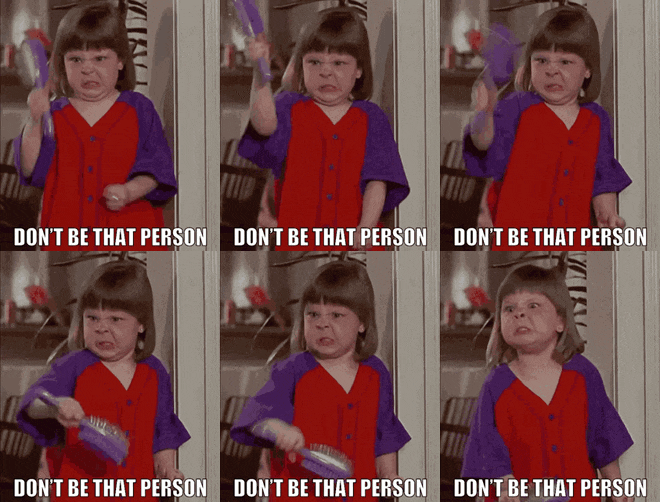
I’m reminded of the messaging many of us put forth during the pandemic, along the lines of, “When did it become necessary to remind people that we should be care about our fellow humans?”
The answer apparently is when so many people decided that only they and those who think like them are worthy of care. This attitude of entitlement pervades our culture.
David Kelley of Louann told me it’s “[n]arcissism, pure and simple. Everyone has a camera which has a phone so everyone can be the center of attention in their own little world. Andy Warhol was right: Everyone will be famous for 15 minutes. TikTok, Facebook, Instagram, Snapchat, people can act like total jerks and morons but don’t care because people will see them. Simple narcissism.”
I yearn for people to be, more often than not, kind to one another, to give others the benefit of the doubt, and to treat each other as they wish to be treated.
Or more simply, just don’t be a jerk.
 Serenity is a fuzzy belly