
It’s hard to feel the need to expound on things that should matter to all of us in a more-perfect world, not just for one’s own mental well-being, but for those who feel that we should be more optimistic.
(I had one comment last week that, in addition to being more positive, I shouldn’t talk about my aches and pains since we all have them. That’s kind of the point, though, since so many people tend to forget that most of us writers are just like you, with the same worries, illnesses, pains, etc. We were often taught that we shouldn’t really write about that sort of stuff, but I think more of us have found that it connects us more with our readers when we’re honest about the trials and tribulations we go through. So there.)
Unfortunately, the world doesn’t quite merit a lot of optimism at the moment, and though I am an optimist by nature, I’m also a realist: I hope for the best, but prepare for the worst.
So many see their rights of free expression and association at risk, and it doesn’t help that some in the media seem to have rolled over, perhaps in hopes they’ll get a pass if/when a crackdown takes place (good Lord, the Las Vegas paper, which was already in the tank for the current White House resident went really overboard with its editorial on his UN speech). That feeling of liberties being curtailed is nothing new, unfortunately.
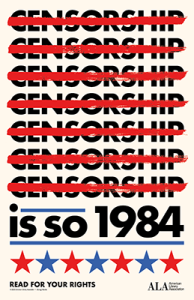
The American Library Association and Banned Books Week took a page from George Orwell’s most famous work for this year’s Banned Books Week theme: “Censorship Is So 1984. Read for Your Rights.” Banned Books Week started Sunday and runs through Saturday.
Betsy Gomez wrote in the press release on the group’s site: “Current efforts to ban books and information held in schools, libraries, archives, and bookstores are a truth close to fiction—namely, the depiction of extreme censorship by an oppressive regime in George Orwell’s cautionary and prescient tale ‘1984.’ The Banned Books Week 2025 theme reminds us that the right to read belongs to all of us, that censorship has no place in contemporary society, and that we must defend our rights.”
Barbara Stripling, coalition chair for Banned Books Week, noted, “Censorship is never the path to truth. All of our lives are enriched when our libraries and schools provide the books that allow us to see ourselves, understand others, and discover the world.”
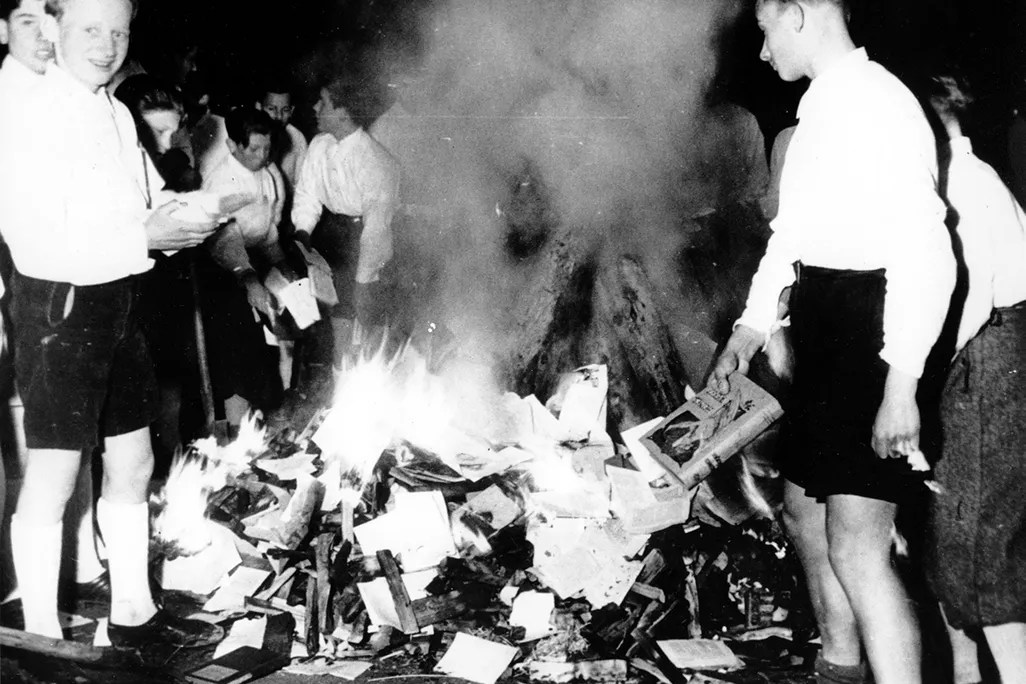
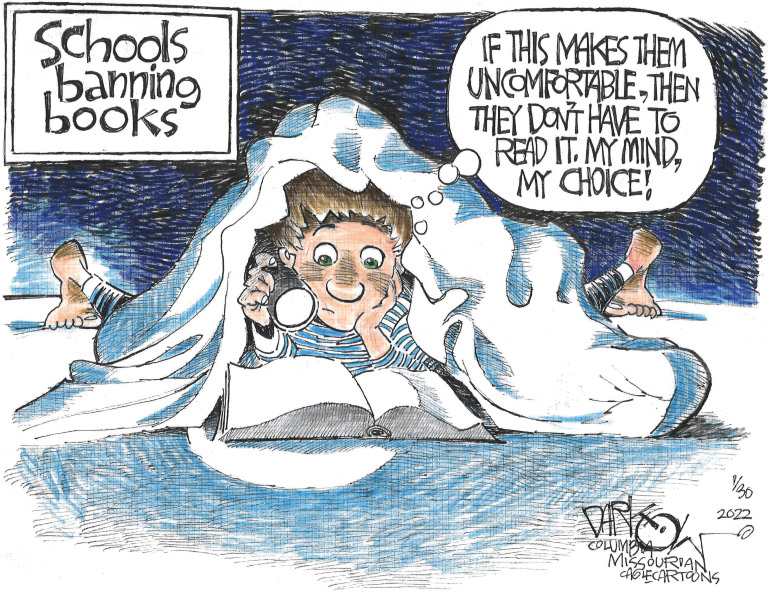
As has often been noted, book-banners are rarely on the right side of history (recall the Nazis and their frequent book-burnings, for one). And yes, while some argue that books aren’t actually being banned, the reality is that they’re often being taken off public library shelves altogether or placed in restricted areas, which for some people has the same effect. Not everyone can afford to buy books when they wish, so even if the book is available, if it’s for a fee or comes with onerous requirements, it’s not really available.
Gomez wrote in the press release, “The majority of book censorship attempts that ALA tracked in 2024 come from organized movements. Pressure groups and government entities that include elected officials, board members, and administrators initiated 72 percent of demands to censor books in school and public libraries. The 120 titles most frequently targeted for censorship during 2024 are all identified on partisan book rating sites, which provide tools for activists to demand the censorship of library books.”
Further, it’s estimated that anywhere from just 1 to 3 percent of the U.S. population is responsible for calls to censor books. Doesn’t exactly smack of grass-roots campaigning based on majority sentiment, now, does it?
Still, there’s good news on the book front, even amid repressive efforts, as “Reading Rainbow” has returned.
I was in my teens when the show started, but I still watched occasionally, and loved the presence LeVar Burton brought to it. The show ran from 1983 to 2006, winning more than 250 awards, including 26 Emmy Awards, and a Peabody Award. Now the show is being relaunched, despite the defunding of PBS and PBS Kids, where it ran before, with Mychal Threets, known on social media as Mychal the Librarian, as its host.
Last year Threets began his partnership with PBS as its resident librarian, producing social-media content to promote literacy. Last week, the “Reading Rainbow” revival was announced, with the first episode premiering this past Saturday (I watched it, and it was a lot of fun; you can see it here). This time around, the show is produced by Embassy Row and Buffalo Toronto Public Media, and airs on the Kidzuko YouTube channel.
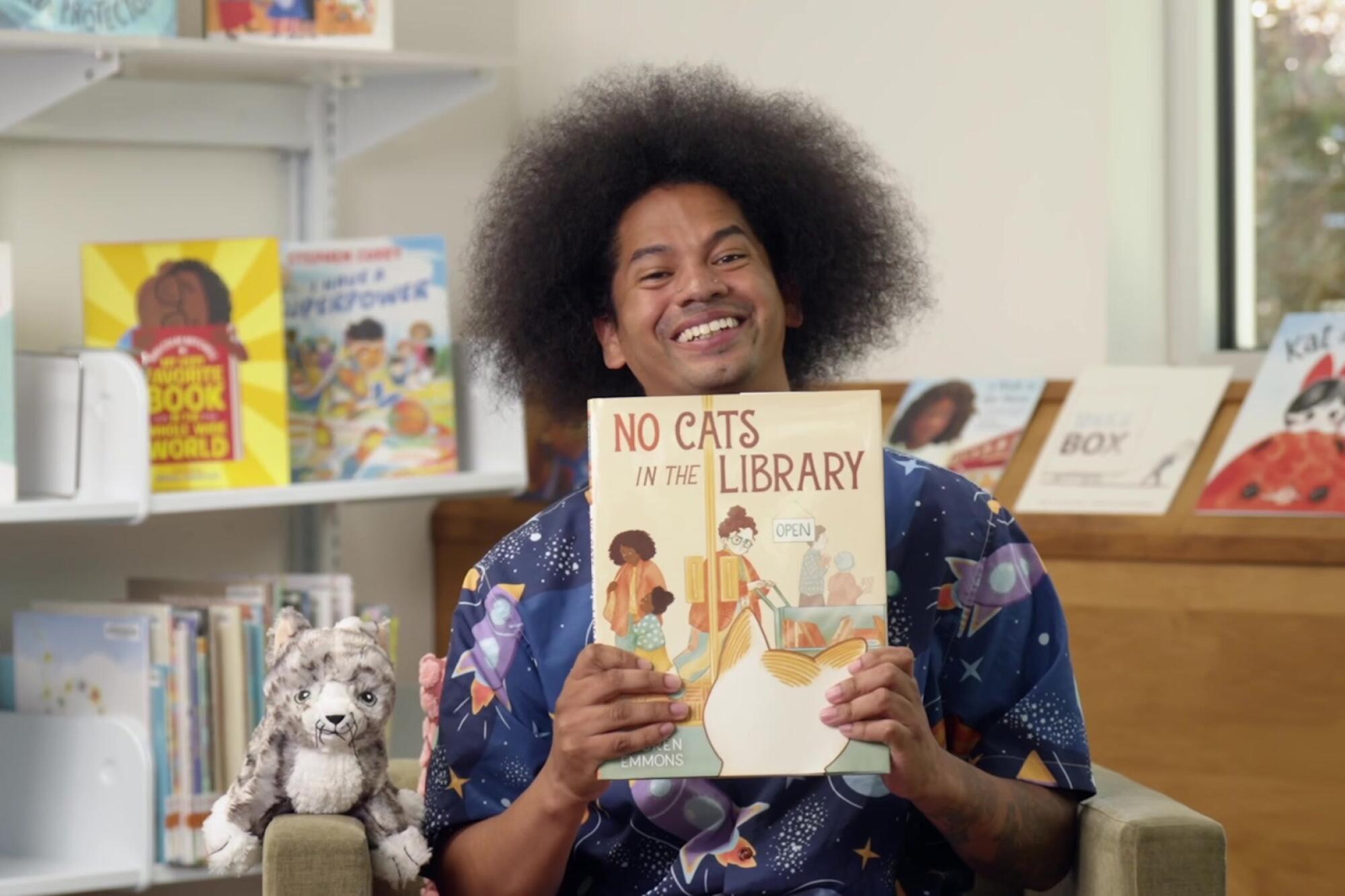
In an interview with The New York Times about the revival, Threets said, “All I’ve ever sought to do is amplify library people and library kids. And remind them that every single one of them are readers, they’re all capable, they’re all worthy.”
Threets is the perfect person to head the revival, as an actual librarian and proponent of “library joy” for adults and kids. Lord knows we need to encourage better literacy in this country, and with literacy often comes understanding that we’re all in this together whether we like it or not.
We could use more of that right now.
📰🥀📰🥀📰🥀📰
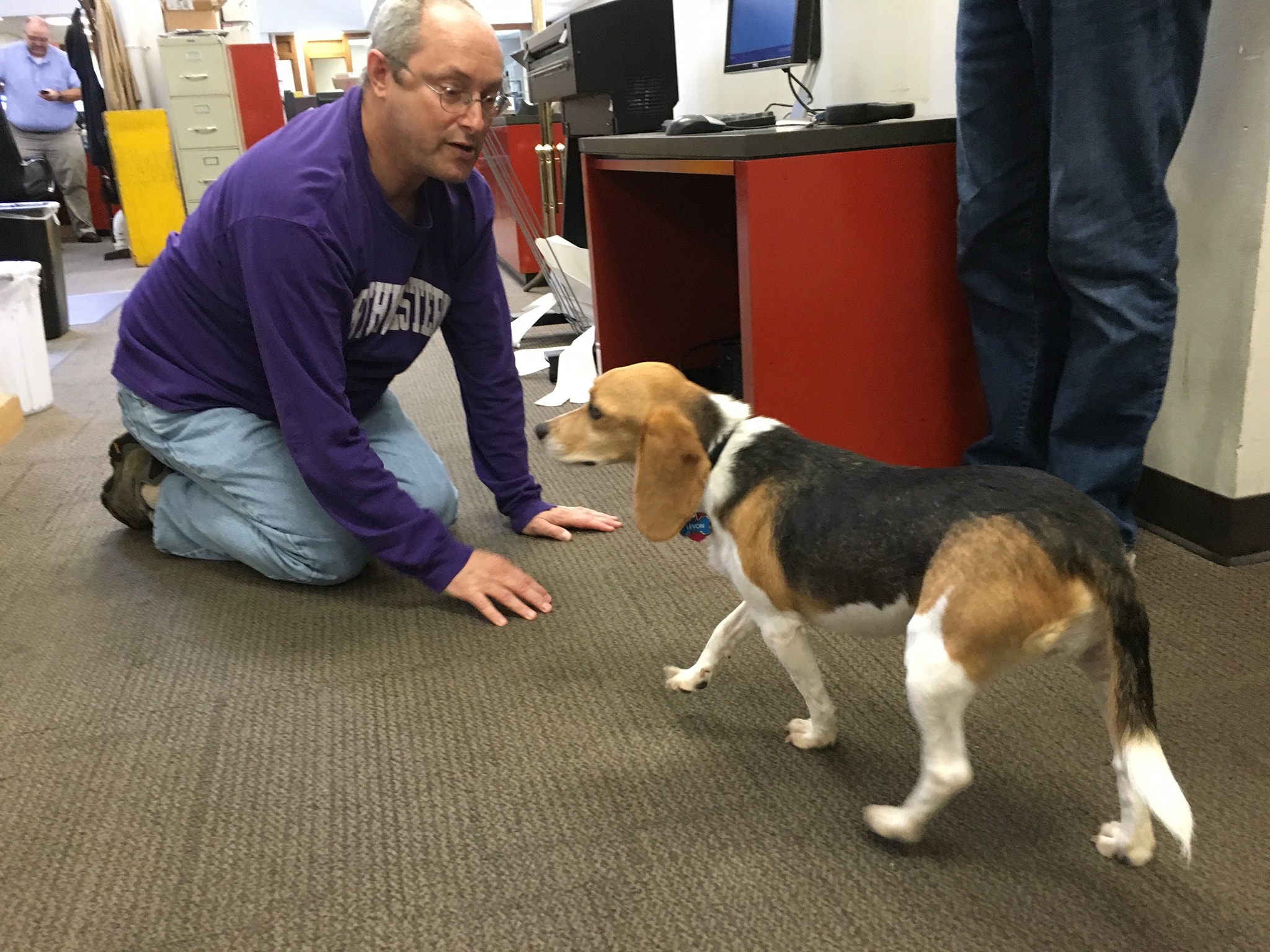
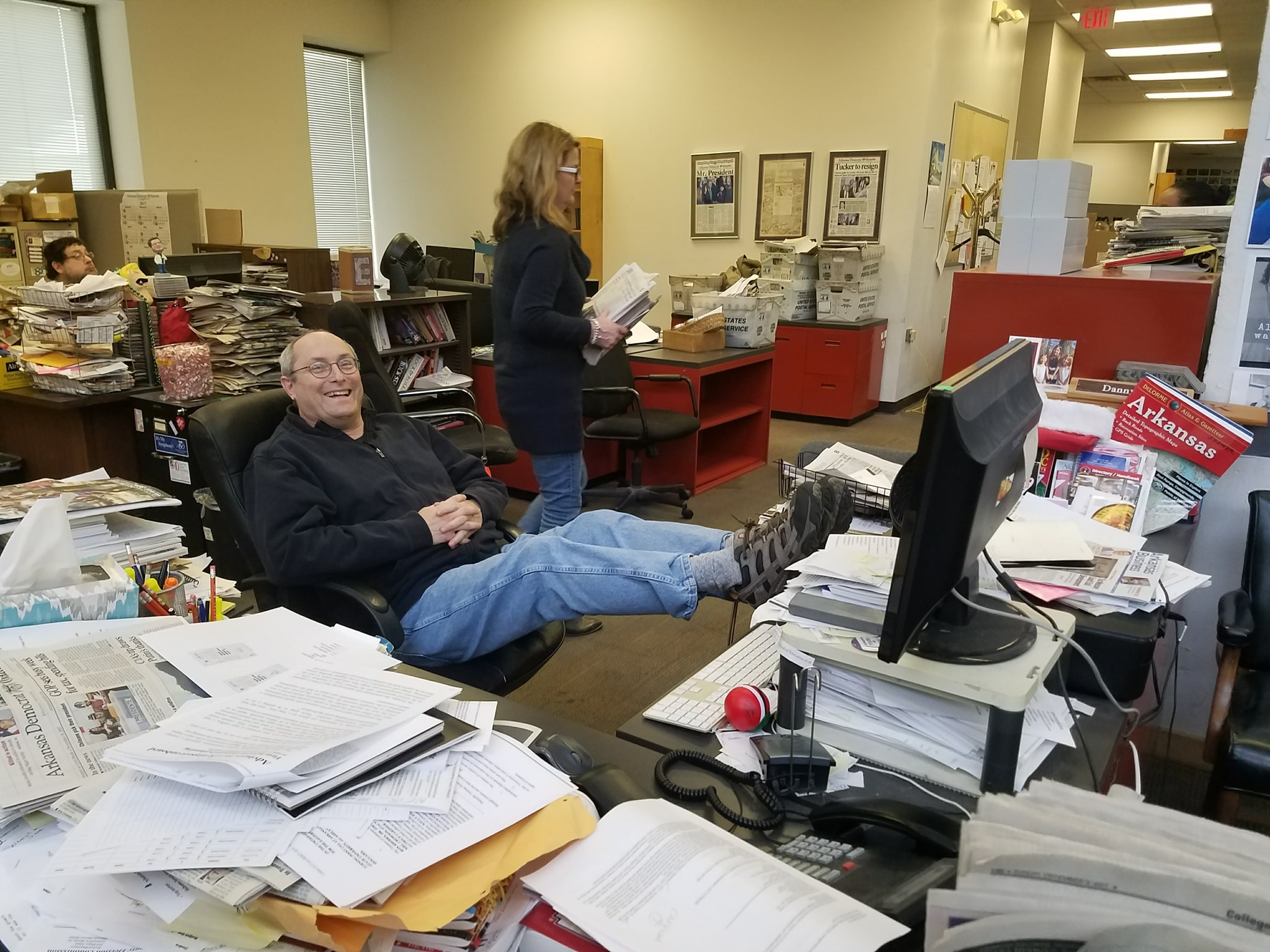
I’d like to end by recognizing the life of a wonderful member of the Arkansas Democrat-Gazette family, Danny Shameer.
It’s taken me a while to put my thoughts together on Danny, who was genuinely one of the sweetest, goofiest and kindest people I’ve ever known. He died Monday after about a two-year battle with pancreatic and liver cancer. He was born in 1959, the same year my mom graduated from high school, in Tel Aviv, Israel (when he and his mom and sister planned a family trip to Israel about 20 years ago, he had to get a waiver from mandatory military service, if I remember correctly, before they could enter the country), moved with his family to the Bronx when he was a toddler, later moving to Stamford, Conn., then college before eventually making his way to Arkansas and the Arkansas Democrat, and then the Democrat-Gazette. He returned last year to Stamford and his mom after his cancer diagnosis, and worked remotely.
When I first joined the paper as a city desk clerk in April 1997, Danny was an education reporter, but he would soon become a city desk editor, and one of the best, in my opinion, that ever graced that desk. He was conscientious and asked the questions that needed to be asked, whether it was of the reporter, a source, or another editor. If you ever needed help on the Freedom of Information Act (what it covered, how to formulate an FOI request, when to involve the attorneys for recalcitrant requestees, etc.), he was the go-to guy.
I could go on for days about Danny’s work ethic (and his constant worry that he was going to be fired, unfounded, really, because c’mon), but for me, Danny was more than an editor, writer, mentor, and font of knowledge.
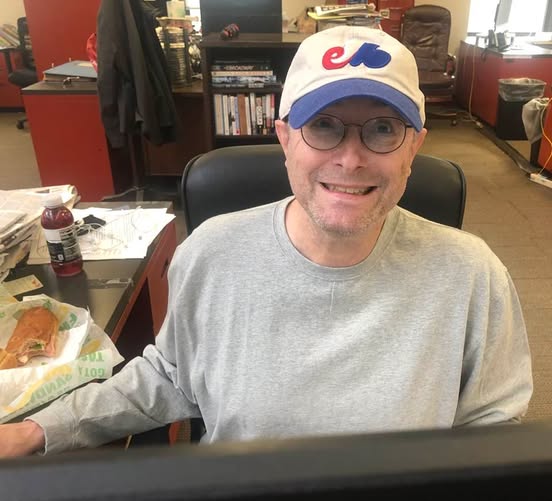
He was another brother to me who I could tease and joke around with since I so often was not able to see my brothers by blood. He called me Shoeless Joe (after the White Sox legend caught up in and banned from baseball for his alleged role in the Black Sox scandal) because of my habit of walking around the office in my socks (seriously, it’s more comfortable, and besides, I have some pretty cool socks). More than once when I was in dire straits he lent me money, then refused to take payment when I tried to pay him back. At least once I ended up with a concert ticket from him because he had to be out of town and didn’t want it to go to waste (I remember specifically a sold-out Eric Clapton concert I got to go to, before Clapton’s full dickishness was revealed during the pandemic; Clapton was great, but his opener, Robert Randolph and the Family Band, was even better).
I don’t have many pictures of Danny (and I borrowed the ones in this post) because I didn’t have a cell phone for most of the time we were friends, and we just didn’t pose for pictures, really. Now I miss that, and I envy those who had a picture-taking relationship with him.
Sometimes in the course of a day, I’d notice that Danny was getting agitated, so if I could, I’d steer him into the stairwell so he could blow off steam with a friend. I and other friends tried for years to get him to get a dog of his own (he LOVED dogs so much), partly to help with his stress level, but he never did, saying he’d feel guilty about leaving the dog alone for so long since he worked so much; he was not swayed by our argument that he wouldn’t work so much if he had a dog. He really did have ink in his blood. It’s kind of apropos, then, that he died during National Newspaper week (because we can’t just celebrate libraries this week; books and newspapers are vital to our rights as Americans).
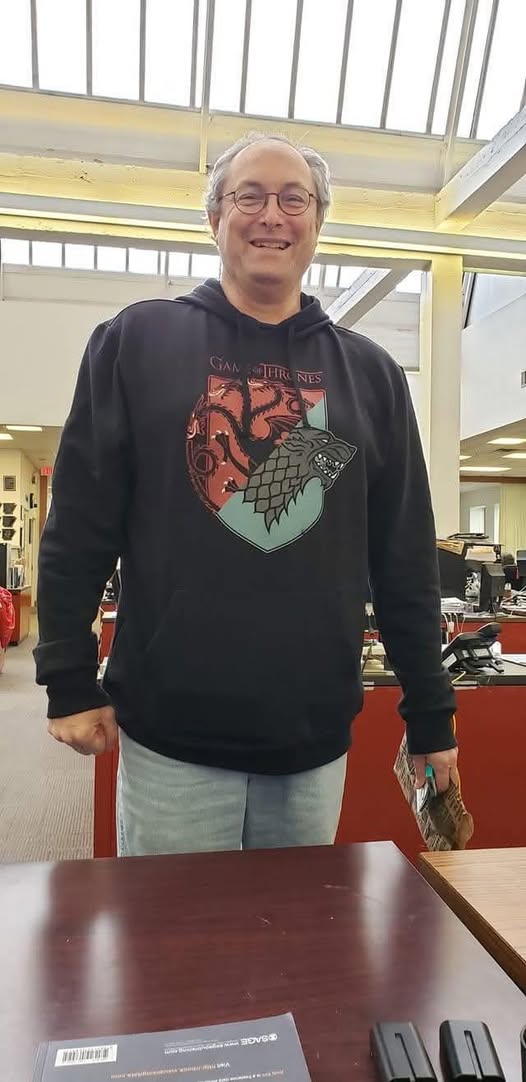
I think what I remember most about Danny is the stories; always outlandish (usually about time he’d spent in prison, on the road with Bob Dylan, or the like, completely made up), and always entertaining. We’d talk about all sorts of things and he’d ask me how things were back in Ohio (since he knew I was from Dayton, Ark. … he’d always “mistakenly” say it was Ohio; it was our inside joke). The times I made him snort-laugh were just the best.
I hadn’t seen Danny much since the pandemic started, partly because I’ve still been mostly working from home (or wherever I happen to be, since I house/cat-sit on the side, and a few of my charges require extra help) ever since, but did run into him a few times over the past few years when I went in to the office, and he was still the same sweet, lovely guy I’d come to love and claim as a fourth brother.
I’ll always remember the kind, sweet, brilliant, goofy and cool guy who treated his friends as family and who fought fiercely for integrity in the journalism business.
Danny, we were all lucky to have known and loved you. Rest well.
 Serenity is a fuzzy belly