
Taking a weekly break from social media is something I’ve done for several years, but especially since the pandemic when I finally joined Facebook. The only social-media activity I generally do on Saturday is prepare my Sunday blog post, and lately I’ve been taking off every other Sunday for some much-needed rest (between my “real job,” house/cat-sitting and adjusting to my CPAP, it’s been a lot lately).
A friend this past weekend declared she would start taking a social-media break as well because the political atmosphere is just too much. I can’t blame her at all, and have long advocated a mental-health break for social-media users.
Another option to preserve mental health has arisen in the past few years: hopescrolling.
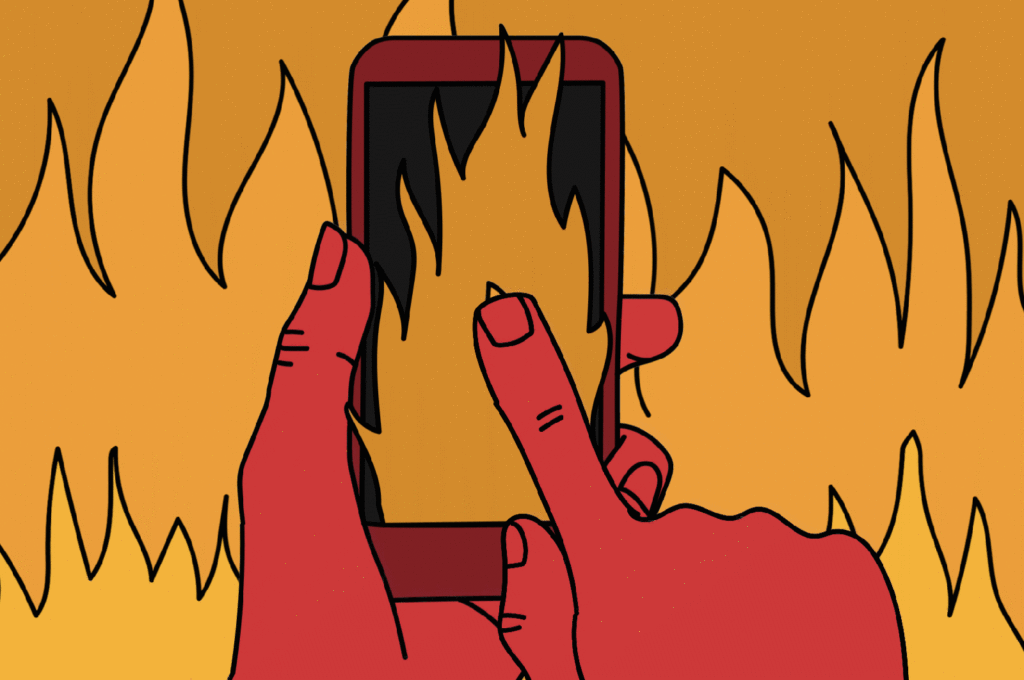
If you spend much time on social media at all, you’re likely familiar with the concept of doomscrolling, which Urban Dictionary defines as “When you keep scrolling through all of your social media feeds, looking for the most recent upsetting news about the latest catastrophe. The amount of time spent doing this is directly proportional to how much worse you’re going to feel after you’re done.” (There’s a more succinct definition there, but it’s hardly family-friendly; it is Urban Dictionary, after all.)
It’s hard on some social media platforms to escape the tendency to doomscroll, especially when you consider all that’s been happening in the world, especially in the past decade or so. Resentment politics let you stew in your own juices as you scroll your feed until the moment you also join the fray because your blood pressure and ire have built up so much that you have to release it, truth, propriety, common sense and sanity be damned.
On the other hand, Urban Dictionary defines hopescrolling as “The act of consciously looking/consuming content that would serve to uplift one’s general mood or views.” According to a May 2021 report by Katerina Schenke from Connected Learning Alliance, the countermovement and hashtag has been gaining traction since fall 2020.
While in the throes of the pandemic, Schenke wrote, many teens reported “being more stressed out, having limited social interaction, and increased conflict at home with their parents,” but noted that the pandemic also eliminated or reduced some stressors for them, as well as raised awareness of mental health challenges, one of which is social media.
Social media can be used for good, Schenke noted, advising parents of how to encourage teens to use it in more hopeful ways, such as seeking out social media that makes them feel good about themselves, especially those “accounts that encourage inclusivity, belonging and personal growth”; encouraging teens to take a break or block/ignore those accounts that are toxic; and evaluating online communities before joining them. She also encourages parents to model good social media practices as well by monitoring their own posts and how much time they spend on social media.
I never really posted on X/Twitter, and my account only remains open because there are some things I can’t see if I’m not signed in, and I sometimes need to check tweets while editing. It’s a hellhole at the best of times, so if Elon Musk finally decides to charge all account holders, I’ll just have to start requiring those who mention tweets to send me screenshots. Pay for constant abuse? No, thank you!

While I have an Instagram account, I haven’t posted to it in a long while, and instead use that login mostly for my Threads account.
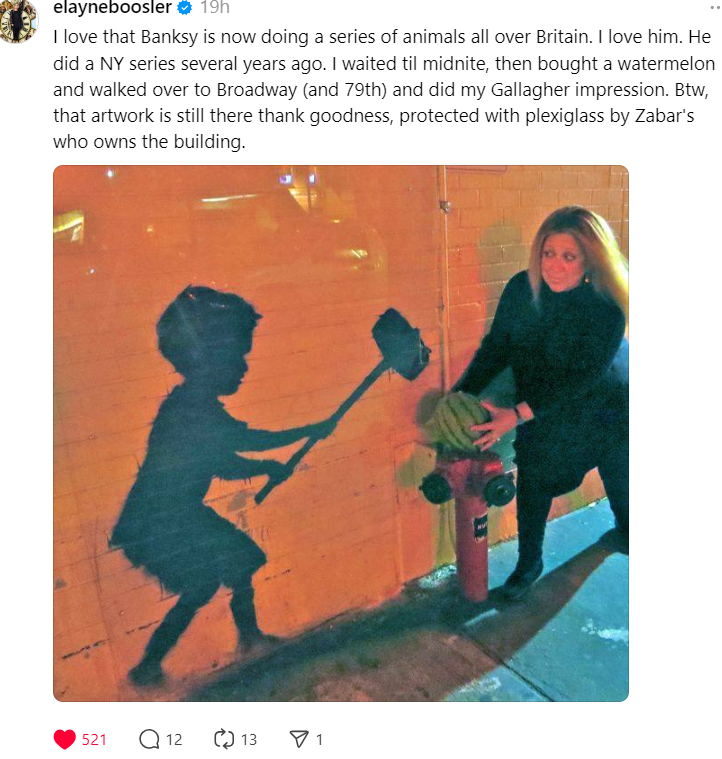
Threads and Facebook are where the majority of my social-media minutes go, and though the two are owned by the same company, I lose myself to hopescrolling more often on Threads, partly as a function of how we early adopters were able to teach the algorithm that we wanted to see more joy and less doom. There will always be those who seek out things to be offended by (see the last two weeks’ columns for proof of that), and you can find angry-making content, but we don’t have to be that way.
We share what’s going on in our lives, photographs we’ve taken, things that make us a laugh and think, and we’re kind to one another. We block trolls/hateful commenters (and spam and pornbots) rather than responding to them while still encouraging rational discussion. The algorithm gives us more content based on what we engage with, so if your feed is looking angry, you might be the reason.
And we’re not ignoring bad news (or news in general) either; generally we go to actual news sites for that rather than social media. Novel idea, that. It’s almost like we recognize that responsible members of the press aren’t the enemy. We post links to our content on social media, and the more responsible of us (even opinion staff members) are careful about what we post even in comments. (Heck, even though I have friends running for office, I don’t even join campaign groups other than for specific ballot issues because I have enough trouble with people thinking I’m a hyperpartisan lackey for whatever party they’re against, regardless of the fact that I’m center-left to center-right on just about everything.)
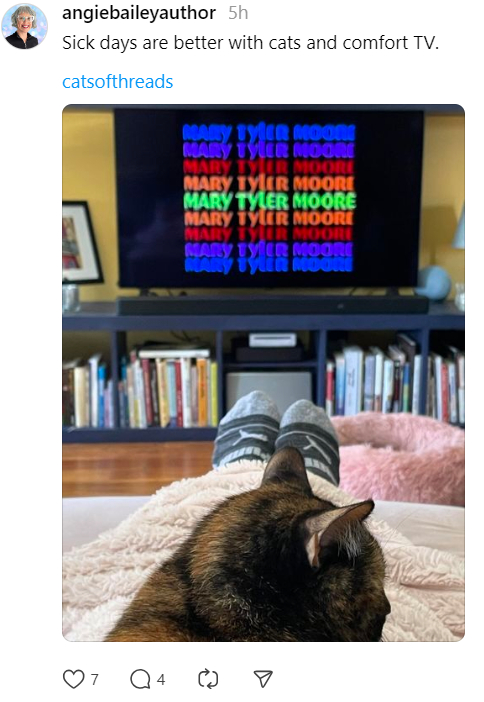
The result of this behavior has been a whole lot of hopescrolling for many of us … through lots of cat and dog pictures, landscape and macro photography, gentle humor (lots of word-nerd play in that), the sharing of joy and sorrow, and an overall attitude of live and let live.
Author Elle Harrigan wrote on Medium Sunday: “My timeline is blowing up with happy emojis: smiley faces, hearts, clapping hands, and teary faces of ebullient joy. It’s a little like walking into a Taylor Swift meet and greet (I imagine). And the comments, usually a mix of nice and ruthlessly mean, have become civil. Like downright, authentically nice. The kind of nice our mothers taught us to be when they said: ‘If you can’t say anything nice, don’t say anything at all.’ …
“It’s as if the lunchroom monitor arrived and threw a group of out-of-control tweens that look that says, your next stop is the principal’s office. A new, unspoken but vehemently observed rule has entered the social sphere. It says: Behave or you’re out. The result of this cleaned-up, friendly, take-care-of-your-words attitude has led to an unexpectedly addictive behavior: hopescrolling.”
That is the exact opposite of what happens most days on newspaper comment sections, and one of the reasons so many publications have shut down those sections entirely or partially (our paper still allows comments on opinion pieces, which can result in the feeling that you need to bathe after reading the comments). Who wants to go somewhere where there’s a stream of constant abuse, except for people with a certain pathological drive for that, either dishing it out or taking it?
Nope, not me. I check the comments, but rarely if ever reply to them anymore on the newspaper site, and I’m usually too busy during the week to respond to blog comments. But on Facebook and Threads (especially Threads), I find much to comment on in the short periods of time during the day I allow myself time away from work, and it’s heavenly.
Harrigan said, “People are feeling hopeful again after a period of dark, doom-speaking in politics, the covid epidemic, and the erosion of civility in our virtual public spaces.” The reasons for that, she believes, are the growing instances of kindness, empathy and joy seen on social media.
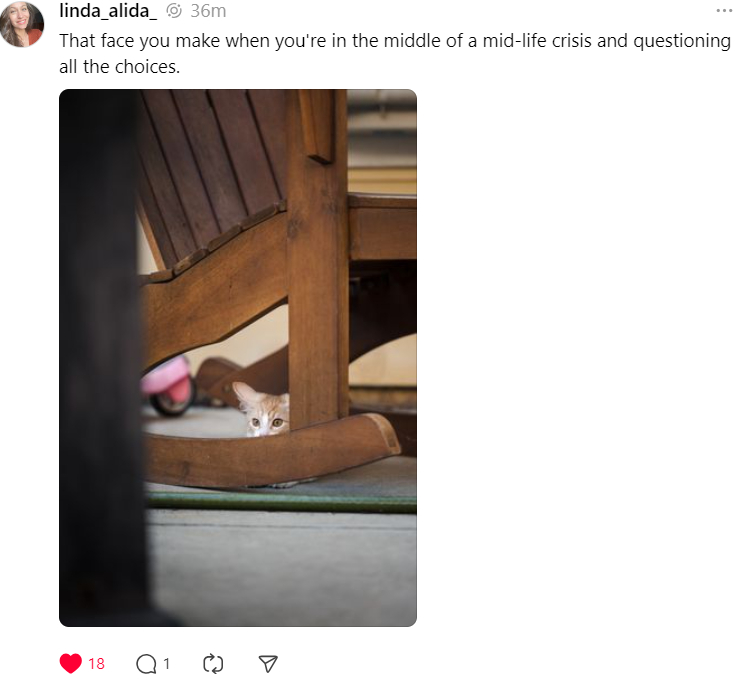
I have made so many friends on Threads who are just living their lives, and happy to share what gives them joy as well as their struggles, knowing that they’re more likely to find support there than rancor. There are just so many of my people there: word nerds, writers, photographers, cat people, social anxiety sufferers, good people who support other good people and who fight for those who are hurt by this world. It’s hard some nights to shut down my feed because of the love and support I find there. Sure, there are also bots and trolls, but they don’t get much air because toxicity is unwelcome. Kinda like it used to be in the real world.
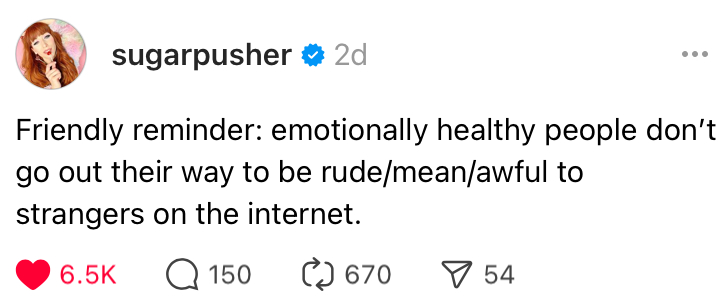
As Harrigan wrote, “Hopescrolling is therapy. It helps us recover a sense of trust in humanity. That there is such a thing as decency in the world. It restores our well-being with dopamine shots and we can’t get enough.”
I know I can’t.
“Which leads to the one, inescapable, consequence of hopescrolling,” Harrigan wrote: “You WILL become addicted to kindness. To the outreach of empathy. To the flaming dumpster videos and satirical memes. You’ll punch the heart so many times your finger will lose all feeling. And you’ll tell complete strangers you haven’t felt so much hope in a really long time.”
Hope is a very good thing.
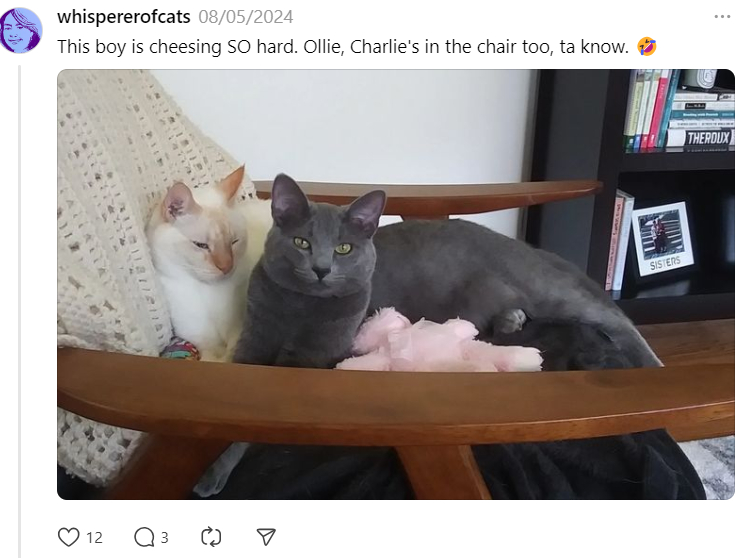
 Serenity is a fuzzy belly