

I’m horrible at formal debate, which I did for a short while in high school (my only debate competition win was against someone I knew through county 4-H to be arrogant and annoying, so I was motivated). While part of my brain is great—nay, obsessed—with squirreling away knowledge, it doesn’t like to communicate on the spot with the part of my brain that controls speech. Extemporaneous speaking is thus not my forte, and the only time I can do anything close to it is in improv acting, simply because I’m not being myself.
As myself, I’m so concerned with getting quotes and factual information right that my mouth and brain freeze up (and my time in debate was long before it began eroding; I never would be able to do it now). It’s why I’m much better at stating my case in writing; I get to review it over and over again before making it public … and I’ll still make mistakes because I’m human. (You should see the look on my face when I see a typo in one of my Facebook memories. 😬)
As much as I disliked debate in high school, there is one part of it that I love: It hews to the rules of logic and structure. Online comment boards, not so much. My eyes are in a near-constant roll any time I get too far into reading the comments.
For instance, one anonymous troll is still convinced that I once wrote an entire column saying I was nonpartisan (though he’s never produced said column despite being asked numerous times). Having the entirety of what I’ve written for the paper and my blog (and my limited social media) at my fingertips, I can state confidently that I have never said I’m nonpartisan. It would defy the rules of logic for me to say that, as I have opinions of my own. (He also believes I moderate the comments on the newspaper’s site and am online pretty much 24/7 so had to have seen a post from another commenter supposedly doxxing him and his family. I don’t, I’m not, and I didn’t, plus no one but the troll’s compatriots have said they saw it, and no one thought to make a screenshot of it, apparently. 🙄)
I have said, among other things: I’m (like most people) middle of the road on a lot of things, liberal on some things, and conservative on some things; I’m a part-time woke radical moderate (in my Facebook bio, and obviously a joke, as one cannot be both radical and moderate); I’m politically unaffiliated/homeless because no party really speaks to who I am.
What I have called nonpartisan are certain fact-checking sites (like FactCheck.org and PolitiFact), mostly because they are unaffiliated with any political cause; are open about their funding sources, which generally come from donations from across the spectrum; and show their work, meaning they link to their information sources so that readers can go to them to understand why they made the judgment they did on whether something is true or false. Their sources, by the way, tend to be primary sources such as original documents, interviews/notes, videos, etc., rather than only links to other things they’ve written.
But yeah, that’s logical. And logic demands that when we’re presented with information, we want to make sure it’s true before spreading it far and wide.
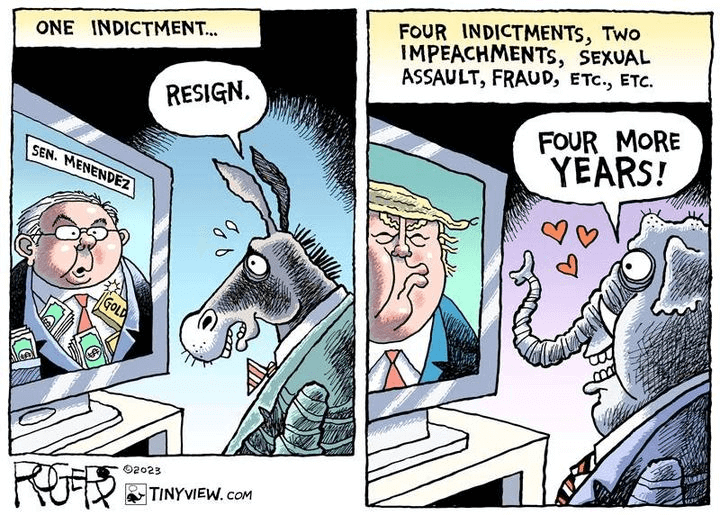
At least it used to. Now that politics has infected so much of our lives, it short-circuits the logic center of our brains too often, somewhat akin to how my knowledge and speech centers don’t communicate well if at all when I’m asked to speak off-the-cuff (so please, stop asking me to speak to your club unless I know all of you and there will be lots of chocolate). Too many people have allowed political beliefs (which often aren’t all that logical to begin with; don’t get me started on all the people who argue against their own point all the time) to determine what they believe about reality. Witness those who still believe that Jan. 6, 2021, at the U.S. Capitol was just a typical tourist outing … I don’t want to know where typical tourists beat police officers and smear excrement on walls, unless it’s to know where not to go. I’m much more into quiet tours at museums, outings at concerts or restaurants and restful places to wind down and sleep. And being nerdy. Opportunities to be nerdy are heaven for me.
Now, when someone whose beliefs coincide with ours (or that we think believes as we do because someone else said they do; you don’t really think Elon Musk is fighting for the little guy, do you?) says something, we accept it as true. We don’t question it. We don’t ask for receipts. We just accept their authority on the subject, no matter how much we should want to make sure that they know what they’re talking about.
I don’t play that way. I back up what I say with knowledge from experts in the field. I bring the receipts (and on my blog, I link to those sources so that you can read the entire piece I quote from in complete context; this post would be an exception since there’s not a lot to link to). Of course, one of the trolls seems to think that I’m thus holding myself out as the expert … he doesn’t understand how journalism in general, much less opinion journalism, works, obviously (and another faults me for not interviewing Elon Musk, like he would deign to speak with me, a little-known columnist/editor at a statewide paper, especially when it would take time away from mean-tweeting). Because I’m not speaking extemporaneously, you can be assured that I’ve assembled facts upon which to base my opinion (that’s what opinion journalists do, though I have different standards for facts than do some I won’t mention). And because I’ve always been overly cautious, even before I took communications law and ethics in college, you know I’m not going to call someone a criminal who hasn’t been formally adjudicated as such (something more people could stand to adopt).

So when I say that Elon Musk and his minions have neither the knowledge nor the authority to do what they’re doing in our government, know that I’m basing that on the facts that his minions are coders/programmers rather than forensic accountants with knowledge of the systems they’re “auditing” (and apparently not enough knowledge of old programming languages like COBOL), the separation of powers/checks and balances written into the Constitution, and that what they’re doing is being shielded from scrutiny, though we’re finally seeing a little bit of pushback, but not as much as needed from Congress, where we really need to see it since Congress makes the laws and has the power of the purse.
Actual auditors gather all the information and analyze it before making a judgment call. It takes time, expertise and accounting knowledge. They don’t take a few things out of context and release them on social media willy-nilly to make their case because their case is made instead on the basis of long, luxurious swims in data, and backed up by receipts. They also are very careful about differentiating between waste, abuse, and fraud, which are separate and distinct categories.
But sure, go ahead and believe claims made without proof simply because they’re made by “your side.” Let me know how that works out for you when those claims mean you (or someone you love) lose your livelihood.
Get the receipts, people.

 Serenity is a fuzzy belly