

Note to readers: The Arkansas Press Association asked for columns and editorials for distribution for National Newspaper Week (Oct. 1-7), and this (except for the bit at the end) was my contribution to the effort. A slightly shorter version appears in Wednesday’s paper. All the editorial cartoons used here were part of the distribution package.
🗞🗞🗞🗞🗞
When I was growing up about 20 miles south of Fort Smith, Ark., I had multiple newspapers to choose from: the daily Southwest Times Record out of Fort Smith that covered the River Valley region, plus the weekly Mansfield Citizen and the Greenwood Democrat, as well as the school paper I cut my teeth on, the Mansfield Tiger Tale. For statewide news, there were the Arkansas Democrat and the Arkansas Gazette dailies. In college, I added the Jonesboro Sun (owned by the Troutt family until 2000), the ASU Herald and The Commercial Appeal out of Memphis to my repertoire.
Midway through my childhood in 1980, Arkansas had 154 total newspapers, including 34 dailies, seven semi-weeklies and 113 weeklies, according to the Arkansas Press Association. A few months before I graduated with the first of two degrees from Arkansas State University in 1991, the 13-year Little Rock newspaper war ended, the victor (the Arkansas Democrat) taking on the assets of the fallen Arkansas Gazette, which had been bought by Gannett just five years earlier.
While that left Arkansas with only one statewide daily, the Arkansas Democrat-Gazette, what was left was locally owned and determined.
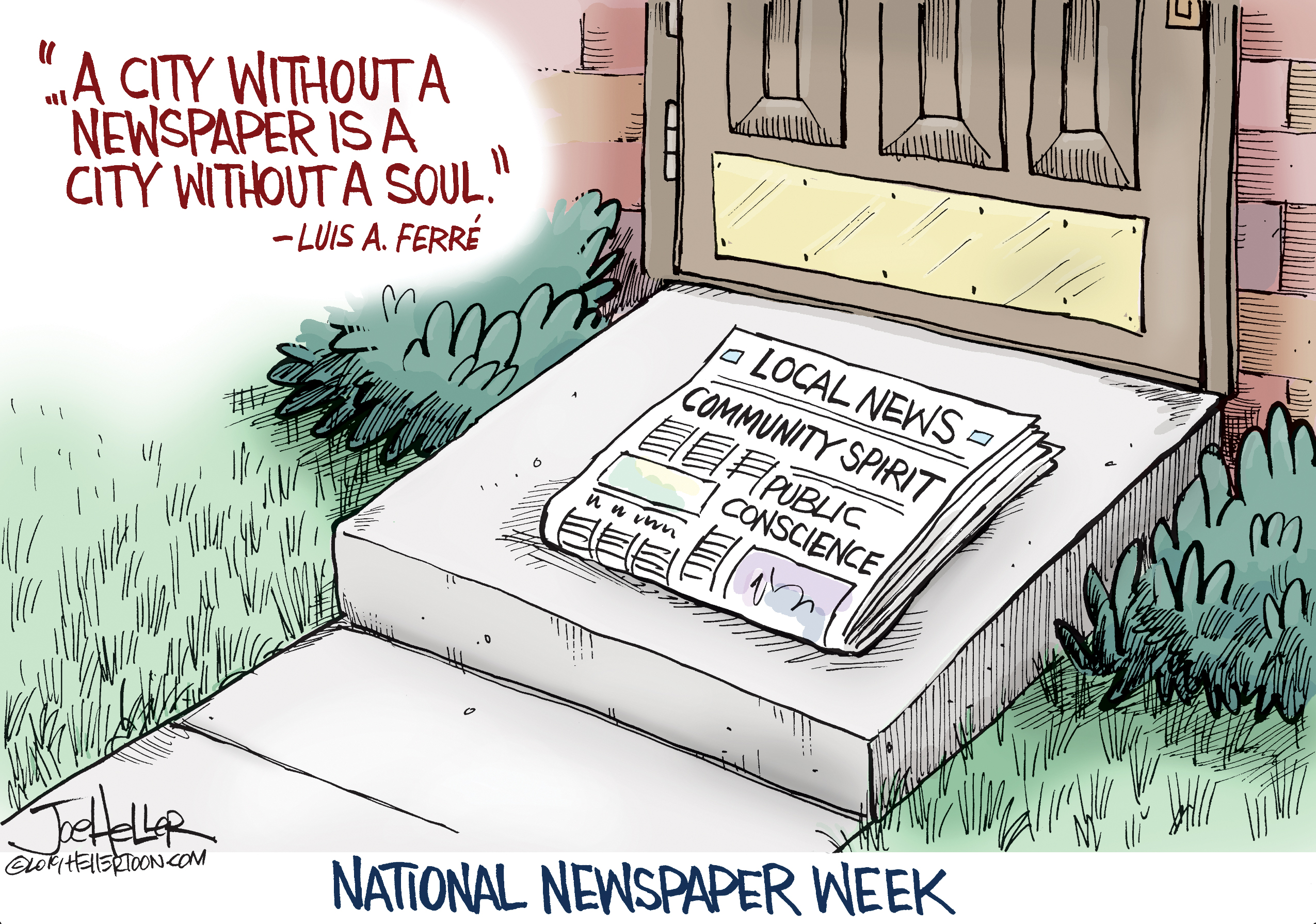
According to Northwestern University’s Medill School of Journalism, Media and Integrated Marketing Communications’ October 2022 State of Local News report, “Newspapers are continuing to vanish at a rapid rate. An average of more than two a week are disappearing. Since 2005, the country has lost more than a fourth of its newspapers (2,500) and is on track to lose a third by 2025. Even though the pandemic was not the catastrophic ‘extinction-level event’ some feared, the country lost more than 360 newspapers between the waning pre-pandemic months of late 2019 and the end of May 2022.
“All but 24 of those papers were weeklies, serving communities ranging in size from a few hundred people to tens of thousands. Most communities that lose a newspaper do not get a digital or print replacement. The country has 6,380 surviving papers: 1,230 dailies and 5,150 weeklies.”
Today Arkansas has 99 total newspapers, and all but one of its 75 counties has at least one local paper (Cross County’s Wynne Progress sustained damage in the March 31 tornado and temporarily closed). Many of the weeklies I’ve read through the years are now gone, online only, or have morphed into magazines, and some venerable papers such as Arkadelphia’s Daily Siftings Herald and the Hope Star are no more.

The Medill 2022 report noted, “More than a fifth of the nation’s citizens live in news deserts—with very limited access to local news—or in communities at risk of becoming news deserts. Seventy million people live in the more than 200 counties without a newspaper, or in the 1,630 counties with only one paper—usually a weekly—covering multiple communities spread over a vast area. Increasingly, affluent suburban communities are losing their only newspapers as large chains merge underperforming weeklies or shutter them entirely. However, most communities that lose newspapers and do not have an alternative source of local news are poorer, older and lack affordable and reliable high-speed digital service that allows residents to access the important and relevant journalism being produced by the country’s surviving newspapers and digital sites.”
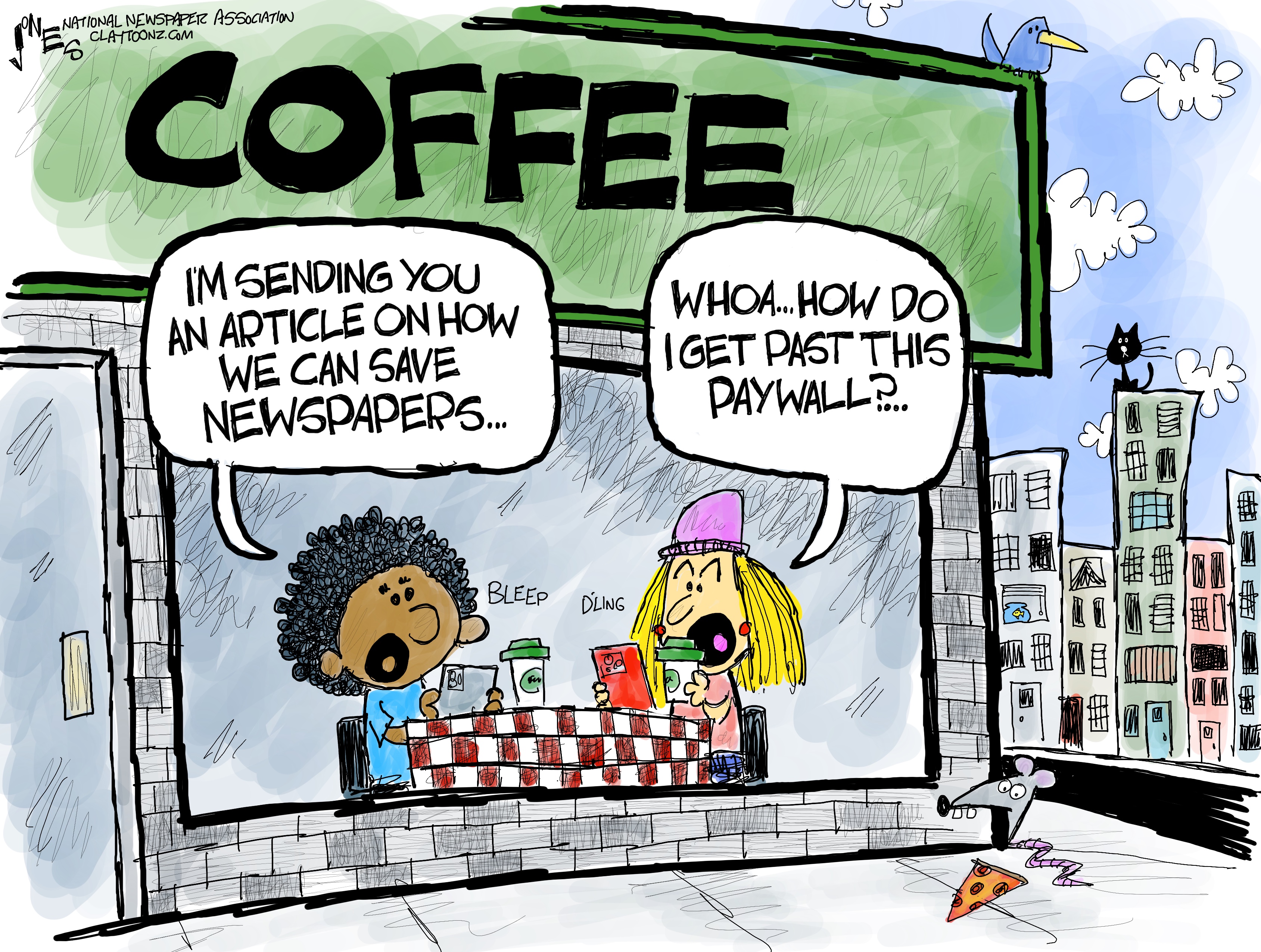
While Arkansas has newspapers in nearly every county, the potential for news deserts is still there.
Lillie Fears, a professor of journalism at Arkansas State University, told this newspaper’s Josh Snyder in August that the ability of residents to find area news is essential to the health of the community. “When you don’t have access to news, you’re less likely to understand why things are the way they are,” she said.
Local news plays a vital role in keeping government and schools accountable, Fears said, and research indicates that corruption rises as news dwindles. “The temptation, it just grows,” she said.
What can we do to not only survive as a check on bureaucracy but as a business? Adapt. The theme for this year’s National Newspaper Week (Oct. 1-7) is thus quite apropos: “In Print. Online. For You. #NewspapersYourWay.”
The Arkansas Democrat-Gazette has adapted by putting a paywall on much of its online content from the beginning of its website, and more recently by moving away from a daily print edition to a replica edition on iPads provided to subscribers; for most people, the Sunday paper is the only print edition they’ll see each week (there’s just something about doing that crossword with a pen or pencil).
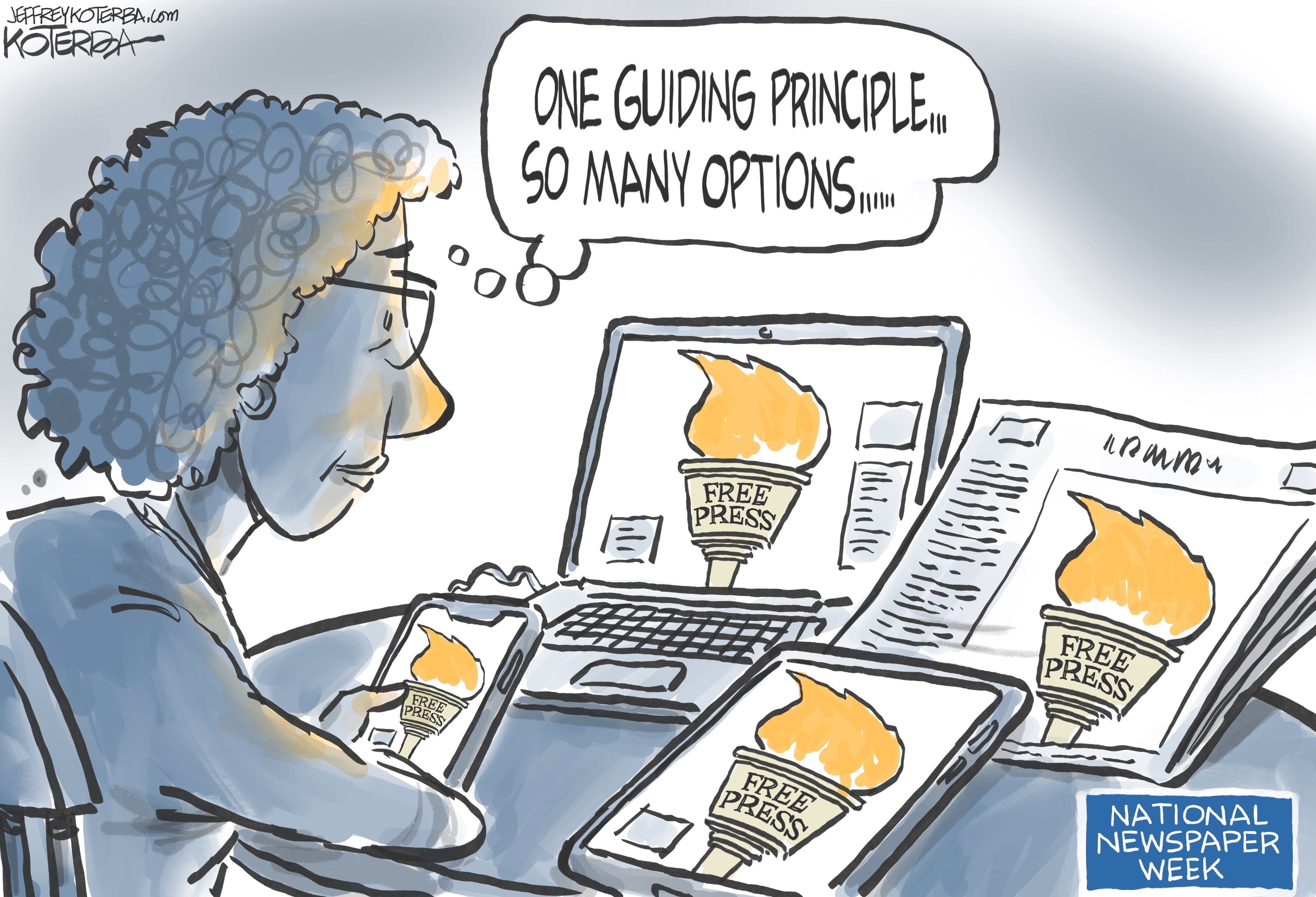
In discussing the change, former publisher and current chairman of the board Walter Hussman Jr. told Mark Jacob of Medill’s Local News Initiative in a story published in January 2020, “We can’t just lose money year after year, and that’s the way it’s going. And I tell them, look, we might still be able to deliver a print edition to you, but it’s not the kind of paper you’re going to want to read, it’s not the kind of paper I’m going to want to publish. It’s going to have a whole lot less news in it. It’s going to have a whole lot fewer reporters and editors covering things. There’s no future in that. That’s what a lot of newspapers are doing, but in my opinion, there’s no future in that.”
There will always be hurdles, such as communities with little to no broadband access (Arkansas is still in the bottom 10 for high-speed Internet), and people who just refuse to read their news off a glowing screen.
Still, we persevere because we must. Newspapers are crucial to our communities, and not just because we want to know who got married or divorced, what the hubbub over at the Exxon station was, or what makes that peach cobbler in the Food section so delicious. We keep a light shining on government, the state, the nation and the world and keep readers informed.
Why? As Fears said, “You need news. Everybody needs news.”
📰📰📰📰📰
You might recall that my degrees are in radio-TV news and mass communicatioon research, and yet I found myself back in newspapers rather than TV.
I had fully intended on pursuing a journalism degree till about the 11th grade, but I had met with the dean of a state journalism school over the summer and walked away befuddled and annoyed by some of his beliefs about the craft, and I decided to shift focus to TV news. A mishap with financial aid for a Missouri university led me to take a year off from studies and I ended up at a different state university with an excellent RTV program. Alas, my first real job out of college was for a news station that was experimenting with a tabloid format. After 20 months there, I was burned out, and decided to start over in my first love, print journalism.
I spent about 15 years at the paper doing features- and news-section work before moving over to opinion from the copy desk, and coming from the news side, I have a different approach to opinion than some (oh, those pesky facts; how dare reality intrude!).
In my 26-plus years at the paper, I’ve realized that I ended up where I was supposed to be in the first place, standing up for print news. While I might have been a great TV news reporter/producer, I’m much happier sitting behind a computer.
Especially if I have a little work buddy nearby.
 Serenity is a fuzzy belly