

In taking a break from moving (15 out of 10 don’t recommend in August), I thought I’d get back to something that never fails to annoy some readers and letter-writers: fact-checking.
Little sisters gotta do what they gotta do sometimes.
The late Sen. Daniel Patrick Moynihan is famous for a lot of things, but for me, he most endeared himself by proclaiming that everyone is entitled to their own opinion, but not their own facts. I was reminded of that when my boss forwarded me a discussion from the NLA-Opinion group. Jim Boren, a longtime editor, political journalist and current executive director of the Fresno State Institute for Media and Public Trust, posted a plea from a non-member (as am I, though I just applied) who edits opinion in the Santa Cruz Lookout Local, noting that “she is facing criticism from activists who believe she applies excessive fact-checking to their op-eds, and she is seeking guidance.”
Gosh, that sounds familiar. Could other opinion editors be dealing with the same thing? Shocker! (Yeah, not really.)

Boren wrote, “My longstanding rule has been that writers are fully entitled to their opinions; however, any factual statements in their commentaries must be accurate and are subject to standard fact-checking procedures.”
That’s long been my rule as well. Slightly more leeway is given to columns since there’s a big “opinion” tag stuck on them on the digital paper page and the website, but not much more than given to letters. (Correct attribution to sources of things being stated as fact goes a long way, especially when party talking points—shudder—are used. That doesn’t mean my eyes don’t roll a lot when editing hyperpartisan rants.)
In letters, while there’s the assumption that everything is opinion, sometimes opinion is stated as fact when it’s not. A recent letter-writer, for example, maintained that a light year was being taught in schools as a unit of time, not distance. However, the claim was unsupported, and no responsible school would teach something so clearly non-factual. Are there even any science books that say that? That claim, therefore, was deleted from the letter.
Every letter is edited, no matter who sent it or what it’s about (because everybody, including me, needs an editor; my boss saved me on this column by noticing that I had somehow turned around the Moynihan quote, one that I use often, I’m guessing because my brain and fingers weren’t talking to each other when I typed it). That means math, quotations, spelling and grammar may be corrected. It means that crossing a line in taste or use of explicit language may mean something gets cut. And if you state your opinion as fact, it means you’ll be fact-checked.
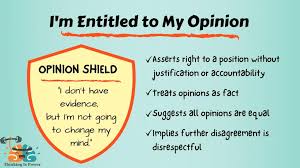
But you can’t fact-check opinion, I hear some of you say, and you’re right. However, as Linda Seebach, a former Rocky Mountain News columnist and Treasure Coast Newspapers letters editor, wrote in the group discussion forwarded to me, “One difficulty is that many people cannot reliably distinguish fact-claims from opinions. (There was an online quiz-poll about this a while back, I think originally from Pew Research, and a large fraction of people who attempted it mischaracterized at least one item.)
“At the personal level, people tend to believe that their opinions are facts, and the opinions of anyone who disagrees with them are (therefore) lies.”
I could make all sorts of comments about the news site’s trolls right now, but I’ll be the bigger person. Because I’ve worked on both the news and opinion sides for nearly three decades now, I’m pretty good at sussing out opinion, and I realize not everybody is. Still, you’d think more people would be able to tell the difference. I blame a lack of media (and heck, civics) literacy in a large portion of our population, especially those who spend the bulk of their time on social media (walk away, even if it’s just for a few hours; even better, take a whole day or weekend off from social media to let your brain reset).
That writer with the light-year claim stated as fact may believe that it’s being taught as a unit of time, but since he provided no evidence or attribution to the source of that bit of information, and I was unable to find any school that taught that, fact-checking meant the claim had to go.
I want to believe that August is a fine month to move (to a new abode, or just walking around in general), but the fact is that August in Arkansas is miserable because of the heat and humidity. Clearly, I should have had my come-to-Jesus meeting with myself about how unlivable my house had become (no AC, for one) when the weather was cool, but nooooo. That’s what happens when you absolutely hate moving, especially if you have depression and anxiety; you don’t even try till it’s absolutely necessary. In the end, the facts in the matter of my house precluded me staying there any longer, no matter my opinion that I could continue to handle it. I’m stubborn, but I will accede to facts, even if it takes a while. (The move hasn’t gone as planned, but I’m at the new place now, sans most furniture, which will make it over here eventually, and other stuff will be brought over when I have the time and it’s not too unbearably hot. Once it’s a little cooler, hopefully a friend with a trailer can bring over the furniture.)
I also want to believe that chocolate ice cream (especially Loblolly’s Arkansas Mud, or Yarnell’s Homemade Chocolate … yummmmmm!) is good for the body, even though facts say it isn’t. In moderation, though, guilty pleasures are OK, and even encouraged in some instances, especially if those occasional indulgences help keep you on a reasonable eating plan. After all, if you completely cut something out because of reasons other than, say, allergies or medication interaction, you’ll likely crave it more than ever, and go off your diet in spectacular ways.
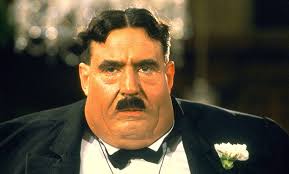
Picture Mr. Creosote from “The Meaning of Life.” Or don’t. It makes me queasy just thinking about it. Pretty much the only Monty Python movie or TV show scene I just can’t watch. Ugh.
Fact-checking hasn’t had the best reputation of late, not necessarily because it’s been biased, but because some people believe it is. Thing is, reality is what we all must live with, and if we can’t accept the plain facts of reality (that largest-inauguration-crowd-ever claim comes to mind, which was easily disproved by photos and actual numbers), then we have a real problem.
I tend to rely on Occam’s Razor (the simplest explanation is usually the best) in a lot of things, including claims of bias. If a certain group is more often dinged by fact-checkers, perhaps that’s because they stretch the truth more often (reminder: use fact-checkers that show their work by linking to original documents, interviews, etc., rather than just to other things they’ve published, because they’re more trustworthy as a rule). If a certain group is less-represented in academia, perhaps that’s because they’re less inclined to want to work in education (and I’m sorry, but your political ideology should have nothing to do with your teaching, no matter what ideology you follow, so it shouldn’t matter; I didn’t know the ideology of most of my teachers, except a few in college, until long after I left school). If fewer letters by a certain group are published in a newspaper, perhaps they, as a group, send fewer letters (and in the case of our newspaper, are also less inclined to follow the rules or to think they should have to write letters when they complain of the dearth in the kind of letters they favor).
But maybe that’s just what I want to believe. If only there were facts I could dig up … 😏

 Serenity is a fuzzy belly