
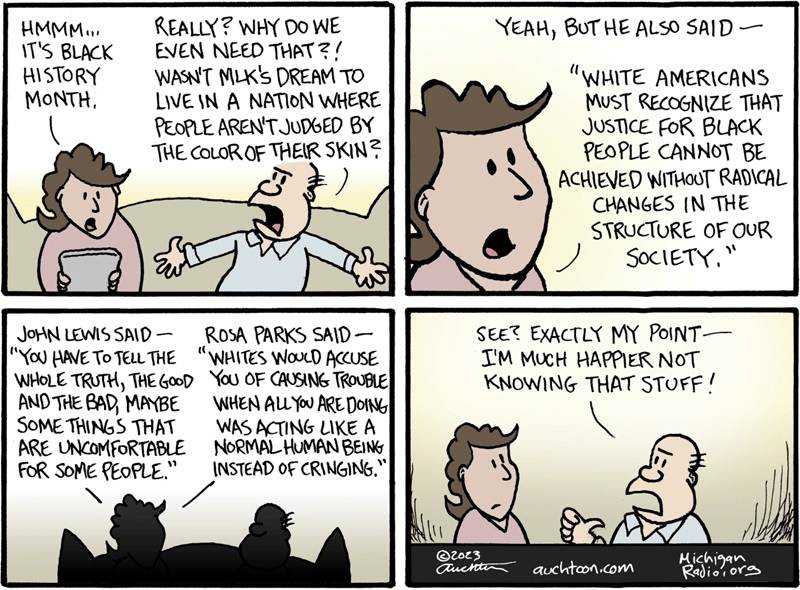
Any time we head into a month designated for recognition of a specific group (Black History Month, Women’s History Month, etc.), there’s usually some dissent on social media about celebrating others. A common refrain seems to be that if there are months honoring Blacks, Hispanics, etc., there should be White History Month.
Really? Isn’t that every month? (Answer: Yes, it is, especially if you’re a white Christian male.)
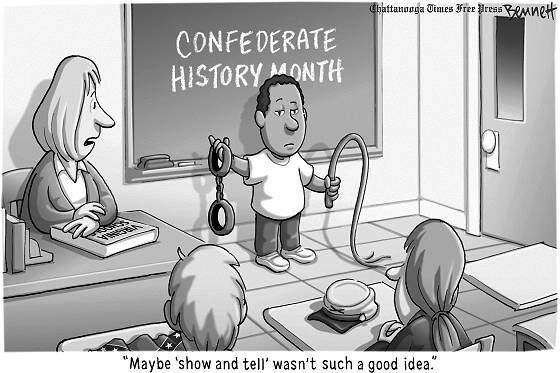
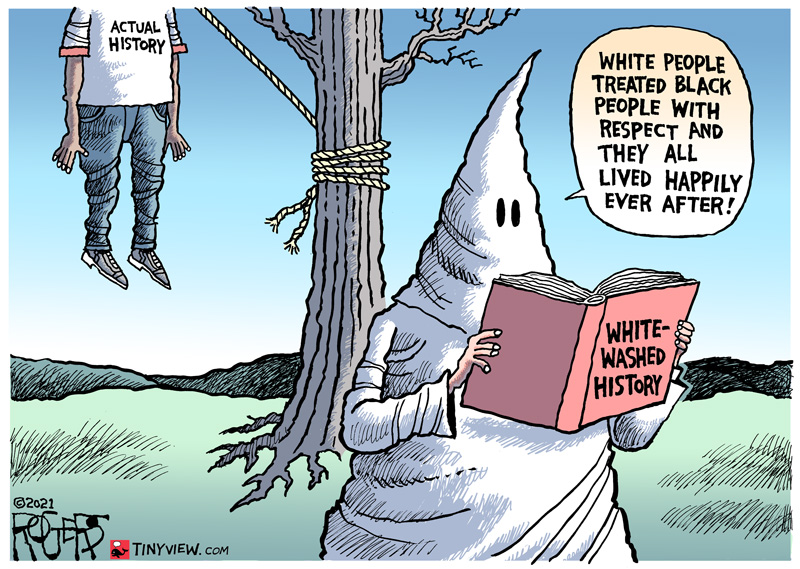
I’m fond of the answer by former archaeologist Matt Riggsby to this question on Quora: “History, as usually presented in the U.S., almost invariably involves white people (more specifically, usually rich white men, but we’ll pass over that). We learn about presidents and governors and senators and generals and captains of industry who, because of our nation’s racist history, are overwhelmingly white. But if you really want to understand history and America in its totality, that’s a problem.
“It’s not that this kind of ‘kings and battles’ history is wrong or invalid, but it’s painfully incomplete. It’s not exclusively a history of white people, nor even a comprehensive history of white people, but since it’s about mostly white people, supported mostly by white communities acting in the interests of mostly white concerns, it’s a pretty white kind of history. History stripped of everything but whiteness is the default, to the point where a lot of people don’t even recognize anything else as history.”
Now the murmurs are starting again because June is recognized as Pride Month. All I can think is some people have no actual connection to the LGBTQ community … knowingly, at least. But there are probably people that they’ve known for years who are part of the community but don’t feel safe enough around them to tell them, probably because of their words and behavior toward other members of the LGBTQ community.
People who have been historically marginalized—Blacks, women, LGBTQ, Hispanics, Asian Americans, Native Americans, immigrants in general, etc.—are the same as everyone else on the inside, but because of what’s on the outside, they’ve had to fight to make even the tiniest bit of progress toward what others get as a default. Months recognizing that history are not really celebrations of being whatever they are, but of having gained rights to do the same things as other people (vote, marry, raise children, etc.) without being persecuted.
As Riggsby noted, “Black people and Black culture are part of history, with their own perspectives and historical trends. Same with Hispanic people. Same with women and gays and Native Americans and so on. There are countless different threads of history in this country, and if we just limit ourselves to the guys they name buildings after and put up statues of, we fail to comprehend that history and this country.
“So what can we do? Well, until we start teaching fully integrated histories, we can have events like [somebody or other] history months. We take a moment to acknowledge that, yeah, what we mostly teach about history has some gaps, and we’re going to try to fill those in in various ways.”
And so it is with Pride Month, which commemorates the 1969 Stonewall Uprising in Manhattan. After police raided the Stonewall Inn, a gay club, on June 28, 1969, patrons and neighbors, fed up with constant raids, clashed with police for six days. Though there had been other significant clashes between police and patrons of gay bars before, the Stonewall Uprising helped serve as a catalyst for the gay rights movement. The first gay pride parade occurred in Manhattan on the first anniversary of the uprising.
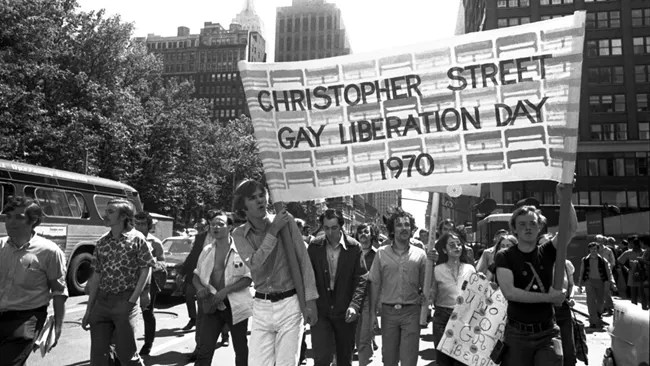
According to the Library of Congress, “Historians have noted that the shift in activism, if Stonewall truly represented one at all, was a shift primarily for white cisgender people, as people of color and gender non-conforming people never truly had the benefit of concealing their marginalized identities.”
History.com noted, “Though the Stonewall uprising didn’t start the gay rights movement, it was a galvanizing force for LGBT political activism, leading to numerous gay rights organizations, including the Gay Liberation Front, Human Rights Campaign, GLAAD (formerly Gay and Lesbian Alliance Against Defamation), and PFLAG (formerly Parents, Families and Friends of Lesbians and Gays).”
Bill Clinton, Barack Obama and Joe Biden have all issued presidential proclamations to honor Pride Month. Donald Trump, who did so with a 2019 tweet, was the first Republican president to acknowledge it, later releasing the tweet as an official statement.
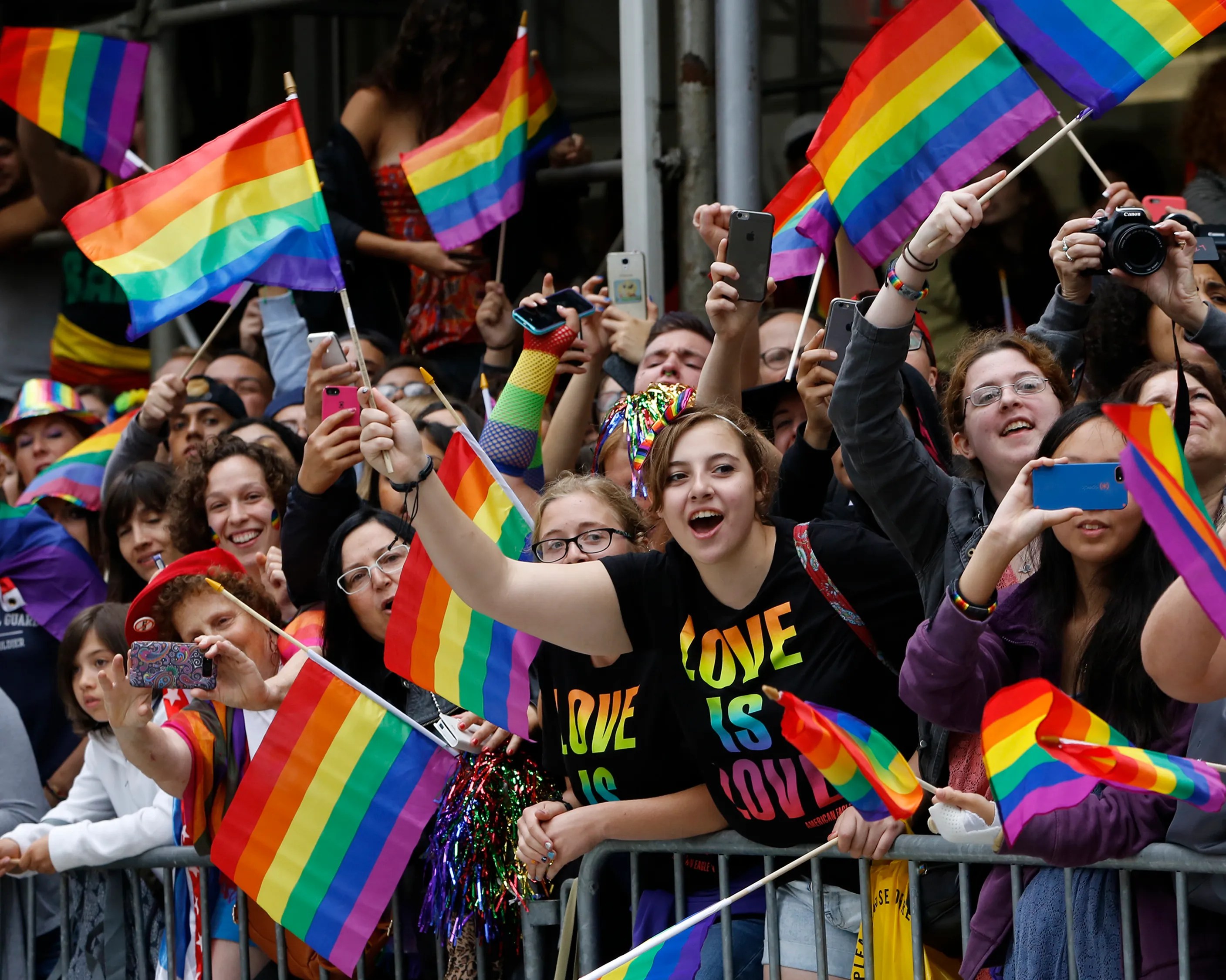
Some have complained that there’s no “heterosexual pride” celebration, but that argument, like the one about Black History Month and Women’s History Month, fails to recognize that straight people (as with white males) haven’t had to fight for their rights as homosexual people have. According to the American Civil Liberties Union, sodomy laws were used to limit the rights of homosexual people, not just in private consensual conduct, but to limit the ability of gay people to raise children (even their own), to justify firing or refusing to hire gays, and to deny equal treatment and discredit LGBTQ voices.
We’ve lost great minds in the push to make illegal anything with which we disagree, like Alan Turing, who despite his work on computing and the Enigma machine that proved pivotal to the British war effort, was charged in 1952 with gross indecency and accepted chemical castration rather than prison. He committed suicide two years later.

It took a long time and a lot of work to get to the point where LGBTQ rights came to be nearly a given, but we now are backtracking, and hard-won rights are in danger because of fearmongering.
In Arkansas, it wasn’t until 2002 that the state statute making same-sex sexual relations illegal was overturned as unconstitutional by the state Supreme Court because it violated the right to privacy and failed to provide equal protection. Same-sex marriage is outlawed by statute and the state constitution, but that prohibition is no longer enforced because it’s unconstitutional (hey, I got in trouble with my boss and a few readers back in 2014 when Judge Chris Piazza ruled in Wright v. Arkansas that the statute was unconstitutional and I wrote a column praising the decision).
In 2011, the law prohibiting cohabiting couples not in a recognized marriage from adopting or fostering children was found to be unconstitutional because it “directly and substantially burdens the privacy rights of ‘opposite-sex and same-sex individuals’ who engage in private, consensual sexual conduct in the bedroom by foreclosing their eligibility to foster or adopt children, should they choose to cohabit with their sexual partner.”

Some of my lesbian friends who would have made wonderful parents (they now dote on their nieces and nephews instead) didn’t have the chance to raise children when they were younger because of the various laws. The fact that it’s so much easier now for gay couples to adopt, foster, have IVF or a surrogate is encouraging, but it’s sad that some never got that chance.
However, state law does not prohibit discrimination in many areas, and in some cases, new laws have been made to punish municipalities that make such laws. “Conscience laws” also allow medical practitioners and others to refuse services to LGBTQ individuals, and other laws ban transgender participation in sports as well as gender-affirming care for those under 18. Don’t get me started on the bathroom law. I have friends who have moved out of state expressly because of these laws and the fact that they no longer felt safe in their own home state. Being constantly accused of being a pedophile and/or groomer when you are the furthest thing from it might have something to do with that.
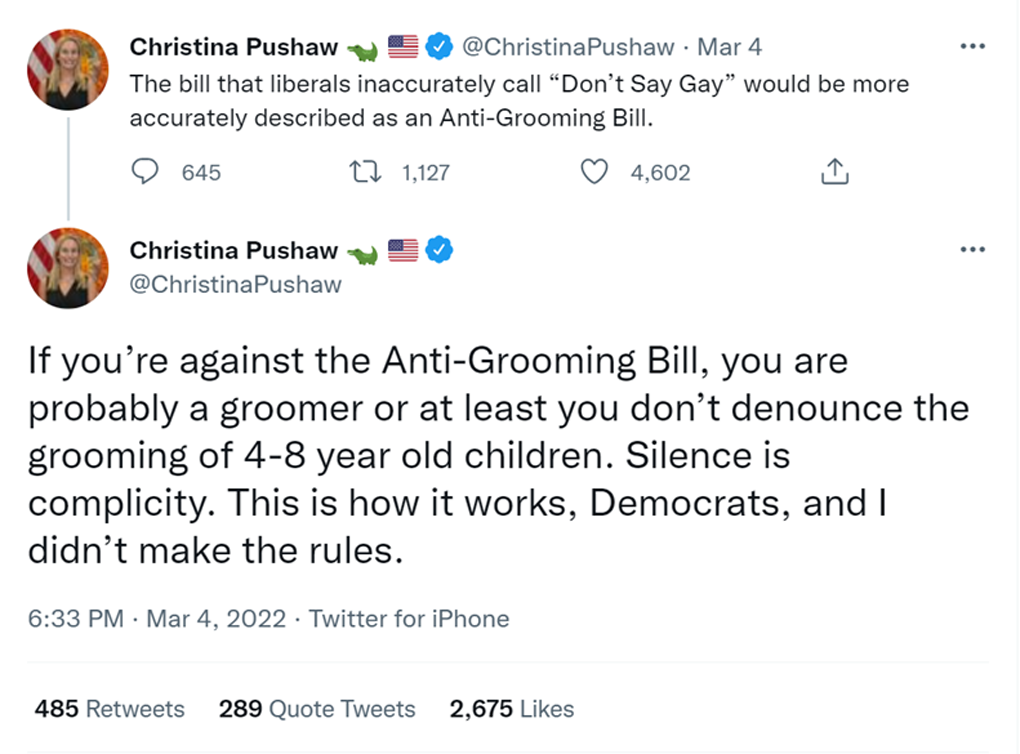
I grew up with many homosexual friends, most of them closeted back then because of fear. They didn’t ask to be gay; it wasn’t a decision, but simply who they are. I have many more friends now who happen to be gay, some of whom pretended to be straight for decades.
The thing is, their sexuality doesn’t matter to me, nor does my being, many times, the only straight chick there matter to them. Who they are as people matters, and like my other friends, they tend to be kind, caring, great parents/grandparents/aunts/uncles, smart, funny, spiritual, moral, and just a joy to be around, regardless of gender, sexuality, race, religion or whatever.
Those who have a month designated to celebrate them would just as soon like not to have to celebrate their progress. But then again, they had to fight for the rights they have, and now many are having to fight again.
As an ally and friend, their fight is my fight too.

 Serenity is a fuzzy belly