
At different points in my life, I might have been called a Republican. At others, “Democrat” would have been a fair label, as would libertarian. However, I’ve never joined a party because labels don’t define who I am (and, alas, no Silly Party in the U.S.). That and … well, people. (Introvert life forever!)
The parties today (at least nationally) don’t much like the idea of nuance, which is one of many reasons I’m unaffiliated and will likely remain so.
Gwen Faulkenberry, with whom I share much in common, especially in relation to family, wrote in her column Sunday: “A lot of my life’s work is to build bridges by helping others see nuance—the gray areas between forced dichotomies like for/against, black/white, and right/wrong—where we can meet on common ground. However, I am writing today to declare a complete lack of nuance on a subject that plagues our state like a river turned to blood.
“I want to be the last person to give up on another Arkansan. But there are those with whom we do not, cannot, and should not find common ground. Some things are not gray.”
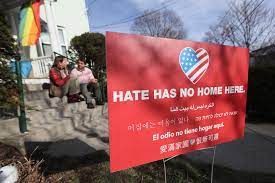
And Gwen is absolutely correct. To paraphrase a hackneyed yard sign, hate should have no home here (back up … hackneyed because it’s overused, played out and memed entirely too much, not because it isn’t a noble sentiment, because it is).
So many people get lost to their hyperpartisanship and decide that simply opposing something counts as hate (that’s not how it works). The sort of hate we’re talking about is based on gender, race, sexuality, religion, profession, etc. In that, there is no gray area.
I can’t say that I’ve never hated anyone; I know I have. (Hurt a member of my family or a dearly loved friend, and you will receive seething hatred from me.) However, that’s based on the actions of the person, not because of things over which they have little or no control.
From Gwen: “This paper recently published two letters to the editor that I find horrifying. Holding them up to the light is like studying an X-ray that reveals cancer growing in the soul of our state. Freedom-loving patriots, and certainly those of us who call ourselves people of faith, must find a way to treat it, so Arkansas can keep growing strong. … Letters like these should not be censored in Arkansas because a newspaper censors them, but because Arkansans won’t put up with trash talk about our people.”
There really is no nuance to the hate Gwen spoke about. That forced dichotomy won’t allow for it; you’re either “fer it” or “agin it,” period, and God forbid you stray from the prescribed path.

But in other issues, there is most definitely nuance. For example, one really can be both pro-life and pro-choice (seriously, you can be opposed to abortion, but not willing to foreclose that option for others if necessary).
I personally wouldn’t have an abortion unless circumstances meant that it was the only choice (though it’s a moot point now for me). My feelings and morals don’t mean that someone else can’t have that choice. They aren’t me, and their decisions are most likely not going to have any effect on me. I don’t get to dictate their choices, nor they mine; that’s what pro-choice means.
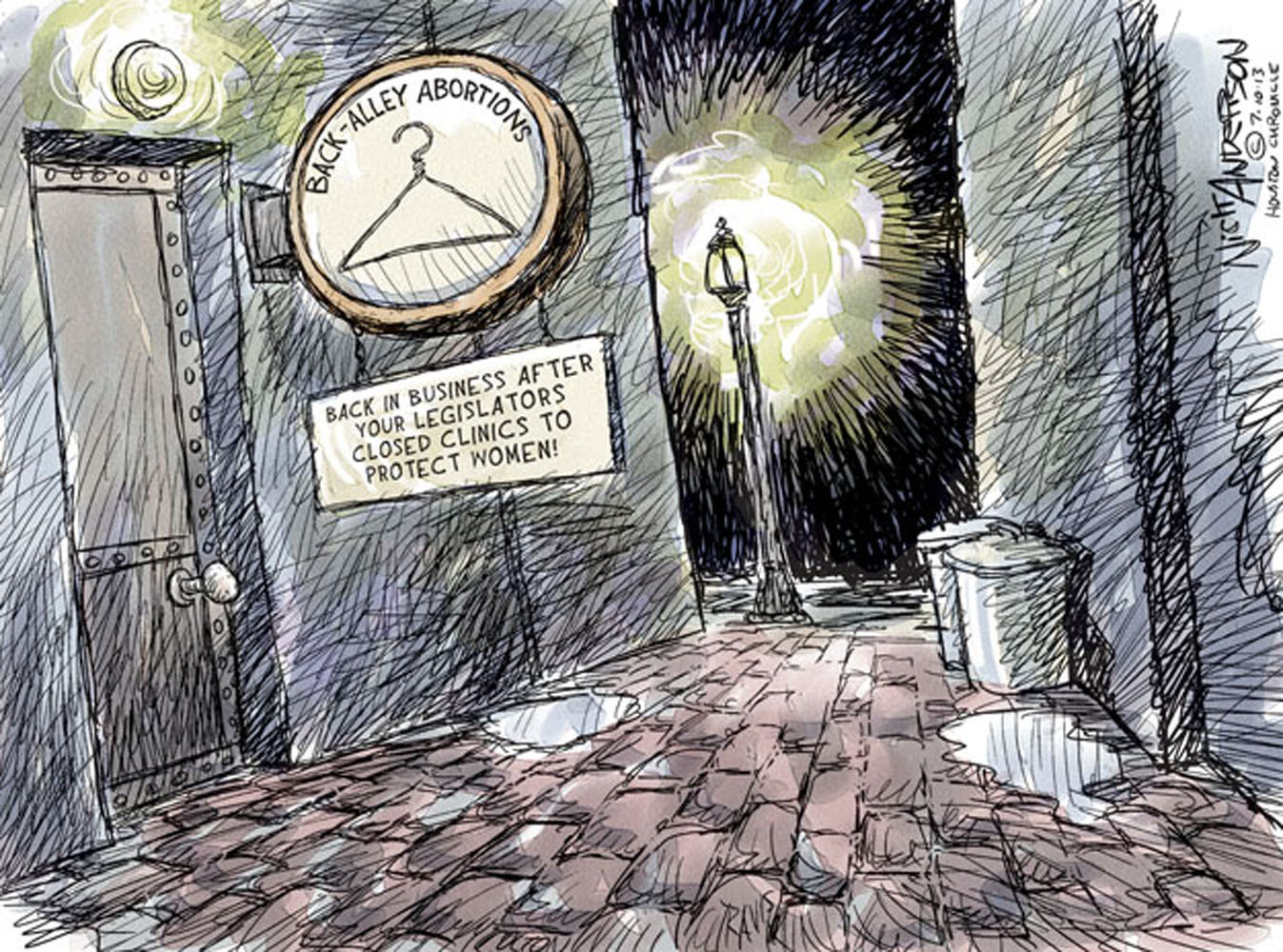
Plus, when someone argues for an abortion ban (or anything else other than what Jesus actually taught) using the Bible, that raises my hackles pretty quickly (and not just because they usually ignore the inconvenient verses). I’m a Christian, but our government is secular for a reason. By forcing my religious beliefs on someone else, I could be said to be violating their religious freedom, but it wouldn’t be a federal case because those injunctions in the First Amendment apply to what the government can’t do, not individuals. To force religious beliefs on someone else using the government, though, well, that’s clearly out of bounds. Those of other religious beliefs or none would be stuck with no recourse but to leave, and that would include others of the same faith that interpret the Bible differently (have you checked how many Christian denominations there are???). Theocracy is hardly freedom, now, is it? Good thing we don’t have that here.

Further, the decision is a personal medical one to be made with the consultation of a doctor. There are good reasons for abortions, including rape and incest (which many of the new laws have no exception for) as well as catastrophic and/or fatal defects in the fetus (that’s the actual medical term for the unborn, not a slight; heck, until about nine weeks in, it’s an embryo) or risks to the mother’s health.
One of those risks is ectopic pregnancy (an embryo that implants itself outside the uterus), which is not viable. A few years ago in Ohio, a state legislator attempted to put through a bill ordering doctors to re-implant ectopic pregnancies in the uterus, which is not possible; he later admitted he hadn’t studied if it could be done.
Maybe if he’d actually talked to a doctor, or read some studies (like the one from American Family Physician that says ectopic pregnancies are a leading cause of maternal mortality in the first trimester), or perhaps talked to women who had such pregnancies (heck, I know of a few), he wouldn’t have embarrassed himself.
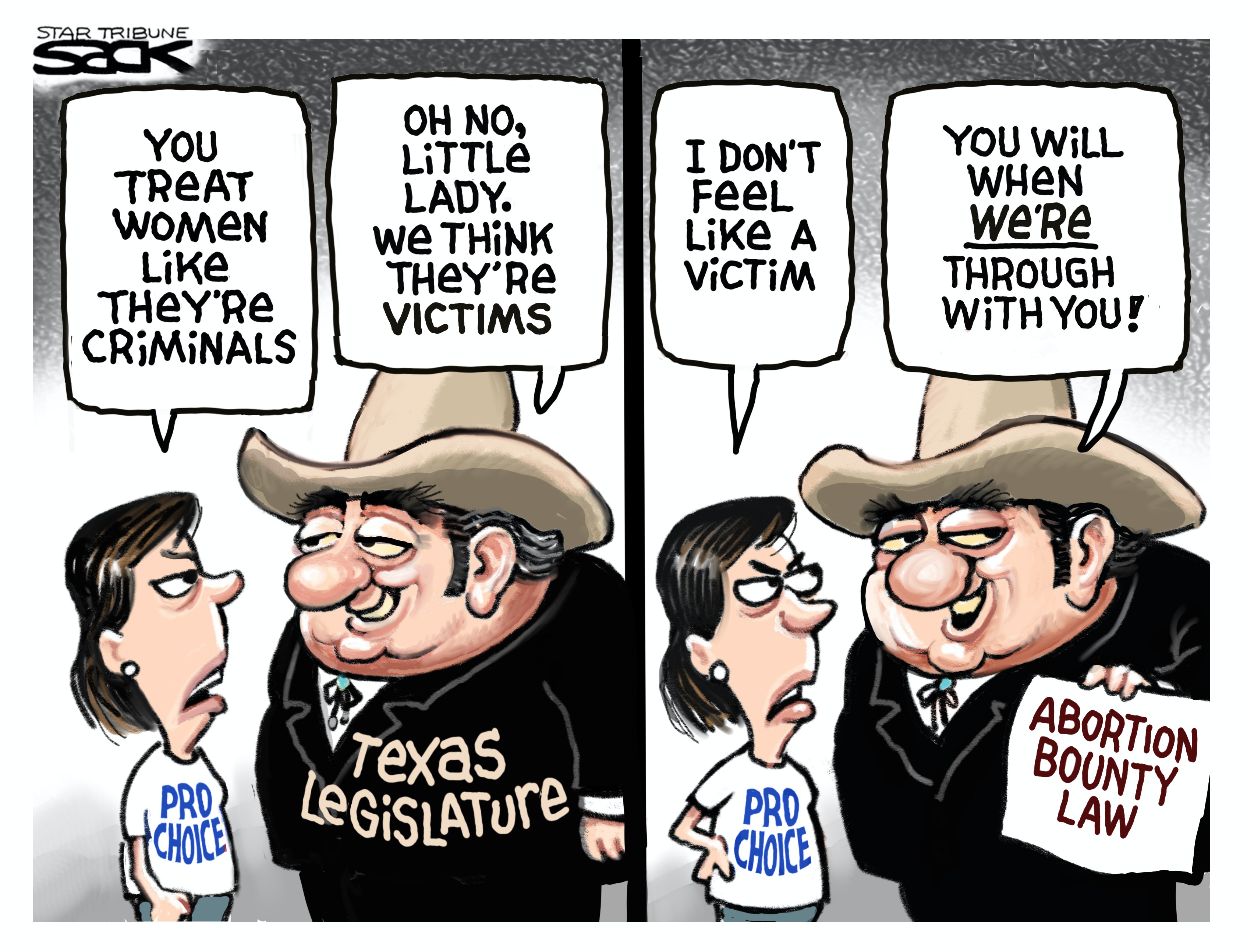
But abortion is the hottest-button issue out there right now, and to prove their party bona fides, legislators are doing their darnedest to interfere in women’s health (uh … it takes two to tango, sooo …). It matters not if, say, the mother is a cancer patient who could die if she continues her wanted pregnancy (there’s a Houston Chronicle piece on this I wanted to link to, but I can’t get past the paywall; c’mon, most paywall papers let you have at least one story for free a month), or if the fetus develops without a brain, or the mother is a victim of rape, or a thousand other reasons. Nor does it matter that only 8 percent of Americans believe abortion should be illegal in all cases, according to Pew Research.
(The report, here, is a master class on nuance; they were very thorough in their questions. A snippet: “As in the past, more Americans say abortion should be legal in all or most circumstances [61 percent] than illegal in all or most circumstances [37 percent]. But in many ways, the public’s attitudes are contingent upon such circumstances as when an abortion takes place during a woman’s pregnancy, whether the pregnancy endangers a woman’s life and whether a baby would have severe health problems.”)
To them, there is no gray. The woman is either evil (by getting an abortion) or good (carrying a pregnancy to term, regardless of what happens to the child after that). Yes, there are a vanishingly few women who might use abortion as “birth control” (I would think that would primarily be sex-industry workers and women in domestic-violence situations). The vast majority do not, and the decision should be theirs because their situations are their own.
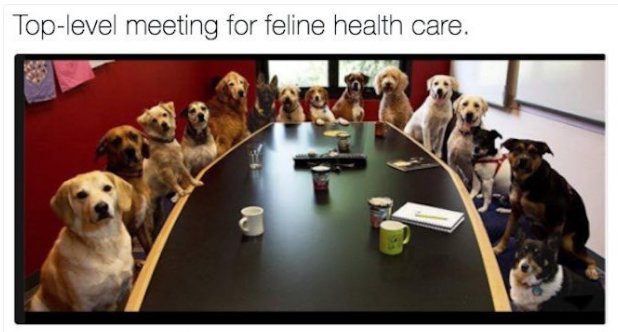
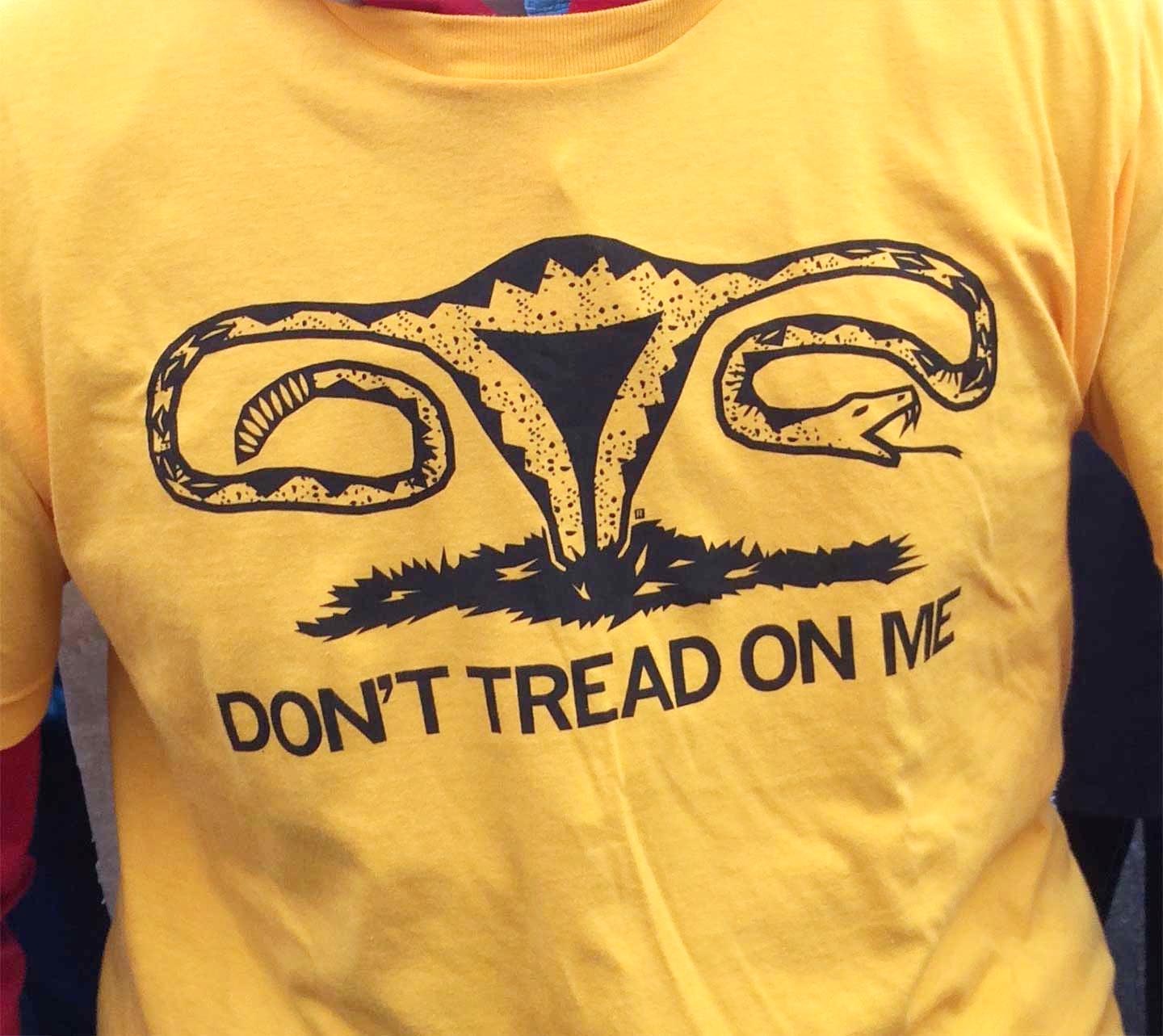
They shouldn’t have to worry about (mostly male) legislators with no medical knowledge using abortion (or transgender issues, same-sex marriage, etc.) as a wedge issue.
Want to decrease the number of abortions (which have been decreasing in the U.S. for decades since Roe anyway)? Do what works: Keep abortion legal and safe. Provide comprehensive (read: not just abstinence-only) sex education in the school systems. Increase access to contraception and reproductive health care (there’s more to it than abortion). If you do that, you’ll reduce the number of unplanned pregnancies, which will reduce further the number of abortions. Funny how that works.
Abortion is far from the only issue that boasts a lot of gray, but it’s the one that’s sucking up all the oxygen right now. On it and other issues, we must ask ourselves: Might there be a good reason for the action taken? Does it have any tangible negative effect on others? Does it pose a danger to others?
Maybe most importantly: Is this really any of my business?
Honestly, there’s a lot out there that could stand a good letting alone.
That includes me at the moment. I get cranky when women’s rights are in danger.
 Serenity is a fuzzy belly