
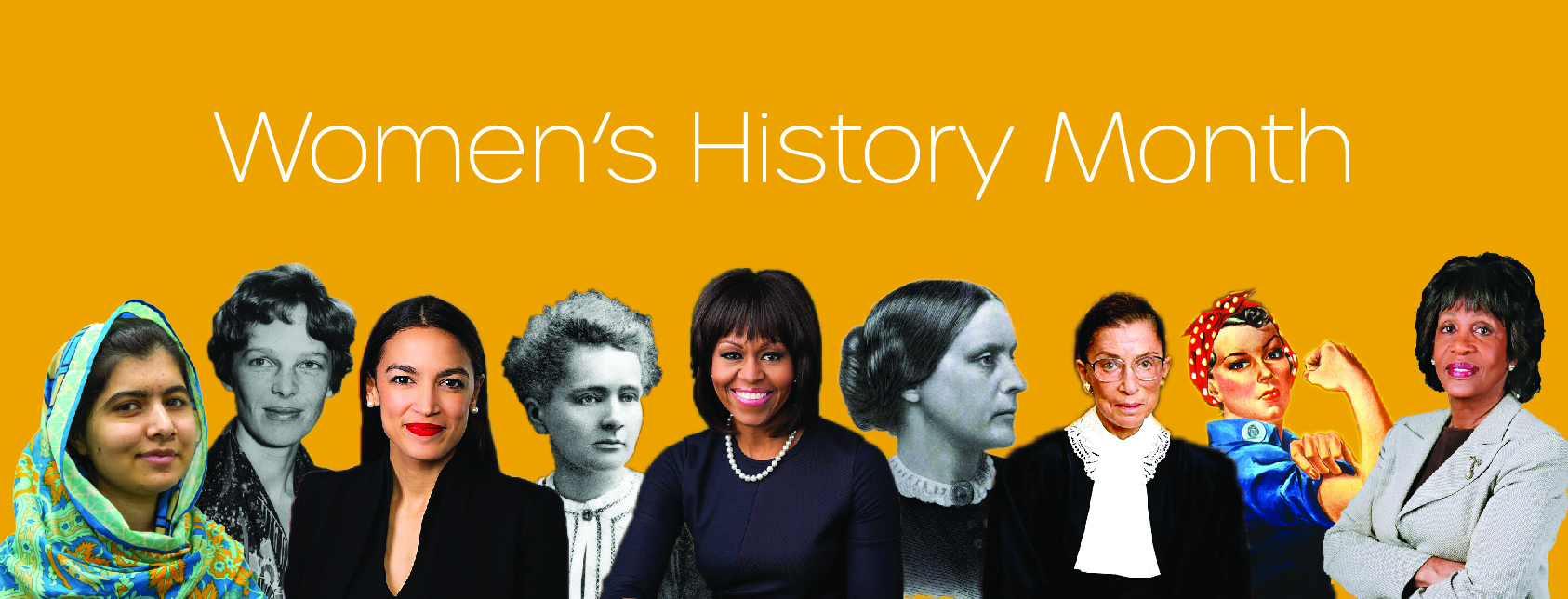
Every time there’s a special day, week or month to celebrate, for example, the contributions of Black people, women (this is Women’s History Month), or LGBTQ+ individuals, there’s an uproar from certain quadrants.
“When’s men’s history month? What about white history month?” (There is an International Men’s Day on Nov. 19, just as there is an International Women’s Day on March 8, not that it matters to these guys.)
Sigh. That would be all the time, actually, as it’s the default position, but recognition of anyone else is apparently too much. From the beginning of our nation, (straight and rich) white men have held the majority of the power, though at first it was limited to landowners. It took a very long time for others to gain the rights those white men had from the start. Ignoring what had to happen for those rights to be extended to all would be shortchanging history, and an insult to the memories of those who fought and sometimes died for them.
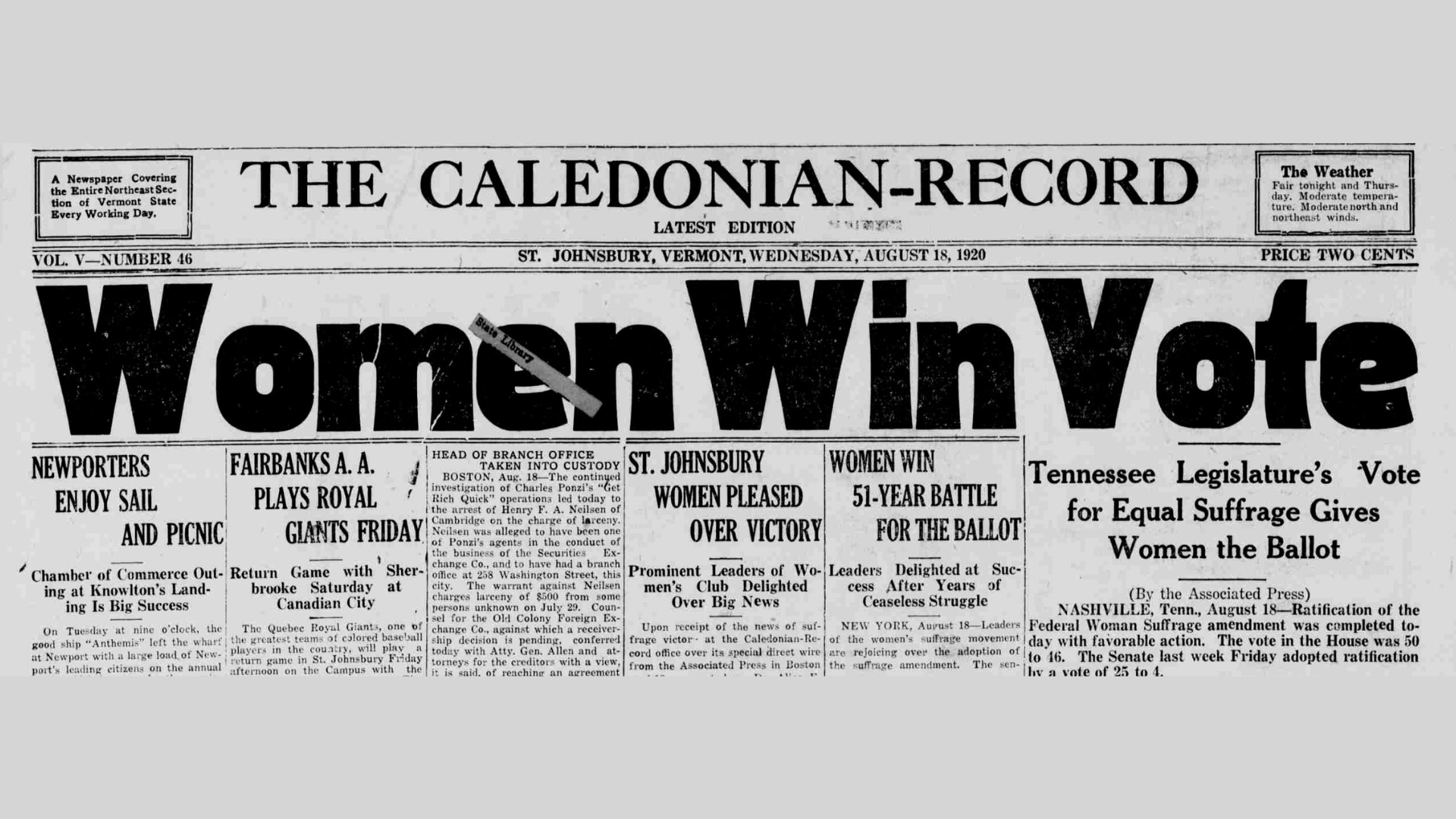
Jimmy Carter was the first president to recognize that fight, in February 1980 signing a proclamation for National Women’s History Week to be held the week of March 8, 1980: “From the first settlers who came to our shores, from the first American Indian families who befriended them, men and women have worked together to build this nation. Too often the women were unsung and sometimes their contributions went unnoticed. But the achievements, leadership, courage, strength and love of the women who built America was as vital as that of the men whose names we know so well.
As Dr. Gerda Lerner has noted, ‘Women’s History is Women’s Right.’– It is an essential and indispensable heritage from which we can draw pride, comfort, courage, and long-range vision.”
In 1987, Congress passed a law recognizing each March as National Women’s History Month, and each president has proclaimed it as such since 1995 (do yourself a favor and don’t read this year’s).
Despite all that was stacked against them, many prevailed over prejudices (such as the idea they were too emotional/hysterical to do anything of importance) and proved they deserved the same rights to vote, to own property, to do just about anything else allowed under the law. They demonstrated that they were brave, brilliant and daring, as well as compassionate.
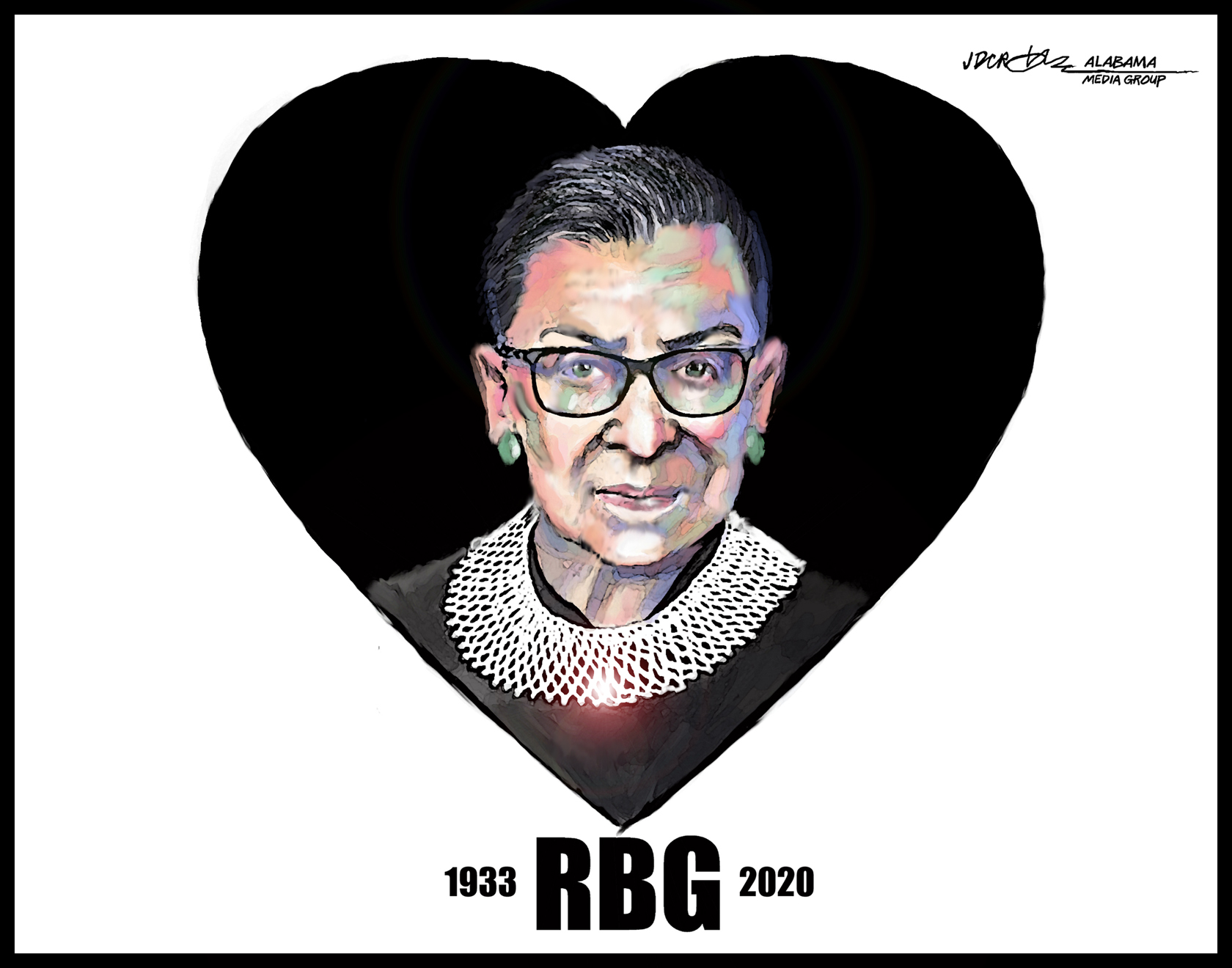
And they didn’t just fight for themselves, but for all. Ruth Bader Ginsburg is often cited as instrumental to many extensions of rights for women, but the first case she argued in court, according to Smithsonian Magazine, was a tax case in which a bachelor was denied a deduction for caring for his mother, his dependent, when a single woman would have been able to claim it. The court ruled the IRS provision unconstitutional in 1972, saying it was an “invidious discrimination based solely on sex.”
Moritz v. Commissioner of Internal Revenue thus became a blueprint of sorts for lawsuits filed by the ACLU’s Women’s Rights Project to incrementally challenge gender-based discrimination. Ginsburg ultimately argued six gender-discrimination cases before the Supreme Court, winning all but one.
Ginsburg is but one trailblazer who made it her goal to ensure discrimination on any basis would not be condoned, and with rights being threatened, we need more like her.
One of the reactions to the backlash over rights in danger has been the idea of reverse discrimination; I mean, clearly something’s wrong if a qualified woman or minority gets a job over a white man. (The comments on a column in which I mentioned that a less-qualified male candidate got a job over me right out of college—despite my grades, skills, experience and the station promo I wrote being used over what he submitted—were typical, overlooking the “less-qualified” bit.)
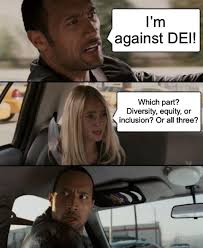
The reason for diversity, equity and inclusion (DEI) measures isn’t to give unfair advantage to the unskilled. Rather, it’s to level the playing field because not everyone gets the same advantages, even if you feel you don’t. I know I don’t feel too advantaged, growing up poor and as a woman, but I did, and do, have privilege, just by being born white. If I were up today for a position against an equally or more qualified candidate who was from a marginalized community, my getting the position would be problematic as it would seem my skin color tipped the balance (especially if it came down to the interview; decades of introversion have taken their toll, and I no longer interview well with people I don’t know).
Taking factors like socioeconomic status, gender and race out of the equation (judging truly blindly) means that candidates can be judged on their merits, which might not turn out as some believe. Condoleezza Rice, Ginsburg, Sally Ride and many more were far from DEI hires, but simply because they’re women, some view them as “less than.” Marie Curie was the first woman to win a Nobel Prize, and the first person to win two (plus the only person to win in two different scientific fields). No radiology without her, and she was definitely no DEI hire.
Some of the things people depend on every day wouldn’t be if it weren’t for women who invented or whose work led to them: windshield wipers, central heating, GPS, Bluetooth, computers, WiFi, Kevlar, home security system, stem-cell isolation, and so many more.
Right about now, the trolls are lining up to gripe about … well, everything, because that’s what they do. But the reality is that women, minorities and others have historically been suppressed from reaching their full potential, having to launch movements to get the rights they deserve.
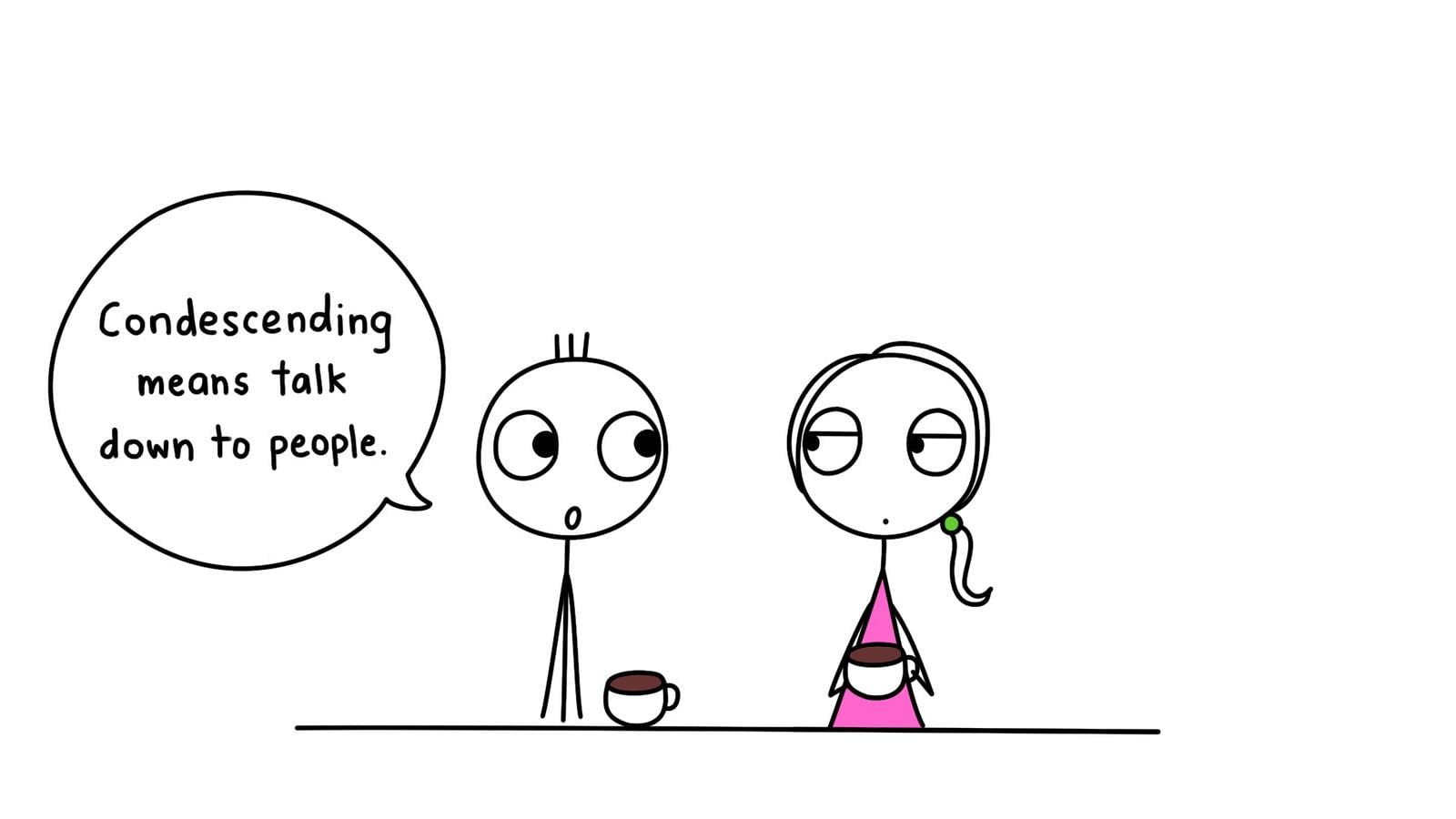
But reality has nothing to do with trolls’ gripes in most instances, and while cruising social media last week, something pinged when I came across a post comparing Internet trolls and mansplainers. Oxford English Dictionary defines mansplaining as explaining something “needlessly, overbearingly, or condescendingly, esp. (typically when addressing a woman) in a manner thought to reveal a patronizing or chauvinistic attitude.”
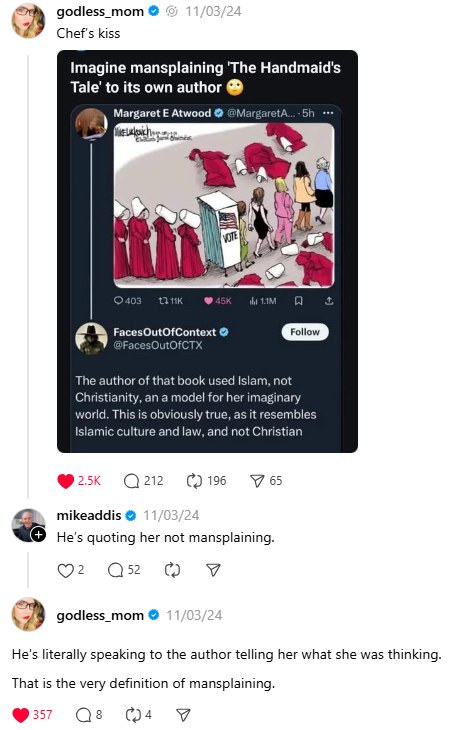
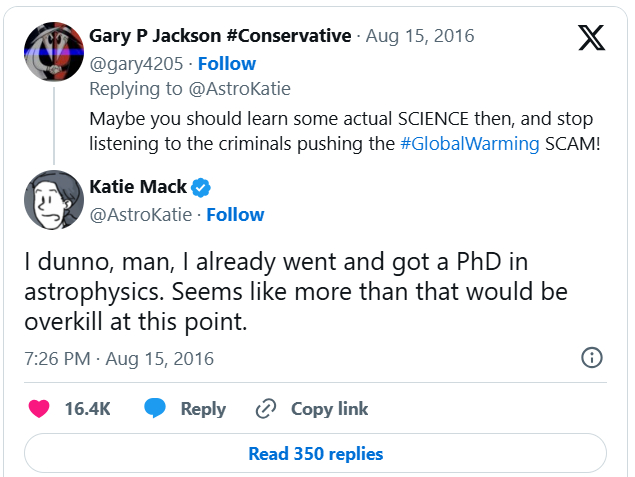
Yes, women do it too, but some men have it down to a science, it seems. Especially if the woman they’re mansplaining to happens to be a scientist. 🙄 Good lord, you’d think they would see who they’re arguing with first. Nicole Tersigni went viral for explaining, using classical art, how women feel about mansplaining (read about it in this gift article), eventually turning it into a book, “Men to Avoid in Life and Art.” (I really want this book.)
Courtney Heard, a Canadian writer also known as Godless Mom, has been battling mansplaining for a while, and a comment she made to a man on a post about mansplaining captures exactly why women’s history is important:
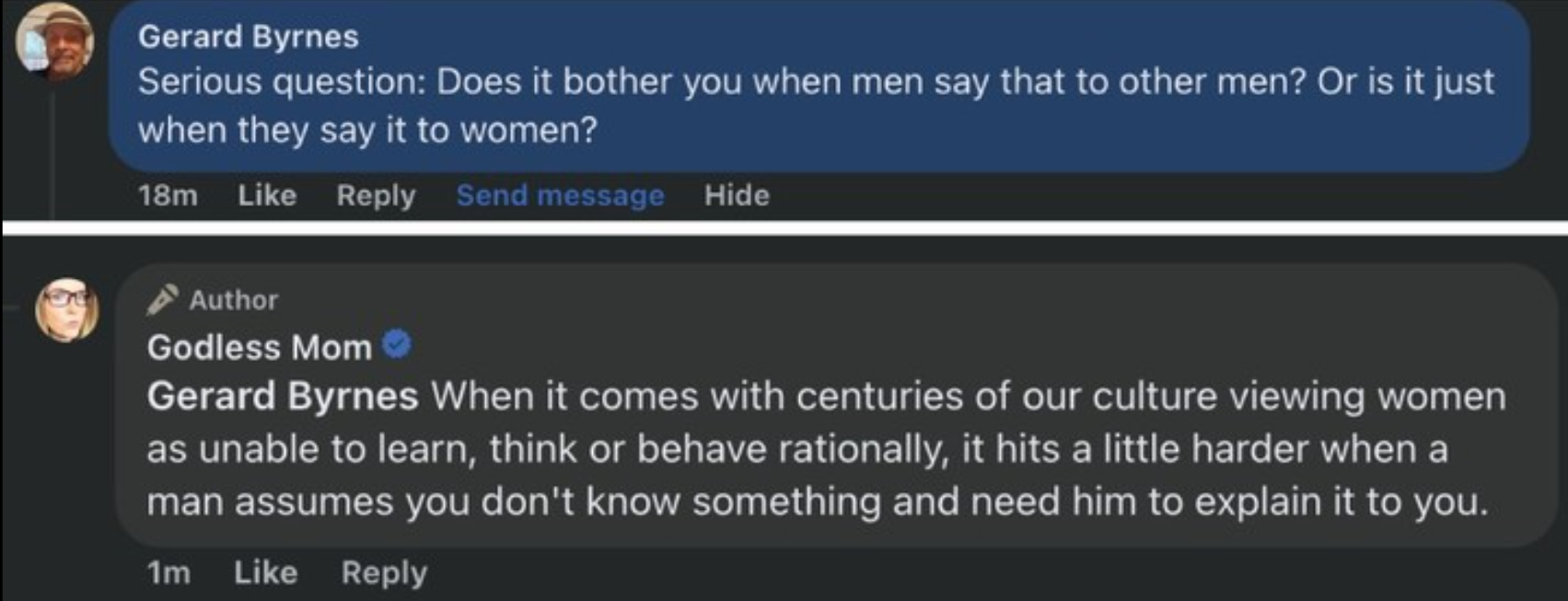
Gerard Byrnes: “Serious question: Does it bother you when men say that to other men? Or is it just when they say it to women?”
Godless Mom: “When it comes with centuries of our culture viewing women as unable to learn, think or behave rationally, it hits a little harder when a man assumes you don’t know something and need him to explain it to you.”
Oof. It does indeed, which is why my eyes roll so much when reading trolls’ comments on the newspaper’s website. Just love being told what my job actually is (it’s apparently not writing or editing), what I think (nope), what I’ve said (double nope), that I have not the slightest idea how to do research (triple nope), etc.
While “mansplaining” entered the vocabulary around 2008, typically referring to blowhard trolls, Corinne Purtill wrote on Quartz in 2019, “The word may be relatively new, but the concept of a mansplainer—a person determined to demonstrate his or her expertise on a topic, regardless of the listener’s knowledge or interest in said lecture—has been around for centuries.”
The widening of the middle classes with the Industrial Revolution prompted demand for etiquette manuals, many of which warned against mansplaining, Purtill found. An 1859 English manual, “A handbook of Etiquette for Ladies and Gentlemen,” included this caution: “The man who makes too much of his peculiar excellencies; who attempts to engross conversation with the one topic he is strong in; who having travelled is always telling you ‘what they do on the Continent’; who being a scholar, overwhelms you with Menander or Manetho; who, having a lively wit, showers down on the whole company a perpetual hail of his own bon mots, and laughs at them himself . . . or who, being a great man in any line, puts himself prominently forward, condescends, talks loud, or asserts his privileges, is a vulgar man, be he king, kaiser, or cobbler.”
Emily Post in 1922 wrote harshly of such behavior, writing, “The man who has been led to believe that he is a brilliant and interesting talker has been led to make himself a rapacious pest.” She further advised, “There is a simple rule, by which if one is a voluble chatterer (to be a good talker necessitates a good mind) one can at least refrain from being a pest or a bore. And the rule is merely, to stop and think. Nearly all the faults or mistakes in conversation are caused by not thinking.”
Which would explain the large number of non-expert men trying to explain rocket science to actual female astronauts/astrophysicists and the like.
 Serenity is a fuzzy belly