

The image that started it all. As one analysis pointed out, the angle you saw it from (several eventually came out) appears to affect how you interpreted it.
Image found on WCTV.
The reactions over the weekend to the standoff of sorts at the Lincoln Memorial between a Catholic high school student and a Native American veteran said a lot about our nation. Even more is being said now that we know there was a third group involved, which reportedly was verbally abusing both the high school boys and the participants in the Indigenous Peoples rally. (Context matters, remember, and sometimes it takes time for the full context to emerge.)
What all this says isn’t good.
I won’t get into the politics of what’s being said or the inevitable sniping among hyperpartisans or who shoulders what amount of blame (and where were the chaperones??). What I will talk about, though, is civility, or the lack thereof.
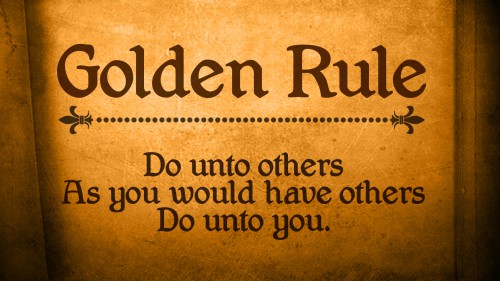
I don’t know about you, but I’d rather not be treated badly.
Image found on Compassionate San Antonio.
Yeah, I know, there I go again, but I have good reason. I often refer to the Golden Rule, which posits that you should treat others as you want to be treated. If that’s what people are doing now, they apparently want to be bullied, insulted and harassed. I’ll never really understand why people are surprised when they’re met with the same bad behavior they demonstrate. And yes, I’ve been guilty of name-calling too.
Incivility has always been with us (accusations of murder, adultery and pimping in a past presidential campaign … in 1824 … come to mind), but so has the capacity for civility and kindness for our fellow man. We don’t have to like each other, but we should be able to carry on a conversation without resorting to anger and insults. But enough about the shutdown.
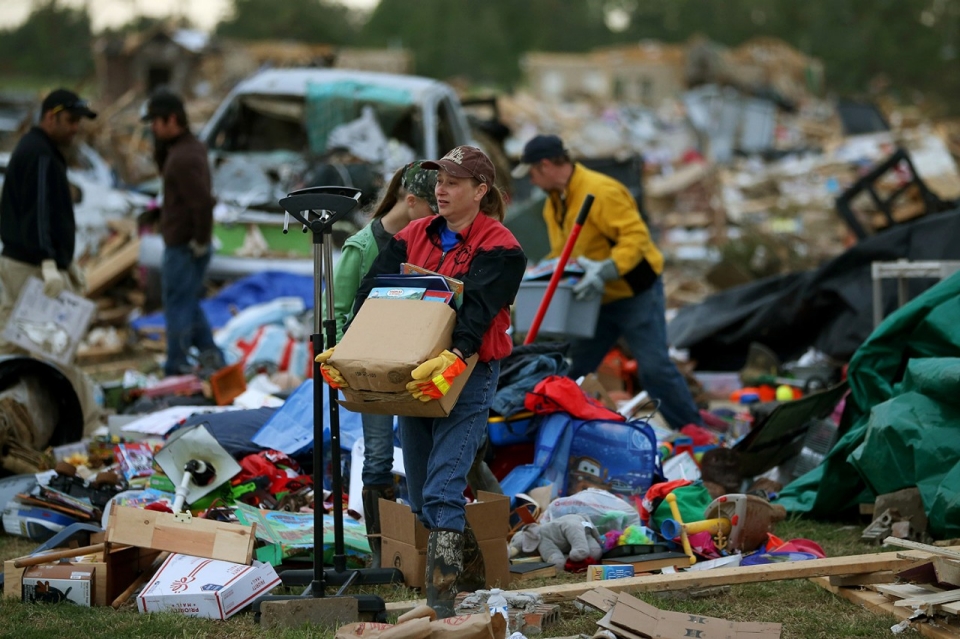
Volunteer Gina Lowe helps a family move belongings from a home that was destroyed by a tornado in Vilonia in April 2014.
Image by Mark Wilson, Getty Images.
I miss those days—and they weren’t so long ago—when people would swoop in to help whenever a disaster struck, with no need for someone to make a big deal of it or organize it to death. We wanted to help people in our community. Not the people in our community who agreed with us, but anybody in the community. Natural disasters don’t discriminate, so why should we?
But civility applies to more than helping people in need (and bravo to those who’ve stepped up to help out furloughed federal employees). It should be an everyday thing, something we do without even thinking about it.
Civility “is more than toleration,” which is more “live-and-let-live,” according to Richard J. Mouw, a professor of Christian philosophy and ethics at Fuller Theological Seminary interviewed by PolitiFact. “Genuine civility has to be grounded in empathy—a genuine desire to promote the well-being of others. It has a moral—and I should add—spiritual, component.”

If you’re focused only on yourself, you can’t give others empathy.
Image found on Glasscock School of Continuing Studies (Rice University).
Some of us, though, have apparently lost our empathy … because, you know, it’s all about us and what we believe. Don’t believe what I believe? Well then, you’re not worth paying attention to.
The tribalism we see in politics today certainly feeds the spiral of incivility, and the more we accept, the more we get until that’s really all that’s left. We then find ourselves tweeting out insults or firing off hate mail or nasty phone calls any time we disagree with someone, and unable to see context or facts that might give us a clearer picture of what happened. While we may be echoing the behavior of those at the top, it’s not just their fault; we let ourselves do it—we’re all complicit in this.
“If voters were to reject uncivil rhetoric, that would help,” Kim Fridkin, an Arizona State University political scientist affiliated with the National Institute on Civil Discourse, told PolitiFact. “Or, if people were convinced that uncivil rhetoric had negative effects on people and society, perhaps people would reject incivility. I think we need people in high-profile positions to model civility in politics. This could help.”
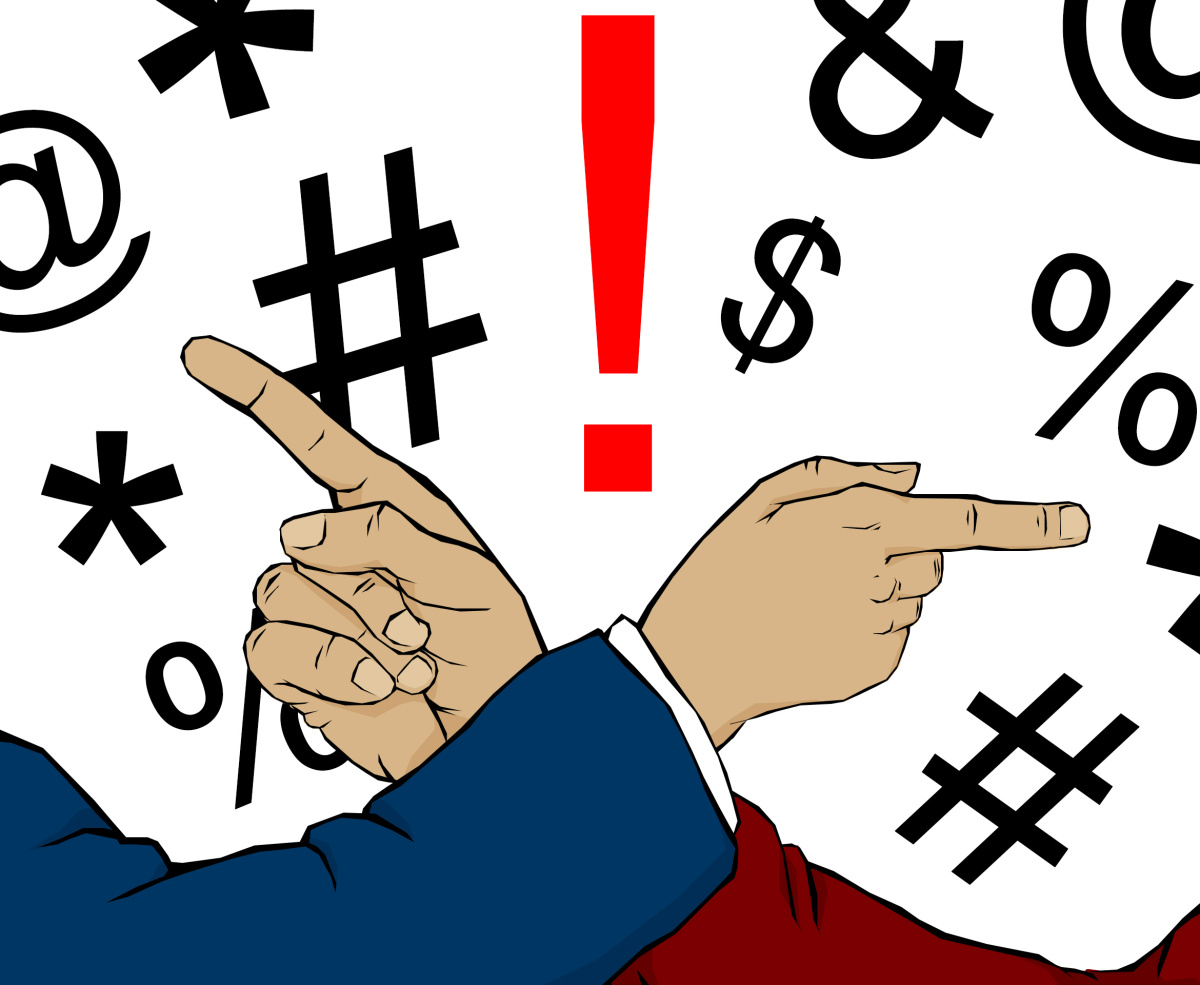
But it’s so much more fun to fight!
Image found on Florida Politics.
Sadly, not a lot of them right now are interested in anything but themselves, and some seem to wait till the sunset of their careers to say, oh, hey, maybe we shouldn’t be acting like this.
Former Sen. Orrin Hatch of Utah, in his December farewell speech, said, “On both the left and the right, the bar of decency has been set so low that jumping over it is no longer the objective. ‘Limbo’ is the new name of the game. How low can you go? The answer, it
seems, is always lower.”
Michelle Obama might have said to go high when they go low, but too many have ignored that.
Hatch, in his farewell, said the Senate was emblematic of what was happening in the nation. Here are a few of the highlights. It’s worth at least reading the whole transcript, if not watching the video of the speech (it’s about a half-hour).
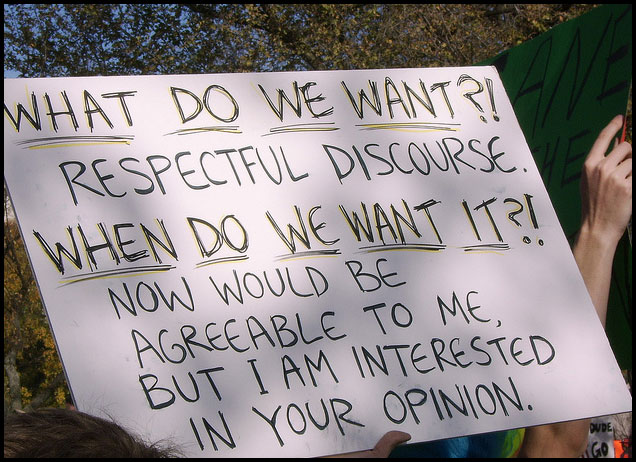
Respectful discourse would definitely be refreshing.
Image found on Bully Bloggers.
“Many factors contribute to the current dysfunction, but if I were to identify the root of the crisis, it would be this: the loss of comity and genuine good feeling among Senate colleagues. Comity is the cartilage of the Senate, the soft connective tissue that cushions impact between opposing joints, but in recent years, that cartilage has been ground to a nub, and I think most of us feel that. We have actually seen it happen. All movement has become bone-on-bone. Our ideas grate against each other with increasing frequency and with nothing to absorb the friction. We hobble to get any bipartisan legislation to the Senate floor, much less to the president’s desk. The pain is excruciating, and it is felt by the entire nation.
“We must remember that our dysfunction is not confined to the Capitol. It ripples far beyond these walls—to every state, to every town, and to every street corner in America. The Senate sets the tone of American civic life. We don’t mirror the political culture as much as we make it. It is incumbent on us, then, to move the culture in a positive direction, keeping in mind that everything we do here has a trickle-down effect. If we are divided, then the nation is divided. If we abandon civility, then our constituents will follow. So to mend the nation, we must first mend the Senate. We must restore the culture of comity, compromise, and mutual respect that used to exist here—and still does, in some respects. Both in our personal and public conduct, we must be the very change we want to see in the country. We must not be enemies but friends. Though passion may have strained, it must not break our bonds of affection. …
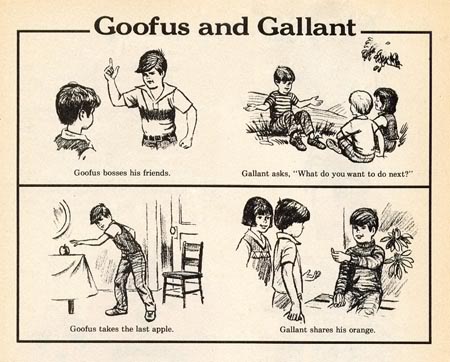
To be clear, Gallant is the model of civility here.
Image found on Compass Datacenters.“Our challenge is to rise above the din and divisiveness of today’s politics. It is to tune out the noise and tune into reason. It is to choose patience over impulse and fact over feeling. It is to reacquaint ourselves with wisdom by returning to core principles. Today, allow me to offer a prescription for what ails us politically. Allow me to share just a few ideas that, when put into practice, could help us not only fix the Senate but put our nation back on the right path.
“Heeding our better angels begins with civility. While our politics have always been contentious, an underlying commitment to civility has been important and held together the tenuous marriage of right and left, but the steady disintegration of public discourse has weakened that marriage, calling into question the very viability of the American experiment. As the partisan divide deepens, one thing becomes increasingly clear: We cannot continue on the current course. Unless we take meaningful steps to restore civility, the culture wars will push us ever closer to national divorce.
By helping others, we help ourselves.
Image found on Our Everyday Life.“We would do well to remember that without civility, there is no civilization. Civility is the indispensable political norm—the protective law between order and chaos. But, more than once, that wall has been breached. Consider recent events: the pipe bomb plot in the midterm election, the terrorist attack in Charlottesville last year, and the shooting at the congressional baseball practice before that. These are stark reminders that hateful rhetoric, if left to ferment, becomes violence. Restoring civility requires that each of us speak responsibly. That means the president, that means Congress, and that means everyone listening today.”

Whatever your personal feelings about Hatch (and he like all of us has been guilty of incivility), you must admit he has a point. Whether we’re too consumed in our bubbles to see it is another matter.
Last week on the comment boards for the Democrat-Gazette, I saw a few signs of civility. For a short while, frequent antagonists ditched the insults and name-calling, and for that time had actual discussion. At least two worthwhile charities (Little Rock Animal Village and Wounded Warriors Project) ended up benefiting out of that civilized discussion.
Then, of course, someone piped up with an insult and spoiled it all.

Actually listening to each other can make a difference.
Image found on Memes.com.
I therefore issue a challenge to commenters on the paper’s site and here—well, to everybody, really, online and in real life: For a day, endeavor not to insult or name-call your fellow commenters and just talk to each other as humans (assuming you’re all humans and not robots in the army of our cyber overlord; 01001000 01101001, bots). Discuss the issues without bringing in political stance, sexual orientation, or anything else that tends to direct how you respond to people who aren’t like you. Don’t presume you know what another person is thinking or feeling unless he or she has told you, and don’t misrepresent what that person has said. Just talk. Calmly. Deliberately.
Maybe we can start something here. And maybe it won’t be a fight. I live in hope.
 Serenity is a fuzzy belly
I accept your challenge and take the pledge. I’ll see if I can spend my daily five minutes or so on Facebook without making those snarky comments that demonstrate how brilliant and right-thinking I am. Upping the ante on my pledge, I won’t just remain silent but will try to make civil comments.The other day, I stood up for Melania going to Mar-Lago because she was escaping evil Agent Orange. Whoops. Okay, okay. My pledge starts RIGHT NOW.
LikeLike
🤣
LikeLike