
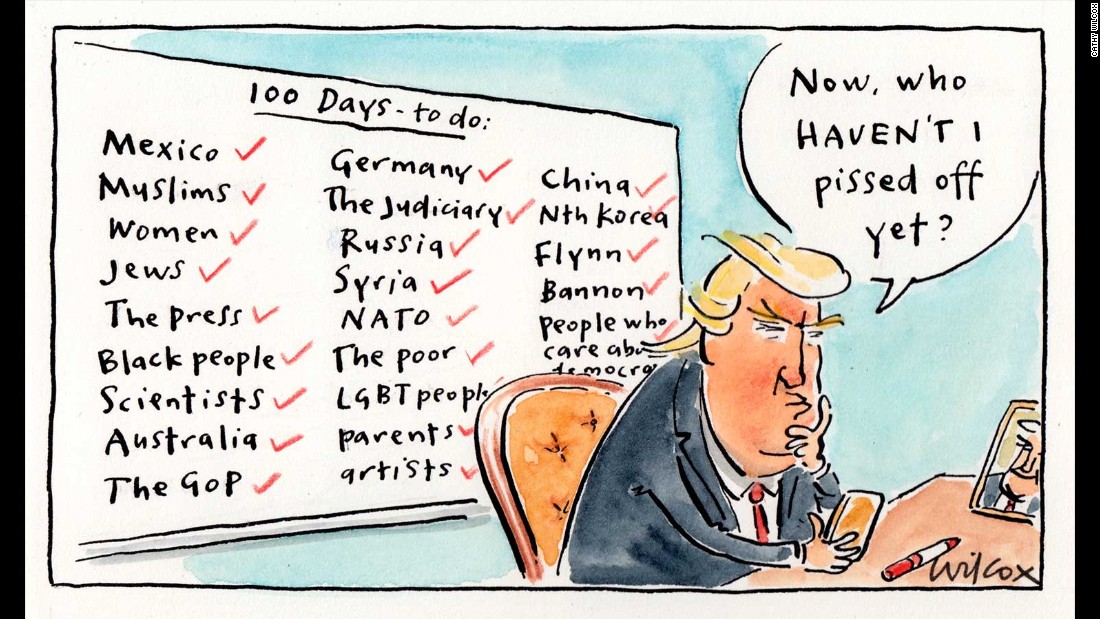
I’m not sure there’s anyone left …
Editorial by Cathy Wilcox found on CNN.com.
With the president in the United Kingdom, having insulted both Meghan Markle, the Duchess of Sussex (how dare she say in 2016 that he was divisive and misogynistic, though he now says the comments were nasty, not her), and London Mayor Sadiq Khan before his plane even touched down, I’m reminded that it’s possible to insult people politely.
Not that you should. As a rule you shouldn’t hurl insults, especially if you subscribe to the idea that you should treat others as you want to be treated. Plus there’s the fact that people will decide that, if you have to use insults rather than address an issue, your argument has little merit. But if you’re going to do it, do it with humor and/or politeness and, for God’s sake, some intelligence.
At least try not calling someone “nasty” or a “stone cold loser.” (Stone Cold Steve Austin might have a few words to say about that one.) And don’t misspell that someone’s name if it’s in writing. (It’s Khan, as in Wrath of, not Kahn as in Madeline, God rest her soul.)
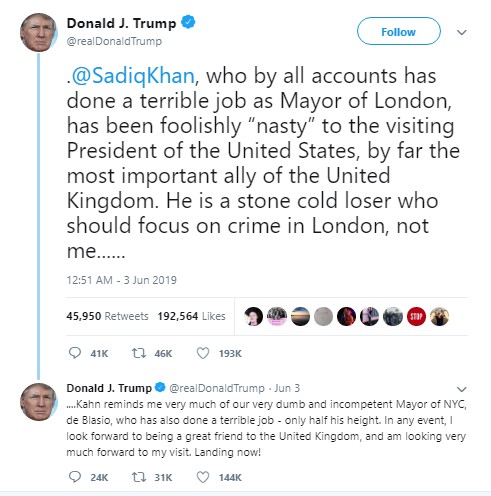
Cue Captain James Tiberius Kirk shouting, “Khaaaaaaaan!!!”
Screenshot from some numpty’s Twitter page.
Southerners and Brits are masters at the polite insult, leaving some people to not know they were insulted at all, and others to marvel at the subtlety. While editing an online column by John Brummett in June 2013 about a conspiracy theorist, I was especially taken with what might be the nicest way to describe someone as less than stable: “It turned out that she had not brought her hinges with her that evening.”
If a Nawthener had said that, it probably wouldn’t have been as polite.
We all know, when said by someone we don’t know, to take “bless your heart” with a grain of salt, because it just might mean, “My God but you’re dense.” Even when said by someone we know, it might still be an insult. Don’t mess with a ticked-off Southerner.

Oh, Honey, I just love how you don’t care what people think!
Image found on Houston Chronicle.
When your aunt tells you you look healthy, she might be saying you look fat (wait … you mean I don’t look healthy???). When your cousin tells you, “Oh, I couldn’t pull that off, but wow, look at you!” … the implication is that you dressed in the dark, your mama dresses you funny, or that you’re nuts for having gone out in public like that. Probably that last bit.
And when your granny says she’ll pray for you, odds are that you don’t have a prayer of pleasing her anytime soon. I pray you didn’t have your hopes set on getting much in the will. No vintage milk glass for you.
Part of the wonder of the polite Southern insult is the honeyed tones in which it is spoken. But Brits could give some of us a run for our money (pounds or dollars, it doesn’t matter).
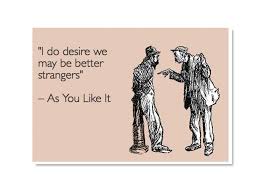
Another way to say this might be, “I’m jealous of people who don’t know you.”
Image found on Classic FM.
Britons have a long history with insults, which just don’t sound the same when not in a posh English accent (a Cockney or Scottish accent might make the insult too obvious, but oh, is it fun to hear). Shakespeare was a master of insults, some obvious (“most toad-spotted traitor,” “thou lump of foul deformity”) and not so much, letting the hearer think, if only for a second, that the speaker is being pleasant (“I was seeking for a fool when I found you,” “your bum is the greatest thing about you”).
Scots have some of the most creative insults, though they’re rarely polite, and quite often unprintable in a family newspaper. Hearing someone like David Tennant or Peter Capaldi reel off a list of Scottish insults will keep me happy for a very long time. “Numpty,” “weapons-grade plum,” “you wiggy slice” … ahh, so much to giggle over, and that’s before you get to the R-rated ones. Still, they’re hardly ones you should pull out if you want to de-escalate an argument.
Brits with posh accents, though, can politely insult people who will likely never suspect they’ve been dinged.
Tell someone “with all due respect,” and you might mean that you respect their opinions … or maybe that they’re useless. What comes after those four words determines the meaning.
Say “there’s room for improvement,” and it might just mean there’s no hope.

Rumor has it the president doesnt like this particular maverick, and likely thought he was more the British meaning.
Image found on Callaway-Jones Funeral Home.
In the U.S., “maverick” usually means someone willing to strike out on his own for something he believes in, but in the U.K., it could very well be someone who’s more than a little loony. In the president’s eyes, those people are the same.
Arron Trevor of the Brit IT blog (who teaches English as a foreign language in Poland) noted in 2015 that if you want to hear examples of polite British insults, you should go to the House of Commons in Parliament, where if a member “oversteps the etiquette mark, the Speaker asks him or her to withdraw the remark, and an alternative is needed. A master of this art is the veteran MP Dennis Skinner, who’s been in Parliament since 1970. Once he accused half of the members opposite of being ‘crooks.’ Dennis was asked to rephrase his comment, which he did by saying ‘OK, half the members opposite aren’t crooks’.”
Sly (though it wouldn’t fly in Voices letters). However, Skinner, who is still in Parliament and is the longest-serving MP, has been suspended multiple times for etiquette breaches, such as calling the agriculture minister a “slimy wart on Margaret Thatcher’s nose.” Well, it’s creative …
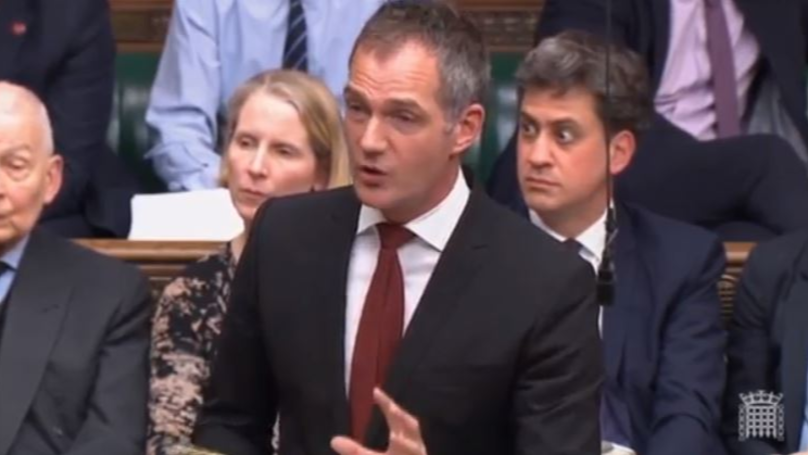
I suspect Ed Milibrand makes this expression for some of the insults that fly around in the House of Commons. This particular time it was because of protesters stripping in the gallery.
Image found on LadBible.
Pointing fingers when insulting someone, Jen Doll noted in 2012 in The Wire, is frowned upon by the polite, and making such a misstep only discredits the insulter. (That particular piece was written after Donald Trump—of course—insulted Arianna Huffington on Twitter.)
Among other things, especially when arguing with someone online, Doll advises that being funny and self-deprecating is a better path than just calling someone who has insulted you a loser. You should also know yourself, when to walk away, and the “difference between making someone else look bad, and making yourself look worse.”
If you insist on insulting someone, do everyone a favor and make it intelligent and relevant, and hopefully with a dash of humor.
And a British accent wouldn’t hurt.
The Scottish ones you can send straight to me, please.

We’ll just keep it between us, OK?
GIF found on Twisted Sifter.
 Serenity is a fuzzy belly
In the USMC, we had a insult-relevant contest to see how long you could swear before repeating yourself. Called for a unique vocabulary.
Re your reference to inheritance, an older woman comedian (name escapes me) told about a conversation with her grandson.
“Nana won’t always be here, you know.”
“I know, and I can’t wait to get on the boat.”
“Boat? What boat?”
“Daddy says when Nana dies, our ship is going to come in.”
LikeLike
Whoops! “AN insult”
LikeLike
Drop and give me 20, Marine!
LikeLike
Any inheritance from me would likely fit in a dinghy with room to spare. 😉 🚣🏻♀️
LikeLike
Just twenty? Don’t you mean “forty”? That seemed to be the favorite number of pushups I was required to do as punishment when I was in Navy boot camp or basic training.
LikeLike
It was a tiny slip, and I’m no grammar grouch. Twenty will do.
LikeLike
Twenty? You are too nice and too easy.
LikeLike
I’m also too tired to wait for 40. 😛
LikeLike
My inheritance won’t be money. Instead, I hope it will be all of the younger musicians whom I have tried to help teach and inspire over the years.
LikeLike
That’s a great one. 👏🏻
LikeLike
Many years ago, I remember watching on television what they call Question Time in the House of Commons in the British Parliament when Margaret Thatcher was the Prime Minister. One of the members of the opposition (the Labour Party?) didn’t like her answer to his question or comment and he called Thatcher a “fat cow”. I don’t remember what her response was.
LikeLike
I’m sure the speaker called that one out. She wouldn’t have needed to respond then. But I’d like to think she would have smacked him upside the head if rules allowed. 😉
LikeLike
On the rare occasions when people have tried to tell me “Bless your heart”, my usual response is to tell them politely, “My heart does not need your blessing.”
LikeLike
I’m assuming it was clear it was said as an insult.
LikeLike
If I believe that someone is trying to insult me, I see nothing wrong with trying to respond in the same way. I would tell the judge, “I plead verbal self defense Your Honor”.
LikeLike
Sure, but don’t stoop to their level. Be funny and intelligent, which I know you are.
LikeLike
Intelligent? Funny? Who? Me? (he asked jokingly)
LikeLike
🤓
LikeLike
I would tell my former sister-in-law, “I would pray for you but it would be a waste of time, energy, and effort.” She would probably be oblivious and would not understand that she was being insulted.
LikeLike
Mine used to get into arguments over the Bible with my grandparents. She had no concept of what she was doing. 🙄
LikeLike