
It should be of no surprise to regular readers that I spend a little too much time on Twitter sometimes, especially considering I have no Twitter account and no plans to start one.
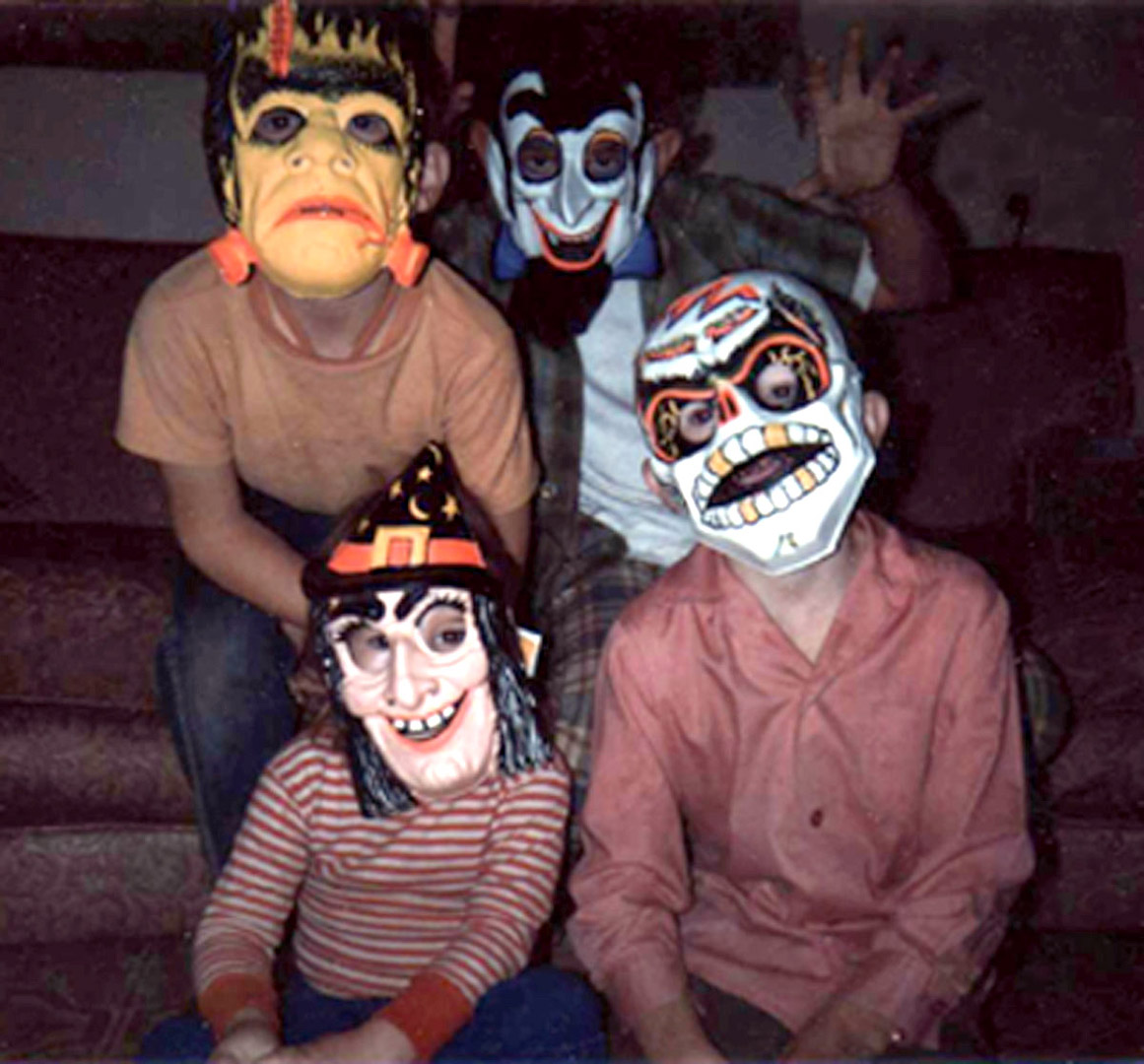
I’m the witch. Call off the hunt!
I have more than enough things to occupy my time already, and I don’t need to deal with the pressure of always being “on.” I’m either funny, insightful, clever, weird, etc., or I’m not. OK, I’m always weird. Ask my brothers (who are also a bit weird).
But Twitter beckons, especially the account for Merriam-Webster. C’mon, if you’re shocked that a word nerd would love Merriam-Webster … I just don’t know what to do with you.
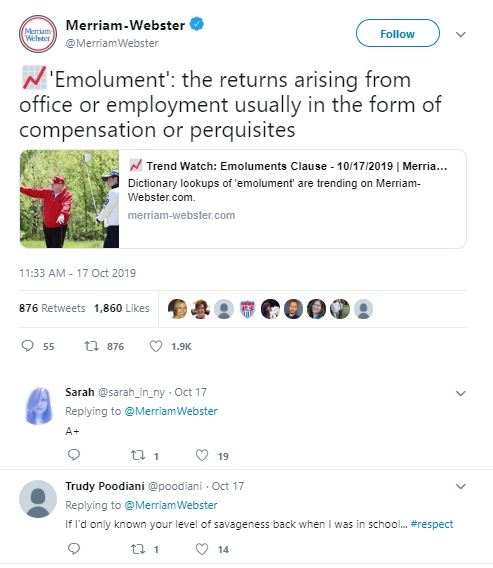
This kind of trolling I fully endorse. And no, the Emoluments Clause isn’t “phony,” you dolt.
Screenshot from Merriam-Webster’s Twitter page.
Notwithstanding its mostly good-natured trolling and fact-checking (as opposed to abusive and fact-deprived sniping that’s often seen on newspaper comment boards and Twitter replies) of a few well-known figures (or hell, maybe because of it, even though it offends some), the dictionary’s Twitter page, which links to its Words at Play blog, is chock-full of wordy goodness that’s hard for me to ignore.
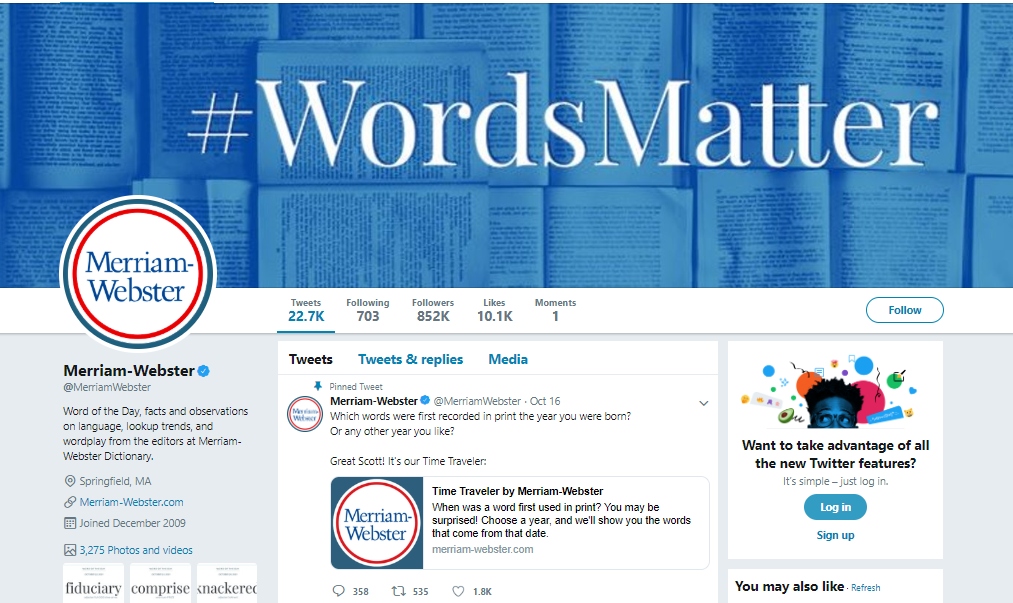
Yes, words matter, even if you don’t know what they mean. Ignorance is no excuse.
Screenshot from Merriam-Webster Twitter page.
I mean, where else can you find out what words had their first known usage the year you were born? Check out Merriam-Webster’s Time Traveler, which a recent tweet flogged, and try not to beat yourself up too much when you realize you’re as old as “crystal meth” (1969), “C ration” (1942), or “fanny pack” (1957). Sure, there are less embarrassing words and phrases, but there are more embarrassing ones too. (One from my mom’s birth year would have horrified her, especially since she was no fan of a person with whom this particular phrase has been associated. And she did not embarrass easily.) None of us (I’m assuming no Methuselahs) would have been around when “inappropriate” was first used, which Merriam-Webster tracked in another entry to 1747 (it hasn’t been added to that Time Traveler list quite yet, where it would join “Hippocratic oath,” “scatterbrained,” and “kelpie” [shout-out to fellow Water Horse fans] among others).
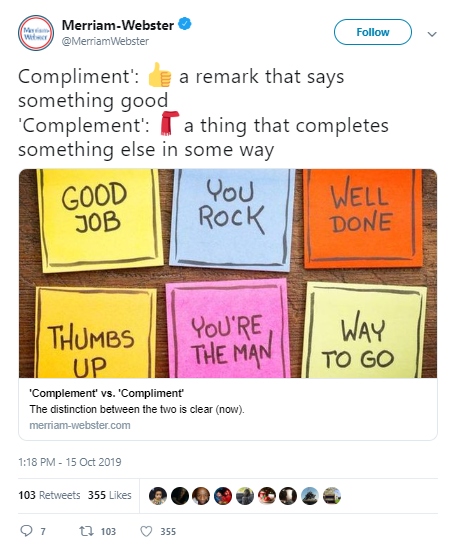
I like to complement my compliments with words from the thesaurus.
Screenshot from Merriam-Webster’s Twitter page.
Need to know the difference between “compliment” and “complement”? If I’d been paying closer attention last week, I could have directed my boss to the tweet, the day before he asked me about it, linking to Merriam-Webster’s discussion of the difference. According to the dictionary, “A complement can be broadly understood as something that completes something else in some way. Sometimes it completes by improving, as in ‘a hat that is an elegant complement to the suit,’ and sometimes it completes by filling a need, as in ‘a team with a full complement of players.’ … Complement is also a verb meaning “to complete or enhance by providing something additional.’”
Compliment, on the other hand, as a noun “most often refers to a remark that says something good about someone or something, and as a verb it communicates the expression of such a remark. … And that’s really the crux of it: complement is about completing, and compliment is about courtesy, especially in the form of admiration, esteem, or approval.”
That’s basically what I told him, but more eloquent. I could do that, but I don’t yet know every English word in existence.

My just desserts will all be chocolate.
Screenshot from Merriam-Webster’s Twitter page.
Or maybe you need to know why the phrase is “just deserts” rather than “just desserts,” which Merriam-Webster hyped with the tweet: “‘Just deserts’: when one gets the punishment one deserves; ‘Just desserts’: a child’s dream dinner.” The jest seems all the more appropriate considering, “The English language is fond of occasionally embracing its whimsical and illogical side, in order to keep things interesting for the people who attempt to use it,” according to the dictionary.
I knew there was a reason I liked it. I mean, besides all the fun words.
“Desert” confuses people because the most common noun form refers to arid land, says Merriam-Webster, but the differently pronounced “desert” (pronounced like the verb form) in “just deserts” is a less common noun form “which may mean ‘deserved reward or punishment’ (usually used in plural), ‘the quality or fact of meriting reward or punishment,’ or ‘excellence, worth.’ This desert and dessert are etymologically related, although the former is quite a bit older; the punishment sense had already been in use for several hundred years by the time we got around to adopting the after-dinner word dessert around 1600.”
But hey, if punishment involved dessert, I imagine more people would be willing to admit their wrongs. Chocolate? Sign me up!
And no, hamberders are not dessert. Unless they’re made of cake.
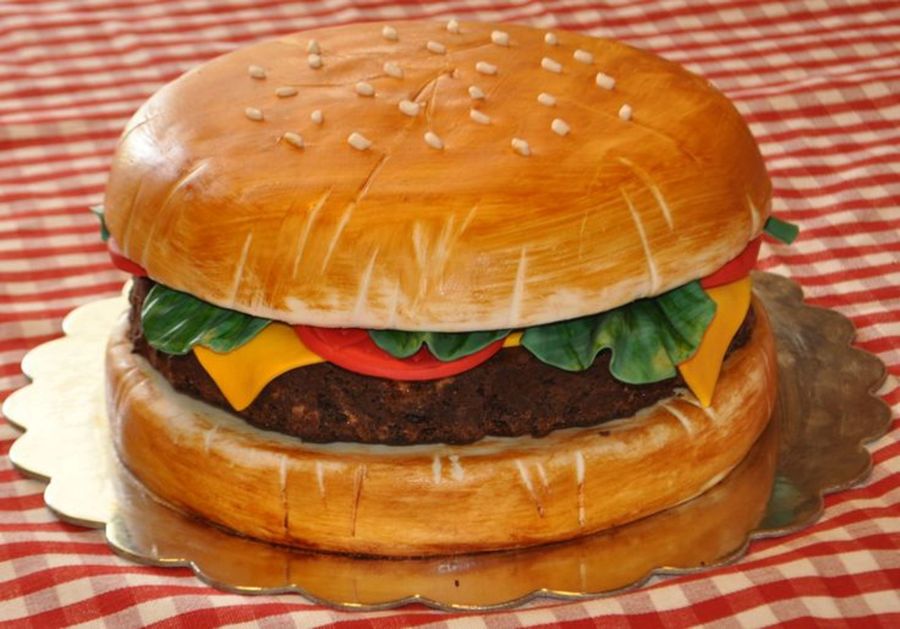
I can’t eat beef, but I could eat this cake …
Image found on CakeCentral.
I’m for anything that gets more people interested in our language, and a little creative snarkiness can be just the thing to create more word nerds (we’re inevitable; get over it).

The cat is innocent! The dog framed him for eating those credit cards!
Screenshot from Merriam-Webster’s Twitter page.
The Twitter pages for dictionaries like the Oxford English Dictionary and American Heritage Dictionary are a bit more staid (especially since American Heritage hasn’t posted in about a year; Oxford’s blog can be pretty chatty, though). However, we can count on Dictionary.com bringing archaic words back from the dead with #DictionaryUndead (I love that “methinks” and “lickspittle” are among the choices), and Merriam-Webster explaining the difference between “credible” (worthy of being believed) and “credulous” (ready to believe, especially on slight evidence … wow … that seems somehow familiar) complete with a cat picture for illustration.
Anytime cute cat photos are involved, I’m onboard. The cat GIFs included in The Washington Post Fact Checker emails are just one more reason to subscribe. Between those and my BuzzFeed cat emails, Fridays are a lot easier to take.
With cats, chocolate and words on tap, who needs anything else?
Sure, money to pay the bills, but c’mon … cats!!!

This is the kind of quality content I expect from my fact-checkers!
GIF found on The Washington Post.
 Serenity is a fuzzy belly
Thanks for the Time Traveler. It was a special thrill catching up with my lexicographic siblings, including:
balding (a little prescience there)
conga line (capturing my fun side)
corpse flower (yikes)
egg-headed (excuse me)
jitterbug (see conga line above)
neo-Nazi (speaking of prescience)
postage-stamp (really? I’m THAT old?)
scattergram and sociolinguistics (preparing my career)
super-duper (thank you)
LikeLike
When I said neo-Nazi was prescient, I was not referring to how I turned out but how much of our current government has turned out. In that latter respect I could have chosen other siblings: payola, deficit spending, panzer division, rabbit hole, Colonel Blimp, and oink.
LikeLike
Or the ewww one from my mom’s year (come to think of it, “ew” might have been on that list as well): golden shower. Ew. Just ew. 🤮
LikeLiked by 1 person
Since I have no TARDIS, this was the next best thing. Though some of it is more than a little depressing.
LikeLike
Oop, and I’m wrong. Ew was 1969. But the golden shower thing is still worthy of an ew. And an “Oh, God, my eyes!”
LikeLike
“I’m the witch. Call off the hunt.” Are you referring to the Wild Hunt from Celtic folklore and mythology? In some versions of this story from other countries in Europe, the Wild Hunt is led by none other than the Devil himself.
LikeLike
Mitchell was the devil, and he was the oldest, sooo …
But no, I was referring to the worst witch hunt ever perpetrated … according to the Oval Office occupant. 🧙🏻♀️🍊
LikeLike
In The Saga Of Pliocene Exile by the late Julian May, the alien race called the Tanu have a version of the Wild Hunt called the Flying Hunt. May borrowed liberally from Celtic folklore and mythology for her Saga. In The Chronicles Of Prydain by Lloyd Alexander which is based on Welsh folklore and mythology and most especially the “Mabinogion”, there is a version of the Wild Hunt which is led by The Horned King.
LikeLike
Did you compliment the complements of your friends?
LikeLike
I did. They were both complementary and complimentary. 🤓
LikeLike
Did you desert your dessert in the desert? Were you punished with your just deserts for doing this?
LikeLike
Fie on that. I would never desert dessert. Unless it was tapioca.
LikeLike
I do not like tapioca either. Personally, I prefer chocolate pudding. I am not pudding you on this time.
LikeLike
The only money I can offer anyone is the song by Pink Floyd.
LikeLike
Speaking of dictionaries, you have reminded me of one of Dick Martin’s signature lines from Laugh-In: “Look it up in your Funk & Wagnall’s.” My father and I would watch Laugh-In regularly every week. If I didn’t understand some of the more “adult” jokes, my father would try to explain them to me. He thought it was an important part of my education.
LikeLike
Speaking of cats, have you seen the video on YouTube of Cats Versus The Invisible Wall?
LikeLike
I don’t think I have.
LikeLike
Since you like cats, I recommend that you watch the cats versus the invisible wall.
LikeLike