
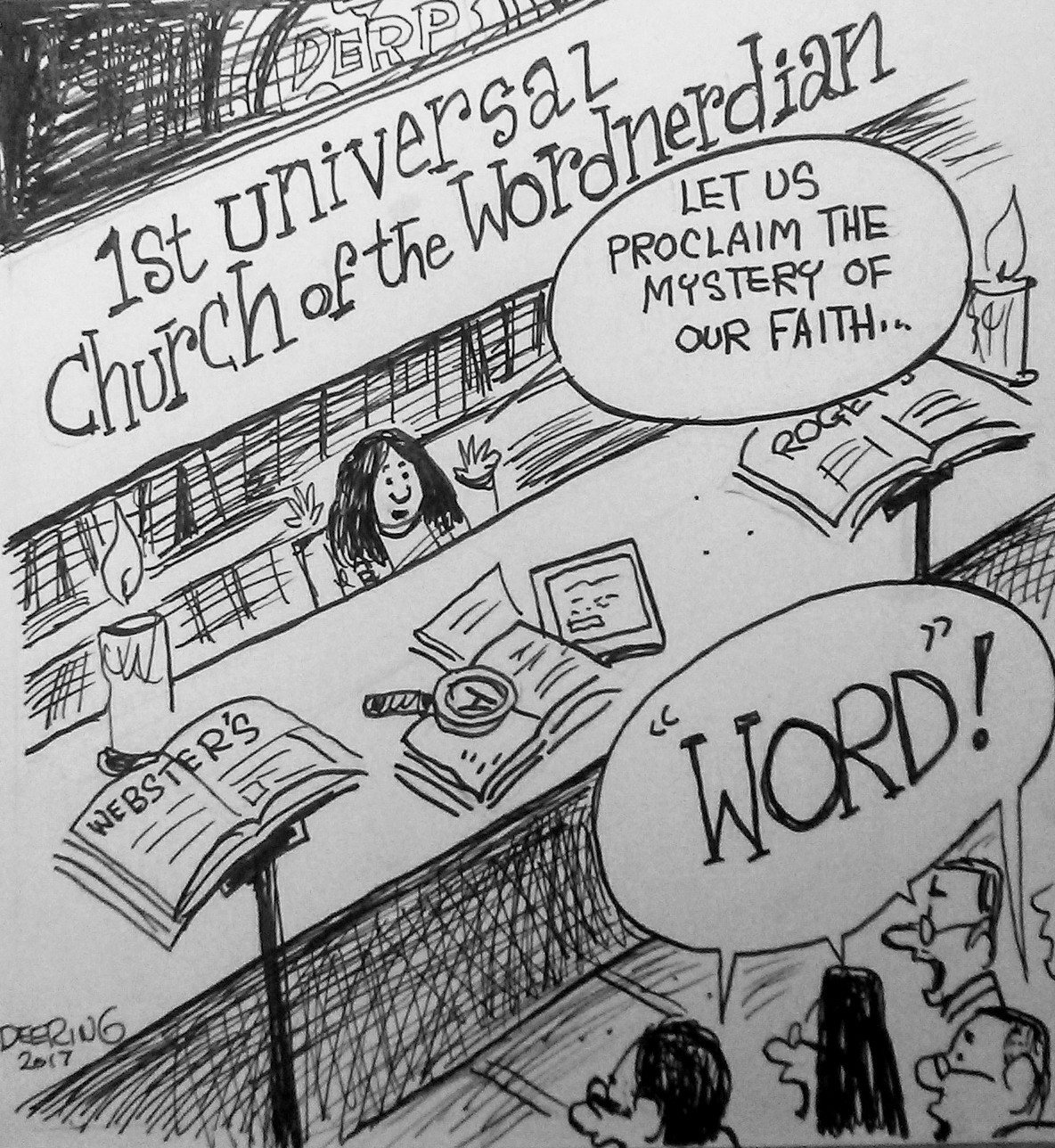
This is the time of year I always look forward to; sure, there’s the whole holiday thing, but for me and my fellow word nerds, there are Word of the Year announcements.
Doesn’t take much to make me happy sometimes. And in a year like this one, well, I need some happy. Really, I need a lot of happy, but I’ll take a little if that’s all I can get.
Which is why you might have heard some colorful swearing coming from my part of central Arkansas when several dictionaries released their words of the year in the past few weeks. Really, you guys couldn’t let it be something to take our minds off this year?
Of course not, because that’s not how these things work. They don’t reflect the reality we wish we had (dang it), but the one we have and for which people searched related terms. And in this pretty awful year (decade, really) of 2020, we sought to define that which has kept us cooped up in our homes (those of us who aren’t essential workers) and masked in public (not counting those who think this whole covid-19 mess is much ado about nothing … if nothing is 282,000 deaths and counting in the U.S.).
I know, right?
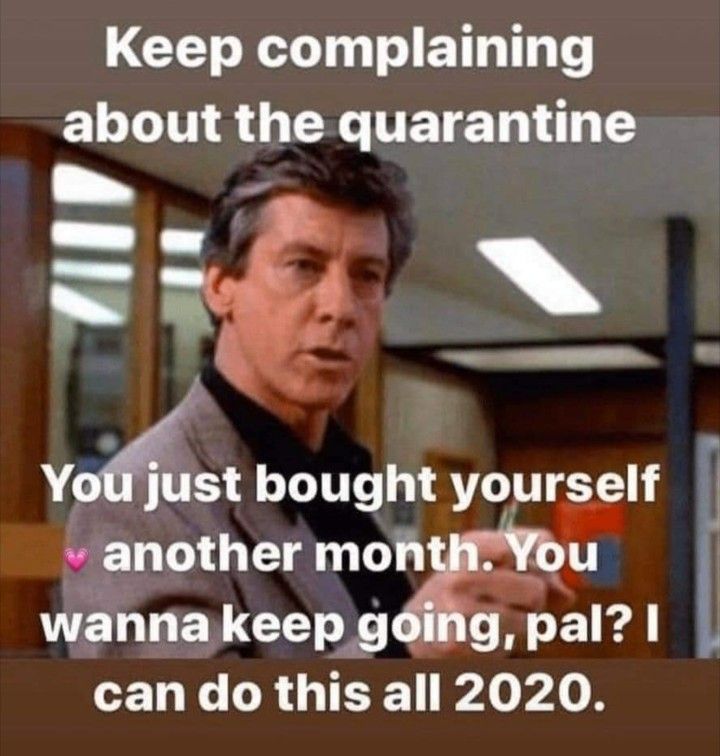
Cambridge Dictionary dropped its news two days before Thanksgiving (uh … thanks?) that its Word of the Year was “quarantine,” saying, “Our data shows it was one of the most highly searched words on the Cambridge Dictionary this year. Quarantine was the only word to rank in the top five for both search spikes and overall views (more than 183,000 by early November), with the largest spike in searches (28,545) seen the week of 18-24 March, when many countries around the world went into lockdown as a result of covid-19.”
Cambridge also noted a new meaning emerging: “a general period of time in which people are not allowed to leave their homes or travel freely, so that they do not catch or spread a disease,” which it has added to the traditional definition of containing a person or animal who has or may have a disease to prevent its spread. And before you say, “They can’t do that,” remember that dictionaries record how words are being used, and as words shift in meaning, so do definitions. Telling people how words should be used is a job left to grammarians.
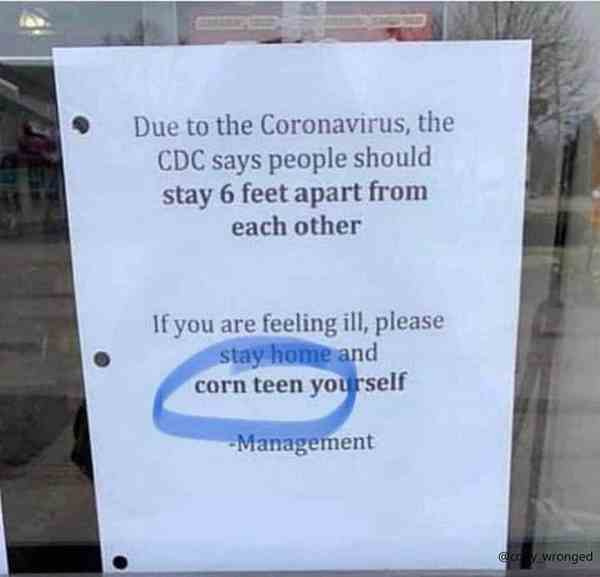
And Lord, are they ready to tell you. I, on the other hand, will just tell you (now, anyway) to stop using “irregardless” (I don’t care that it’s been in the dictionary since at least 1934), “anyways,” “lookie here,” and “supposably” … because they annoy the bejesus out of me. Take that to some other person who doesn’t care if you use ol’ (correct) or ole (incorrect unless you’re talking about the Opry or some dude named Ole).
Cambridge proffered a theory on why quarantine came out on top: “The words that people search for reveal not just what is happening in the world, but what matters most to them in relation to those events.
“Neither coronavirus nor COVID-19 appeared among the words that Cambridge Dictionary users searched for most this year. We believe this indicates that people have been fairly confident about what the virus is. Instead, users have been searching for words related to the social and economic impacts of the pandemic, as evidenced not just by quarantine but by the two runners-up on the shortlist for Word of the Year: lockdown, and pandemic itself.”
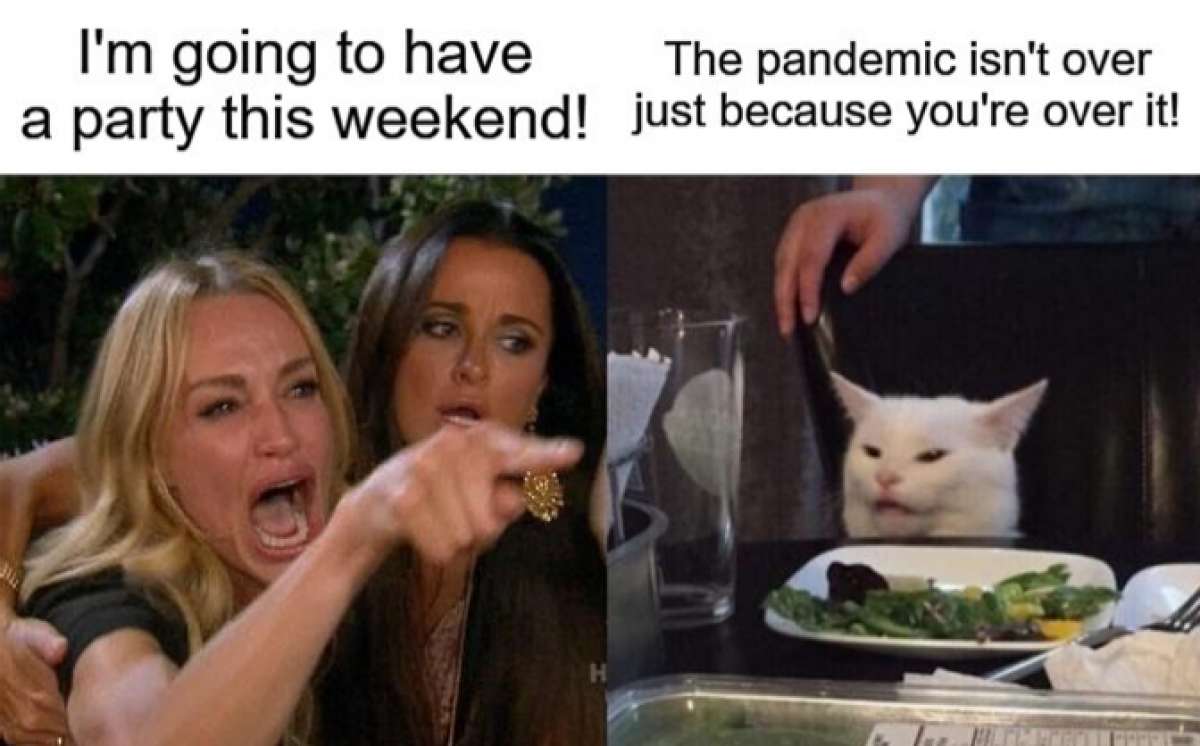
A little less than a week later, Merriam-Webster and Dictionary.com both unveiled “pandemic”—an outbreak of a disease that occurs over a wide geographic area (such as multiple countries or continents) and typically affects a significant proportion of the population—as the Word of the Year.
Gee, thanks.
Merriam-Webster noted its first big spike in lookups happened Feb. 3 when the first U.S. covid-19 patient was released from the hospital in Seattle (though they had started ticking up Jan. 20, when the first positive case in the U.S. was announced), and lookups only grew from there. On March 11, when the World Health Organization officially declared a pandemic, the dictionary saw a 115,806 percent increase in lookups over the same day in 2019, and the word has remained near the top of the list of lookups all year.
Coronavirus, defund, Kraken, quarantine, schadenfreude and malarkey (one of my favorites because it’s fun to say, as is schadenfreude) were also among the top lookups for Merriam-Webster.

But Oxford Languages couldn’t pick just one word, not that a lot of people likely noticed when it was announced a couple of weeks ago. You know, covid deaths, unsettled election counts … there was a lot going on.
“The English language, like all of us, has had to adapt rapidly and repeatedly this year,” it wrote. “Our team of expert lexicographers have captured and analysed this lexical data every step of the way. As our Word of the Year process started and this data was opened up, it quickly became apparent that 2020 is not a year that could neatly be accommodated in one single ‘word of the year’.”
Instead, Oxford designated “Words of an Unprecedented Year,” tackling dozens of words related to the pandemic (such as covid-19, quarantine, social distancing, mask-shaming, superspreader, etc.), world Englishes (how other English-speaking regions refer to quarantines/lockdowns and other pandemic terminology), technology (remote learning, Zoom-ready, etc.), the environment (bushfire, climate, net zero, etc.), social movements and social media (BLM, cancel culture, QAnon, etc.), and politics and economics (impeachment, Brexit, mail-in, furlough, etc.).
You can download the 30-plus-page report at the link above. Then you can marvel at how excited Oxford’s lexicographers got about words this year, including new coinages like Blursday (when you don’t know what day, time, etc., is because the days blur together) and covidiots (do I really have to define that?). Semantic shifts will do that.
As Oxford noted in its closing statement, “From the sobering discourse of pandemics and politics, to the light-hearted neologisms that have emerged in times of darkness, language is the common thread connecting these shared experiences across the globe.”
Considering so many of us live in different realities, any connection is to be applauded right now.
😍🤬😍🤬😍
So, my fellow word nerds, what have been your favorite words this year? What words do you hope to never see again? Let me know at blooper@adgnewsroom.com, in the comments here, or in comments on any of my Facebook posts if you’re a friend, and I might include you in a future column.
 Serenity is a fuzzy belly
I was going to propose another categories: Words to describe the Trump Era. However, I couldn’t think of any words suitable for publication in this family-sensitive blog. Well, maybe “darn.”
LikeLike
Now that you mention it, can we never hear Trump again? 😏
LikeLike
I don’t wanna see “ok boomer” again.
LikeLike
Even though I’m not a boomer, I’d love to never hear that one again as well.
LikeLike
I thought Children Of The Corn was a really corny movie. Just as corny as Bob Corno the horn player with the symphony.
LikeLike
😏🌽
LikeLike