
I was born on a Monday. It’s been mostly downhill from there.
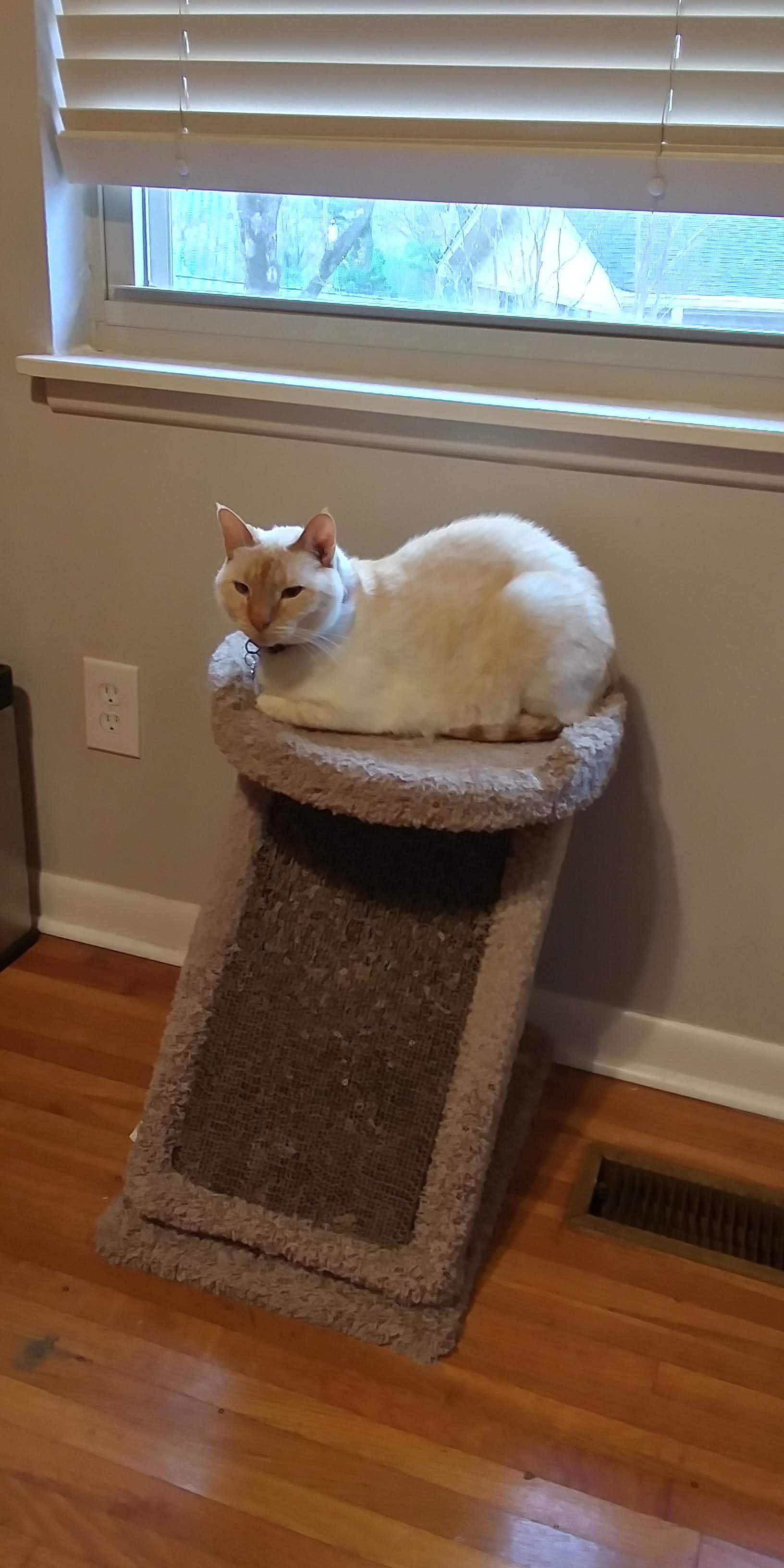
I thought about that Monday afternoon as I realized I’d locked myself out of the house I’m checking on for a friend, while her cat paced in the window, wondering why his crazy sitter was just sitting in her car. (Sorry, Charlie; I know that’s not what it means to cat-sit; earlier that day I accidentally locked him outside in the backyard. I’m spacey at times, but Monday was a special case entirely.) Another friend, who had to drive back from Hot Springs, managed to find a spare key and get me back in, and it just ended up being an annoyance overall.
Which brings me to ways to annoy editors, other than reading over their shoulders, touching their monitors to point out something, or having to be reminded of deadlines. All of these are accurate, at least for our paper, and no, Danny, I won’t stop touching your monitor screen. 😏

You might think that editors are, on the whole, a bunch of grammar grouches. There are some among our number, but I’m fairly confident that you won’t find a ton of them in the news business. The percentage might be a bit higher on the opinion side and on the copy desk, but we tend to be bigger nerds anyway.
Here are a few ways to get on an editor’s nerves. I’d say it’s just me, but experience tells me I’m not alone.
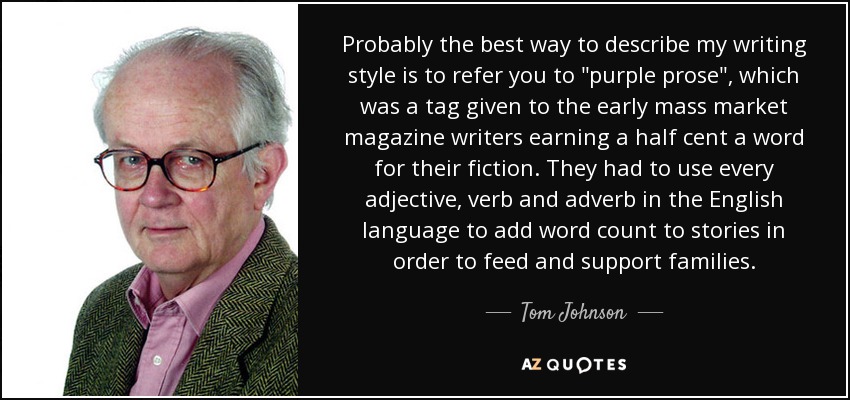
🤯 This is a big one: Use every adjective and adverb. Every. Single. One. And make sure to use a few that have nothing to do with the subject at hand; editors love attempting to interpret what you’re trying to say.
William Zinsser, author of “On Writing Well,” has a few words to say about modifiers: “Most adverbs are unnecessary. You will clutter your sentence and annoy the reader if you choose a verb that has a specific meaning and then add an adverb that carries the same meaning. Don’t tell us that the radio blared loudly; ‘blare’ connotes loudness. Don’t write that someone clenched his teeth tightly; there’s no other way to clench teeth. …
“Most adjectives are also unnecessary. Like adverbs, they are sprinkled into sentences by writers who don’t stop to think that the concept is already in the noun. This kind of prose is littered with precipitous cliffs and lacy spiderwebs, or with adjectives denoting the color of an object whose color is well-known: yellow daffodils and brownish dirt. If you want to make a value judgment about daffodils, choose an adjective like “garish.” If you’re in a part of the country where the dirt is red, feel free to mention the red dirt. Those adjectives would do a job that the noun alone wouldn’t be doing.”
Zinsser isn’t saying don’t use them at all, but just to be more thoughtful when choosing your words. He has become, though, a favorite target of those who feel he’s put out a bounty on adjectives and adverbs. He never says that, says Michael Leddy of the Orange Crate Art blog, but rather cautions moderation and offers “sound advice about lifeless sentences and dopey overwriting.”
Hey, I love the color purple, but the purple prose resultant from overwriting should be stopped (especially when it’s just overall horrible writing).
Honestly, a lot of the critics sound like the ones on the newspaper’s website who are constantly droning on about the things we didn’t say and taking things we did say out of context so they can misrepresent what was actually said. They need a new hobby in the worst way.
If Ben Yagoda received similar opprobrium for his “When You Catch an Adjective, Kill It” (the title is based on advice attributed to Mark Twain), I have yet to find it.
Yagoda writes after much discussion on adjectives, “Now you know what adjectives are, but you may still be wondering why so many people bash them. These words are clearly necessary in order to communicate many thoughts and ideas: how could we make our way in the world without saying things like the ‘other cup,’ an ‘old man,’ the ‘green door,’ the ‘last day,’ etc., etc.? Moreover, adjectives aren’t really used that much—they account for only about 6 percent of all words in the British National Corpus, a 100-million-word collection of samples of written and spoken language. The root of the problem is lazy writers’ inordinate fondness for this part of speech. They start hurling the epithets when they haven’t provided enough data—specific nouns and active verbs—to get their idea across.

“It’s easy—too easy—to describe a woman as ‘beautiful.’ It takes more heavy verbal lifting, but is more effective, to point out that the jaw of every male in the room dropped when she walked in. And establishing that someone kicked an opponent who was down, stole $17 from a Salvation Army collection kettle, and lied to partners about having sexually transmitted diseases precludes the need to call him terrible, awful, horrible, horrid, deplorable, despicable, or vile.
“Describing nature may be writers’ toughest challenge—and many face it by stacking up the attributive adjectives, with a sprinkling of adverbs. An adherence to this formula may in fact be the most reliable sign of bad poetry: each line seems like an unfunny game of Mad-Libs. “The ____ snow fell ____ on the ____ ground as the ____ children played ____.”
So if your writing sounds concise and to the point, by all means, lard in as many adjectives and adverbs as you can. Lord knows we love an overwritten sentence that makes us forget what it was about by the time we get to the end of it. Less is more? Nah, more is more!
🥴 Don’t spellcheck (this obviously refers to anything done on a computer). I’ve yet to find a word-processing program that doesn’t have spellcheck in some manner (though I hear the excuse that they can’t find it. ???), but sure, go ahead and leave that for the editor to do. It will really endear you to her.
🤓 Don’t re-read before submitting, whether you’re a reporter, a columnist, or simply a letter-writer. I often advise letter-writers and others to sit on something before submitting it, preferably overnight or longer, then re-read it in the cold light of day. Having created some distance, you’re more likely to find errors, awkward and/or repetitive passages and bits that don’t accurately convey what you mean. (It really does work, especially if you write/read many things in the course of the day.) Reporters on daily stories can’t take that long, obviously, but it’s always best to re-read, no matter how quick the turnaround, to avoid embarrassing corrections later.
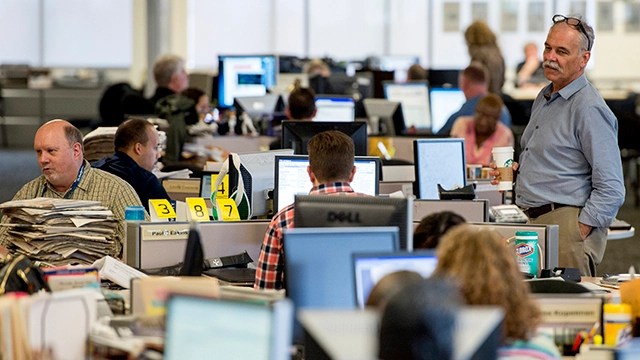
🤬 Don’t check your facts. There are many other things that will annoy an editor, but misquoting people, not double-checking references made, incorrect attributions and ensuring that all statements of fact are indeed fact will make most of them see red (if they don’t, there’s something wrong). The time it takes for the editor to track down correct information will be more than that of the writer, who ostensibly had access to that information in the first place. Editors on deadline (who are cranky enough already) won’t thank you for the extra work or the short shrift given to everything else they have to edit that day.
I mean, they’re already trying to put their brains back together after wading through thick, florid prose and losing the point of the whole thing. But yeah, g’head.
Does anyone have an aspirin? Or at least some Scotch tape?
And chocolate … lots of chocolate.


Over five decades of writing textbooks, I have come to respect and love my editors–most of them–even when we disagreed. They protect me from embarrassing errors and make me seem a better writer. But one of my proudest achievements in the impish category, as I’m sure I’ve told you before, was ending a book with a preposition. Either my editor missed it or chuckled and looked the other way. I hope it was the latter.
LikeLike
Remember, a lot of those “rules” were made because someone had a pet peeve.
LikeLike
Not a great Monday, eh? Glad you survived. Not sure I would have. And I loved reading about the origin of purple prose — although surely at some time in my career I’d heard it before. Now, where did the “purple” part come from? Meanwhile, for a time at least, I’ll be checking to see if my choice of nouns and verbs has been careful enough.
LikeLike
Not sure, but I suspect it was more the alliterative aspect, and pink prose just doesn’t sound right. 😂
Charlie’s purrs and cuddles have miraculous healing powers, so that helps.
LikeLiked by 1 person
According to my Perpetual Calendar (a paper calendar instead of an electronic one), i was born on a Tuesday. No I am not full of “Grace” and I am reasonably sure that God would agree with that statement about myself.
LikeLike
When I had to write essays for high school and/or college classes, I would deliberately try to use too many unnecessary adjectives and adverbs because the professor would insist that the paper or essay must be a certain length and a specific number of words. I still do not like restrictions like that on the rare occasions when I write something.
LikeLike
I have always been good at spelling and I did double check anything I wrote before I turned it in.
LikeLike
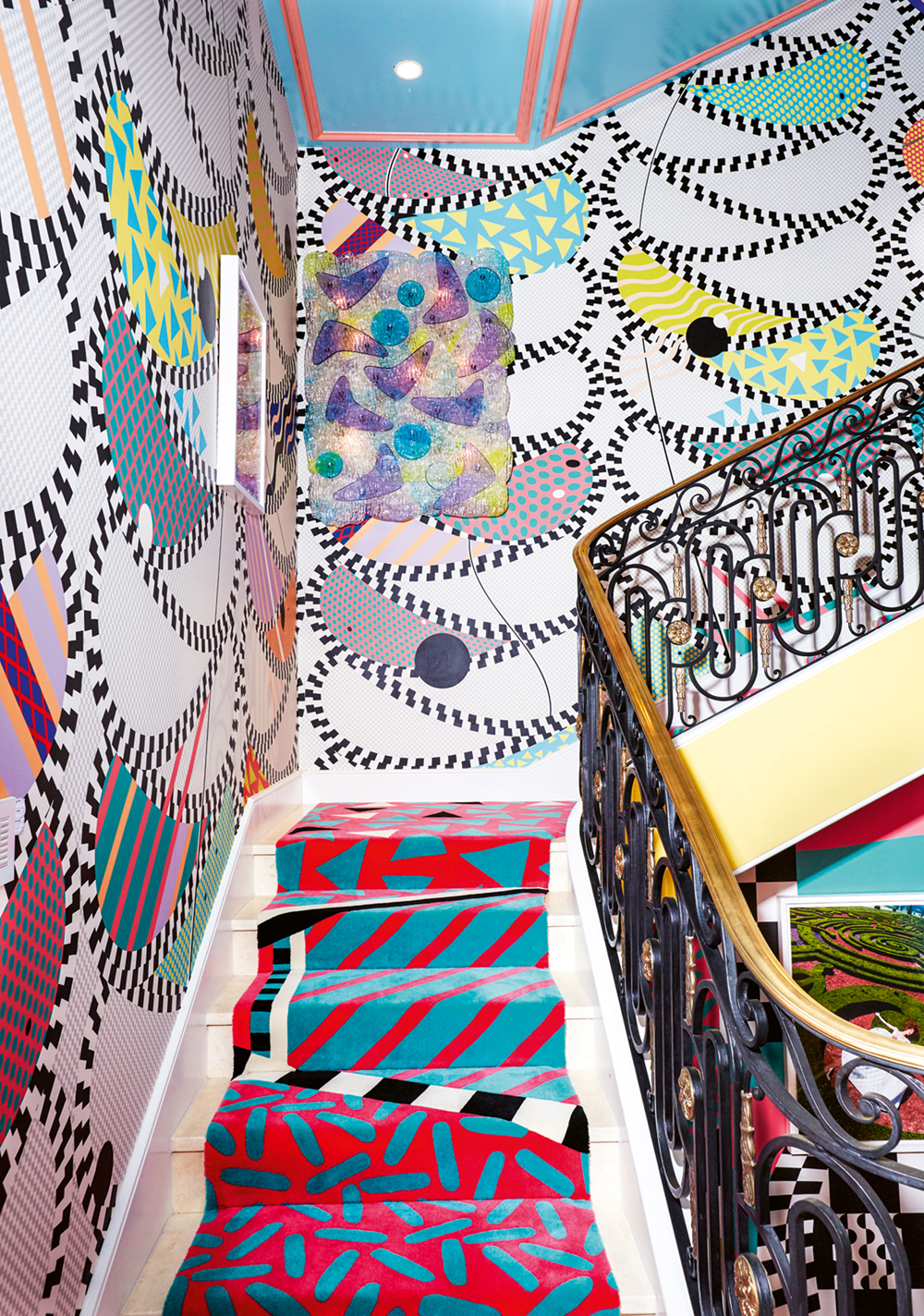
That interior designer did not need an editor. I like that color scheme and would have that in my house in I could.
LikeLike
Way too many patterns.
LikeLike
And one last question: Where Is The Chocolate?
LikeLike
Soon to be in my belly. 😆
LikeLike
Brenda was your Monday as Manic as The Bangles used to sing about?
LikeLike
It was basically me asking what else could go wrong and being swiftly answered.
LikeLike
“Manic Monday” was one of my favorite songs by the Bangles.
LikeLike