

We all like to think that we would never take pleasure in the misfortunes of others, but we’re human. It happens. Uppance comes for all, and we get a little thrill when it’s not us.
Schadenfreude is the word for that feeling, and is just one of many for which we can thank the German language. Merriam-Webster notes: “Schadenfreude is a combination of the German nouns Schaden, meaning ‘damage’ or ‘harm,’ and Freude, meaning ‘joy.’ So it makes sense that schadenfreude means joy over some harm or misfortune suffered by another.”
The schadenfreude has been thick lately (what with FBI raids, subpoenas, investigations and all), but so has the weltschmerz; the feeling, says Merriam-Webster, “of sentimental sadness or pessimism; the weariness that comes with knowing that the world is going to let you down no matter what and there’s nothing you can do to stop it.” Weltschmerz literally means “world-pain.” I think a lot of us have been feeling that, if not since 2015 or so, then by 2020 when covid-19 became a pandemic.
As Homer Simpson said, “Boy, those Germans have a word for everything.”
He wasn’t wrong, and we’ve adopted many of them into English. The German language has a love for creating compound words like erdferkel (earth pig, or aardvark), naschkatze (treat cat, or person with a sweet tooth [me!]), stachelschwein (spike pig, or porcupine) and kummerspeck (sorrow bacon, or the excess weight gained from emotional overeating, and I really think we need to use “sorrow bacon” … just because).
Rosetta Stone reports, “German is widely considered among the easier languages for native English speakers to pick up. That’s because these languages are true linguistic siblings—originating from the exact same mother tongue. In fact, 80 of the 100 most used words in English are of Germanic origin.”

English is a Germanic language (the most widely spoken of those languages), but it borrows heavily from others; as the joke goes, it follows other languages into dark alleys, assaults them, then rifles through their pockets for loose words. Consequently, a lot of foreign-language words have made their way into English as “loanwords.” English, like a lot of us, is a mutt/Heinz 57 mix of a little bit of everything (let’s see, in my family there’s English, French, German, Canadian, etc.).
My class at school was the first one in our district to go through kindergarten, if I remember correctly. Kindergarten is another compound noun, meaning children’s garden, and was coined by Friedrich Fröbel. Though he wasn’t the first with the concept of early education, his word and approach, which reflected his belief that children should be nourished like plants in a garden, ultimately reigned.
I first came across doppelgänger when I was in my paranormal fascination phase in grade school. The word means “double-goer,” according to Merriam-Webster, and is credited to Johann Paul Richter from his 1796 novel “Siebenkäs,” in which the main character meets and talks to his alter ego. In German romanticism and romantic horror literature, the word came to mean spirit double, and it was said that to meet your own doppelgänger was a bad omen that you would shortly die. Now it mostly means someone looks like a lot like you.
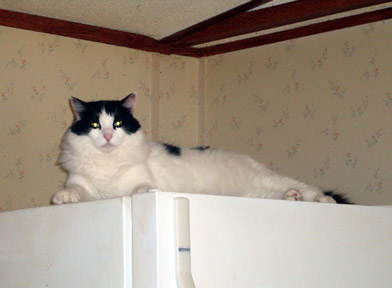
Speaking of the paranormal, we also “borrowed” poltergeist from the German. Merriam-Webster says it’s possible Martin Luther (he of the 95 Theses), who used it frequently in his writings, might have coined the word. It comes from the German verb poltern, meaning to knock or rattle, and geist, or ghost. In my house, my dearly departed furry one is the poltergeist, as he was in life. If I hear something fall, it’s probably him knocking stuff off the counter so he’s not forgotten (like there’s a chance of that happening).
Many other words came from German that we might not even recognize as necessarily German origin. Angst is German, as is wiener, kaput, leitmotiv, kitschy, rucksack, noodle, wanderlust, foosball and … hamster. Yes, hamster comes from the 17th century Old High German word hamustro, a rodent generally native to Europe and northern Asia, according to Lexico. The word translates to corn weevil (fun to say, but today would refer to an insect).

There are other untranslatable German words akin to schadenfreude that really should be used more, if for no other reason than the joy word nerds like myself get from them. A few of my favorites, and what they mean (thanks to Education First’s blog for gathering them):
🧤 Handschuhschneeballwerfer, which literally means “glove snowball thrower,” but really sorta means wimp. Because hey, if you can throw snowballs without gloves, you’re no wimp. You may have frostbite and lose your fingers, but wimpy? Nah!
⛱ Fernweh, which means “distance pain.” Instead of feeling homesick, you might have the urge to be somewhere else, like a warm, sunny beach far away from snow and the need for gloves because you know it’s too frickin’ cold to throw snowballs without them.
🤚🏻 Backpfeifengesicht, “a face that begs to be slapped.” Some days I’m surrounded by them, and my slappin’ hand gets really itchy.

👹 Erbsenzähler, which literally means “pea tally.” This would be someone who’s obsessed with details and is a bit of a control freak, or a nitpicker … perhaps someone who finds fault where there is none because he has nothing better to do. Sorta like certain trolls on our newspaper’s site …
🧀 Dreikäsehoch, which means “three cheese high.” It has nothing to do with my favorite cheese combos (which, for one thing, usually have four or five different cheeses), but instead a child who is as tall as three wheels of cheese stacked on top of each other. I mean, we measured height with marks on a door frame, but you do you, Germany.
🥴 Verschlimmbessern, which means to make something worse by trying to improve it. In politics, it’s sometimes imaginary so that nothing gets done at all, but in real life it may mean trying to fix the bangs you messed up by cutting more hair and looking like someone took a weed-whacker to your head. Do that when you’re a kid, and you’ll probably experience erklärungsnot, having to explain yourself quickly.
And no, Mom probably isn’t gonna believe you when you say your brother did it. Well, unless you have my brothers.

 Serenity is a fuzzy belly
German was one of my reasons for switching from Physics to Sociology in college. Then, I found myself confronting Gemeinschaft und Gesellschaft. There’s no escape.
LikeLiked by 1 person
It’s listening to us right now. German is more intrusive than Alexa and Siri. 😂
LikeLike
Try this on for size: Pelzknäuel
LikeLiked by 1 person
Google was no help, but I think I found it on a German shelter site: Furball?
LikeLike
Yes, and sometimes, fur ball.
LikeLike
Love the photograph! One of the first projects I undertook upon retirement was consolidating and mounting the many family photos that had accumulated over the years, and we have enjoyed them ever since.
LikeLiked by 1 person
I had started digitizing photos, but life got in the way. That photo, though, was a no-brainer. It was one of the first ones scanned!
LikeLike
Yep, whole lot of weltschmerz going on here.
That photo was probably the first and last time all those brothers looked that angelic!
LikeLike
There were a few others, but yeah, they usually looked a bit devilish (Mitch literally; he wore a devil costume to school and work one year for Halloween. I think he was a senior).
LikeLike
Is any of that “kummerspeck” originally from Canada?
LikeLike
Since my father took a semester or two of German in college and my mother took two or three semesters of French in College, whenever myself or one of my sisters sneezed, our father would say “Gesundheit” and our mother would say “A votre sante.”
LikeLike
In high school, I had a friend who resembled me but he wasn’t a genuine “doppelganger”. Sometimes Kirby and I were asked if we were cousins.
LikeLike
I saw two German words which describe my infamous former sister-in-law. They would be “Erbsenzahler” and “Verschlimmbessern”. Thank you for including them Brenda.
LikeLike
Whenever someone mentions “Freude”, I am always reminded of the baritone solo from the fourth movement of Symphony Nine by Beethoven which starts with “Freude, schoner Gotterfunken, Tochter aus Elysium, wir betreten feuer-trunken, Himmlische, dein Heiligtum.”
LikeLike
Would a “poultrygeist” be the ghost of a dead chicken? Yes I know that is a FOWL and most unfair question but I just had to ask it. There is supposed to be a bizarre and really weird horror movie titled “Poultrygeist Night Of The Chicken Dead”. No I have never watched but I have heard of it.
LikeLike