
Though my experience in the opinion side of the newspaper only goes back 11 years, my love for one specific endeavor within has been decades-long.
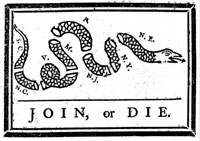
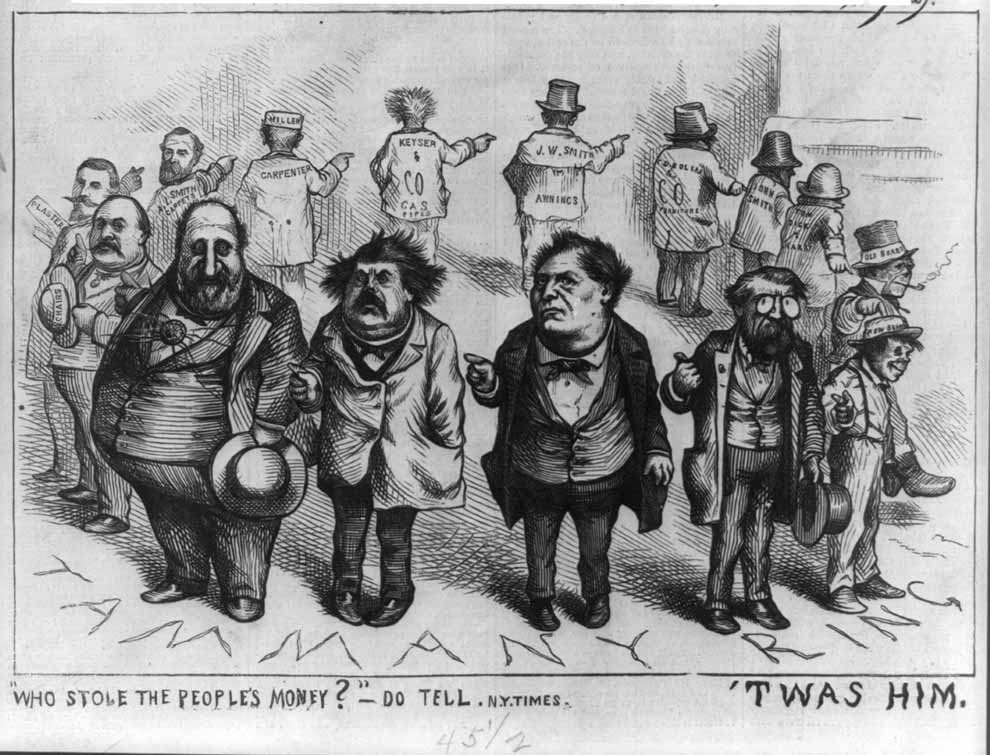
Through history classes in school (elementary, high school and college), I learned of the impact a well-done editorial cartoon can have, with examples such as Benjamin Franklin’s “Join or die” (acknowledged as the first editorial cartoon in the U.S.) and Thomas Nast’s many cartoons on Boss Tweed and Tammany Hall corruption (yes, the same Thomas Nast responsible for our vision of Santa Claus, as well as the Republican elephant and popularizing the Democratic donkey).
While there were other cartoonists/caricaturists before (such as William Hogarth), James Gillray is considered the father of political cartooning, according to Illustration History, taking on Napoleon and King George III. The website (which is part of the Norman Rockwell Museum) writes: “The political climate of Gillray’s time was favorable to the growth of this art form. The party warfare between the Loyalists and Reformists was carried out using party-sponsored satirical propaganda prints. Gillray’s incomparable wit, keen sense of farce, and artistic ability made him extremely popular as a cartoonist.”
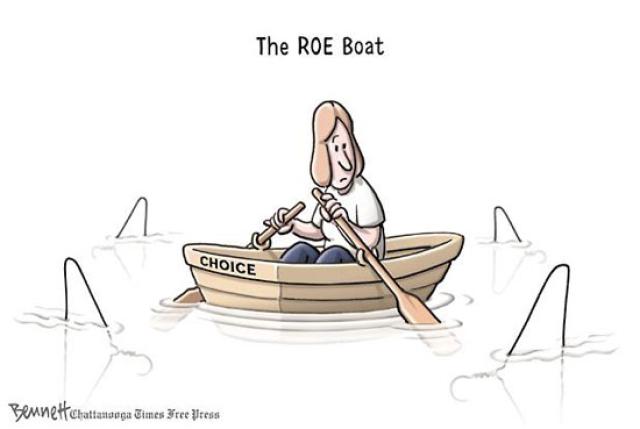
We have several cartoonists today who can claim Gillray’s command of drawing style along with satirical ability, as well as the ability to be dead serious when needed; Michael Ramirez (though not necessarily throughout the Obama years), Ann Telnaes, Clay Bennett and the Arkansas Democrat-Gazette’s own John Deering among them.
In 1843, the periodical Punch introduced the word cartoon to refer to comic drawings. (Its chief cartoonist for a time, John Tenniel, is perhaps better known as the illustrator for “Alice’s Adventures in Wonderland.”) By the mid-19th century, periodicals around the world were using cartoons to express publishers’ and cartoonists’ thoughts on politics.
Ohio State University’s History Teaching Institute notes that editorial cartoons are based on current events and have an educational purpose as “[t]hey are intended to make readers think about current political issues.”
But wait, I hear some of you say, cartoons are supposed to be funny!
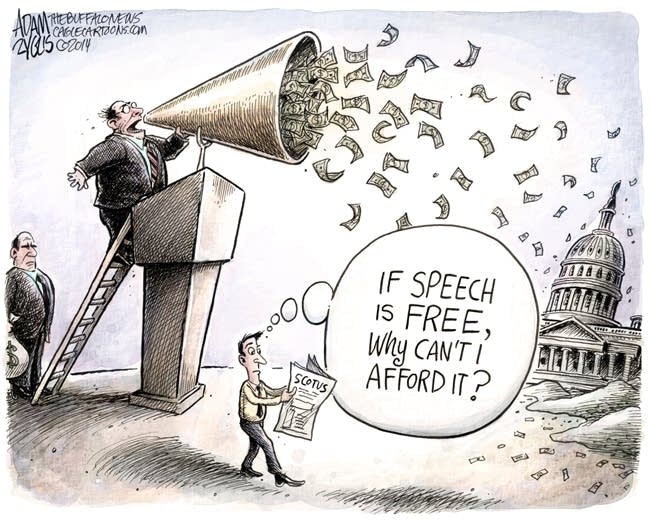
Well, sometimes editorial cartoons are funny, but not always. If you want cartoons to be consistently funny, you’ll have better luck on the comics page with the likes of Mutts and Pearls Before Swine (I’d say Dilbert, too, before the last decade or so, but Scott Adams has been phoning it in for a while; I miss the “fist of death” days of the late 1990s and early 2000s). On the opinion pages, though, is where you’ll find editorial cartoons, which may or may not involve humor, but will definitely have a point of view.
The university’s site reports: “A good editorial cartoon combines a clear drawing and good writing. A good editorial cartoon expresses a recognizable point of view or opinion. In the best instances, the cartoon cannot be read or understood by only looking at the words or only looking at the picture. Both the words and the pictures must be read together in order to understand the cartoonist’s message. Not all editorial cartoons are meant to be funny. Some of the most effective editorial cartoons are not humorous at all. Humor is only one tool available to editorial cartoonists.
“Editorial cartoons provide a window into history by showing us what people were thinking and talking about at a given time and place. Today’s editorial cartoons will provide the same record of our own time.”
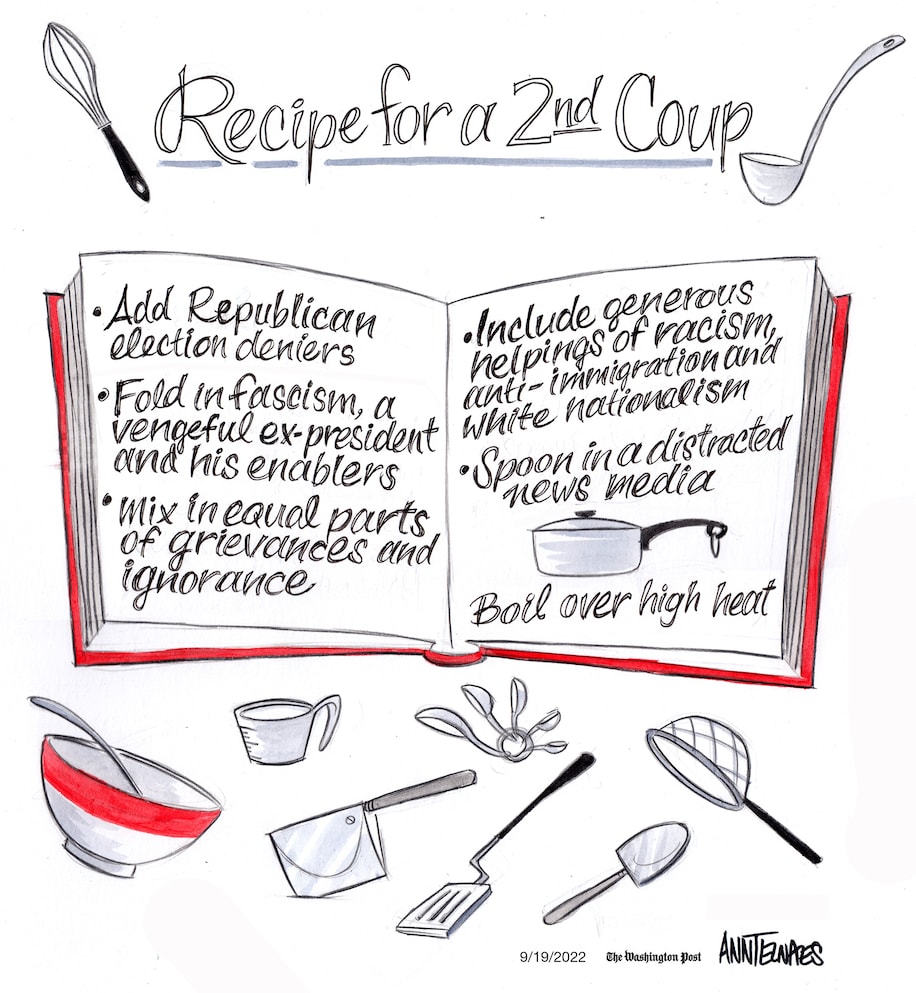
Washington Post cartoonist and former president of the Association of American Editorial Cartoonists Ann Telnaes is more direct, telling visual journalist Liza Donnelly in 2017: “The job of an editorial cartoonist is to expose the hypocrisies and abuses of power by the politicians and powerful institutions in society. I think our role has become even more urgent with the new political reality … . Political dog whistles have become red meat to be tossed out regularly by politicians without the slightest attempt to conceal racism or sexism. Except for journalists and cartoonists, there’s no one keeping a check on conflicts of interest or unethical behavior in government.”
There are times when we just can’t do without editorial cartoons. Can you imagine the Watergate era without Herblock? World War II without Bill Mauldin? Heck, much of Arkansas politics, especially from Orval Faubus to Bill Clinton, without George Fisher?
That’s not a world I’d want to be in. I’ll take the occasional laugh, but without the message that makes me think, it can’t really be called an editorial cartoon.
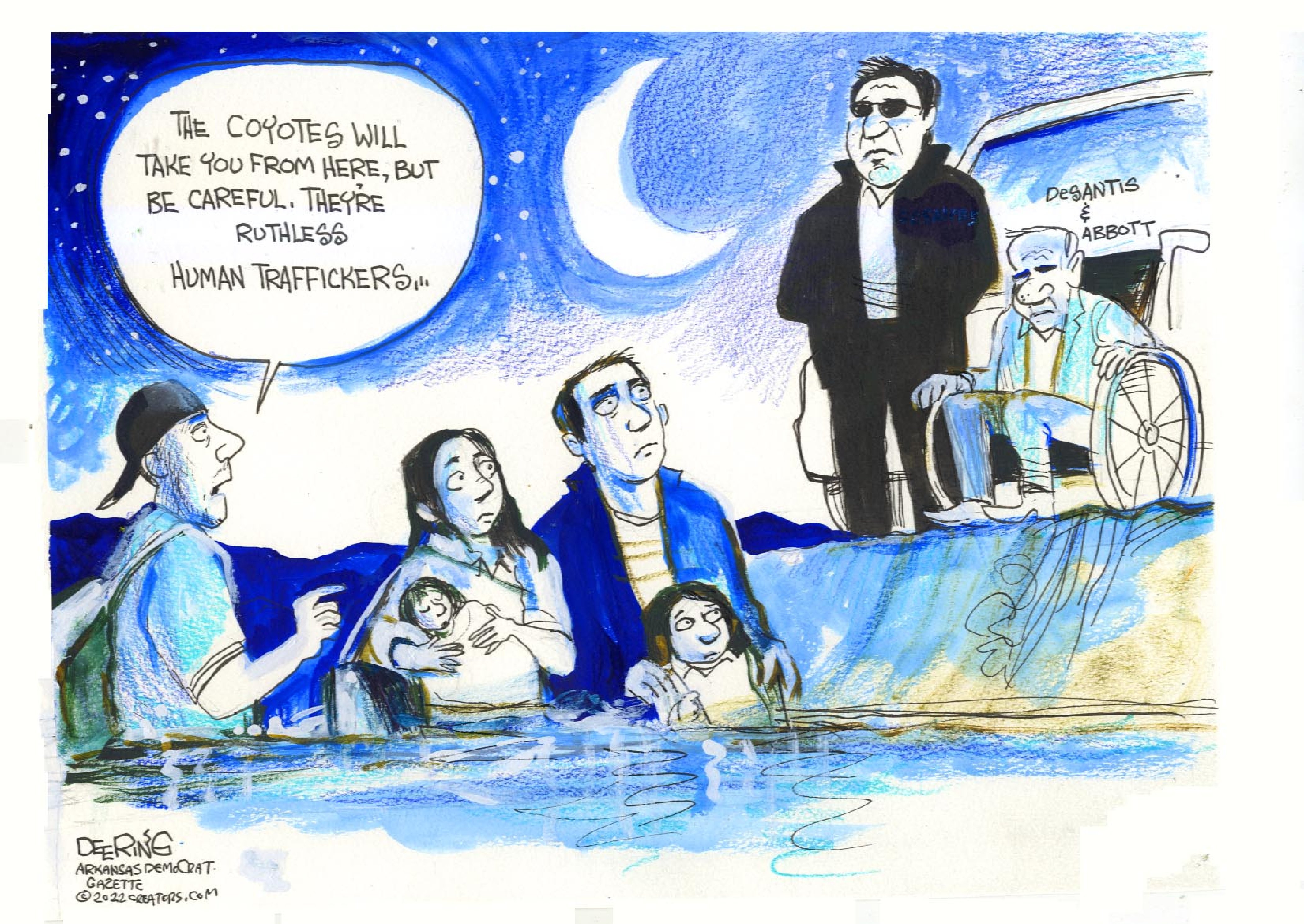
I’m lucky that I can count as a friend editorial cartoonist/artist/sculptor/all-around good guy John Deering, who until a few years ago was in the office next to mine. But our friendship goes back to my first days at the paper, when he shared space with Vic Harville. It helps that our birthdays are only days apart (for a while, most of the opinion employees had January birthdays; weird, but cool) and we share the same weird sense of humor and love for cats.

When he was in the office, one of us would often poke a head into the other’s office when we were stuck on something, or needed a laugh or just a “derp.” Now we communicate primarily by text (including derps). We still share laughs and frustrations, though not as frequently as we used to.
Occasionally I get to use one of his cartoons on the Voices page rather than one of the syndicated cartoonists I usually run (like Ramirez, Tim Campbell, Dave Whamond and Christopher Weyant, among others), and it’s truly a privilege. I may be prejudiced, but I think he’s the best editorial cartoonist to not have won a Pulitzer. (Seriously, that’s a travesty, as is the fact that the Pulitzer Board simply released the finalists’ names rather than giving an award in 2021, which was an insult. The award category is now called Illustrated Reporting and Commentary, perhaps a reflection of the decrease in working editorial cartoonists, partially thanks to the decline in the number of newspapers.) Give John (or Dee Ring, as a couple of correspondents erroneously call him) a Pulitzer, for God’s sake! He more than deserves it.
His art and his political insight make him a powerful force in the opinion pages, whether that’s on the editorial page or mine (and honestly, some of his obit cartoons have made me cry, like this one for Queen Elizabeth).
Not everyone will like what he draws, or what I or anyone else writes. That’s the beauty of an opinion page in a free country; not everyone has to.


I’ve loved editorial cartoons for as long as I can remember. A daily newsletter brings me some new ones every day and I really enjoy them. (Well, most of them.)
LikeLiked by 1 person
There are many out there who really do their job well, but there are also a few too many hacks as well. Some, like Ramirez, have a great drawing style but get lost in talking points a bit too much. Still, when he’s on, it’s amazing.
LikeLike
Great discussion of editorial cartoonists. The John Deering view of DeSantis/Abbott was right on the money, though Clay Bennett is my personal favorite in general. Editorial cartoons can have a powerful and instant impact whereas more time is required to take in a carefully reasoned and well-written editorial, column, or letter. A cartoon smacks you in the face and you GET IT all at once.
Henri Bergson said one element of humor is incongruity, which explained to me why I often chuckle at things that are not intrinsically funny. I think the Deering cartoon is a good example of that.
LikeLiked by 1 person
I love Clay’s work, and I wish we’d run him again.
LikeLike
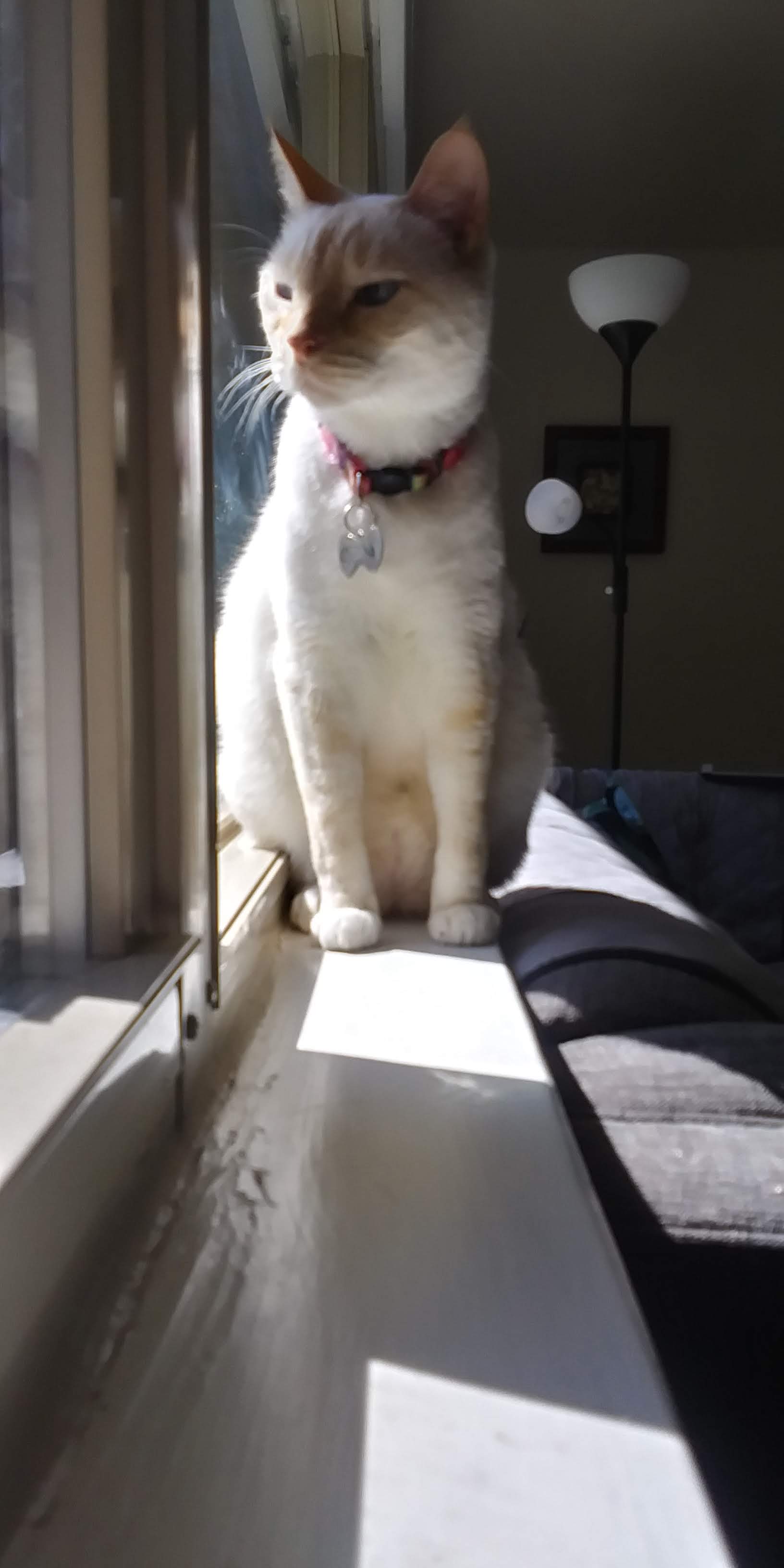
I have a FOWL question about Charlie the cat. Does he prefer cooked chicken or raw chicken?
LikeLike
Don’t know if Sarah’s ever given him raw chicken (I wouldn’t), but I know he LOVES the smell of cooked chicken, which may be a problem Friday since that’s what we’re planning for dinner. 🐔😼🤣
LikeLike
I miss Herblock and I was going to mention him if Brenda didn’t mention him, As for the other cartoonists, I am tempted to jokingly ask, “George who?” I did get to meet Fisher once at one of the monthly meetings of the Rackensack Folklore Society a few years before he died. Fisher was one of the original founding members of this Society and he was the MC at the meetings for many years. Fisher played guitar and sang.
LikeLiked by 1 person
I saw that in his bio and thought of you. I think I knew that at some point but had forgotten it.
LikeLike
As a World War Two veteran, Fisher did come to the Veterans Hospital occasionally to see his primary care doctor.
LikeLike
Cartoons are supposed to be “Funny”? Well, Golly Gee Sarge, I didn’t know that (to paraphrase Gomer Pyle).
LikeLike
Speaking as the medical secretary in an intensive care unit, there have been too many times when I was tempted to use the “Fist Of Death” on some of the doctors and nurses whom I work with.
LikeLike
In the context of this excellent post, I wonder if Russian, Chinese and Iranian newspapers have political cartoons? If they do, I’m sure they are dull stuff. Political cartoons may be the canaries in the fascist coal mine.
LikeLiked by 1 person
I’m going to guess that totalitarian countries’ newspapers wouldn’t have editorial cartoons. If they did, they’d only take on the opposition, which would just be more propaganda from state media. Oy, that’s depressing.
LikeLiked by 1 person
I tried googling to find any Rus cartoons and came up empty.
LikeLike