
I really don’t like getting political; I’m cranky enough on my own, but add politics as now practiced? Yeesh.
But then Merriam-Webster has to go and make “gaslighting” its Word of the Year for 2022. You just know the trolls are gonna be griping about this column (not here; on the newspaper site).
Not that they need a reason. They seem to be deeply unhappy people.
In its announcement, Merriam-Webster notes: “In this age of misinformation—of ‘fake news,’ conspiracy theories, Twitter trolls, and deepfakes—gaslighting has emerged as a word for our time. A driver of disorientation and mistrust, gaslighting is ‘the act or practice of grossly misleading someone, especially for one’s own advantage.’ 2022 saw a 1,740 percent increase in lookups for gaslighting, with high interest throughout the year.
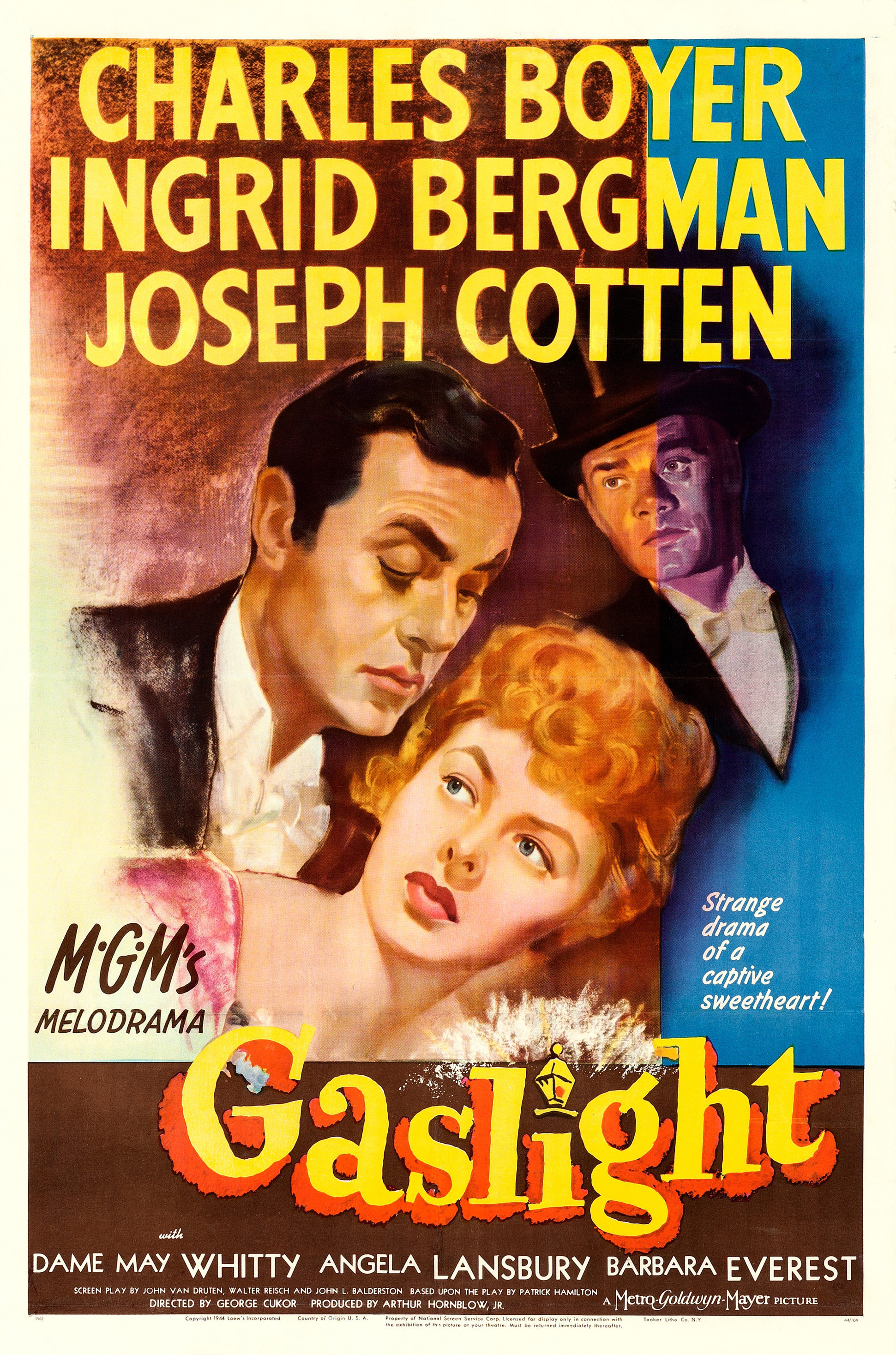
“Its origins are colorful: The term comes from the title of a 1938 play and the movie based on that play, the plot of which involves a man attempting to make his wife believe that she is going insane. His mysterious activities in the attic cause the house’s gas lights to dim, but he insists to his wife that the lights are not dimming and that she can’t trust her own perceptions.”
Over the years, the dictionary reports, the meaning broadened and simplified from the intense psychological manipulation in the play and movie to what it now signifies. “The idea of a deliberate conspiracy to mislead has made ‘gaslighting’ useful in describing lies that are part of a larger plan. Unlike ‘lying,’ which tends to be between individuals, and ‘fraud,’ which tends to involve organizations, gaslighting applies in both personal and political contexts.”
Patients may feel that doctors are deliberately dismissing their symptoms as minor, or as psychological. A corporation may present a face to the public that claims to be doing all the right things environmentally while internal records prove something else entirely. Others may want you to believe, despite all the evidence to the contrary, that an election was stolen (ahem, Donald Trump and Kari Lake, you both lost).

All of those could be considered gaslighting, and as we’ve seen, can have dangerous consequences in some instances, especially with the reach of social media and “news” outlets with little regard for truth.
Merriam-Webster notes: “English has plenty of ways to say ‘lie,’ from neutral terms like falsehood and untruth to the straightforward deceitfulness and the formally euphemistic prevarication and dissemble, to the innocuous-sounding fib. And the Cold War brought us the espionage-tinged disinformation. In recent years, with the vast increase in channels and technologies used to mislead, gaslighting has become the favored word for the perception of deception. This is why (trust us!) it has earned its place as our Word of the Year.”
Fine. I’ll trust them. This time. OK, and pretty much any other time I need to find out what a word means in common usage.

Gaslighting wasn’t the only word in Merriam-Webster’s list of finalists with political implications. Lookups of “oligarch” (“one of a class of individuals who through private acquisition of state assets amassed great wealth that is stored especially in foreign accounts and properties and who typically maintain close links to the highest government circles”) have spiked with the Russian invasion of Ukraine. And let us not forget that some consider U.S. billionaires to be oligarchs and, considering the political activities of some (Elon Musk, George Soros, etc.), they have a point. Musk, especially, is throwing spanners in the works about every quarter-hour or so right now. He sure tweets a lot for someone who supposedly works all the time. 🙄
Other politically infected words on the list include “omicron” (thanks to the stubbornness of those who refuse to follow covid guidelines for partisan reasons and the ability of covid-19 to shift from variant to variant), “codify” (referring primarily to making Roe v. Wade federal law after it was overturned by the Supreme Court; that’s still to come, but Tuesday the Senate passed the Respect for Marriage Act to protect same-sex and interracial marriages, and it’s headed to the House), “LGBTQIA” (because we can’t just let our gay friends live their lives in peace), and “raid” (ahem, relating to the execution of a search warrant at Mar-a-Lago that has been described as a break-in, with no Trump attorneys allowed to be present, classified documents having been declassified [with no evidence presented of declassification], etc.; those statements were false).
I’m really praying hard that next year’s Word of the Year and finalists will be at most only tangentially related to politics. I think we could all use a break from the political about now.
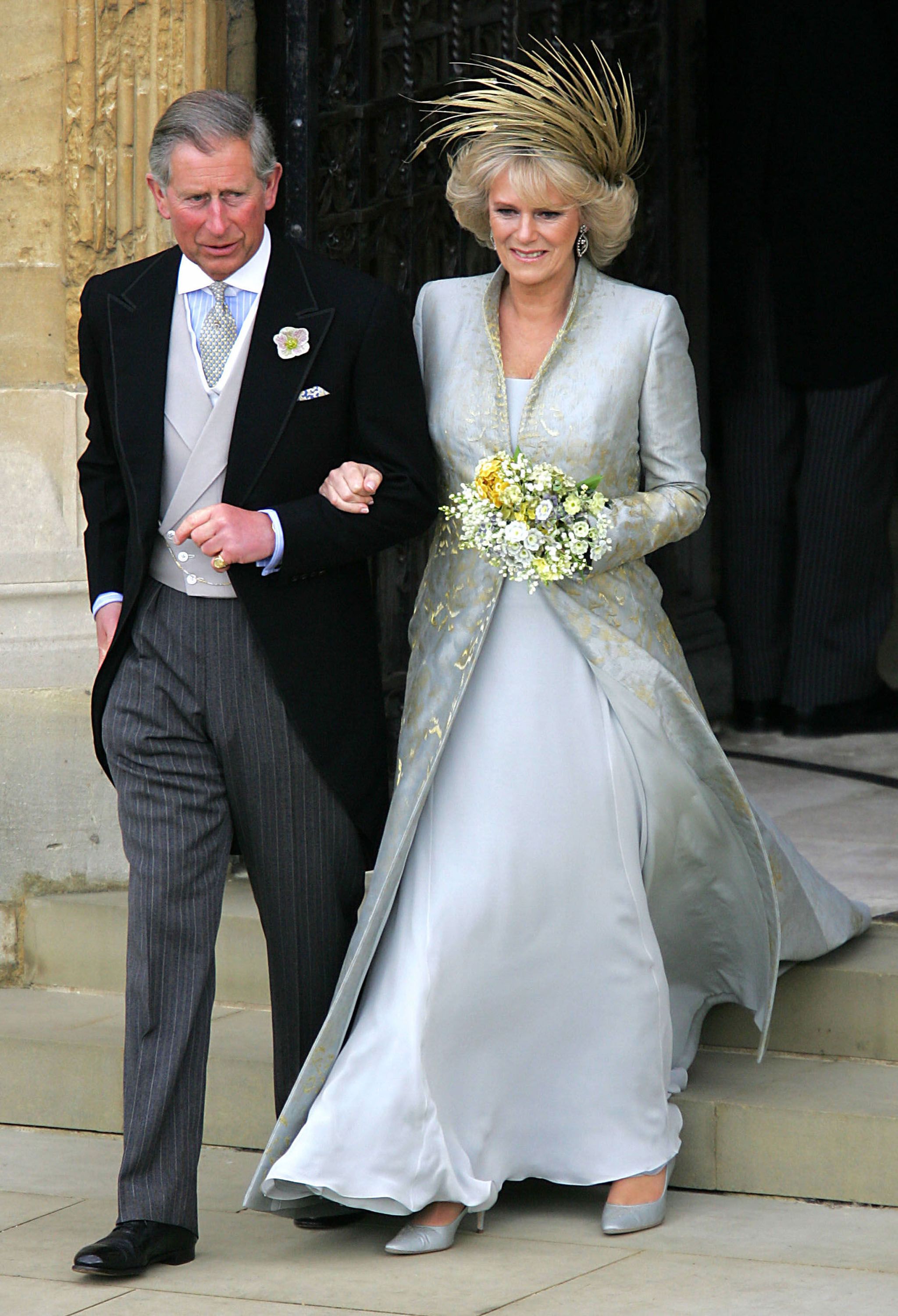
There were a few apolitical words on the finalist list this year, such as “sentient” (thanks to the Google researcher who claimed the company’s AI chatbot had developed human-like conciousness) and “queen consort,” which is Camilla’s new title with the death of Queen Elizabeth II and the ascension to the throne of King Charles.
Read more about the Word of the Year and the finalist list here.
🤓🤓🤓🤓🤓
Another dictionary is close to naming its word of the year, but needs your help. The team of lexicographers at Oxford Languages has narrowed its list of contenders to three finalists: “metaverse,” “#IStandWith,” and “goblin mode.”
You can read the dictionary’s reasoning for those picks and vote for your favorite until 12:01 a.m. Friday here.
Not gonna tell ya how to vote, but one of them would probably be a lot more fun for me to write about.
Meanwhile, unless you’re reading this before 7 a.m. Central today, Lake Superior State University has closed its submissions for words and phrases to be banished for 2023, and plans to release its list on Dec. 31 (which means my first column of 2023 will be about the list unless it’s delayed). If you manage to get to it before the deadline, you can submit a word or phrase you’d love to send packing here. (Whether you submit to the university or not, send me those words and phrases you’d like to be rid of and tell me why at blooper@adgnewsroom.com. I’m nosy and you know I’ll be writing about it.)
I submitted a couple, but I can’t tell you what they were since they were months ago and I’ve forgotten since then.
I’d like to speak to the manager about this aging thing, please. It really sucks.

 Serenity is a fuzzy belly
Gas-lighting should at least be consistent, I should think. Yet Trump has asserted that (a) the FBI planted the classified documents and (b) he wants them back. I suppose you need at least a third-grade education to see an inconsistency there–but way too many of our fellow Americans don’t seem to see any.
The word I’d like to see disappear is contained in the above paragraph. It begins with T.
LikeLiked by 2 people
Very true. It’s sad that too many people can’t see the truth.
LikeLike
Let’s do away with weather-wise, so our TV weather forecasters would have to stop misusing it. Here’s the Merriam-Webster online entry for it:
weather-wise: adjective
weath·er-wise ˈwe-t͟hər-ˌwīz
1: skillful in forecasting changes in the weather
2: skillful in forecasting changes in opinion or feeling
a weather-wise politician
First known use: 14th century, in the meaning defined at sense 1, above.
Notice that it does not mean, “Here’s the condition of the weather.”
Of course, maybe we should merely eliminate the word “wise,” so people would stop inappropriately merging it with every known noun and adjective in the language.
LikeLiked by 1 person
The election was not stolen, it was just “borrowed” temporarily.
LikeLiked by 1 person
“Goblin mode”? Oh dear, I’ve been in my cave too long. BTW, I forgot about your Charlie when I decided to call my new dog Charlie. I hope neither of them takes offense.
LikeLiked by 2 people
Is “goblin mode” better than “orc mode”?
LikeLike
I prefer hobbit mode, especially as it usually involves potatoes. 😏
LikeLiked by 1 person
Charlie is an excellent name, and I’m sure my feline fur-nephew doesn’t mind sharing.
LikeLike
SusanR, I am sure that your new dog will not object to whatever name you give him just so long as you do your best to convince your dog that his life is not as Ruff as Bark. Speaking from my own experience, if you give your dog a lot of attention and talk to him frequently and play Fetch (throw the ball) with him and rub his belly and scratch his head and take him for a walk at least once a day and give him the occasional raw beef flavor dog treat, he will not think his life is as Ruff as Bark.
LikeLike
I’m spoiling him rotten and we’re both loving it. I’m sticking with Charlie; no other name seems to fit as well.
LikeLiked by 2 people
Yes that is good. You are supposed to spoil your furry, four-legged animal companions.
LikeLike