

The last couple of columns have been devoted to Words of the Year from the biggies, Merriam-Webster (gaslighting) and Oxford Languages (goblin mode). This week, it’s dictionaries that don’t get the press the others do in these parts, especially since they’re primarily seen as U.K. dictionaries. Still, we live in a global society, and some people (like me) love dictionaries so much that they’ll search multiple sources when they’re on the hunt. (Onelook.com is a favorite, and has 1,061 dictionaries indexed that you can search at once.)
Cambridge announced a Word of the Year that might seem odd for a U.K.-based lexicon: “homer,” which had over 65,000 searches in a single day. Why? On May 5, “homer” was the winning word on Wordle. Cambridge noted: “This informal American English term for a home run in baseball left players of Wordle who were not familiar with the word feeling confused and frustrated. Tens of thousands of these Wordle players took to the Cambridge Dictionary to understand the meaning of the word homer.”
And that’s without people like me bringing up Homer Simpson or the concept of “homer journalism.”
“Homer was not the only five-letter word that saw a spike in searches in 2022. Cambridge Dictionary, the world’s most popular online dictionary by page views, saw bursts of searches for many five-letter words in 2022 as the ‘Wordle effect’ took hold. Among the long list of these five-letter words are humor (the American spelling of humour), and words like caulk, tacit, and bayou, which prove that short words aren’t always easy ones!
“Spikes for American words and spellings such as homer, humor, and favor happened because of a series of social media storms led by angry players of the popular word game Wordle, especially those who don’t speak American English. It wasn’t all one way, however: A lesser spike, but still noticeable, occurred when the British word bloke was a Wordle answer in February, prompting some annoyance in the U.S.”
I’m a Words With Friends 2 player, not Wordle; maybe it just annoys me seeing all the posts on my Facebook feed considering my aversion to bandwagons. That, and having hissy fits over word games seems counterintuitive if the purpose is to have fun. Besides, as a bit of an anglophile, I’m familiar with a lot of terms that are primarily British usage … and I love them.
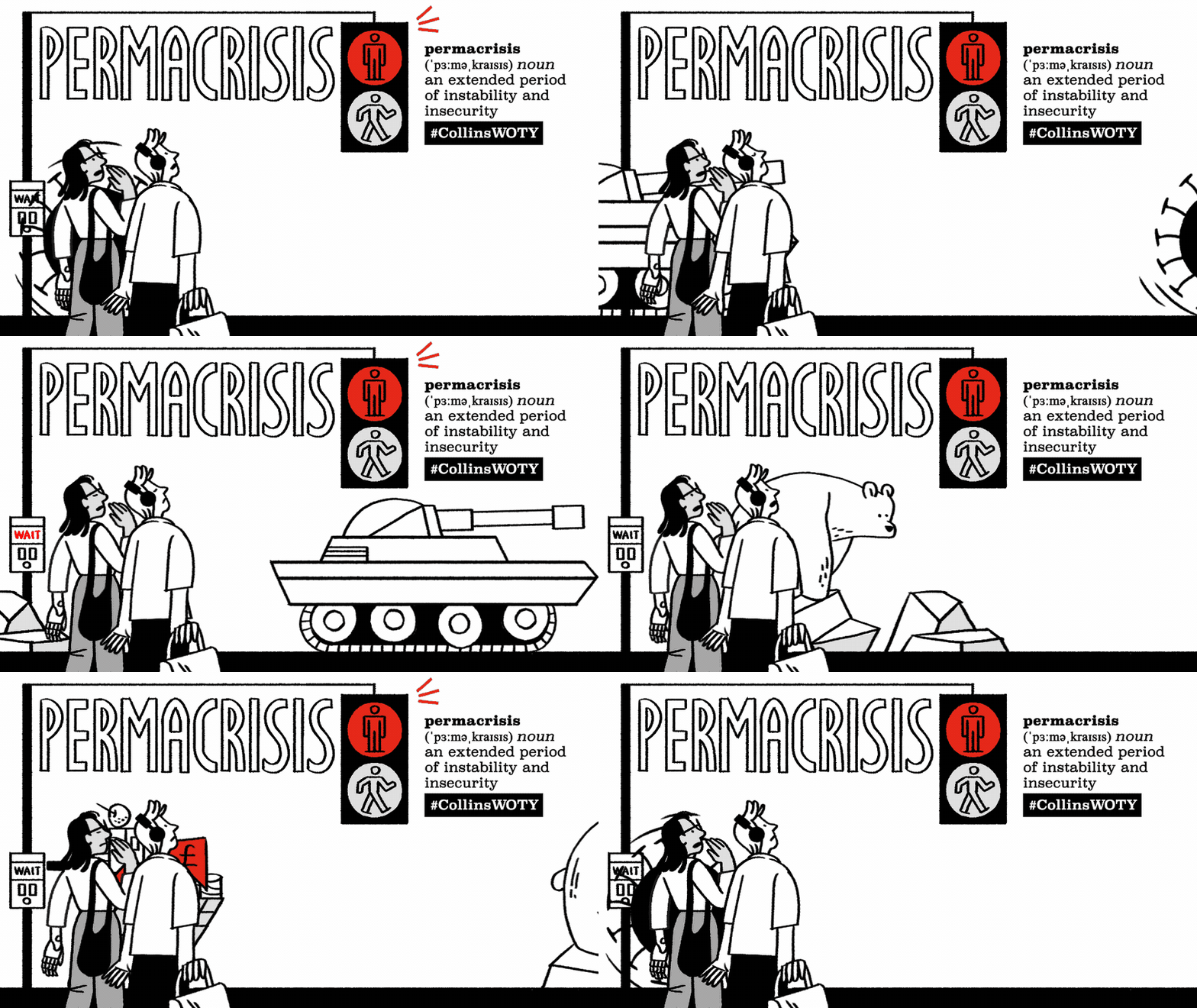
Collins Dictionary chose as its word “permacrisis,” which it says is “an extended period of instability and insecurity.” Seems very appropriate as we prepare to enter year four of the pandemic while also dealing with political instability, the war in Ukraine, climate change, inflation and other worries.
It’s certainly seeming as if covid will never go away. Those who refuse to do even the bare minimum to help others or to listen to anyone with actual authority in their fields are still a big part of this, and attitudes need to change. I’m still wearing a mask when I go out in public if I’m going to a crowded indoor space; at a performance of “White Christmas” in North Little Rock this past Sunday, my friend Sarah and I were two of the few people wearing masks. Considering we’re dealing with a surge of flu, RSV and covid in the area, maintaining my hermit behavior and wearing masks in public seems wise.
But I was honestly more taken with some of the finalists, including “partygate” (the covid lockdown scandal that brought down Boris Johnson), the replacement of the Russian spelling of Ukraine’s capital city (Kiev, pronounced KEE-ev) with the Ukrainian spelling (Kyiv, pronounced keev; about damn time), sportswashing (promotion or sponsorship of sporting events to distract from controversial activity or a tarnished reputation; serious wag-the-dog vibes), Carolean (relating to Charles II), and lawfare (strategic use of legal proceedings to intimidate or hinder an opponent).
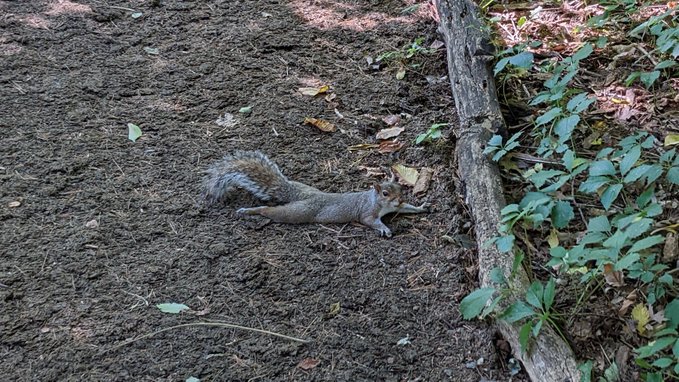
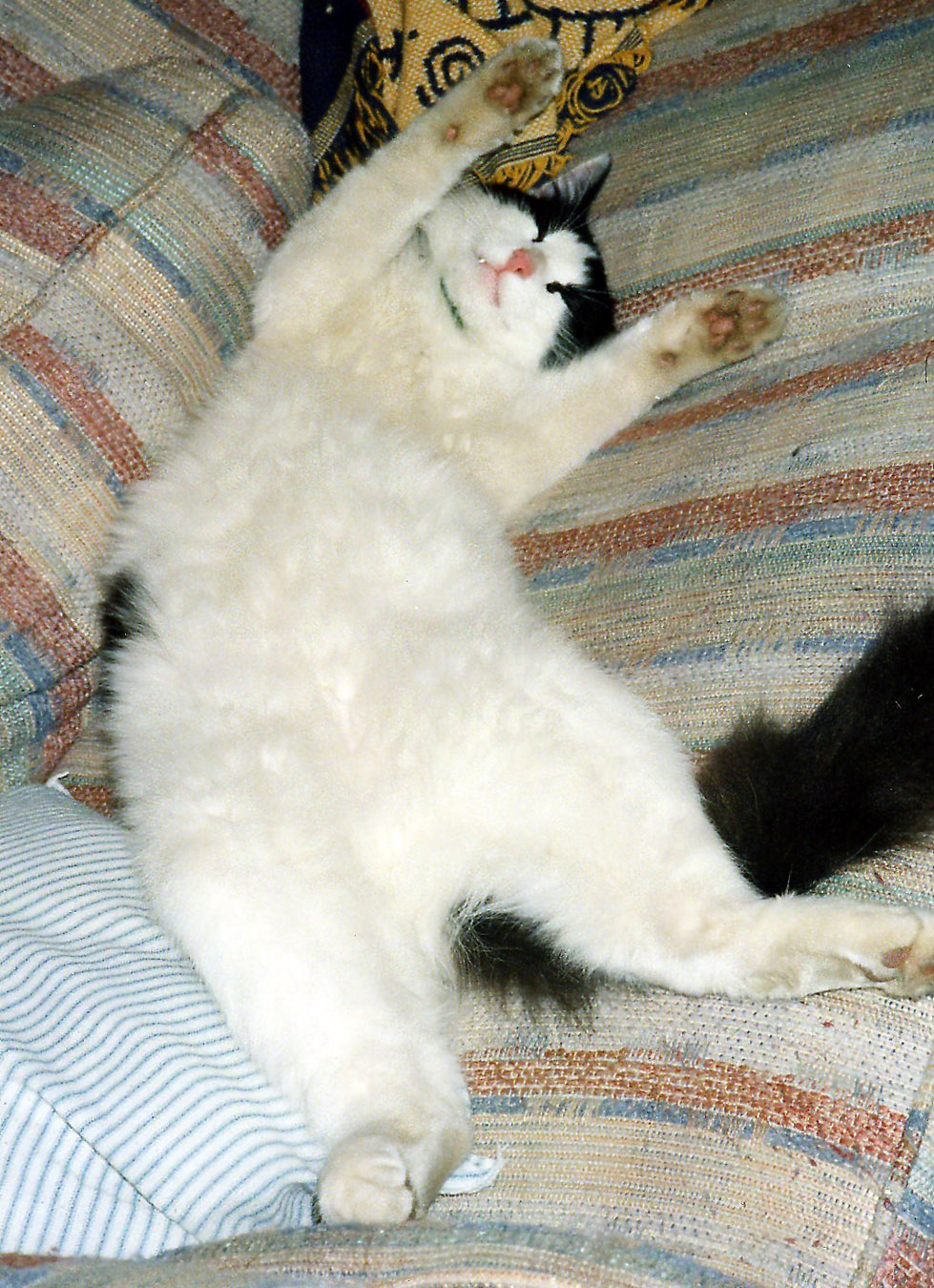
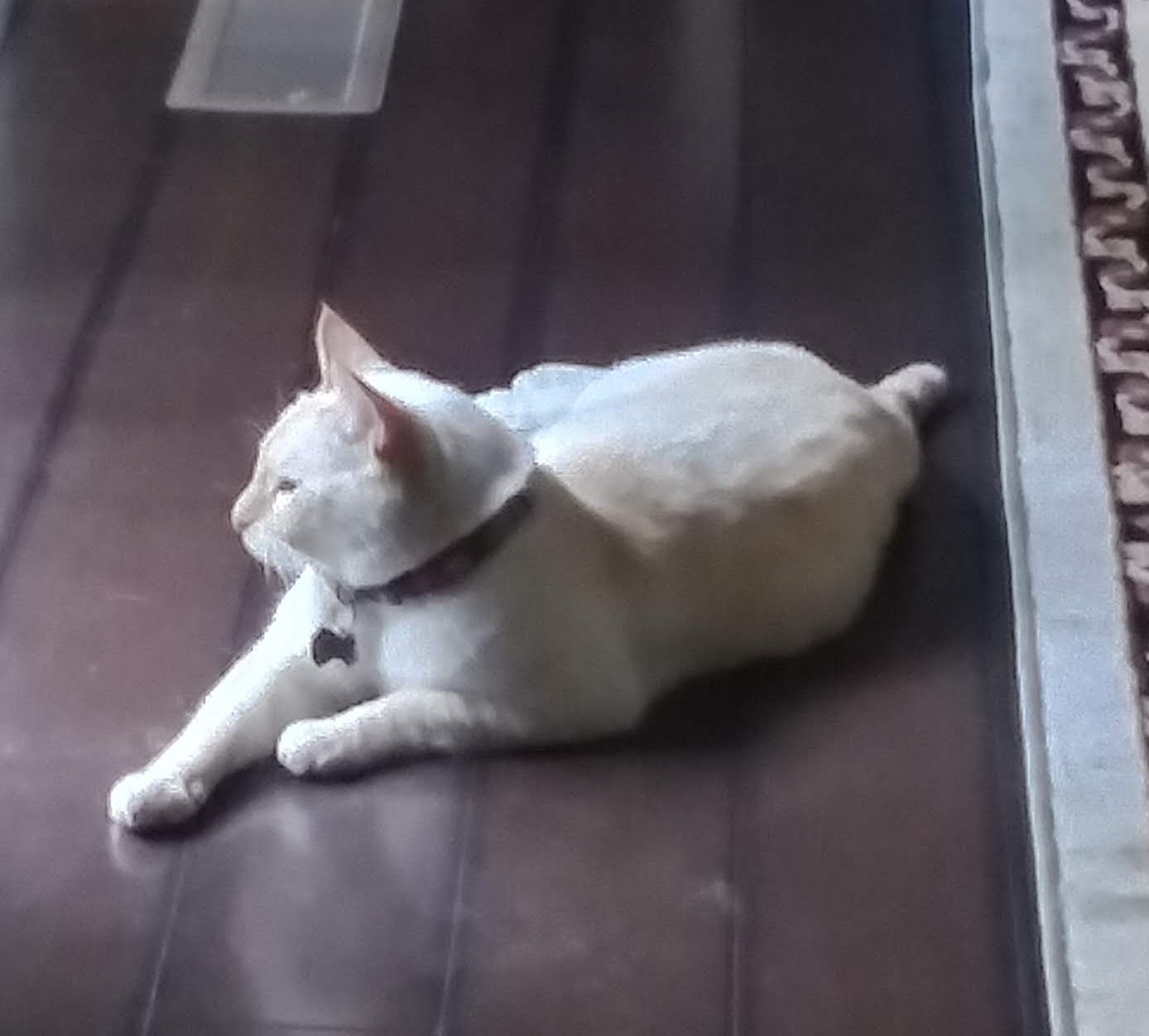
And then … there’s “splooting.” That’s something those of us who spend a lot of our free time on animal websites (they’re frickin’ adorable, people!) are very familiar with: the act of lying flat on the stomach with legs splayed out. You see it a lot when it’s hot as animals try to keep cool, sometimes with a full sploot, or perhaps a half-sploot with front or back legs to the side (fur-nephew Charlie’s an expert at that one).
This summer there was a rash of stories explaining splooting after the New York City Department of Parks and Recreation tweeted out a picture of a squirrel sploot.
This animal lover/word nerd thinks splooting could go a long way not just toward relief from heat, but cooling down tensions of an over-sensitive populace. Now if I can just find someone to help me up off the floor after I sploot.
Another group that usually selects a Word of the Year won’t have its selection till the new year. The American Dialect Society (americandialect.org) is accepting nominations for another two weeks (till 6 p.m. our time Dec. 28). According to the group’s website, “Since 1990, the society has selected words of the year to highlight language change, to bring a few aspects of the study of linguistics to the public’s attention, and to have a little bit of fun. The lighthearted vote is held each year at the time of the society’s annual conference,” which will be held in early January.
The 2021 word was “insurrection.” Gosh, I wonder why …
When making nominations, the group says: “For the sake of the vote, ‘word’ is broadly defined to include multiword phrases, compounds, and idiomatic expressions that behave like single lexical items. Ideal Word of the Year nominations are words which demonstrate widespread usage by a large number of people, in a variety of contexts and situations, and/or which reflect important events, people, places, ideas, or preoccupations of English-speakers in North America in 2022. Nominated words do not have to be absolutely brand-new but they should have risen to prominence or reached some kind of peak of popularity in 2022.”
Have at it, and let me know if you make any nominations. And yes, I nominated “sploot.” It’s fun to say, and to do!
Can you really blame me? Give me something fun, dammit!
 Serenity is a fuzzy belly
Speaking of neologisms, discussions of Trump, Walker, MTG, and their ilk often contain “words” such as f**k, s**t, and similar creations.
LikeLiked by 1 person
There are some Scottish concoctions about them I absolutely love, like cockwomble. 🤣
LikeLiked by 1 person
I love the word “sploot” but can never remember it, perhaps because I’ve never seen it in my house (neither canine nor feline). In the past I’ve thought only certain animals or breeds were physically able to sploot, but evidently it’s just personal preference.
I’d nominate the word “curate” if it hadn’t already been featured several years ago. I’ll not buy anything that’s been “carefully curated” or even just “curated.” So pretentious! Museums have curators, not local retailers.
LikeLiked by 1 person
Speaking as a hospital employee, I thought “cure rate” referred to how many patients one of our overworked and underpaid physicians cures of their diseases?
LikeLike
Also, speaking as a hospital employee, myself and all of my co-workers are still required to wear a mask all of the time while we are at work and on duty.
LikeLike
It was hit and miss at the doctor’s office this morning. Some were masked, some weren’t.
LikeLiked by 1 person
LOL
LikeLiked by 1 person
HATE curate. It’s a collection. You don’t curate it, you collect it. 🙄 When I give my friends gifts, I’ve collected a selection of things, and. I would expect them to smack me upside the head if I told them I curated it for them. 😂
LikeLiked by 1 person
The way people in the United States spell the word “humour” is not funny according to the broken arm bone from England.
LikeLike
The American Dialect Society’s Word of 2021 was “Insurrection”? Duh, I wonder why?
LikeLike
Speaking of “idiomatic expressions”, did I ever tell you the funny mistake which Lawrence Welk unintentionally and accidentally made during the weekly rehearsal for his TV show?
LikeLike
I’m wondering just what the long-term effect the world-wide-web will have on the language. Will it increase neologisms, balkanize their spread, or homogenize usage? I like “sploot”, but not sure it has legs because there are lots of urbanites who don’t have occasion to use it.
LikeLiked by 1 person
Speaking of British spellings, I find the term “one-off” curious. The word means singular, unique, or limited to a single instance. So, why didn’t it evolve from one-of-a-kind? Why did “off” get tangled into the expression? Can’t help but think it evolved out of mishearing and subsequently propagated pedantically. To use an engineering term, language is stochastic.
LikeLiked by 1 person