

After my column last week, a friend emailed to let me know I’d left an important word out of an early paragraph when I was talking about rights and responsibilities. He was right, and I’m sorry.
I had written: “And while the government can’t restrict your speech for the most part (though public safety is one reason it might be restricted, i.e., yelling ‘fire’ in a crowded theater) …” I should have said falsely yelling fire, and unfortunately a lot of us make that mistake when using that particular example.
Even overlooking that mistaken omission, one of the usual trolls tried a “gotcha” on the Arkansas Democrat-Gazette website by claiming the Supreme Court, in Brandenburg v. Ohio, “in fact said yelling ‘fire’ is [First Amendment] protected speech.”
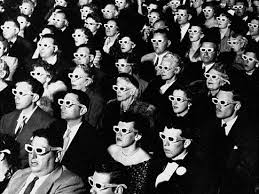
But not quite, as pointed out by another commenter (remember, I rarely comment on the newspaper’s website, especially to the troll gang): “I hope you know you are not giving the whole truth about what Brandenburg v. Ohio concluded. You’ve done that before. It says speech advocating illegal conduct is protected under the First Amendment—unless the speech is likely to incite imminent lawless action.
“Conclusion: It is legal to yell ‘Fire’ in a crowded theater; however, if it leads to death or injuries, you can face serious charges, such as inciting a riot or disorderly conduct. I’m sure you would probably get banned from the theater as well.”
Specifically, the court held that “the constitutional guarantees of free speech and free press do not permit a State to forbid or proscribe advocacy of the use of force or of law violation except where such advocacy is directed to inciting or producing imminent lawless action and is likely to incite or produce such action.” (You can read the full case here.)
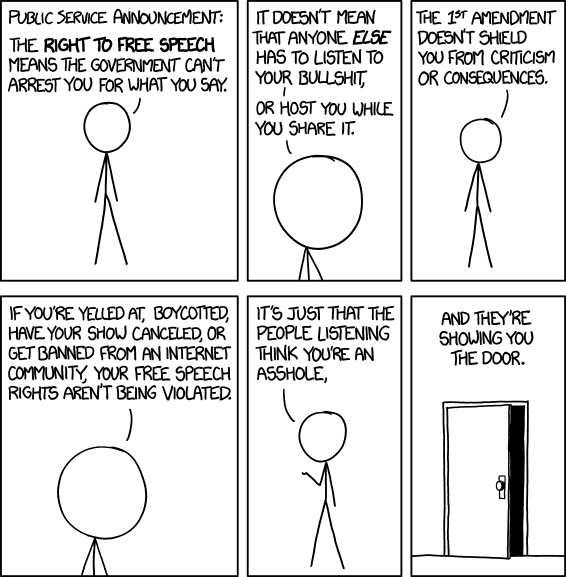
Which brings us to the idea of protected speech. As I said last week, you have the right to say or write pretty much whatever you want under the protection of the First Amendment, but you have to accept responsibility for your words (i.e., take the consequences), and that’s true whether your speech is protected or not by the government (local, state, or federal). Symbolic speech like refusing to stand for the pledge of allegiance or the national anthem or salute the flag is government-protected speech, as is burning the flag or wearing black armbands to protest war, but non-governmental entities may still legally punish you.
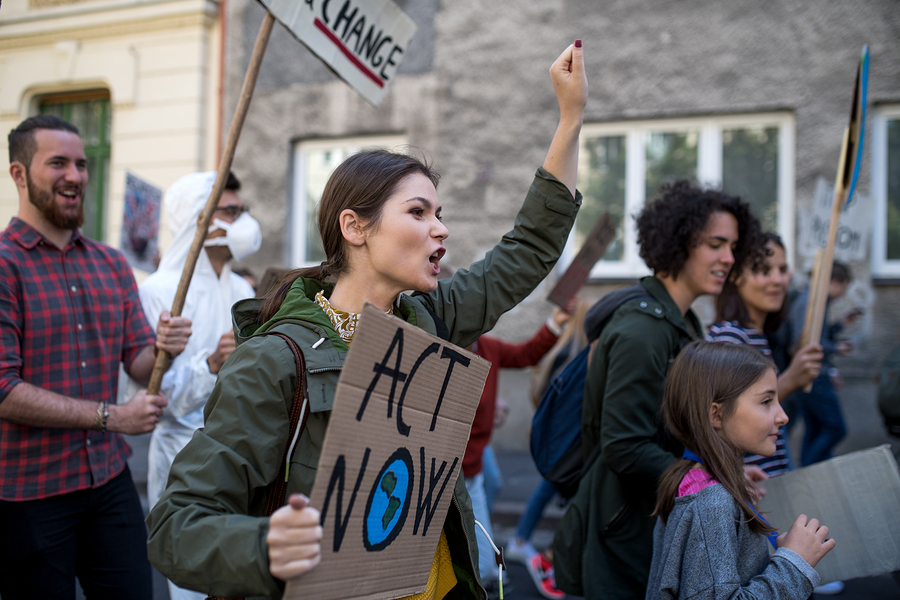
Government can limit some protected speech, according to the American Civil Liberties Union, by imposing “time, place and manner” restrictions, such as requiring permits for rallies, but other than that, most speech, pure or symbolic, is free from government censorship, even unpopular speech (you might recall that the ACLU has defended free-speech rights of groups like the Ku Klux Klan and neo-Nazis). Additionally, when government acts as educator, employer or jailer, reports Freedom Forum, K-12 public school students, government employees and people in state or federal prison can have their rights limited.
What isn’t protected? As noted earlier, speech likely to incite imminent lawless action. In addition to that, Freedom Forum notes that child pornography, commercial speech, blackmail, defamation, fighting words (those “that by their very utterance inflict injury or tend to incite an immediate breach of the peace”), speech intended to harm the U.S. or aid our enemies, obscenity, perjury, plagiarism, solicitation to crime, and true threats are not protected.
Social media companies and publication websites have their own rules for conduct for their platforms or comment boards, and may restrict or ban your account if you violate their terms of service (TOS). Newspapers like mine, which only opens opinion pieces to comments (The New York Times opens a limited number of news and opinion pieces each day for comment) after taking it on the chin so much for years from the resident trolls, usually post the TOS at the end of each piece people can comment on so that no one can realistically say they didn’t see them.
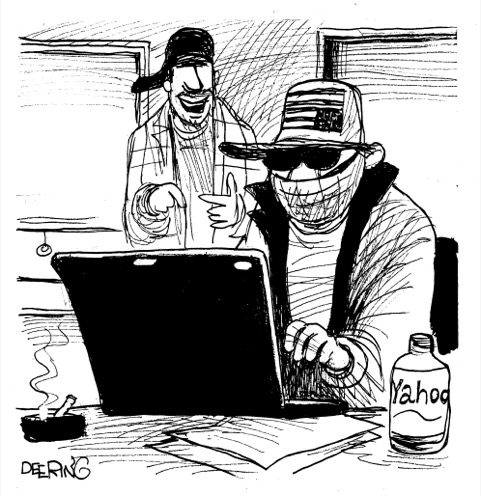
While you may think that’s unfair, I’d remind you this isn’t China or North Korea, and social media platforms and Internet comment boards aren’t part of the government.
We should count ourselves lucky.
Elon Musk and Mark Zuckerberg are interminable jerks, but at least they’re not Xi Jinping or Kim Jong Un.
👺👺👺👺👺
The same troll last week wrote after bringing up Brandenburg v. Ohio: “It should also be noted too many people confuse rights specifically guaranteed in the [C]onstitution with privileges.”
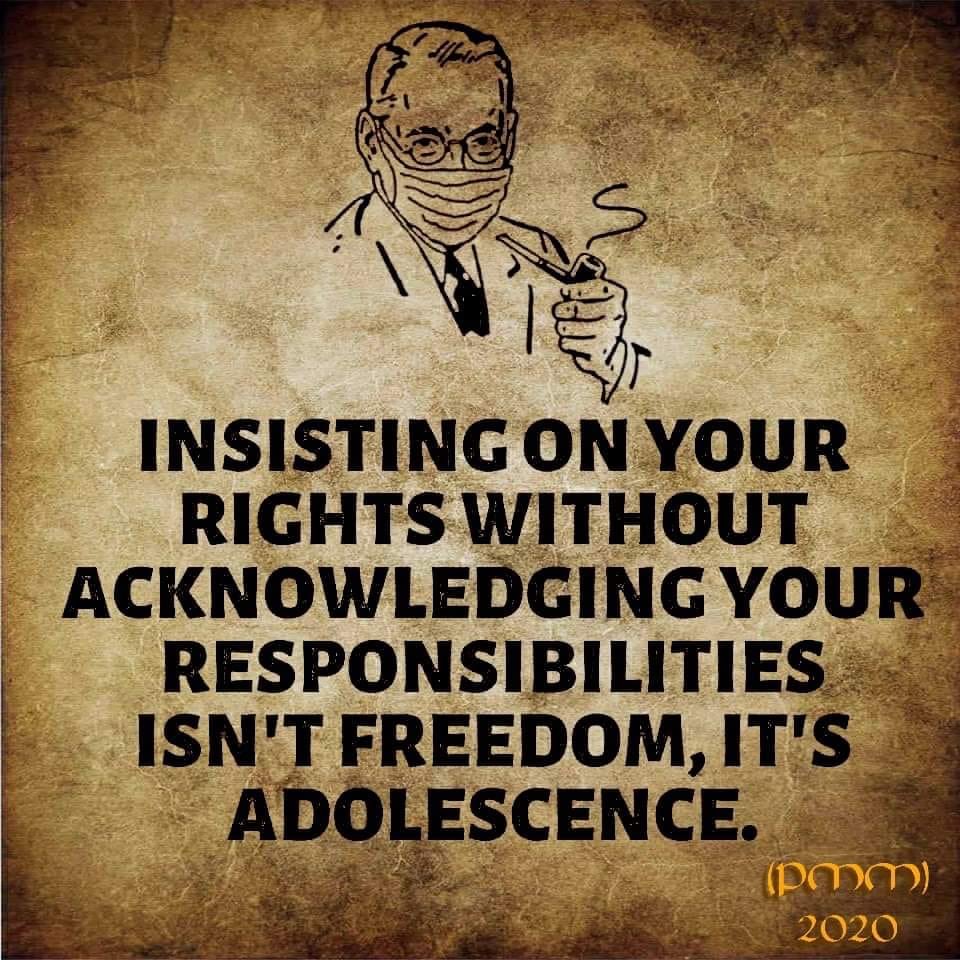
I would note that too many people mistakenly believe rights guaranteed by the Constitution are unlimited. No amendment is unlimited, including the Second Amendment (per conservative jurist icon Antonin Scalia; good Lord, how often do I have to say this), and all come with responsibilities.
Tyler Brandt wrote in 2018 for the Foundation for Economic Education, “What does a free society look like to you? Is it an anarcho-capitalist utopia where individuals are free to shoot fully automatic AK-47s at their 1040 EZs in their private marijuana fields? Is it a harmonious society free from bureaucratic central planning, where people freely trade and engage in commerce? Is it your own apartment, with nobody yelling at you to do the dishes?
“What components are necessary to exist in a free society? Is it trust, independence, toleration, or peace? Is it the rule of law and the triumph of negative rights? Is it the absence of coercion?
“It’s a fun thought experiment, but I would ask you to add one thing to your vision. A free society is impossible without a healthy dose of responsibility. …
“Liberty and responsibility are inseparable. At first glance, this might seem like a paradox due to responsibility being an inherent constraint on liberty. Responsibility is the absence of flexibility and free-flowingness. However, those who truly want liberty also want the self-responsibility entailed.
“In each person being their own master, that person also has to accept that the actions they take produce real consequences. That person then has to choose carefully what actions they take as they are the owner of the consequences. Without a fair sense of responsibility, self-directed individuals would not be able to produce a prosperous society.
“Having to carry the burden of consequences forces each individual to pick up their own weight and make each corner of their world a better place. For if they do not pick up the burden of being responsible, then the world falls into a chaotic place, a place of disregard. It is in this sense that responsibility is a necessary component of liberty.”
We always have to remember that our rights end where someone else’s begin. Someone else quietly and responsibly exercising their own rights doesn’t mean your rights are being infringed, but if you prevent them from exercising their rights, you are infringing. Exercise of rights thus come with the burden of responsibility; being responsible for our words and actions should make us remember that fact.
Taking responsibility does not make rights “privileges.” It just means that you understand the nature of liberty and know that lack of responsibility leads to chaos.
And not the fun kind.
 Serenity is a fuzzy belly
So if someone shouts me down at a public gathering, they are not violating my Constitutional rights (unless they are a government official); they are just exercising their right to be an asshole. Jefferson never said that all Americans were created equally civil.
LikeLiked by 2 people
Exactly.
LikeLike
Speaking of “symbolic speech”, in April of this year, I performed with the Rackensack Folklore Sociey at the Arkansas Folk Festival in Mountain View on Saturday, April fifteenth. We were the opening act and played music for one hour from eleven a.m. to noon. However, before we performed, Pam Setser sang “The Star Spangled Banner”. Since I do not feel or believe that I must prove my patriotism by saluting and/or temporarily removing my hat or any similar actions, I just stood there quietly while Pam sang the national anthem.
However, someone did notice my actions (or lack of action) and he tried to criticize me for it. So I told him that I had spent four years in the Navy as an enlisted man and gotten out with an honorable discharge. Then I got a job helping to take care of my fellow veterans at the Veterans Hospital in Little Rock and I had been working there for many years. So far as I was concerned, I did not need to prove how patriotic or unpatriotic I am. Instead of saying anything else to me, this man just walked away from me.
LikeLiked by 1 person
This critic walked away before I had the opportunity to ask him if he had served in the military.
LikeLike
I detest trolls. I used to enjoy many news sources and online forums particularly for their thoughtful, interesting comment and discussion sections. Trolls caused almost all of them, over time, to shut down. They were one of the great features of the internet — until they weren’t.
(That’s a lot of text for a t-shirt, but I’d sure like to see it posted prominently in a lot of places.)
LikeLiked by 2 people
As I have asked before: Where is the Internet version of Billy Goat Gruff when we need him?
LikeLiked by 1 person
Exactly. We shut down comments on all but opinion pieces a few years back because it was so toxic, but it’s just as toxic in opinion as it was in news, if not more.
LikeLike
Provide a public forum and anonymity and the trolls will come. Sad.
LikeLiked by 1 person
Excellent post! It would be a good addition to a textbook for journalism or citizenship 101.
LikeLiked by 1 person