
On Valentine’s Day when I shared some of the words I love (word nerd, duh), I received an email with the subject line “Wait til April 8.”
Intrigued, I opened the email:
“Dear Madame Editor:
“You will then be safe to use my favorite word. Wait for it.
“SYZYGY.
“Regards, Art Pfeifer”
Email from Art Pfeifer, Feb. 14, 2024
Well, Art, I have a column several days before that date, so please forgive me for breaking it out now.
Also, don’t ask me to pronounce it. As I’ve noted before, and as Philip Martin did in his column Sunday about Kevin Hart, when you encounter some words only through reading, you might not necessarily know how they’re pronounced. That was why, until someone pronounced the word “determined” for me when I was 5, I thought it was DEET-er-mined. (I was an early reader because I wanted to do what my brothers could. That meant that in grade school I was often tapped to help the slower readers; that was one of the few times I was really outgoing.) After that, I’d ask an adult to pronounce a word I came across just so I could make sure I had the pronunciation correct when I’d inevitably use it in conversation.
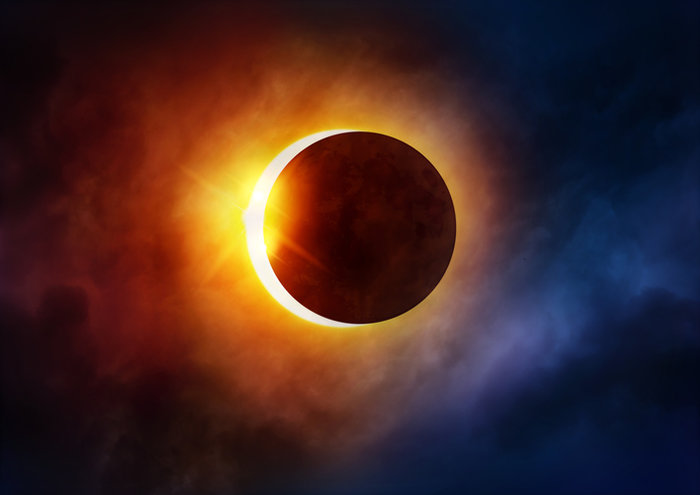
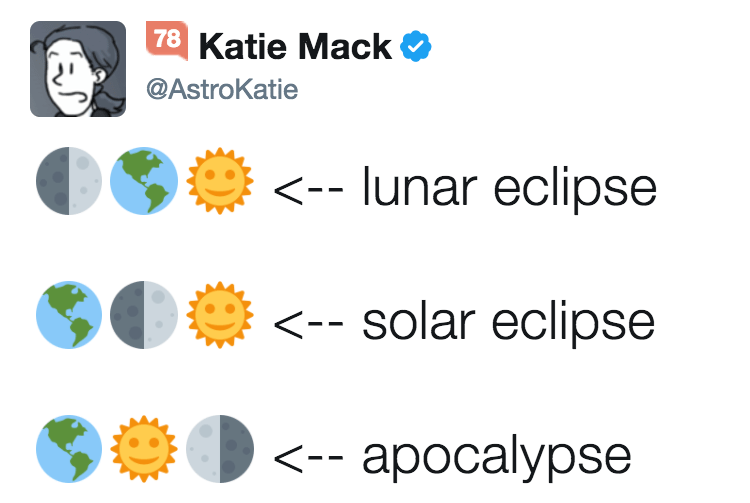
I’ve never had occasion to use syzygy, which according to Merriam-Webster is “the nearly straight-line configuration of three celestial bodies (such as the sun, moon, and Earth during a solar or lunar eclipse) in a gravitational system.”
Oooh, like the total solar eclipse we’ll see (with eclipse glasses or other safe viewers) on Monday. Let me practice: SI-zuh-gee. SI-zuh-gee. SI-zuh-gee.
Thank the Lord for the Internet and dictionary apps that will pronounce words for you. Having that back then would have saved me a lot of embarrassment through the years.
I know people who have followed eclipses (more now than when I was a kid), traveling to places where they’d get to experience totality. I’ve never done that (couldn’t afford it, for one thing, and still can’t), and can only remember one instance when I took time out of my day to go out to see an eclipse since I was usually in school or working when it happened. Besides, I’m a word nerd, not an astronomy nerd.
I was working with Mama at an industrial laundry in Fort Smith one summer off from college when there was a partial eclipse. We were allowed a break to see it, and several of us gathered around the back door to the folding room with pinhole viewers. Once it was over, though, it was back to work.
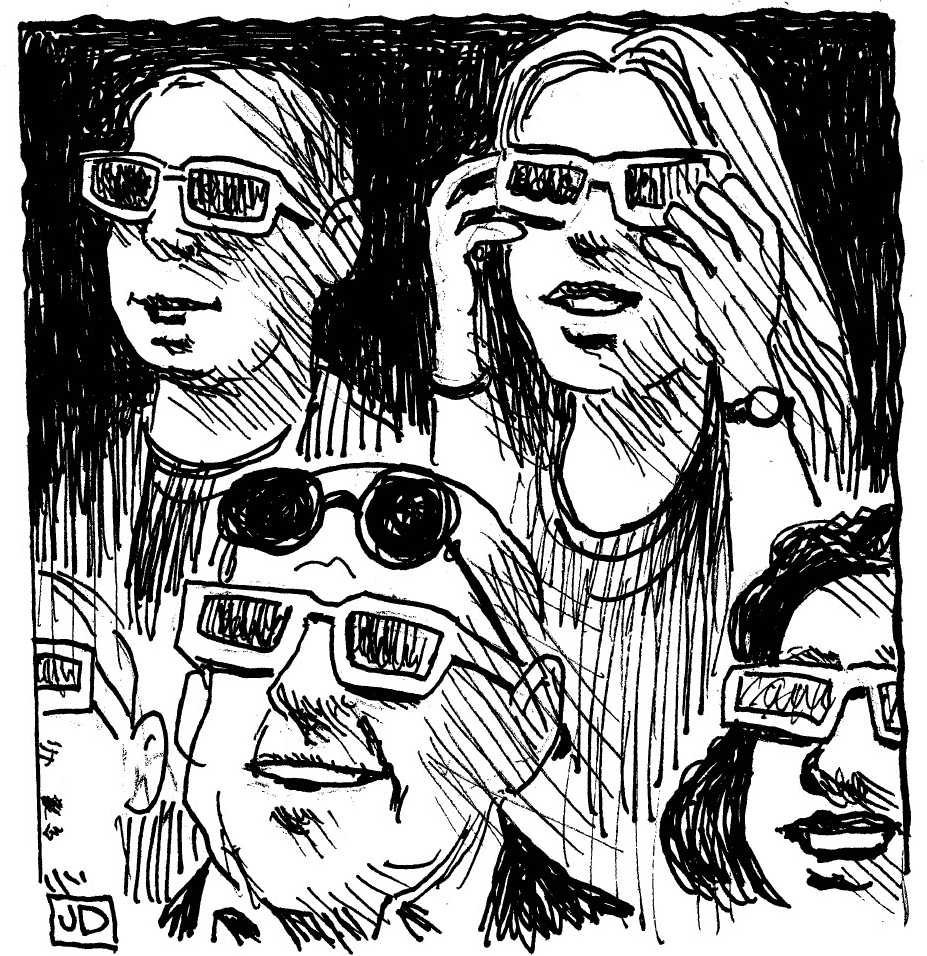
This time I’ll take a break and use eclipse glasses I got from the library (just one more lovely thing the library is good for) to watch before I have to get back to work getting as much done as possible so I can take Tuesday and Wednesday off. Since we’re in the path of totality, no travel is needed. Which is good because I’m tired and skint. Besides, I don’t like driving when there’s even a drop of precipitation on a normal day because people around here tend to forget how to drive. Drive before and immediately after an eclipse when there will be even more people about? No, thank you. I’ll just stay put from Saturday till Tuesday, thanks.
But back to syzygy. Merriam-Webster writes: “At first glance, syzygy appears to be a somewhat singular member of the English language. Despite its appearance, however, it does have etymological ties to a few words in Modern English. Syzygy can be traced to the Greek syzygos (‘yoked together’), a combination of syn- (‘with, together with’) and zygon (‘yoke’). Zygon is also the source of zygote (‘a cell formed by the union of two gametes’) and zygoma, which refers to several bones and processes of the skull, including the zygomatic bone (a.k.a., the cheekbone). Zygon is also related to the Old English geoc—the source of the Modern English yoke—and the Latin jungere, from which the English words join and junction are derived.”
And that was probably more than you would ever want to know about etymology unless you’re as word-nerdy as I am.
But syzygy refers to much more than just alignment of celestial bodies. In mathematics, it’s a linear relation between elements of a module (don’t ask me to explain; one semester of college algebra with a master’s candidate with a grudge as a teacher flushed at least two years of advanced math from high school from my brain, and I can no longer recite the quadratic equation in my sleep). In biology, it’s the pairing of chromosomes during meiosis. In literature, it’s a system of symmetrically corresponding verse forms in Greek Old Comedy, or the combination of two metrical feet into a single unit of poetry.
In philosophy, it can mean close union, or Carl Jung’s union of opposites (anima and animus). Psychology-Lexicon.com expands on that, calling it “a state of balance or union between opposing forces or elements. It is often used to describe the integration of different aspects of the self, such as the conscious and unconscious, the masculine and feminine, or the rational and irrational.”
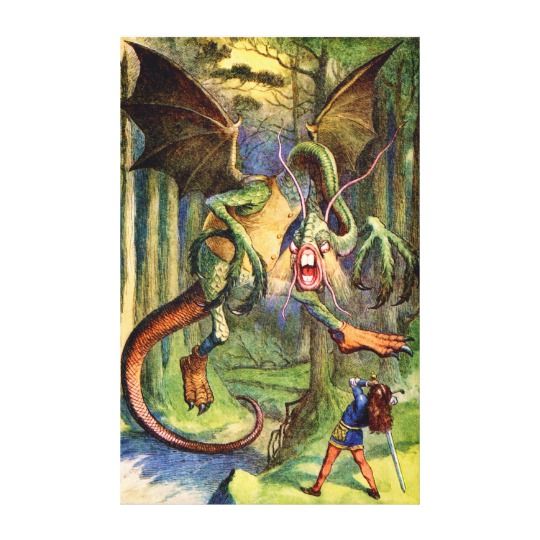
Syzygy is also a word game created by Lewis Carroll, creator of so many lovely nonsense words (Beware the Jabberwock, my son!). The Lady in Read Writes blog explains: “In 1879, Carroll noted in his diary that he had created a new type of word puzzle he called ‘syzygies.’ The objective was to turn one word into another by changing letters according to logical rules. A ‘syzygy’ is the common set of two or more consecutive letters between two words. The puzzle itself consists of connecting two given words by a chain of words, called links, where each consecutive pair of words is connected by a syzygy. This can be played with any number of players. Each player scores based on the length of the “syzygies” as well as the length of the chain. The longer each syzygy, the higher the score.”
The blog shared the basic rules for the game:
- A syzygy can be anywhere in the word (beginning, middle, or end) but it may not begin both words, or end both words. So some is not allowed as a syzygy between handsome and troublesome, but it is allowed between handsome and somewhere.
- No proper nouns or hyphenated words are allowed.
- Pick a pair of words, and form a chain of links linked by syzygies!
And now this word nerd has another diversion to investigate. Right after the eclipse. (And that native plant sale that opens at 8 a.m. Tuesday!)
 Serenity is a fuzzy belly
Margy Trailer Queen. I don’t know if that’s a syzygy but I think it describes a certain Georgia Congresswoman.
LikeLiked by 3 people
Or maybe Bette Midler’s neologism is a syzygy (clearly I don’t know what that is): EVANGENITALS – Christian fundamentalists who are constantly interested in what’s in someone else’s pants.
LikeLiked by 3 people
In my case, my brain is definitely inside my head instead of between my legs–unlike too many male human beings.
LikeLiked by 1 person
Some words seem to just hied in dark corners, waiting and longing to be used. I can’t help but wonder why we even have them if they don’t comfortably fit into normal conversation at least ever once and a while. (…a diamond in the rough?) 🤔
LikeLiked by 2 people
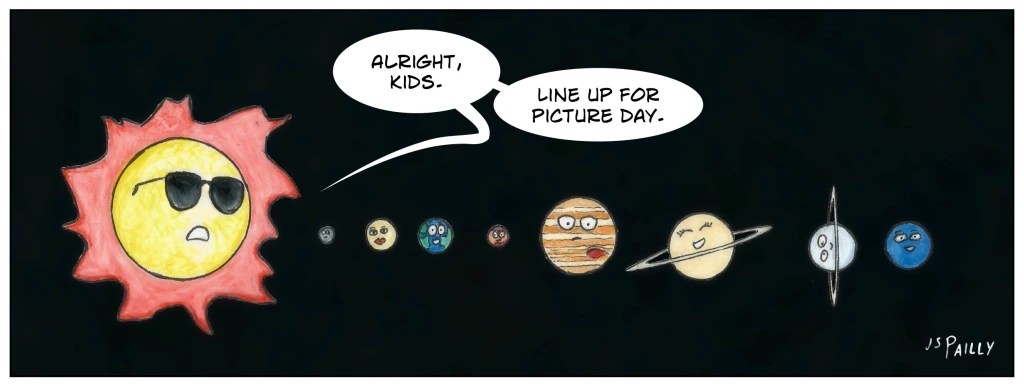
I never did like “picture day” either and I still don’t like it when someone takes a picture of me. Whenever I look at pictures of myself, I wonder how women can stand to look at a man who is so plain, homely, and unhandsome. If they can’t stand it, I suppose they can always sit down.
LikeLiked by 1 person
Brenda when you love words, do they love you back?
LikeLiked by 1 person
Since I have already seen two (or maybe three) eclipses, I am planning to stay inside and work while some of my younger co-workers go outside to see the eclipse. Yes I am scheduled to work that day.
LikeLiked by 1 person
I have always thought the study of etymology was interesting ever since one of my English teachers told me about it when I was a child in elementary school.
LikeLiked by 1 person
I cannot remember the quadratic equation either.
LikeLiked by 1 person
And last but not least, I would like to lead everyone in singing the poem “Jabberwocky” by Lewis Carroll to the tune of “Greensleeves”.
LikeLiked by 1 person
“Skint”? Thanks. I’ll add that to my passive vocabulary.
LikeLiked by 2 people
When a bee stings you on the mouth, you get puffylips.
LikeLiked by 2 people
I recognized the word but couldn’t have told you what it means.
Several years ago I thought I’d maybe fly to Dallas to see the eclipse, but now I’m too lazy and it looks like the weather there isn’t going to cooperate anyway.
“Skint”? I read right past that and had to go back. Yep, like Jim, I’m adding that to my vocabulary. It can replace one of the many words I’ve forgotten.
LikeLiked by 2 people
One of the advantages of being a British television junkie is that I pick up terms like skint that so perfectly fit my life.
LikeLike