
With Independence Day upon us, celebrating 248 years as a nation, my thoughts turn, as they often do, to the meaning of patriotism.
When I speak of patriotism, I don’t mean what it’s been bastardized into by political parties, essentially to mean, first and foremost, a love of party. It is simply, as Merriam-Webster defines it, “love for or devotion to one’s country.”
The Stanford Encyclopedia of Philosophy notes that Stephen Nathanson, in a 1993 book-length treatise on the subject, “defines patriotism as involving: special affection for one’s own country; a sense of personal identification with the country; special concern for the well-being of the country; willingness to sacrifice to promote the country’s good.” That can certainly include, says Stanford, both pride in a country’s merits and shame for its acknowledged lapses or crimes.
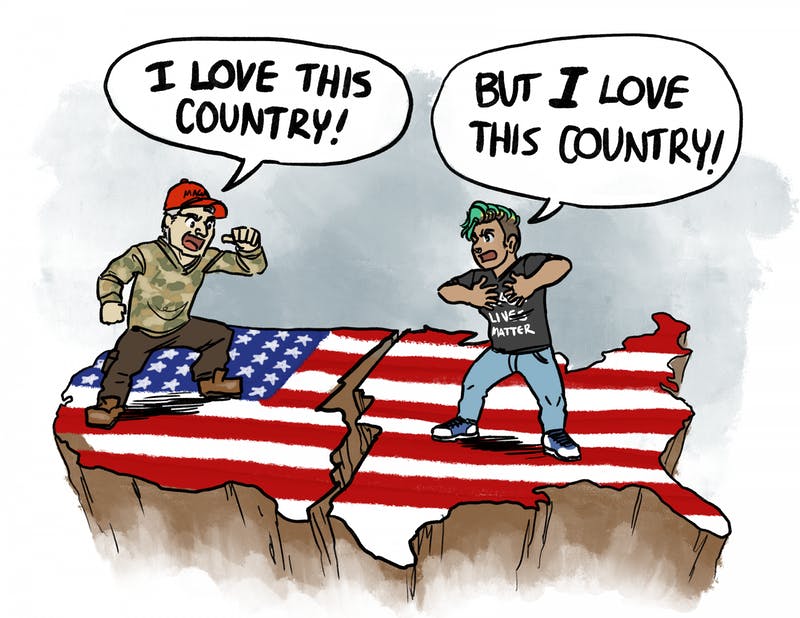
So no, one need not be all “rah-rah, U.S.” to the point of ignoring the sins of slavery, manifest destiny, discrimination and other issues to be a patriot. A patriot who wants the best for his or her country wants it to grow, accept responsibility for its wrongs, and to be better for future generations. Patriotism is not a blind love; jingoism, an extreme sort of patriotism (and close relative of nationalism), on the other hand, is best represented by the phrase “my country, right or wrong.”
And nationalism … hoo, boy.
George Orwell (whose novels I can take or leave, but whose journalism and political commentary are must-reads) wrote: “Nationalism is not to be confused with patriotism. Both words are normally used in so vague a way that any definition is liable to be challenged, but one must draw a distinction between them, since two different and even opposing ideas are involved. By ‘patriotism’ I mean devotion to a particular place and a particular way of life, which one believes to be the best in the world but has no wish to force on other people. Patriotism is of its nature defensive, both militarily and culturally. Nationalism, on the other hand, is inseparable from the desire for power. The abiding purpose of every nationalist is to secure more power and more prestige, not for himself but for the nation or other unit in which he has chosen to sink his own individuality.”
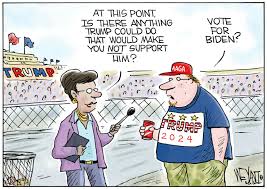
That last bit is dangerously close to what our major political parties have become, which is why I am not a member of any party. (Stanford, by the way, said that Orwell’s interpretation “comes close to an approach popular among politicians and widespread in everyday discourse that indicates a double standard of the form ‘us vs. them.’ Country and nation are first run together, and then patriotism and nationalism are distinguished in terms of the strength of the love and special concern one feels for it, the degree of one’s identification with it. When these are exhibited in a reasonable degree and without ill thoughts about others and hostile actions towards them, that is patriotism; when they become unbridled and cause one to think ill of others and act badly towards them, that is nationalism. Conveniently enough, it usually turns out that we are patriots, while they are nationalists.”
Orwell expanded on nationalism, which encompasses a bit more than even extreme jingoism, to include not just country, but ideology: “Nationalism, in the extended sense in which I am using the word, includes such movements and tendencies as Communism, political Catholicism, Zionism, Antisemitism, Trotskyism and Pacifism. It does not necessarily mean loyalty to a government or a country, still less to one’s own country, and it is not even strictly necessary that the units in which it deals should actually exist. To name a few obvious examples, Jewry, Islam, Christendom, the Proletariat and the White Race are all of them objects of passionate nationalistic feeling: but their existence can be seriously questioned, and there is no definition of any one of them that would be universally accepted.”
Pretty sure MAGA would fit in there pretty well.
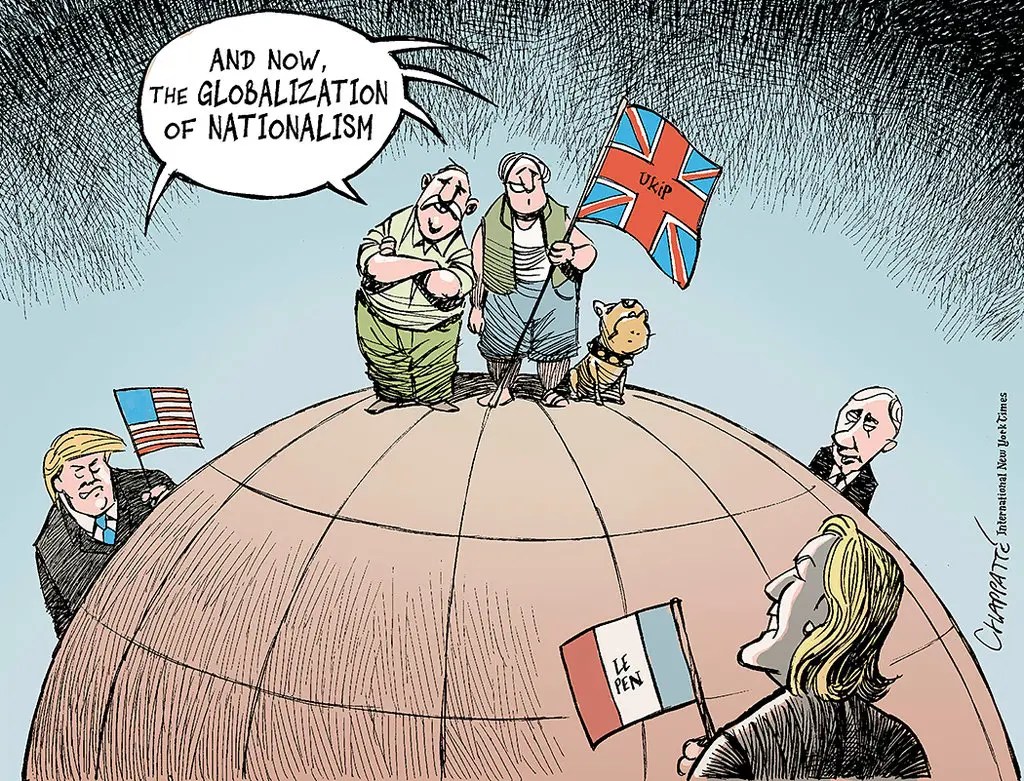
He continued: “… A nationalist is one who thinks solely, or mainly, in terms of competitive prestige. He may be a positive or a negative nationalist—that is, he may use his mental energy either in boosting or in denigrating—but at any rate his thoughts always turn on victories, defeats, triumphs and humiliations. He sees history, especially contemporary history, as the endless rise and decline of great power units, and every event that happens seems to him a demonstration that his own side is on the up-grade and some hated rival is on the down-grade. But finally, it is important not to confuse nationalism with mere worship of success. The nationalist does not go on the principle of simply ganging up with the strongest side. On the contrary, having picked his side, he persuades himself that it is the strongest, and is able to stick to his belief even when the facts are overwhelmingly against him. Nationalism is power hunger tempered by self-deception. Every nationalist is capable of the most flagrant dishonesty, but he is also—since he is conscious of serving something bigger than himself—unshakeably certain of being in the right.”
OK, MAGA is definitely in the mix.
What’s gotten lost in the parties is what’s best for the country, replaced by what’s best for a small subset of people who don’t necessarily have our best interests at heart, but as long as they prevail, all is sunny and bright … for the people who fall in line. (And woe be to those who even attempt to offer opposition or to allow the people to vote on an issue beholden to those in control, for they shall be intimidated, threatened and worse. Because power corrupts.)

As I often do when I speak of patriotism, I call on the wise words of former president Theodore Roosevelt, who wrote in a May 1918 essay in Metropolitan Magazine about then-President Woodrow Wilson’s war efforts: “Patriotism means to stand by the country. It does not mean to stand by the president or any other public official save exactly to the degree in which he himself stands by the country. It is patriotic to support him in so far as he efficiently serves the country. It is unpatriotic not to oppose him to the exact extent that by inefficiency or otherwise he fails in his duty to stand by the country. In either event it is unpatriotic not to tell the truth—whether about the president or about anyone else—save in the rare cases where this would make known to the enemy information of military value which would otherwise be unknown to him. …”
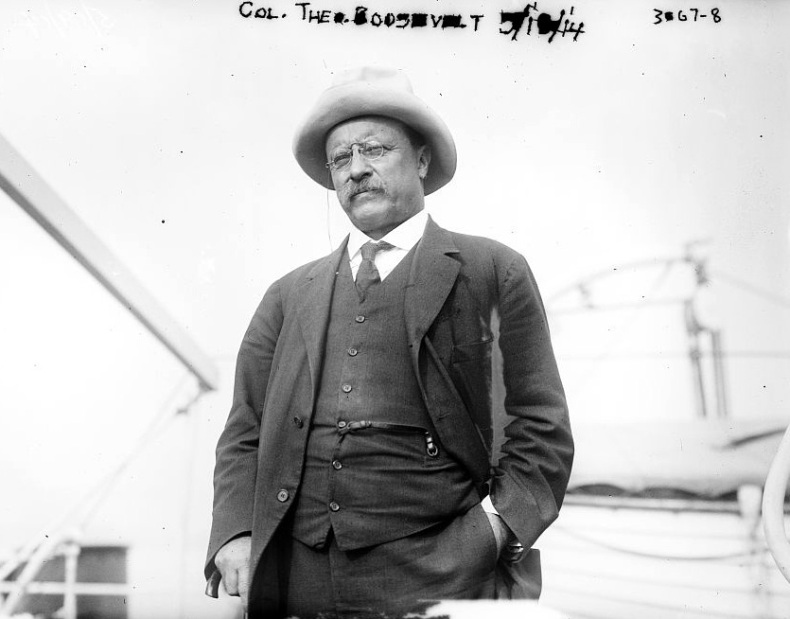
“One form of servility consists in a slavish attitude of the kind incompatible with self-respecting manliness toward any person who is powerful by reason of his office or position. Servility may be shown by a public servant toward the profiteering head of a large corporation, or toward the anti-American head of a big labor organization. It may also be shown in peculiarly noxious and un-American form by confounding the president or any other official with the country and shrieking ‘stand by the president,’ without regard to whether, by so acting, we do or do not stand by the country.”
Teddy never was one for mincing words, especially when it came to love for the United States.

I think most of us are probably pretty patriotic, and don’t need to festoon ourselves with flags (which would be against the U.S. Flag Code anyway). We love this country and the opportunities it has afforded us, while we’re still cognizant that the United States of America is far from perfect. There are still tremendous wealth gaps, barriers to full participation in the American experiment, and too much hostility toward “the other” (especially if that “other” isn’t a straight white male Christian). Does it mean, when we point these things out, that we don’t love our country?
No, it just means we know it can be better. We don’t need to choose sides and worship politicians, but rather hold the banner for all Americans. No American should have to fight for the same basic rights as everyone else, like marriage, children, jobs and education, rights that many take for granted because they’ve always had them. Yet here we are, with hard-won rights for some segments of the population in danger.
We can do much better. We just have to want to, and that starts with really seeing what’s going on and how it affects more than just you.
Is that too much to hope for? I really pray it’s not.
🎆🎆🎆🎆🎆
One more note: For the love of all that is holy, if not for your country, leave the fireworks to the professionals. You’re not only risking life, limb and property (especially as crispy as some of the grass is right now), but neighborhood peace (some of us have to work in the morning, ya know, and would greatly appreciate some quiet).
Your neighbors and their critters will thank you for it. Not to mention your insurance agent.

 Serenity is a fuzzy belly
Once again, my comment didn’t post, so I will continue reading the blog but will not be commenting.
Best,
Earl
<
div>
Sent from my iPad
<
div dir=”ltr”>
<
blockquote type=”cite”>
LikeLiked by 1 person
Good piece. Of course, my head hurt after I finished reading it. That’s no reflection on you or your skills at reducing such complicated thoughts to a small space. My head always hurts when I read such stuff and how history is replete with people who stay up late trying to figure out how to lord over the rest of us. (I’m sure my history teachers, I minored in history in college, are turning over in their graves, seeing me reflect in such an elementary fashion…sorry.)
LikeLiked by 2 people
Patriotism, like pride, often is a useless asset.
LikeLiked by 2 people
Well said, Brenda. This post deserves a national audience. I’m glad you included the P.S. about the fireworks. Our furry friends would benefit.
LikeLiked by 2 people
Brenda- you might try and read a book entitled “The Imperial Cruise” and see
what our Teddy was all about!!
LikeLiked by 2 people
It’s not on the digital library consortium, but I have alerts set up in case it becomes available. Love history. Thanks!
LikeLike
Speaking of furry friends, while Marlow the Golden Retriever was still alive and living with me, July Fourth was one of his least favorite days because too many of my neighbors seemed to enjoy shooting off firecrackers and Roman Candles and sparklers, etc.
LikeLiked by 1 person
Whenever people try to accuse me of not being sufficiently patriotic enough, I will remind them that I am a veteran and I have worked at the local Veterans Hospital for many years trying to help take care of my fellow veterans. Sometimes this reminder works and sometimes it does not work. I still get criticized for not supporting certain causes or certain persons (not to mention any names).
LikeLiked by 1 person
Certain people, who insist loudly that they are “Good Christians”, seem to want to ignore Leviticus 19: verses 33 and 34.
LikeLike