
The last several days of September were bleak for many of us. Fresh on the heels of James Earl Jones’ passing at 93 on Sept. 9, we heard the news of Dame Maggie Smith’s death at 89, and then Kris Kristofferson at 88. For me, and I’m sure many others, those three seemed like the sweet but stern-when-needed grandpa, witty aunt and cool uncle. For all the gravitas they had in their careers, they felt a bit like family to me, always a part of my life.
James Earl Jones had that commanding voice that was instantly recognizable … as Darth Vader, Mustafa, as the man intoning “This is CNN.” His work ran the gamut from serious drama to light comedy (while his Tony-winning work in “Fences” and “The Great White Hope” was awe-inspiring, so was some of his sitcom work; his guest appearances on “Will and Grace” and “The Big Bang Theory” live rent-free in my head on a loop … “Jimmy Choo!”), and he was one of the few to attain EGOT status (Emmy, Grammy, Oscar and Tony, though his Oscar was an honorary one, when we know he really deserved his own competitive one).
Maggie Smith was almost an EGOT, just lacking a Grammy (Jones’ was for spoken-word album … naturally), and as much as I loved her as Professor Minerva McGonagall in the Harry Potter movies (wands up!), I loved her even more in “Downton Abbey” (Violet was the epitome of persnickety), “Evil Under the Sun” (her Daphne was brilliantly played), “Hook” (I’ve been bawling seeing memes based on the movie’s “Hello, Wendy Lady” scene with Robin Williams), “The Miracle Club” (her final role) and many more. She was at her best when her wry sense of humor poked through, but she could make you weep just as easily. And her darker turns, such as in “The Prime of Miss Jean Brodie” could chill while still making you feel pity for the human at the core. (I finally found a place to stream it Monday, though it was interrupted by commercials in odd places; she really deserved the Oscar she won for her performance.)
And Kris Kristofferson … I grew up mostly on country music, so well remember his role in the outlaw country movement, and was a big fan of his songwriting prowess (how anyone couldn’t love “Me and Bobby McGee” and tons of other great songs is beyond me). I was too young to watch his turn in “A Star is Born,” but he showed up in a lot of movies and TV shows I’ve loved over the years (yes, geeky me did watch and love his turn as Whistler in the Blade trilogy).
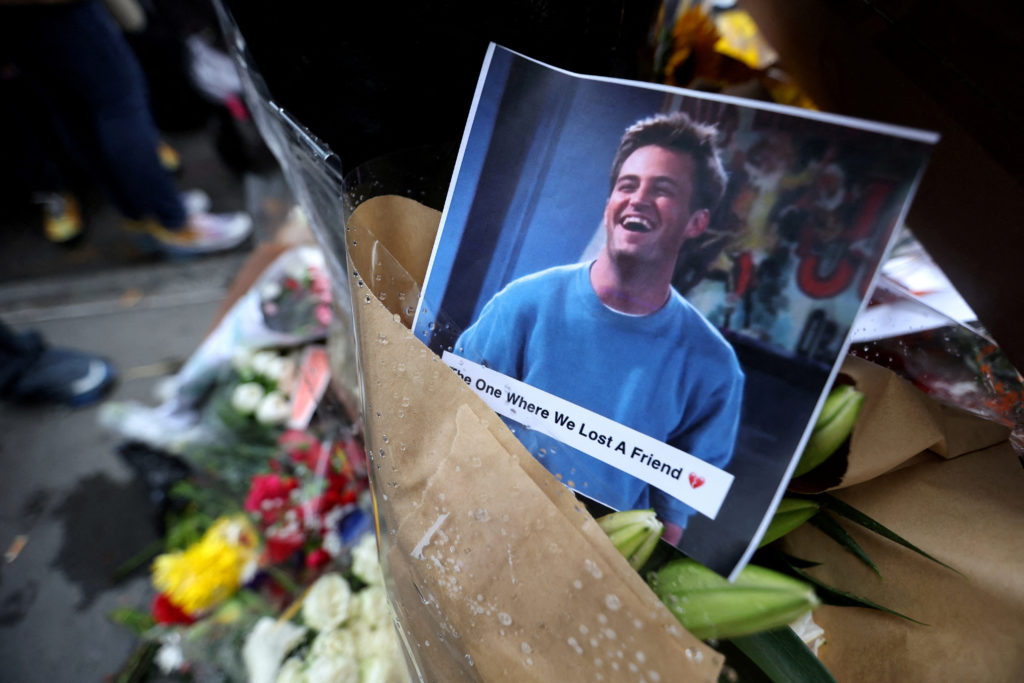
But I didn’t know the stars personally, so why would I grieve? Jennifer Lea Austin wrote in Psychology Today in October 2020, “Experts say that the loss is indeed personal and undeniably real. It’s a sadness that transcends missing their guitar playing, acting ability, or comedic timing—and an emotion that deserves attention.”
Jones, Smith and Kristofferson were a big part of my formative years, and much of my early exposure to them was on PBS, whether “Sesame Street,” “Masterpiece Theater” or “Austin City Limits.” The fact that my mom was a huge Agatha Christie fan helped me marvel over Maggie Smith in “Evil Under the Sun” and “Death on the Nile” once they were broadcast on TV, so by the time “A Room With a View” came out I was already a fan. I would have loved to have met her (partially because I loved when a little Scottish burr slipped out; her mother was a Scot), but it was not to be.
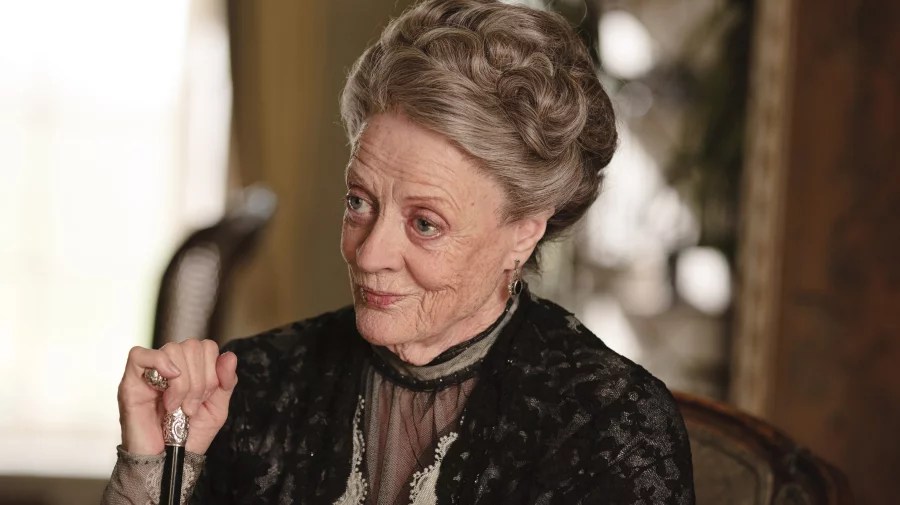
Still, that doesn’t mean that I can’t grieve. “Mourning the death of a celebrity we’ve admired is just as important as any other death,” therapist Aniesa Hanson, Ph.D., of Tampa, Fla., told Austin. “Grief is grief. Ignoring your feelings of grief won’t make you grieve faster—it can actually do the opposite. …
“Our emotional bond with an influential person is based on our projection of what we need that person to be for us during influential moments of our lives. It’s the idea of that person we bond to, not necessarily the person themselves—since we didn’t come to know them in real life.”
Other celebrities we may grieve because there is a part of their life that resonates with us as similar to our own. Robin Williams and Freddie Prinze are much like that for me, both with a larger-than-life comic persona but dealing with depression and other ailments. I’ll never be as funny as either of them, but I’ve often been guilty of covering my pain with humor. (So many comedians make great dramatic actors, as Williams did, because they understand pathos better than most.)
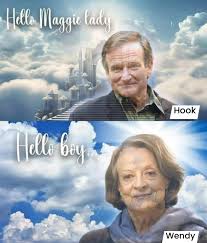
The type of one-sided relationship we experience with celebrities is called parasocial, according to licensed clinical psychotherapist Julia Breur, Ph.D., of Boca Raton, Fla., who defines it for Austin as one “where one person extends emotional energy, interest, and time and the other party or the persona is completely unaware of the other’s existence.”
Not long after the death of David Bowie (another tough one for me) in January 2016, @ElusiveJ posted on her Twitter profile: “Thinking about how we mourn artists we’ve never met. We don’t cry because we knew them, we cry because they helped us know ourselves.”
As Caroline Framke opined on Vox in 2016, that’s it in a nutshell, really. “Great artists give voice to both the huge emotions that threaten to consume you and the fuzzy ones lying in wait in your periphery, indistinct but just as urgent. Great artists reach into their own hearts, brains, and guts to wrench out what’s most vital and hold it out for you to grasp. Then you can decide what—if anything—it means for you.”
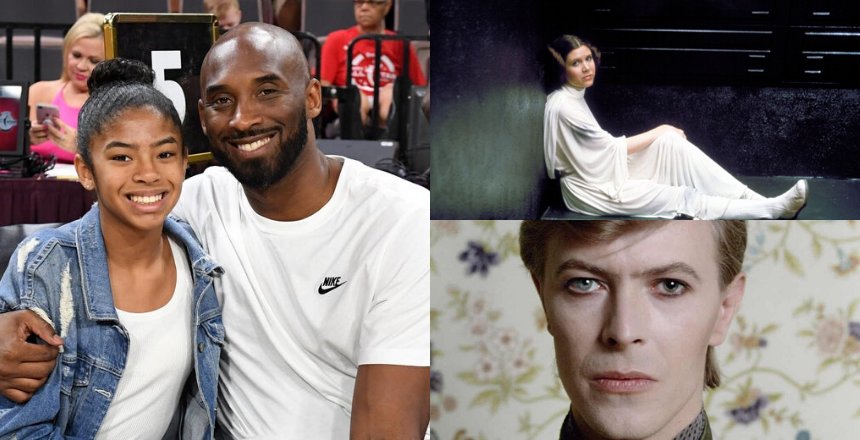
Framke elaborated: “Grieving en masse might intensify the initial reaction, but every single response to a public figure’s death is an individual one. We all experience art from our own singular place. That’s true whether you’re hearing the joyful, soaring chorus of Prince’s ‘I Would Die 4 U’ or the fierce zip of Bowie’s ‘Rebel Rebel’ for the first time. It’s true whether you’re feeling an ecstatic jolt at Michael Jackson’s ‘Thriller,’ clutching your face to keep from smiling too hard at Robin Williams’s performance in ‘The Birdcage,’ giving in to the chills inspired by Heath Ledger’s smile in ’10 Things I Hate About You,’ or closing your eyes and letting the smoke of Amy Winehouse’s voice curl around you and squeeze, just a little too hard.
“Or maybe you don’t quite recognize any of these experiences. After all, they’re mine. In these moments, I learned a little bit more about myself thanks to people I never met and never knew beyond the art they presented to the world. But I’m still grateful they passed through my solar system, even if their orbits were worlds away—and so, I suspect, are you.”
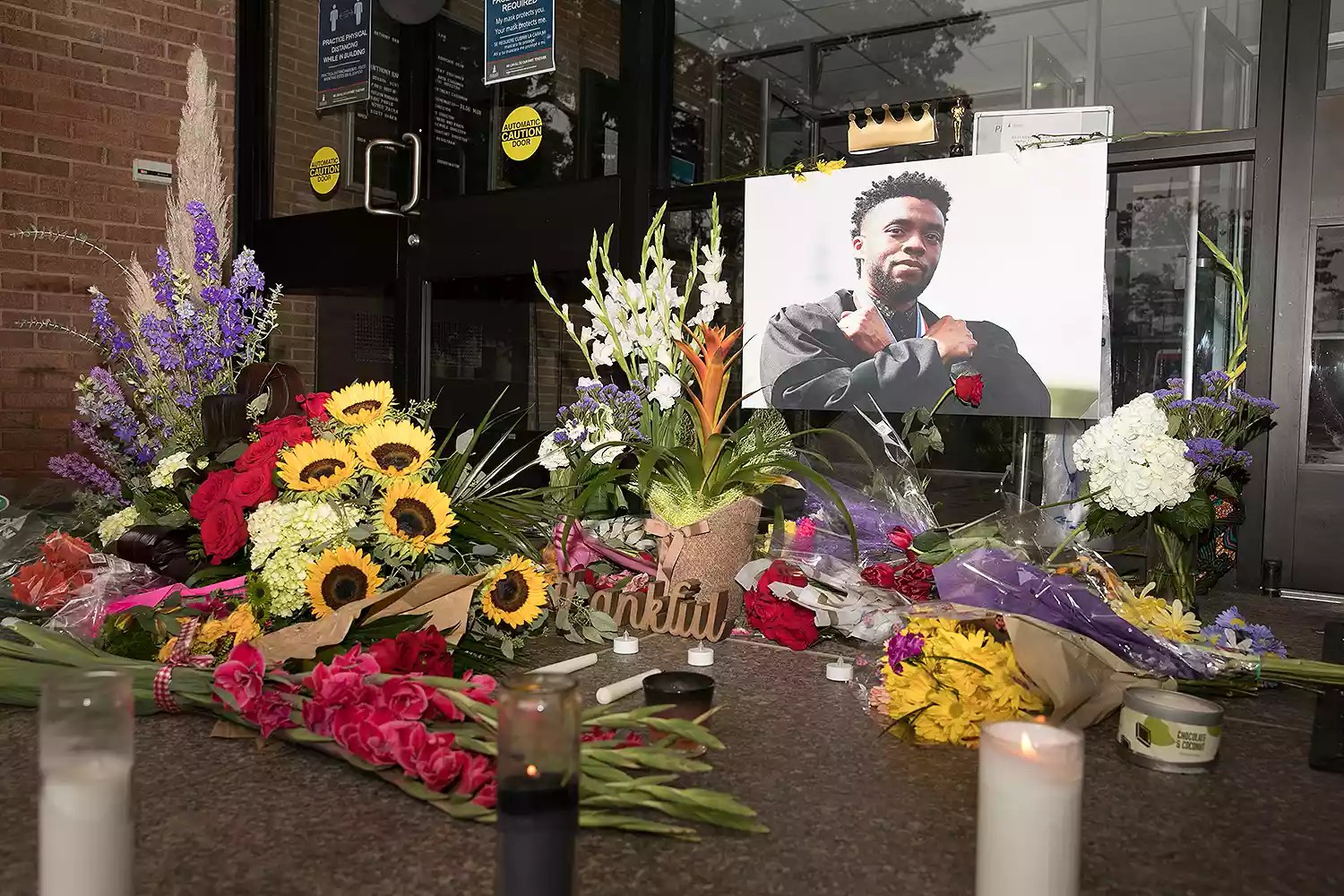
So no, while I may not have any tangible connection to these celebrities and many more (Freddie Mercury, Angela Lansbury, Stephen Sondheim, Bob Newhart, Chadwick Boseman and too many others to recount), I still hold them in my heart, along with life lessons I gleaned from them, and the joy of watching them do what they did best. Their absence from the world is felt deeply, and it’s not a shameful thing to admit.
We no longer have them here physically to admire and aspire to. But we have their work, what they meant to us, and the memories that in many cases helped shape who we are.
Rest well.
 Serenity is a fuzzy belly
Too often, our degree of appreciation for those we have admired in life is recognized only after their deaths. As we age, some of us learn to be “all in” with the appropriate depth of appreciation we have for our living heroes. It’s something worth a thought or two. Take it from someone who has aged.
LikeLiked by 2 people
Lately, there seems to be a lot of those old-shoes-comfortable type celebrities tsking their last breath. It’s as if the angel of death decides to take of bunch of them all around the same time.
I certainly mourn the loss of famous people like the ones you mentioned. I also mourn the loss of the characters they portrayed. For example, I’ll always be endeared to Leonard Nimoy’s rendition of Mr. Spock. He was the real McCoy, even though ZacHary and Ethan Peck have given us Star Trek fans good Spocks.
LikeLiked by 2 people
Agatha Christie was one of my mother’s favorite authors also.
LikeLiked by 1 person
You grew up mostly on country music? I am tempted to respond by jokingly commenting that listening to country music doesn’t seem to have done any permanent damage to your brain.
LikeLiked by 2 people
Over the years, I have had to attend too many funerals for too many older musicians from whom I learned a lot about performing music. For example, last year I had to go to three funerals in three months. I will miss them just as I will miss Kristofferson and other songwriters whose lyrics spoke to me. Their words and their music helped express my feelings and thoughts in a better way than I could think of doing it myself.
LikeLiked by 1 person
Anymore, for me, it’s usually a reminder of how old I’ve become. People who’ve been around me as a part of my life for many years, who marked important moments or times, are disappearing. They are falling away like leaves from my tree of life.
LikeLiked by 2 people
I agree, the passing of long-familiar celebrities can’t help but remind us that the world is moving on while we may be stuck in the past. It’s Fear Of Missing Out. Merely mentioning a celeb’s name can help bond lives but soon young people won’t recognize the names of those who were part of our world. Ask a young person about Bob Hope, Red Skelton, Clark Gable, Tim Conway, . . .
LikeLiked by 1 person
So true. It’s like one by one the threads that bound our generation together are breaking.
LikeLiked by 1 person
hgt
LikeLike