
Stress is really doing a number on me lately, between money woes (why does everything have to break down at once, especially when I just replaced the dying phone and still need to replace the dying iPad, in addition to dealing with the new electrical issues??), the election, and just life in general. So to calm myself a bit, I thought I’d explore what I intended to write about last week before some nutty fact-checking issues intruded: New words added to the dictionary.
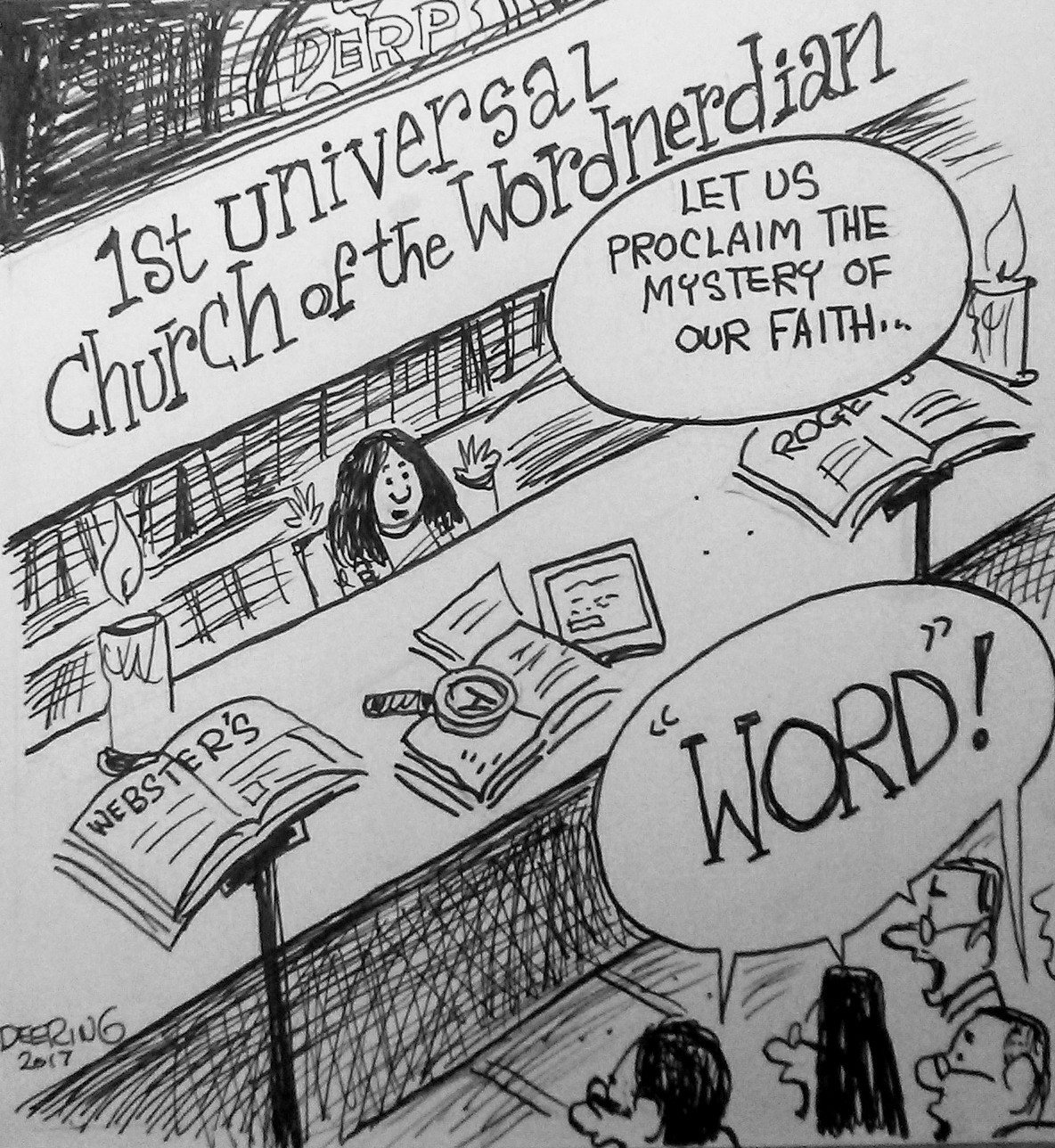
If you’re a word nerd like I am, you get press releases from dictionaries. I know. So cool. How did I get so lucky?
While the print editions take longer to register new words/usages (new editions are generally a few years apart, so they won’t be up-to-the-minute), the online versions of dictionaries like Merriam-Webster and Oxford English Dictionaries add words in batches a few times a year. Earlier this month, Merriam-Webster added 200 new words that have grown in widespread use over time and that give a snapshot of what’s going on in the world now.
Said Peter Sokolowski, editor at large for Merriam-Webster, in the dictionary’s press release, “Our lexicographers monitor a huge range of sources to select which words and definitions to add. From academic journals to social media, these give us a very thorough view of the English language.”
“The one constant of a vibrant living language is change,” Gregory Barlow, president of Merriam-Webster, explained in the press release. “We continuously encounter new ways of describing the world around us, and the dictionary is a record of those changes.”
Remember, dictionaries are descriptivist, and document how words are actually used, which means when language evolves, so do definitions. Prescriptivists are concerned with how words should be used. They’re real sticks in the mud.
It still takes a while for a new word or new sense of a word to make it in, as it has to be in wide use for a sustained amount of time before the big dictionaries add it. The smaller and slang dictionaries don’t take quite so long, especially if they’re only online. So no, you won’t find “salt bae” in Merriam-Webster, but you will find it on the Urban Dictionary (which includes the actual definition plus several not-safe-for-work definitions, so I won’t link it here; it is, after all, user-created).

Among the social-media-related terms added to Merriam-Webster this go-around are “shadow ban” (“to cause [a user or their content] to be hidden from some or all other users usually without the user’s knowledge”) and “touch grass” (“to participate in normal activities in the real world especially as opposed to online experiences and interactions”).
I’ve never worried about a shadow ban because clicks are not my goal. And as a few wags have noted, how do you know if your post isn’t getting views because it’s shadow-banned or that it’s just not very good? My thought is that if someone wants to read my stuff, great. As long as they’re not there to troll, it’s fine. While I have impostor syndrome (I don’t think I’m worthy of attention), I’m also a realist and know I’m not everyone’s cup of cocoa. Plus, in this state, the loudmouths tend to drown out the thinkers/nerds.
I’ll admit at times I do need to “touch grass,” though, especially as I can get caught up in a few of my games. None of those games, though, is really a “dungeon crawler” (another new entry), a video game “primarily focused on defeating enemies while exploring a usually randomly generated labyrinthine or dungeon-like environment.” I much prefer strategy, merging, matching and puzzle games that don’t stress me out with timers.

I’m a bit surprised that words and phrases like “freestyle” (“an improvised performance especially of a rap”), “true crime” (genre that examines and investigates real crime cases) and “beach read” (“a usually light work of escapist fiction [such as a thriller or romance]” weren’t already there in current usages.
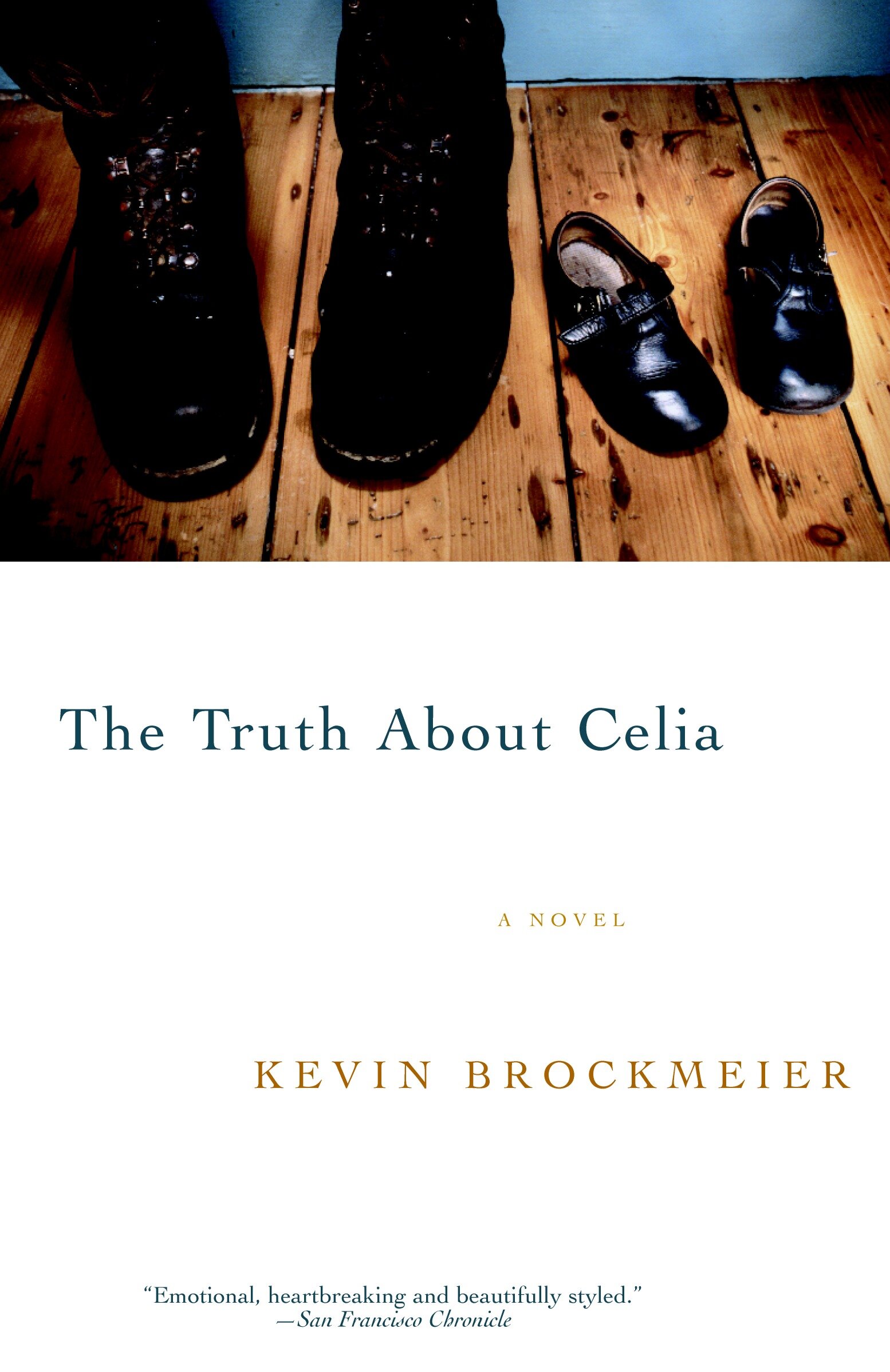
The closest I get to rap most of the time anymore is “Hamilton,” though I was tuned in to BET’s rap and hip-hop shows all the time in college (LOVED Heavy D and Al B. Sure), and I’ve always been a fan of true crime (a natural outgrowth of the interest in mystery fiction my mom nurtured in me). While I don’t go to the beach (can’t swim, and I burn easily), I can highly recommend authors like Jasper Fforde (his Thursday Next books are great) and Little Rock’s own Kevin Brockmeier. (“The Truth About Celia” was my introduction to him, and it was a powerful read; his style is magical realism, and I’m all in. Plus, I sit his fur-sis for his mom when he’s not in town.)
Science terms added included “heat index” (function of temperature and relative humidity; boy, are we familiar with this in Arkansas) and “spotted lanternfly,” an insect of Asian origin that’s become invasive in the United States. I want nothing to do with either of those.
Of course, I’m a huge fan of slang, partially because so many of the words are just fun to say (remember my lasting love for words like persnickety, discombobulated and tump), and the additions in the informal word category didn’t disappoint. “Snog,” a British term meaning “to kiss and caress (someone) passionately,” has long been a favorite (must be all that British TV I watch; thanks, Mama and PBS, for getting me hooked in the first place). “Creepy-crawly” was added as well, referring to “an organism (such as a spider, beetle, or cockroach) that typically crawls along close to or on the ground and is often considered unwanted or unpleasant.”
An uninvited bug, especially in the house or eating your vegetation, can definitely be unpleasant. I do my best to deter any with natural methods before breaking out the big guns that may harm beneficial bugs. Sometimes, though …

Speaking of unpleasant, several political terms were added this time around as well. (Seriously, politics, keep out of my happy places.)
“MAGA,” meaning “a political movement calling for strict limits on immigration and a return to policies and practices in place before globalization and especially before the era of globalization that began in the late 20th century,” found a spot in the dictionary. So did “far left” (the group that is most liberal or progressive, though the U.S. version is pretty conservative by European standards) and “far right” (most conservative).
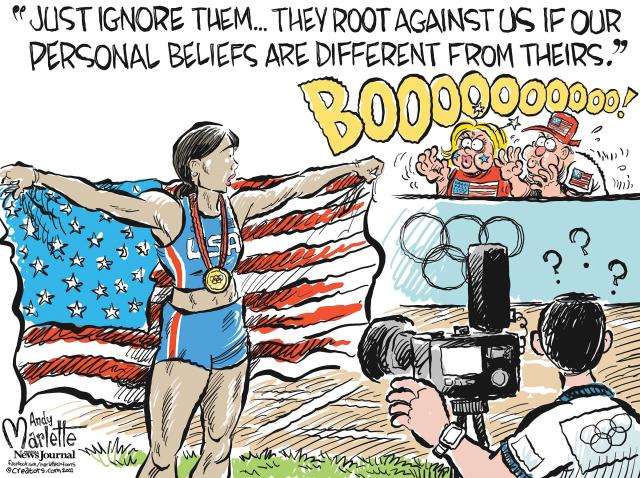
And just for giggles, “classical liberalism” was added as well, meaning “a political philosophy based on the belief that freedom of the individual is paramount and that government’s role should be largely limited to protecting that freedom.”
The giggles come when you realize that elements of both major parties claim to be for this in theory, but in practice … yeah, not so much. (Individual rights and government involvement clash in several areas, but maybe none more so than guns and women’s health care. It’s amazing how small-government types suddenly want to govern uteruses.)
And this is why I don’t like parties. Unless they have cats.

 Serenity is a fuzzy belly
Inglish is a strange language when you compare spelling and pronunciation. As a Naval Midshipman, for example, I would join others in singing Ankers Away.
And there’s that fourth-grade rule: I before E except after C: or after R, as in freight, or after S as in science, or the just-alluded to Aweigh. I recently read a study of the nearly 20,000 words with IE or EI in them, and 28% violated that grade-school rule. But other than that . . .
LikeLiked by 2 people
I too have a touch of impostor syndrome. When I look back on over 8 decades of life I feel like a salmon swimming upstream, amazed at how far I’ve survived.
LikeLiked by 2 people
MAGA is neither a word nor worthy of dictionary status. When will furosis (a condition in which furniture is covered in animal fur, e.g., “My couch has furosis.”) be recognized?
LikeLiked by 2 people
I thought “MAGA” stood for “Make America Godly Again” as certain churches supposedly claim they are trying to do?
LikeLiked by 1 person
So Merriam-Webster has an Editor At Large. Do they also have an Editor At Extra Large and am Editor At Medium as well as an Editor At Small? So far as I am concerned, this seems like a Perfectly Reasonable question to ask.
LikeLike
Doesn’t being “at large” have something to do with avoiding the law?
LikeLiked by 2 people
Only if it is the infamous and much feared “Grammar Police”.
LikeLike
Speaking of pest exterminating companies, there used to be one such company who advertised that they would “Get Rid Of What Bugs You” (or some such ad).
LikeLiked by 1 person
No prescriptive dictionaries anymore? Guess I’ve been retired too long. And how dare they include MAGA without, at the very least, saying what it stands for.
I’ve counted on the Urban Dictionary for years just so I’ll know what the younger generations are saying.
And hey, “dungeon crawling” is not even close to new. I’ve been dungeon crawling in video games for thirty years.
Oh well, old editors like me never die. We just revert to type.
LikeLiked by 2 people
If you are an “old editor”, is your favorite hymn “Come Thou Font Of Every Blessing”?
LikeLike