
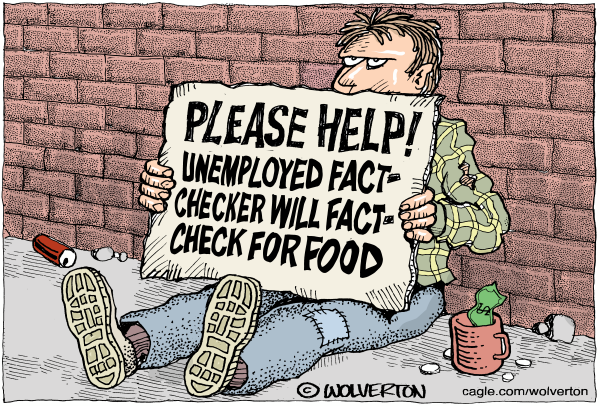
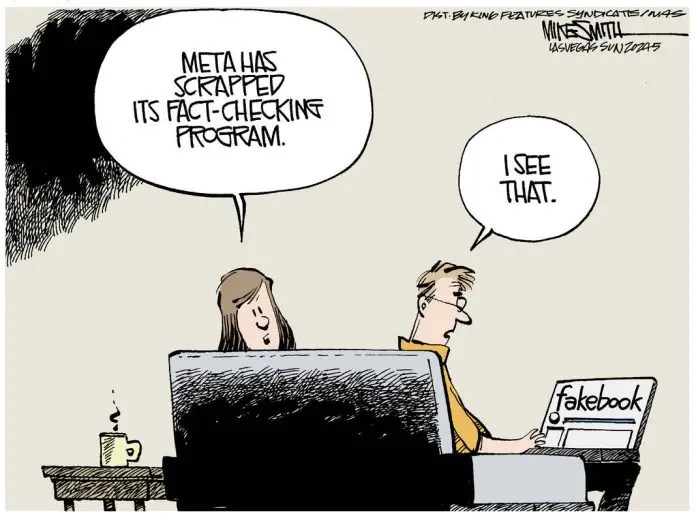
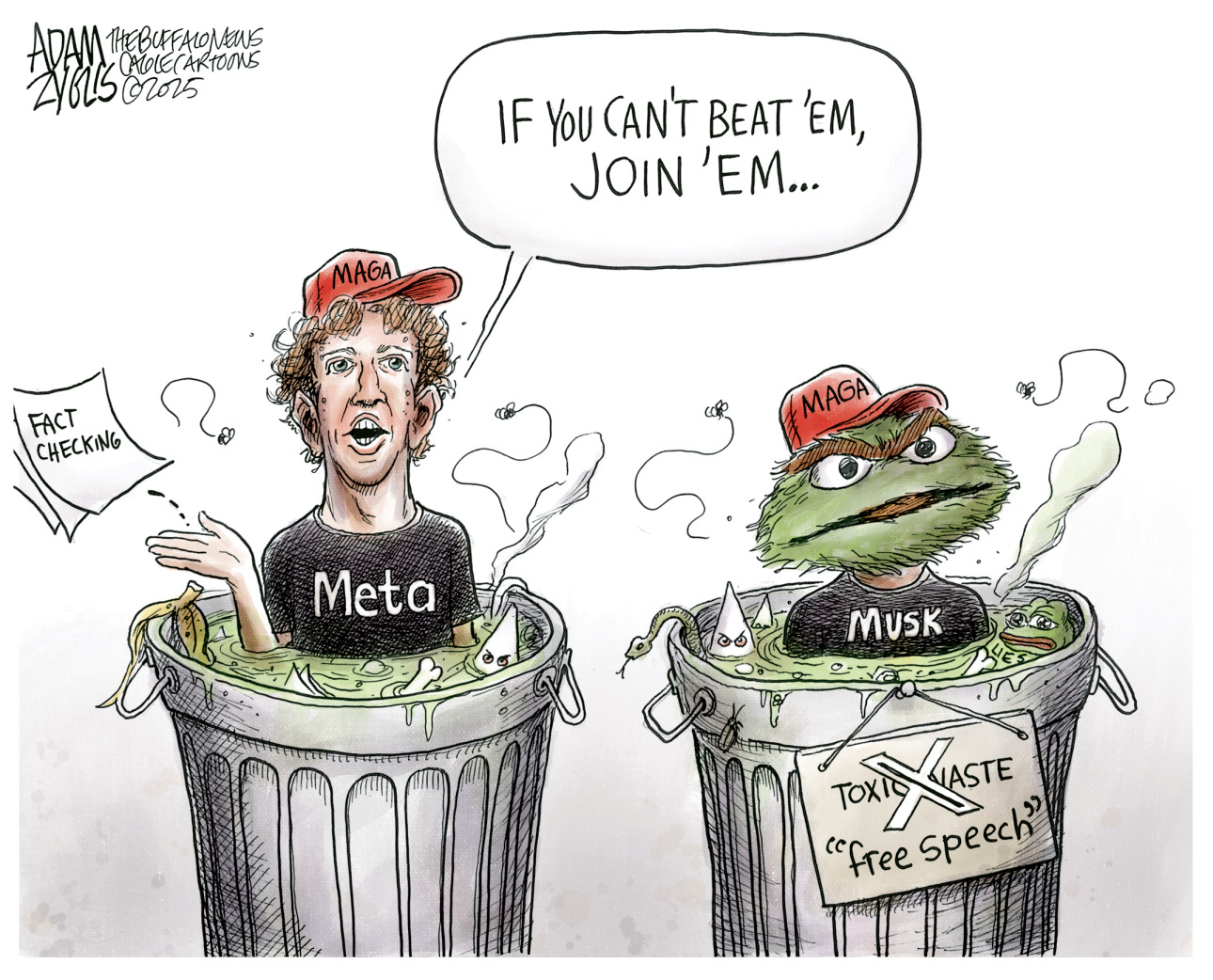
In light of the large contributions made by people like Meta’s Mark Zuckerberg and The Washington Post/Amazon’s Jeff Bezos to the inauguration fund for incoming president Donald Trump, it was really no surprise at all that Meta announced the end of its fact-checking project in the U.S. (Nor was it a surprise that The Post declined to print a cartoon critical of those contributions, leading Pulitzer Prize-winning cartoonist Ann Telnaes to resign. That, in turn, was one more thing tipping the scale and prompting columnist Jen Rubin to resign as well; she and Norm Eisen have started The Contrarian on Substack. Telnaes’ Substack is Open Windows.)
As a proponent of fact-checking, I’m disappointed in Zuckerberg, who owns Meta, of which Facebook, Instagram and Threads are a part. It’s not just the idea of moving to a “Community Notes” program like that of X/Twitter (the wisdom of the crowd often isn’t so wise, and few of the notes are actually seen), but the implication that fact-checking is a form of censorship.
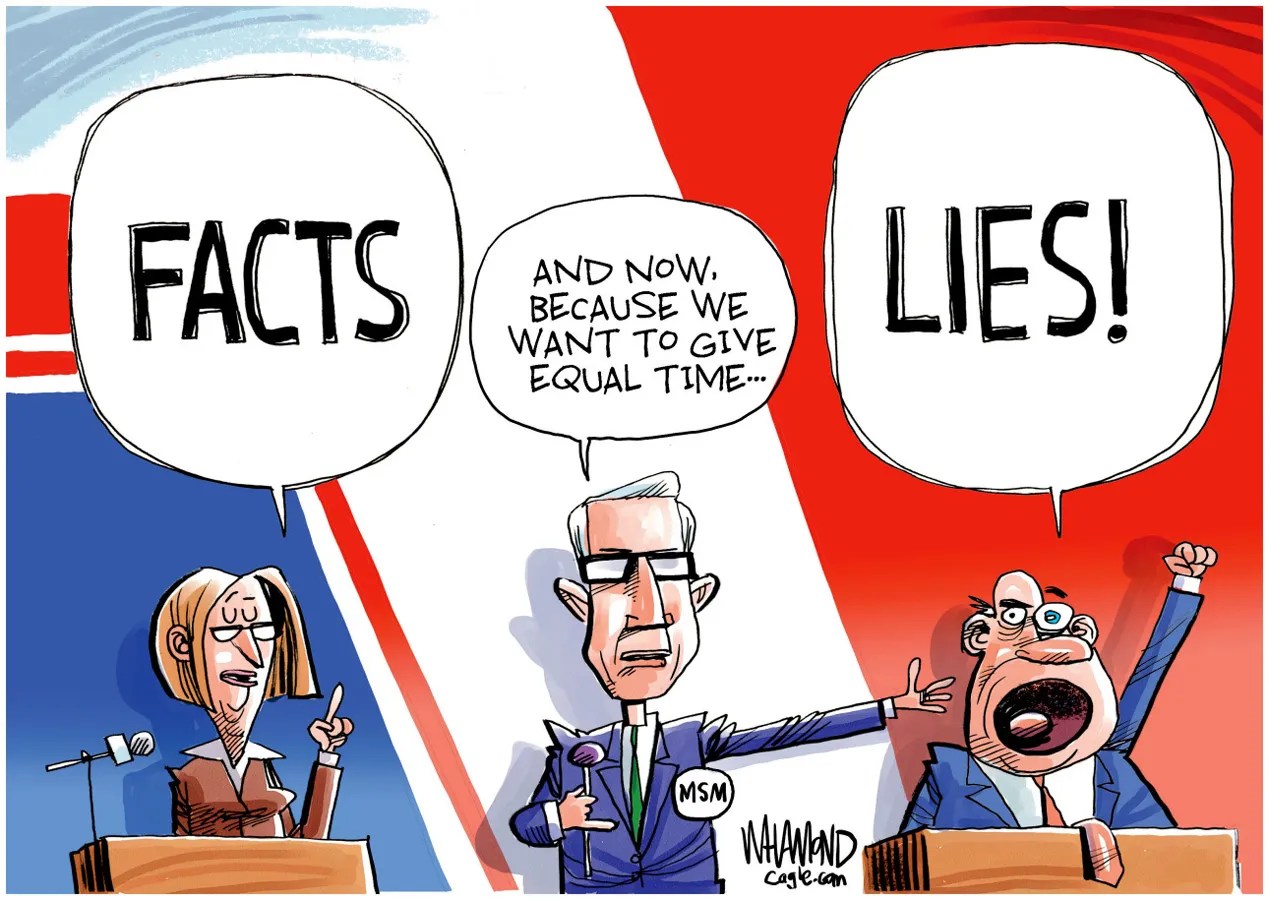
Seriously? Telling people the truth is censorship? I know who’s getting dictionaries and media ethics textbooks soon!
In the statement announcing the end of third-party fact-checking, Meta said: “Experts, like everyone else, have their own biases and perspectives. This showed up in the choices some made about what to fact check and how. Over time we ended up with too much content being fact checked that people would understand to be legitimate political speech and debate. Our system then attached real consequences in the form of intrusive labels and reduced distribution. A program intended to inform too often became a tool to censor.”
Soooo … political speech isn’t to be questioned? Make that make sense.
The International Fact-Checking Network (IFCN) responded in a post on Poynter.org: “Nine years ago, we wrote to you about the real-world harms caused by false information on Facebook. In response, Meta created a fact-checking program that helped protect millions of users from hoaxes and conspiracy theories. This week, you announced you’re ending that program in the United States because of concerns about ‘too much censorship’— a decision that threatens to undo nearly a decade of progress in promoting accurate information online. …
“But you say the program has become ‘a tool to censor,’ and that ‘fact-checkers have just been too politically biased and have destroyed more trust than they’ve created, especially in the U.S.’ This is false, and we want to set the record straight, both for today’s context and for the historical record.
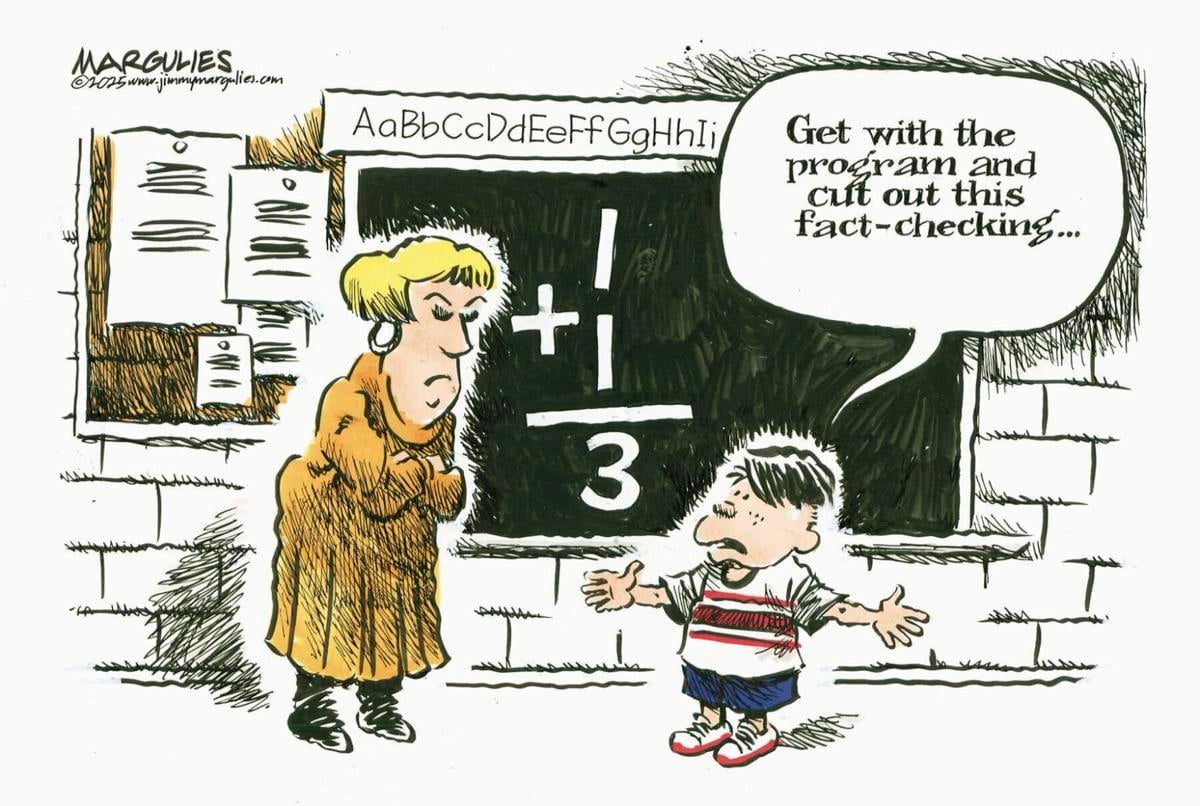
“Meta required all fact-checking partners to meet strict nonpartisanship standards through verification by the International Fact-Checking Network. This meant no affiliations with political parties or candidates, no policy advocacy, and an unwavering commitment to objectivity and transparency. Each news organization undergoes rigorous annual verification, including independent assessment and peer review. Far from questioning these standards, Meta has consistently praised their rigor and effectiveness. …
“Your comments suggest fact-checkers were responsible for censorship, even though Meta never gave fact-checkers the ability or the authority to remove content or accounts. People online have often blamed and harassed fact-checkers for Meta’s actions. Your recent comments will no doubt fuel those perceptions. But the reality is that Meta staff decided on how content found to be false by fact-checkers should be downranked or labeled. Several fact-checkers over the years have suggested to Meta how it could improve this labeling to be less intrusive and avoid even the appearance of censorship, but Meta never acted on those suggestions. Additionally, Meta exempted politicians and political candidates from fact-checking as a precautionary measure, even when they spread known falsehoods. Fact-checkers, meanwhile, said that politicians should be fact-checked like anyone else.”
Good lord, yes. If I had a dollar for every politician who should be fact-checked, my medical bills would be paid off rather quickly, with money left over.
After Meta’s announcement, The Economist posted a link to commentary on Threads, with the comment: “Meta’s moves are a step in the right direction. Social-media platforms should not be in the business of defining truth.”
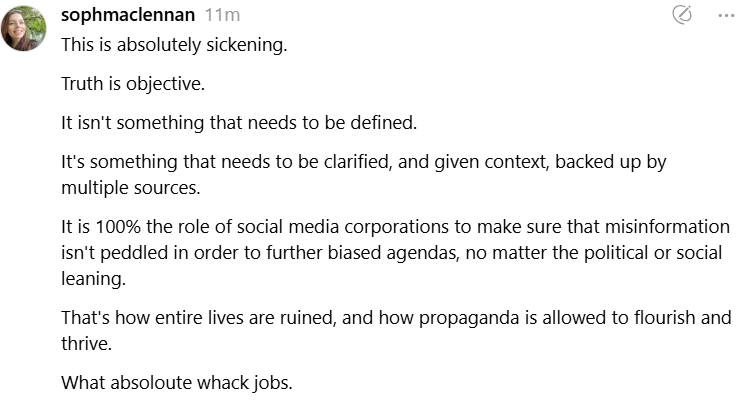
Activist Sophia MacLennan replied: “Truth is objective. It isn’t something that needs to be defined. It’s something that needs to be clarified, and given context, backed up by multiple sources. It is 100 percent the role of social media corporations to make sure that misinformation isn’t peddled in order to further biased agendas, no matter the political or social leaning. That’s how entire lives are ruined, and how propaganda is allowed to flourish and thrive.”
She and so many others who responded are right. We’ve spent entirely too much time over the past decade or so giving truth the short shrift in favor of comforting falsehoods to our own detriment. Some have built alternate realities where the things that don’t mesh with their political views aren’t true despite all evidence to the contrary.

As IFCN noted in their commentary, “The freedom to say why something is not true is also free speech.” So by dropping fact-checking, Meta is infringing free speech.
Is anyone over there paying attention?
And beyond dropping fact-checking, Meta is making other changes: “We want to undo the mission creep that has made our rules too restrictive and too prone to over-enforcement. We’re getting rid of a number of restrictions on topics like immigration, gender identity and gender that are the subject of frequent political discourse and debate. It’s not right that things can be said on TV or the floor of Congress, but not on our platforms.”
I and others can foresee that that will mean immigrants, LGBTQI+ members and those who stand up for them will be subject to much of the same harassment, bullying, doxing and othering that drove so many away from platforms like X/Twitter, which is little more than a hellscape now, with the inmates running the asylum. I fear most especially for my trans friends and family members, as they’re probably most likely to be targeted.
Here’s the thing: Society needs rules to survive, and most of us have no problem following them. However, there’s a growing portion of the population that doesn’t believe rules apply to them, and the more social media platforms acquiesce to their demands and apply terms and conditions to everyone but them, the more they want. We can’t keep leaping from platform to platform to find places where it’s safe to be who we are if we don’t fit into the boxes that monstrous population believes we should. We have to stand up to them and their hate. Don’t back down, even if that means creating a bubble. Don’t block out genuine news, but you don’t have to expose yourself to unbridled hate.
We all need to stay safe and sane.
Those of us in the press are obliged to provide truth to our audience (sometimes it may take a while because facts don’t always present themselves at once), and most of the journalists I know on the news side of things are committed to that purpose (most, unless I hung out with them regularly, I had no idea of their political leanings, so for a few who retired, I was a bit shocked once I knew). That truth presented by members of the news media depends on evidence, not politics. Later evidence may mean the truth might change a little, but again, based on evidence rather than bias.
Critics tend to point to the preponderance of fact-checked conservatives as evidence of bias without considering that conservatives have been shown to have greater reach on social media, which means wider distribution. Liberals are fact-checked too, but don’t have the spread of conservatives. And with Meta ending fact-checking on its platforms, who will know what the truth is anymore unless they check out the evidence for themselves on sites that provide links to primary documentation?
As late Sen. Daniel Patrick Moynihan wrote, “Everyone is entitled to his own opinion, but not his own facts.”
To that, Meta apparently said, “Hold my beer.”
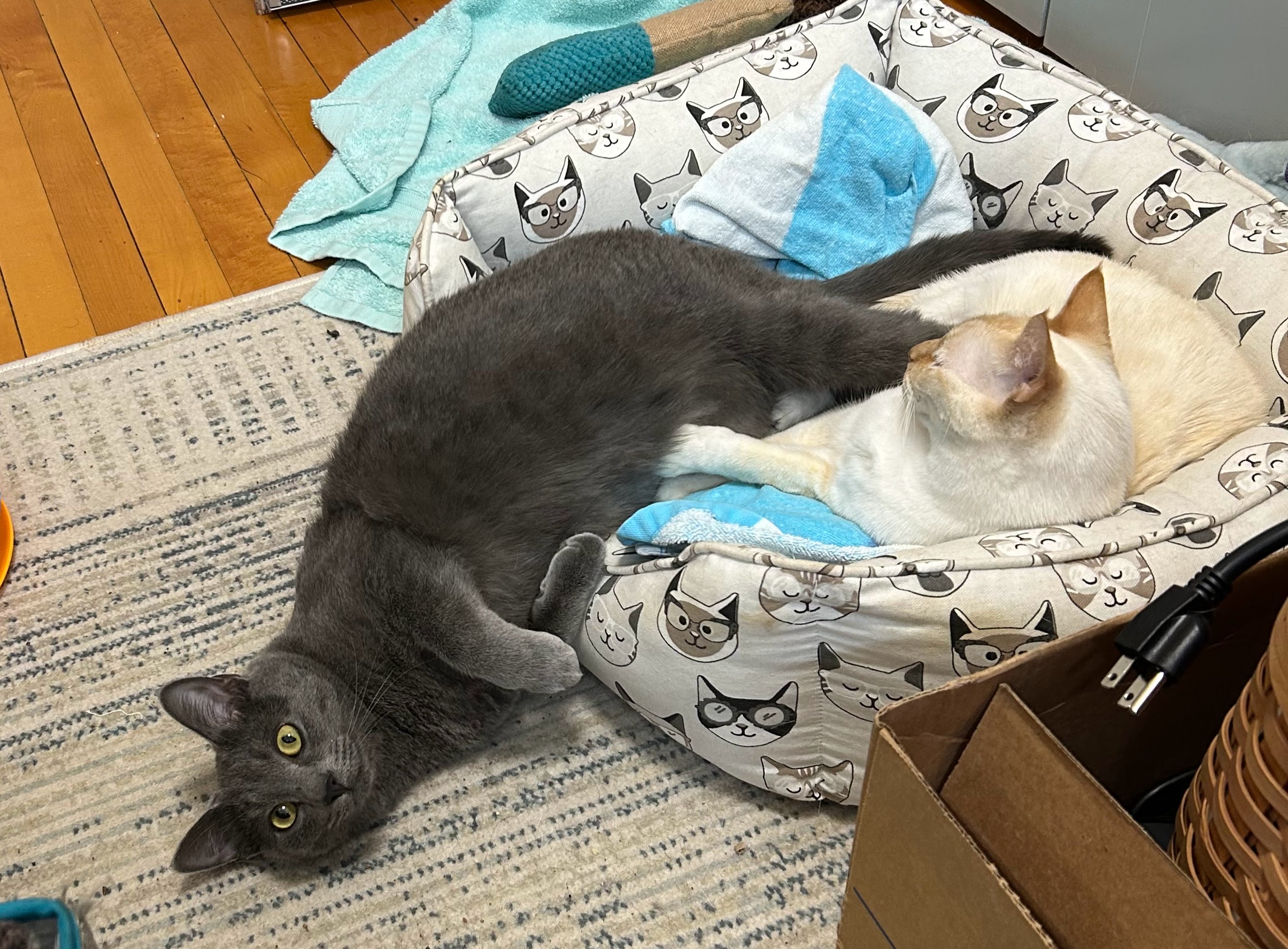
 Serenity is a fuzzy belly
Avoiding news bias is a losing battle, for even if news stories are pure truth, the choice of which stories are included in publications and broadcasts, as well as the choice of which information is included in those stories, also can reflect bias. So . . . for those who live in journalistic glass houses, who can justify throwing the first stone?
LikeLiked by 2 people
EVIDENCE. I can say that here, as I imagine it is a dirty word on Facebook or Twitter. At the same time, there are often different ways of measuring something: e.g., mean income is skewed by those with extremely high incomes, so the median (middle) income will usually produce a lower “average.” Even when we agree on how to measure something, we can have different explanations for the facts. However, those explanations can usually be tested with further analyses of additional data. Getting to the truth can be hard work, but it’s better than lies and bias.
LikeLiked by 2 people
The hunter will continue to control the story’s content, as well as the means by which the story is introduced in the public square. The lion will continue to take one step forward, in celebratory fashion, and two steps back when his story gets too close to truth. That’s history 101.
LikeLiked by 1 person
But, Brenda, our minds are made up and we do not want to listen to or read the facts because it will just confuse us (he said sarcastically and jokingly).
LikeLike
I don’t care about fact checking on social media because I don’t waste time with it. If I want facts/news I look to reputable news sources. The FTC enlightened me about Facebook years ago and I took that as a warning against all social media.
LikeLiked by 1 person
To clarify, I don’t waste time with social media. Fact checking is valuable.
LikeLiked by 1 person
Silly kitty 🙂
LikeLiked by 1 person
I think President Biden’s speechwriters read your post today, as the farewell address tonight referenced fact-checking and Meta! Good job!
LikeLiked by 1 person