
I’m not alone, I know, in being weary of constant notifications on my phone. I still have to pay attention to them lest an important one (like my mortgage application) gets lost in the shuffle, but so often when I get an alert, my first thought is: What has he done now?
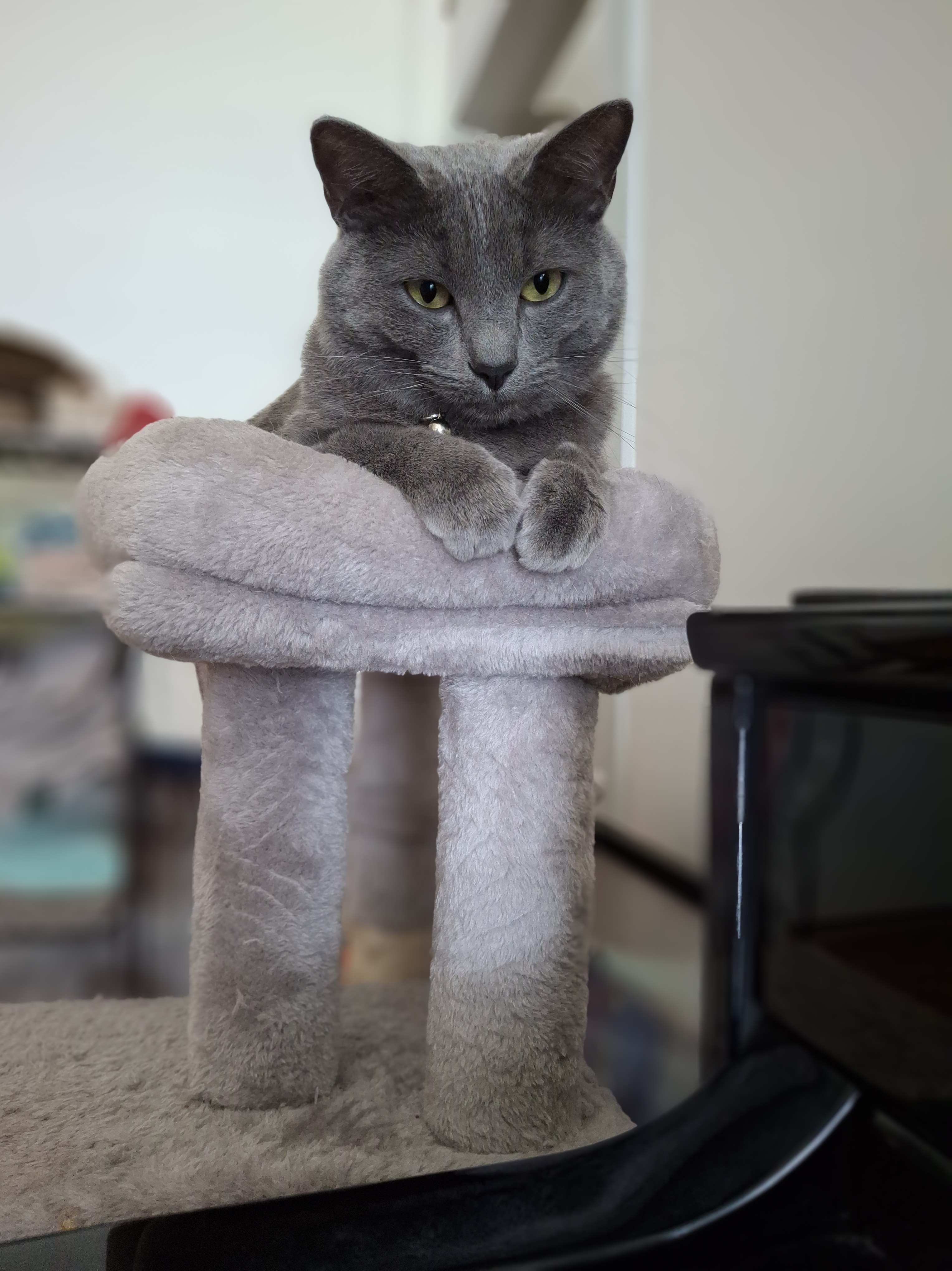
I wish I could say that I was referring to fur-nephew Ollie, who I’m sitting this week, but it’s his mom, not me, who gets alerts on her phone should he disappear (he’s really good at that; being gray helps him blend in). I think most people know to whom I’m referring.
What’s sad to me and many others is the glee with which some greet the constant stream of actions that, were it anyone else, they would decry with their last breath.
So. Much. Winning.
Oh, except for the Jeffrey Epstein thing. It seems, for some, the Department of Justice declaration that Epstein committed suicide and that there was no client list was a bridge too far, leading followers to torch their red hats.
That’s the thing about die-hard conspiracy theorists: They tend not to react well when the rug is pulled out from under them, even (or maybe especially) by someone they trusted. And at least in this case, many non-conspiratorial people also see the declaration as more than a little fishy, even just considering past statements from prosecutors and others in the administration.
But this column isn’t about Epstein (I don’t think I could stomach that; the man was a creep of the first order, and has been since even before the current White House resident had a falling out with him); it’s about conspiratorial thinking.
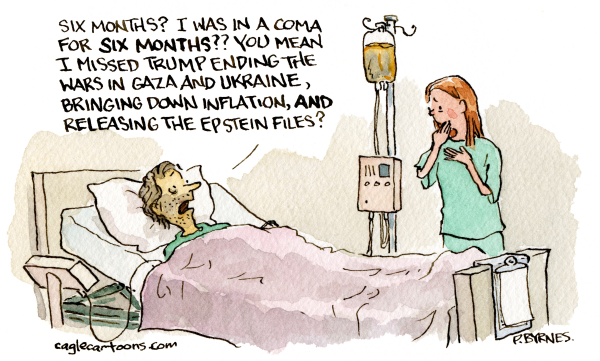
Being suspicious isn’t always a bad thing; it’s a defense mechanism that allows us a moment to stop and consider whether an action is wise. As Ronald Reagan said, trust, but verify. You can have trust in someone yet still want to protect yourself.
But when you allow fear and suspicion to so consume you that you become frozen into inaction (I’ll admit I’ve been a victim of this, especially as related to housing and some jobs) or you become convinced some shadowy cabal is directing things, to the point where you’re unable to function in a reasonable manner (i.e., perform your work, family and other duties without incident) … well, it’s a problem.
We all want what researchers say conspiracy theorists want: to understand the world in which we live, to feel safe and in control of our environment, and to keep a positive image of ourselves and our compatriots, according to a December 2017 literature review by Karen M. Douglas, Robbie M. Sutton and Aleksandra Cichocka in Current Directions in Psychological Science.
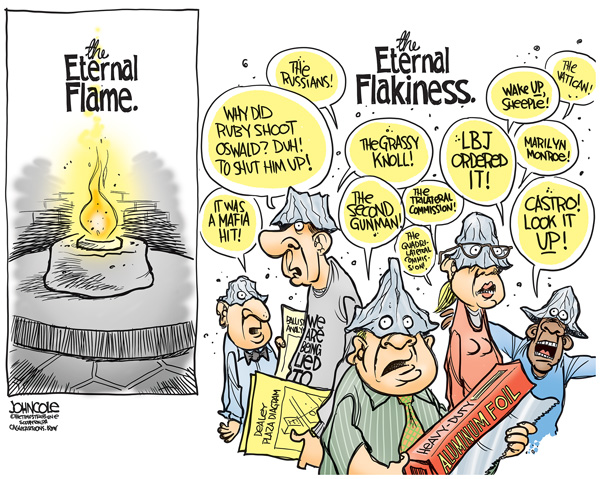
The researchers noted, “Finding causal explanations for events is a core part of building up a stable, accurate, and internally consistent understanding of the world (Heider, 1958). Specific epistemic motives that causal explanations may serve include slaking curiosity when information is unavailable, reducing uncertainty and bewilderment when available information is conflicting, finding meaning when events seem random, and defending beliefs from disconfirmation. Relevant to these motives, conspiracy theories have attributes that set them apart from other types of causal explanation. Albeit to varying degrees, they are speculative in that they posit actions that are hidden from public scrutiny, complex in that they postulate the coordination of multiple actors, and resistant to falsification in that they postulate that conspirators use stealth and disinformation to cover up their actions—implying that people who try to debunk conspiracy theories may, themselves, be part of the conspiracy (Lewandowsky et al., 2015). A related property of conspiracy theories is that they can protect cherished beliefs (e.g., vaccination is harmful; climate change is not a serious concern) by casting overwhelmingly disconfirmatory evidence (e.g., scientific findings) as the product of a conspiracy (Lewandowsky, Oberauer, & Gignac, 2013).
“In general, empirically warranted (vs. speculative), parsimonious (vs. complex), and falsifiable explanations are stronger according to normative standards of causal explanation (e.g., in science; see Grimes, 2016). However, conspiracy theories appear to provide broad, internally consistent explanations that allow people to preserve beliefs in the face of uncertainty and contradiction. In keeping with this analysis, research suggests that belief in conspiracy theories is stronger when the motivation to find patterns in the environment is experimentally heightened (Whitson & Galinsky, 2008). It is also stronger among people who habitually seek meaning and patterns in the environment, including believers in paranormal phenomena (e.g., Bruder, Haffke, Neave, Nouripanah, & Imhoff, 2013; but see Dieguez, Wagner-Egger, & Gauvrit, 2015). It also appears to be stronger when events are especially large in scale or significant and leave people dissatisfied with mundane, small-scale explanations (Leman & Cinnirella, 2013). Furthermore, the need for cognitive closure is associated with beliefs in salient conspiracy theories for events that lack clear official explanations (Marchlewska, Cichocka, & Kossowska, 2017). Also, research suggests that conspiracy belief is stronger when people experience distress as a result of feeling uncertain (van Prooijen & Jostmann, 2013).
“Our analysis suggests that conspiracy theories may satisfy some epistemic motives at the expense of others—for example, by shielding beliefs from uncertainty while being less likely to be accurate. The epistemic drawbacks of conspiracy theories do not seem to be readily apparent to people who lack the ability or motivation to think critically and rationally. Conspiracy belief is correlated with lower levels of analytic thinking (Swami, Voracek, Stieger, Tran, & Furnham, 2014) and lower levels of education (Douglas, Sutton, Callan, Dawtry, & Harvey, 2016). It is also associated with the tendency to overestimate the likelihood of co-occurring events (Brotherton & French, 2014) and the tendency to perceive agency and intentionality where it does not exist (Douglas et al., 2016).”
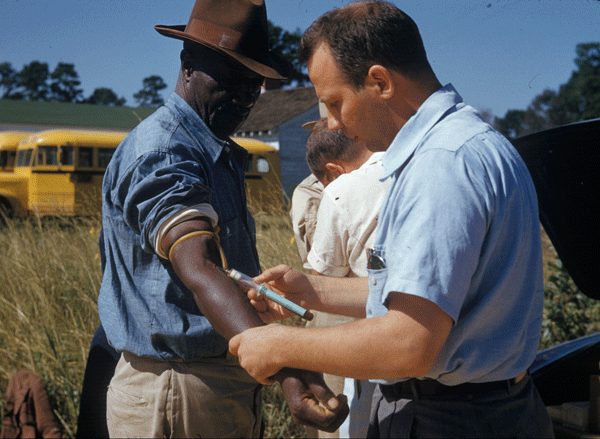
People who deal in reality know the world is full of uncertainties, there are no easy answers, and the odds of a conspiracy being revealed grow with time and the number of conspirators involved. Dr. David Grimes of Oxford University came up with an equation he applied to four well-known conspiracy theories (fake moon landing, climate-change hoax, vaccines and autism, and pharmaceutical companies hiding a cure for cancer), based on calculations from three real collusions (the NSA PRISM program, the Tuskegee syphilis experiments, and FBI crime lab malpractice in the 1990s) that showed that if they were true, they would have been revealed long before now.
If you think it’s hard for one or two people to keep their mouths shut about a secret, imagine how many people would have to have been involved in the supposed fixing of the 2020 election, or keeping a fake moon landing a secret for more than 50 years, and you’ll see the illogic of it.
Still, there’s that part of all of us that just wants answers, even if they don’t necessarily make much sense on close examination.
Conspiracies do exist, and always have, but the key to keeping them a secret is keeping the circle small. The more moving parts there are, the more likely they’ll fail and/or be revealed prematurely.
We need to reconcile with the fact that, as I’ve noted many times before, life isn’t black and white. Answers will come to us when they come to us, quite likely with the hard work of investigative reporters.
They’re good at that stuff.
😵😵😵😵😵
Correction from last week: “Applied Idealism” was a chapter in Teddy Roosevelt’s autobiography, not the title of it. This chagrined nerd thanks Mark Robertson for his most excellent catch, and hopes to not make such a boneheaded mistake again. I was able to fix it for the blog, but not the newspaper column. For that, I would need a time machine, and honestly, there are a bunch of other things we need to fix in the past first, starting at least in 2015. Oof.
 Serenity is a fuzzy belly
Wait . . . You’re saying the Moon landing was real?
LikeLiked by 2 people
🤣 Though I was a baby at the time, I believe my mom. And NASA.
LikeLiked by 1 person
Maybe your Mom conspired with NASA!
LikeLiked by 2 people
While the human foibles and fantasies you describe are real, it’s important that we not lose sight of the vast good that exists among people around the world. Caring for one for another is extensive. For example, there is a young man (in India, I think) who is so concerned about my well-being that he calls frequently to see if my automobile warranty has expired.
LikeLiked by 4 people
🤣🤣🤣
LikeLiked by 1 person
Does this young man from India ever ask if your automobile has expired instead of the warranty?
LikeLike
Stevie Wonder said it best, “Very superstitious…writings on the wall…”, and it had a nice beat, easy to dance to. 😊
LikeLiked by 2 people
I need to listen to some Stevie. He always makes me happy.
LikeLiked by 1 person
All of which makes one wonder What are they hiding?
LikeLiked by 2 people
What are they Haydn? The famous de-composer from the so-called “Classical” period of music history who was born in 1732 and died in 1809.
LikeLike
If Ollie is a normal cat, he is just as calculating as the cats in that infamous book by Eric Gurney.
LikeLike
As I have said before, just so long as “Not-So-Glorious-Leader” seems to be “owning” the hated “liberals”, it does not matter what he does or says. His followers will still worship him. Too many of these followers are the type of people who do not like change–any changes–at all. So far as they are concerned, if it was good enough for their parents and their grandparents, it is good enough for them as well. Also, so far as they are concerned, any newfangled nonsense and changes are all the fault of the hated liberals who are the guilty parties responsible for the changes. However, Not-so-Glorious-Leader is going to save the day and prevent any changes and show the liberals who is really in charge.
LikeLike
Speaking of conspiracy theorists who are paranoid, I had an interesting conversation with one of them last month when I attended church with one of my sisters who lives in San Antonio, Texas. This woman refused to believe that the Moderna vaccine and the other vaccines for the COVID-19 virus actually worked as they are designed to work. She refused to get vaccinated. She did not like it when I told her that our patients who got vaccinated were still alive and well while the patients who did not get vaccinated were dead and gone. I told this woman that if she wanted to talk with a man who she could be sure would lie to her, she needed to talk with a politician or a used car salesman. If she wanted to talk with a man who would try to be truthful, she should stay here and talk with me so she walked away from me.
LikeLike