

In trying to redirect my grief over my oldest brother Mitch’s death, I came across an email from Unscramblerer.com on mispronunciations (it’s a site that unscrambles letters for Scrabble players). As loath as I am to use PR “research” as column fodder, the subject tied in with the type of my columns Mitch loved to read: word-nerdy stuff, usually because I tend to work in funny memories and rants. So in his honor, some ruminations on mispronounced words, something I’m sure we’ve all had a few giggles about.
A spokesman for the website noted: “Our research about the most searched for mispronunciations gives an interesting insight into American culture. Exposure to new words through media, music, pop culture and social platforms drives curiosity. People often look up pronunciations if there is a gap between how a word or name is spelled and how it sounds. English language is particularly irregular in this regard (‘Colonel’ and ‘Wednesday’ defy phonetic expectations). English spelling only matches pronunciation about 75 percent of the time (University of Oxford research). A Cambridge University linguistics survey found that over 60 percent of English speakers admit they regularly mispronounce at least one common word. Correct pronunciation is closely tied to perceived intelligence and competence. The desire for correct pronunciation is a mix of avoiding social embarrassment and simple curiosity. There are over 40 regional accents across America. No wonder people are searching for how to pronounce words.”
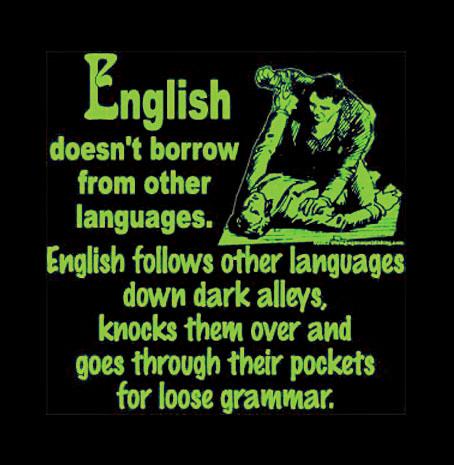
Not to mention how difficult learning English as a second language can be since, as the trope goes, English likes to follow other languages into dark alleys, mug them, and root around in their pockets for loose vocabulary. Who can blame people for being confused? I’m still reeling over the former co-worker who insisted on pronouncing havoc as ha-VOCK rather than HA-vuhk. I swear, that stops me in my tracks at least once a week.
(On colonel, I was young when “Hogan’s Heroes” was on afternoon syndication locally, so I had lots of exposure to Robert Clary’s French pronunciation of “colonel,” which is how I always think of it when I see the word, even though I know that we Americans pronounce it “kernel.” Kinda bland, and not as fun.)
Unscramblerer used Google Trends to find the most mispronounced words, and Ahrefs to find the number of searches. Looking at the list, I can’t vouch for any accuracy, but I was more than a little amused. Arkansas’ most mispronounced word was Laufey, the name of an Icelandic singer (how many people in Arkansas are really searching for this; did I just show my age?); it’s LOW-fay, by the way.
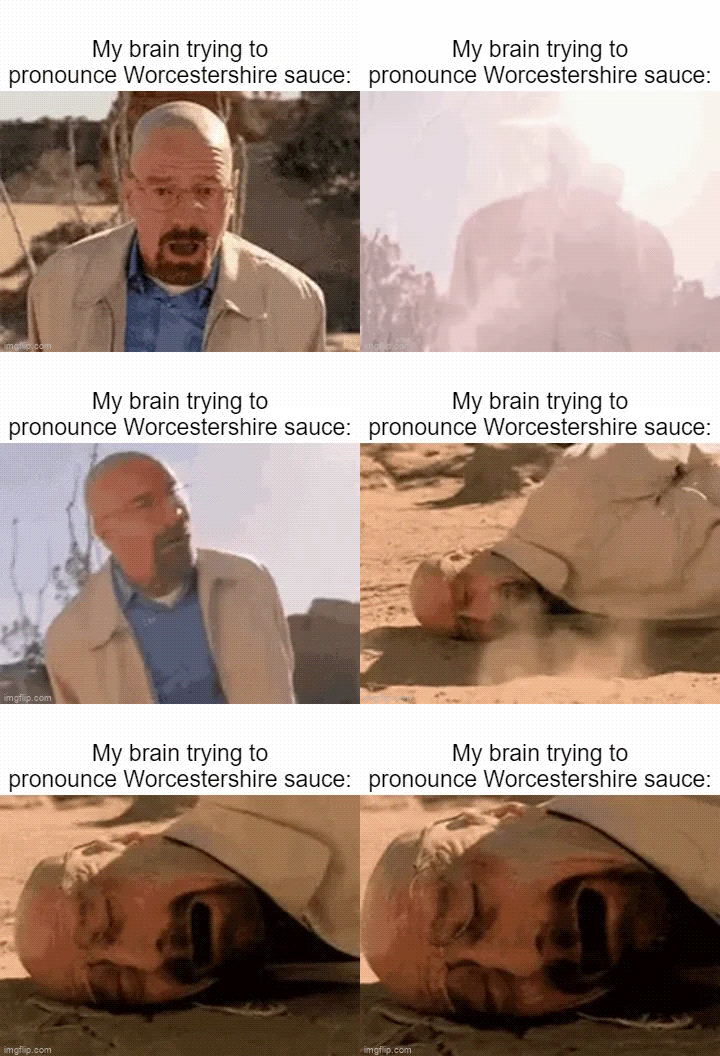
Alabama’s word was Worcestershire sauce (or “Wash Your Sister Sauce,” as Guy Fieri likes to say), which is typical of a lot of English (meaning the old country) words that have a lot of letters thrown in that aren’t pronounced (same with France, but perhaps a little less snooty). If you stick with WUSS-ter-sher, you should be fine. It was the second-most-mispronounced word in the U.S., after gyro (YEE-roh).
The list is full of names (Saoirse and Aoife, along with a few celebrities like SZA), along with other words related to food (like acai, tzatziki and mayonnaise), health-related words (staphylococcal and hippopotomonstrosesquippedaliophobia, which is the fear of long words) and assorted other words. I do wonder if it’s really true that Montpelier is the most-mispronounced word in Vermont (Montpelier is its capital) or North Carolina’s is Raleigh (which is its capital). And seriously, who’s looking up supercalifragilisticexpialidocious? Though it didn’t top any state’s count, it was still the 11th-most-mispronounced word on the national list. If you’ve seen “Mary Poppins,” you know how to pronounce it (though maybe not how to spell it). If you haven’t seen “Mary Poppins,” hie thee to a TV/computer/iPad forthwith.
But maybe what bugged me most in the list was New Mexico’s word, GIF, which Unscramblerer insists is pronounced jif (like the peanut butter).
Ahem. While I’m well aware that the inventor of the GIF format, Steve Wilhite, said upon receiving a Webby award for it in 2013 that it should be pronounced with a soft g (again, like the peanut butter), I have to side with those who hold that a hard g makes more sense. It stands, after all, for graphics interchange format … that’s graphics with a hard g. For those who argue that the soft g makes more sense because most of the time words beginning with “gi” are pronounced with a soft g (like giraffe and ginger), I’d remind you of words like girl (not pronounced jirl) and gift (not pronounced jift).
Any wonder English-as-a-second-language learners get confused? Our language is tougher for non-natives to learn because of all the weird rules and exceptions. God forbid we try to make an effort to learn someone else’s because it’s just “too hard” and “we’re Americans and everyone everywhere should speak English.”
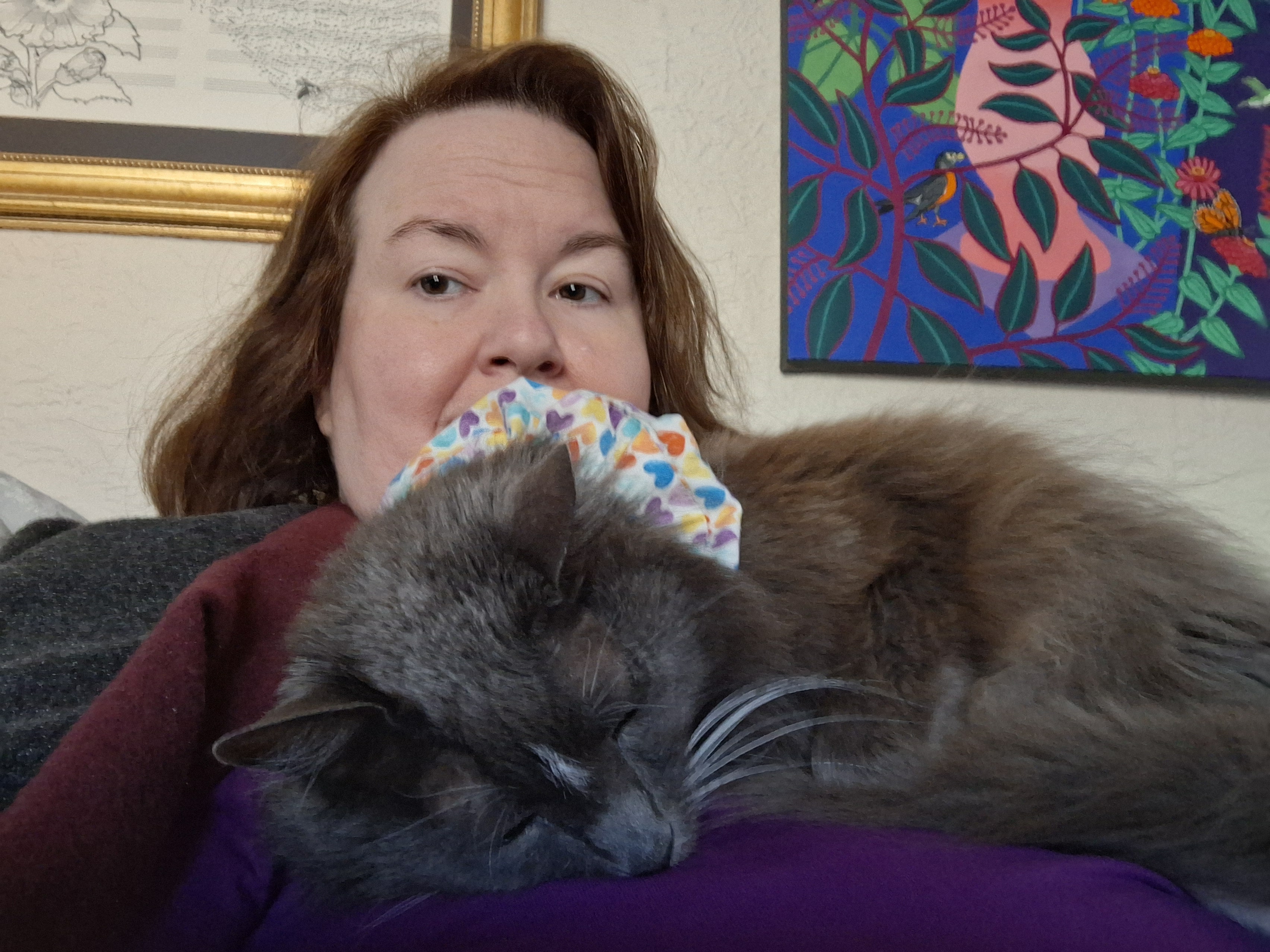
I’d spout on a bit more, but I have a 20-year-old cat glaring at me, and page proofs to read. (You have no idea how much Tomkin and I have sparred over my working.)
OK, I’ll spout on just a little more, but in favor of not castigating people for the occasional mispronunciation, especially of words that are likely new to them, either because they’re new to the language, or because, as happened with me many times when I was young, they first encountered them through reading.
We didn’t have recorded books, or storybooks that read the story to you as you read along, when I was a kid. If you were lucky enough to have a parent there to read with you (not just to you), you had someone who’d help you sound out the difficult words. If your parents worked, you might not have gotten to have them there when you wanted to read. So you made do and sounded the words out as best you could, not knowing for sure how they were pronounced. Because you were DEE-ter-mined (yep, that’s how I first read “determined”) to read.

That’s a good thing. Especially when you realize you’re not alone.
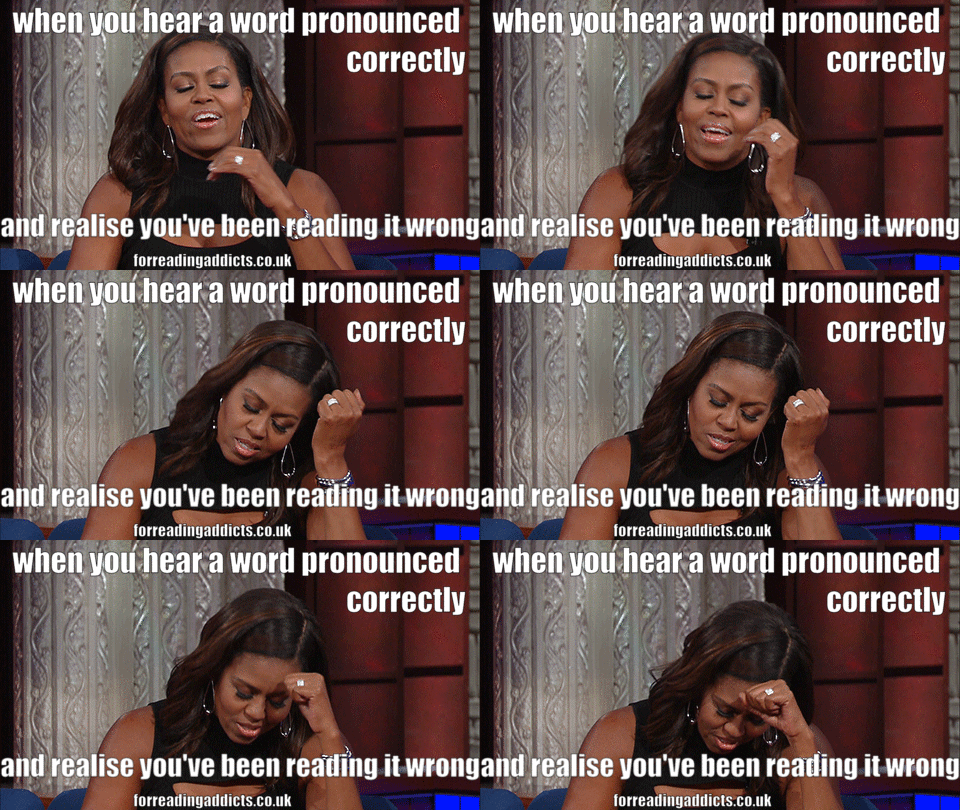
James Harbeck wrote in The Week in 2022 of Jeopardy champion Amy Schneider’s admission about the word misled: She thought for a long time that it was the past-tense form of misle. “The truth is,” Harbeck wrote, “Schneider is like most of us in this regard: Everyone who has learned English words by reading has gotten some pronunciations wrong. Usually we’re corrected quickly enough by our parents or teachers — ‘No, it’s ‘bay-con,’ not ‘bah-con‘ — but sometimes we get well into adolescence or even adulthood without realizing the misapprehension. Every time someone mentions this phenomenon, plenty of highly literate people chime in to tell of their own missteps.”
Oh, lord, there’s epitome, calliope and a whole bunch of others that bedeviled me.
Harbeck continued: “And yes, there’s a word for this. In fact, there are several. The established term for a word that a person has learned by reading and has not been told how to pronounce is a ‘book word.’ But some people also call these mispronunciations ‘misles’ — usually rhyming ‘misle’ with ‘guys’ll’ — in honor of ‘misled.’ And Judith Wynn Halsted, in her book ‘Some of My Best Friends Are Books,’ calls it ‘Calley-ope Syndrome’ after another misleading word, ‘calliope.’
“It can’t be surprising that English speakers, however literate, mispronounce words some of the time. We get spelling wrong at least as often. English is the Winchester House of languages, developed in a variety of strange and inconsistent ways, with many traps and dead ends, some of which are entirely deliberate. If spelling were a game, English would be the final boss level. There are several ways English spelling has peeled apart from pronunciation, and each of them has produced words that, like misled, are often among book words’ bedeviling number.”
Nice to get in that reference to the Winchester house, which fascinated me when I first read about it as a kid. That I knew how to pronounce. (The entire piece on words is interesting; read it at the link above.)

Of the co-worker who mispronounced “havoc,” I tend to hope that he was just doing what my English teacher cousin Mary used to do in class to remind people to “put the em-PHAH-sis on the correct sih-LAH-bull.” Maybe he just wanted to draw attention to the word.
Sure, that’s it.
🌹🌹🌹🌹🌹
Thank you to everyone who’s been so sweet and kind following Mitch’s death late last month. It’s been a rough ride for the whole family, and we thank you for your thoughts and prayers for us in this difficult time.
Your well wishes have meant so much to me and my family. It’s always hard to lose someone you love, and sometimes we forget that a little bit of grace should be the rule when someone is in mourning. Thank all of you for giving me that grace.
 Serenity is a fuzzy belly
A subtle difference: when you mispronounce a word, you commit a mispronunciation.And I like this post of the 3 hardest things to say:
I’m sorry
I was wrong
Worcestershire
LikeLiked by 2 people
A few days before the end of my college days I had a disagreement with one of my roommates over mispronunciation. I heard him say, “subtle” only he pronounced the “b.” Couldn’t help myself, I corrected him. Our friendship was damaged. I don’t know if it would have been repairable after that because I never saw him again – assignments separated us.
The Merriam-Webster app now supplies actual sound rather than the hieroglyphics which I found puzzling. It says I was right (as of today, that is.) I would rather have retained the friendship.
LikeLiked by 1 person
I’m sticking with “jif” just because the inventor said so. But I have several pet peeves, “words” I hear constantly that do not exist: “ma-SEC-tomy” and “IN-term” (mastectomy and interim). And don’t get me started on half the world now saying “verse” instead of “versus.” That’s not a pronunciation problem, but it’s driving me crazy.
LikeLike
I thought it was impossible to travel to crazy unless you know how to find the psychopath? Would you like to borrow my psychopathic car so you can drive to Crazy instead of trying to walk all of the way to Crazy?
LikeLike
When I tried to learn French in college classes, the professor who taught the class had to frequently remind me to quit trying to pronounce the French words as if they were English words.
LikeLike
I am familiar with Mary Poppins because it was one of my mother’s favorite movies.
LikeLike
I learned how to pronounce “Calliope” correctly when I discovered a version of “Calliope Rag” in the book “They All Played Ragtime” by Rudi Blesh and Harriett Janis. I played through “Calliope Rag” once and decided that I liked it so much I wanted to learn it.
LikeLike
We use words to communicate with each other, along with body language, spatial awareness and other subtle signs. I’ve walked away from many a conversation where mispronounced words were sprinkled liberally. The communication was precise.
I still give television weather broadcasters, who are new to Arkansas, a break on their first outing with Eldorado, Searcy and Ouachita. 😊
BTW, I’ve developed the skill for avoiding words I have trouble with when speaking in public. I’m sailing along, sentence by sentence, planning to use a certain word: Red light flashing ahead, make an adjustment, or look silly.
LikeLiked by 1 person
Ouachita, that’s a good one. Up here in Missouri we have a town spelled “Nevada.” There are two ways to pronounce the state name, but in Missouri there’s a third way to say it: say the middle “a” like eh.
LikeLiked by 2 people
These are examples of American not English.
LikeLiked by 1 person