
I’ve never had much money. It’s not that I haven’t tried, but that I grew up pretty poor, which meant I didn’t get a lot of the opportunities others did (I’m still a little salty about the school not offering to pay full freight for our Quiz Bowl team, which I captained, to go to the national championship at the Beta Club convention in Louisville; we didn’t exactly have disposable income for airline tickets and hotels in my family), and I happened to choose an occupation (local journalism) that traditionally doesn’t pay a whole lot.
Yeah, if you were thinking that all journalists are raking in the big bucks, I can assure you that most of the big earners are on network television or are nationally known print reporters who probably write books as well (hello, Bob Woodward). Your average Joe or Josephine Journalist isn’t pulling in nearly that much, especially in states like Arkansas.
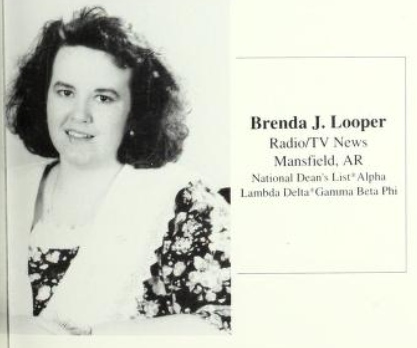
I was the first one in my family to go to college, and I paid for it with grants, scholarships and loans (at 8 percent interest, I believe, until I consolidated my Sallie Mae undergraduate and graduate loans for a slightly lower interest rate and a single payment each month). There were no savings set aside, and my parents couldn’t contribute much, so it was up to me (without a car for most of college) to make it work, which I did as a resident assistant and desk clerk at my dorm, and later as a graduate assistant in the College of Communications, as well as earning as many scholarships as I could (not having a car made working difficult, even before considering that I needed to focus on my studies to cut down on the number of expensive semesters I would need to graduate).
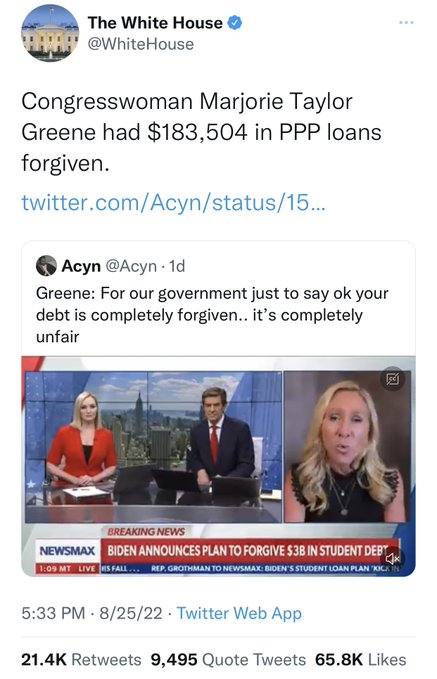
Because of my experience of not having parents who could afford to pay for college, or even to take out loans themselves to pay for it, and me still struggling at times all these years later (just this year I’ve had to pay for replacement chip keys for my car, new glasses, and a new portable AC, plus pay for my February surgery … sigh), I don’t begrudge those who will have up to $10,000 (up to $20,000 for some Pell Grant recipients) of their student loan debt forgiven (not all in most cases, and not for high-income individuals; don’t believe MTG). If this was happening in the 1990s and 2000s, I would have been the kind of person benefiting … the sort of person who doesn’t get a lot of breaks in life.
The thing is, when I went to college, it was less expensive than it is now. And that’s before adding student fees and room and board, as well as textbooks and incidentals. My scholarships paid for room and board (mostly), and I think tuition and fees were probably somewhere around $2,000 to $3,000 per semester for me with a full load of 18 hours of classes for my undergraduate degree; the estimated in-state tuition at Arkansas State now, based on 15 hours, is $9,310 (books, room and board, etc., raise the cost to $26,407). Someone like me wouldn’t be able to swing a cost per semester like that, and that’s at a public university!
In 2020, Preston Cooper wrote in Forbes: “Tuition inflation has risen at a faster rate than the cost of medical services, child care, and housing. While generous financial aid means that students usually pay far less than the ‘sticker price’ of tuition, the net price of public four-year colleges has still more than doubled since the turn of the century. Moreover, underlying costs at American colleges are the highest of any large country in the developed world.”
Excuse while I weep over “turn of the century.” I suddenly feel much older than I am. I mean, other than when I’m getting up from the couch after too long in one position.

Cooper cited a study by economist Beth Akers of the Manhattan Institute on the reasons for the rising costs, the proximate causes of which were “administrative bloat, overbuilding of campus amenities, a model dependent on high-wage labor, and the easy availability of subsidized student loans.” Akers concentrated on why the market hadn’t brought down cost inefficiencies as it had in other industries and surmised that “students overestimate the return to a degree; colleges are not transparent about their true prices; too few institutions operate in each regional market; and there are significant barriers to entry for new educational providers.”
Then there is, as has been pointed out by many people, the chronic underfunding of state institutions of higher education (not just in Arkansas), meaning that colleges have to make up the lost revenue somehow so they can keep the lights on (apparently cutting salaries in athletics never comes up). That means tuition, student fees, etc., keep going up, and students find it harder to pay for an education that might not provide the salary bump advertised. More and more, the people who’ve been advantaged all their lives are the ones who can afford college while middle- and low-income students are stuck with huge loans or not furthering their education at all. It’s a depressing and disheartening situation to be in, especially when you’ve done everything else right except for that having-money part.
It will take more than forgiveness of chunks of federal student loans for those with an income under $125,000 ($250,000 for a married couple) to fix the system. It’s broken and has been for a long time.
The cost of college has skyrocketed, and even trade school is getting more expensive due to the need to keep equipment current. For those in low-income brackets, especially, hope seems a luxury.
Plus there are all the people who start out in lower-paid professions like teaching (and, ahem, journalism) with thousands of dollars in debt before they get their first measly paychecks. Scrimping and saving and working multiple jobs can only take you so far when you’re at the bottom, especially if you’re doing it all on your own and have limited energy/time. And when you look at other developed countries where higher education is low-cost or free, it’s easy to get downhearted about your lot in life here.
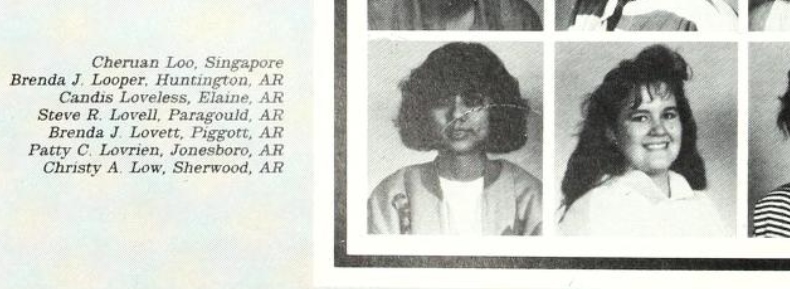
I had offers from multiple universities, most of them private and small-ish, and had accepted one from Columbia in Missouri before I graduated from high school. Unfortunately, I found out just before we prepared to drive up for the fall semester that my financial aid (and that of several other students) was delayed because the mail truck had burned.
I had the choice of coming up with the first payment of $700 or so (which would require not paying my dad’s parts suppliers for at least a month, and I couldn’t in good conscience allow that) or just taking the year off and hoping I could get into a less-expensive state school the next year (luckily, ASU offered me a scholarship the next year, so that worked out). I’m not the only one who has had to make choices like that.
It sure would be nice if no one had to.
 Serenity is a fuzzy belly
Going to college while being poor didn’t use to be easy, and it is even harder today. I eventually paid off my student loan, but I have no problem with giving a helping hand to those in severe need today. Those who object to that reasoning must have an edition of the Bible in which Jesus said, “Bedroom? Let ’em be born in a manger like I was.” The same people seem to regard empathy and generosity as signs of weakness.
LikeLiked by 2 people
Exactly. We are called to be charitable to all. But yeah … be like Jesus? Bah!
LikeLiked by 1 person
It seems to me, federal approval of student loans gives an imprimatur to the process that is unwarranted. (If the government is involved, it must be on the up and up.) Besides, “everybody does it.” The result is that the marketplace doesn’t control it. The fact that loan repayment is delayed until after graduation factors in as well. It’s all a huge financial trap. Maybe the government should get out of the business, it ain’t workin’. How about federal scholarships?
Along with scholarships and their summer work, I saved and paid for our 3 sons’ college, And, I saved and invested enough (529 program) over the years enough to put our 3 grandchildren through with no debt. In my own case I went to the U.S. Naval Academy. The financial ride may have been financially free, but the whole process was tough. The running joke there in the late 1950’s was, “It’s a $40,000 education shoved up our butts a nickel at a time.”
LikeLike
It wasn’t quite as bad until Obama forced commercial lenders out of student loans. Though he had good intentions, it made things worse. Mine was still in the Sallie Mae era, but the interest rate was too high (because they could get away with it, which I think is one of the things Obama was trying to address).
LikeLiked by 1 person
Let the colleges and universities be charitable. Their tuitions and annual increases are insane. Student loan forgiveness won’t fix the problem.
LikeLiked by 1 person
Definitely, and generally I would say administrative salaries and costs would be the place to start looking for cost efficiencies rather than professors and academic programs (I think that’s what Henderson State in Arkadelphia has been doing, which explains some anger from students and former staff). I mean, colleges are there for education, so why cut academics?
LikeLike
At the risk of being called a socialist, I think we should work toward all education being free or as close to that as possible. We all benefit from a well-educated population, though I know that prospect gives some politicians nightmares.
LikeLike
Babbie, I am totally in agreement about the importance of education but I must respectfully disagree about offering it for free. With the possible exception of STEM courses, I have the impression that there has been some serious grade creep over the decades since our vintage attended, and, the stats indicate that a sizable chunk of graduates say they finally settle on work outside their degrees. One of the real values of a degree, IMO, is that it is evidence of work and responsibility (for the non-rich at least.) If it’s free, that will be less the case.
LikeLike
I agree with much of what you say, Jim, but I don’t see a problem in people working in a field outside their major studies. While I support STEM, I feel there is value in a good general education–which can support flexibility in finding one’s true calling.
LikeLiked by 1 person
If you are referring to what used to be called a “liberal” (small L) education, you are right of course. My impression from the media is that the trend in offering is otherwise. Hope I’m wrong.
LikeLike