Sometimes my eyes roll so much that I fear I’ll have to catch them before they tumble out of my head and provide one of my fur-nephews or nieces with a fun new toy. Good luck getting the dust and cat hair off those.
In the comments on my column last week, my original troll (he of the “game, set, match, I win, again” taunt, though I’m not sure he’s ever actually won anything, and who is mightily offended by being correctly labeled a troll but is awfully quick to insult others) posted this:
“True what you say, Brenda, with a couple of notable notes. Field experts often disagree with one another leaving us Normals in a quandary. Newspapers lost much credibility when reporters began offering up opinions cloaked as objective news. The key is trusted sources mixed with critical thought and common sense.”
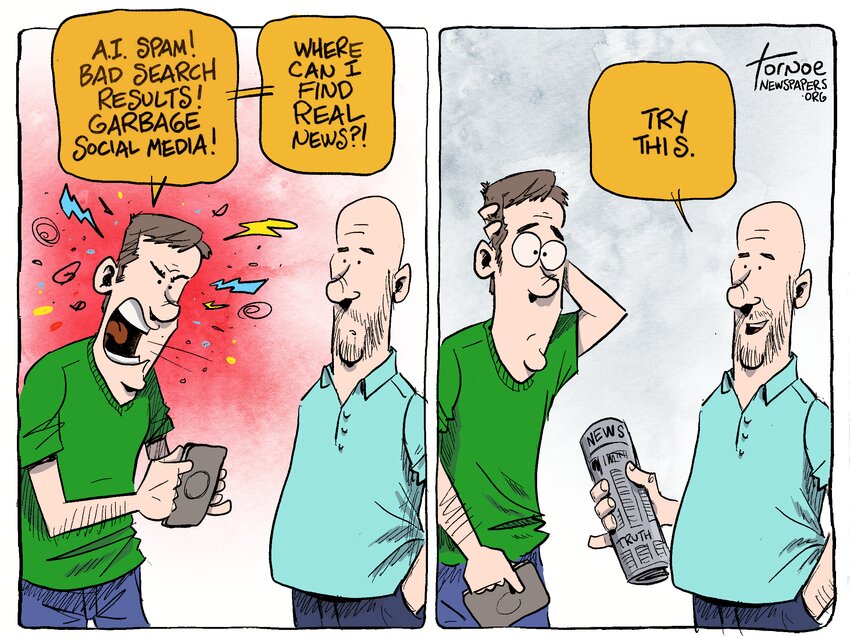
While I wholeheartedly agree with his last sentence, I don’t think we agree on what he thinks that means. In neither of his other statements does he offer evidence (10,001st reminder: the burden of proof is on the person making the claim). I noted with a chuckle his use of “Normals” (uppercased for some reason) rather than his usual “normies” (perhaps he actually took to heart my column on the use of the word “normies” by people who just aren’t the norm). Of course, I didn’t respond in the comments because I’ve found it’s useless since he and his buddies twist whatever I say into something else entirely (and apparently I’m not allowed to make joking remarks because they’ll take them seriously and imply that I’ve accused one of their brethren of being my stalker or some other inanity that anyone else would realize was a joke). Sigh.
However, I have to address his second point.
Newspapers have had a mixed past. While there have been some great highs, such as the investigative reporting involved in incidents like Watergate, the My Lai massacre, sexual misconduct on Capitol Hill (which led to Bob Packwood’s resignation), NSA surveillance and other landmark cases, there was also the yellow journalism practiced during the late-1800s newspaper war between Joseph Pulitzer and William Randolph Hearst, as well as plagiarism and fabrication scandals involving the likes of Jayson Blair, Jack Kelley, Stephen Glass, Janet Cooke and others.
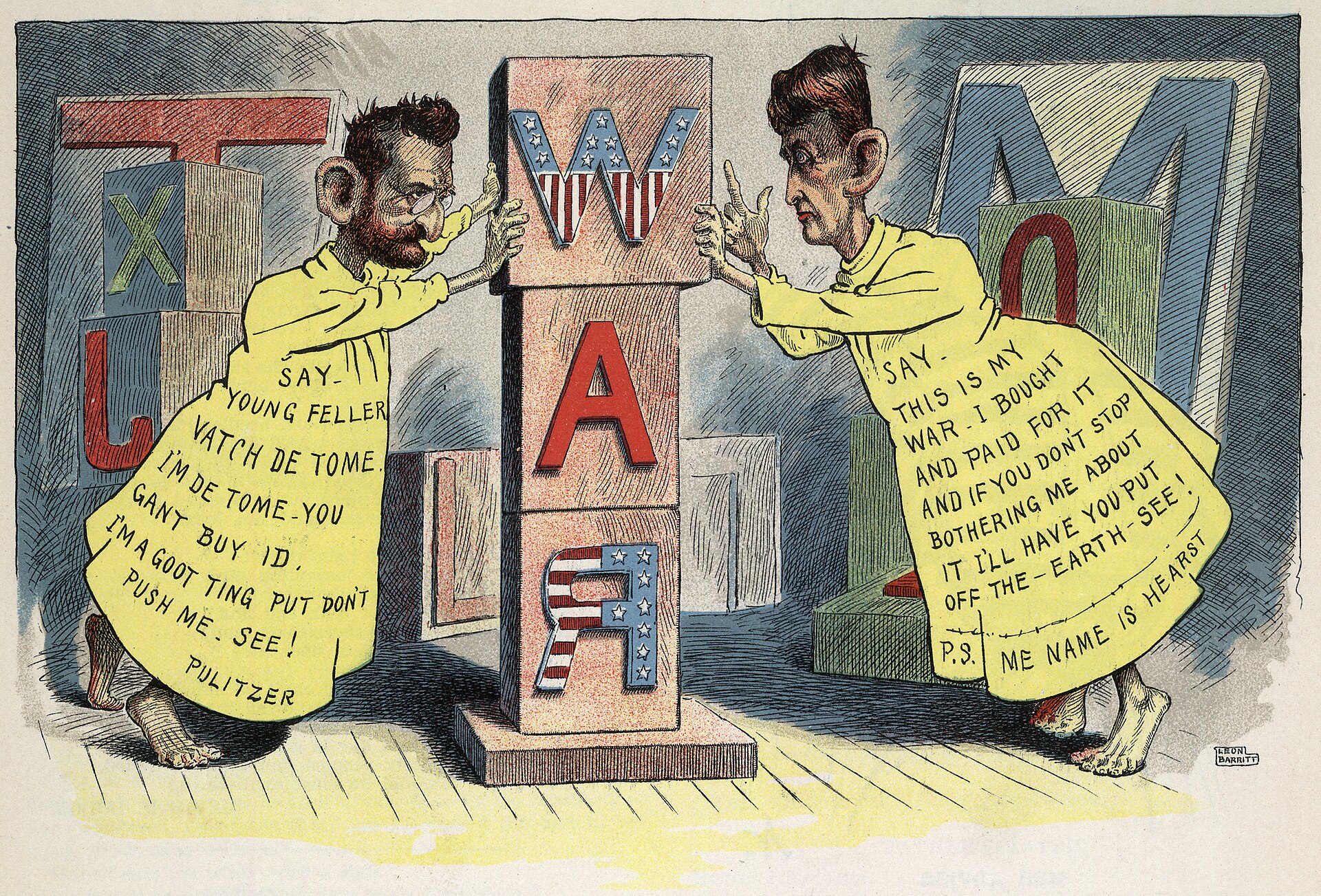
Back in the days of Pulitzer and Hearst (and even before), objectivity wasn’t the goal so much as getting more readers than your competition, and that was often accomplished with sensationalism. While there were notable achievements during those years from journalists such as Nellie Bly and Upton Sinclair, much of what was printed was blatantly partisan. But, Matthew Pressman notes in a 2018 story in Time, in the 1920s, objectivity gained purchase: “A wave of newspaper mergers and closings (which would continue for the rest of the century) meant each city had fewer papers, and the surviving papers had to appeal to a broader swath of the public. Overt partisanship in the news pages would alienate large parts of the target audience.”
In some cases, though, journalists essentially became stenographers for political figures like Joe McCarthy (as some people of the MAGA variety apparently want journalists to be now). Eventually we would get to the point where the understanding was that professional judgment in the adding of context was OK, but the reporter’s opinion was not. That’s the era I grew up with, and I’ve never had a problem telling the difference between news and opinion, even before I went to college.
Of course, the idea of liberal bias in newspapers has been around for a long time (because context is a liberal idea, I guess, rather than relevant information needed to understand news events; how dare newspaper reporters research history to provide a fuller picture), but really started taking off in the late 1960s (thank you, Spiro Agnew). Yet most newspapers continued to aim for the center, and kept news and opinion separate (as they are at the Arkansas Democrat-Gazette, which is considered center-right; there is zero coordination between the news and opinion sides).
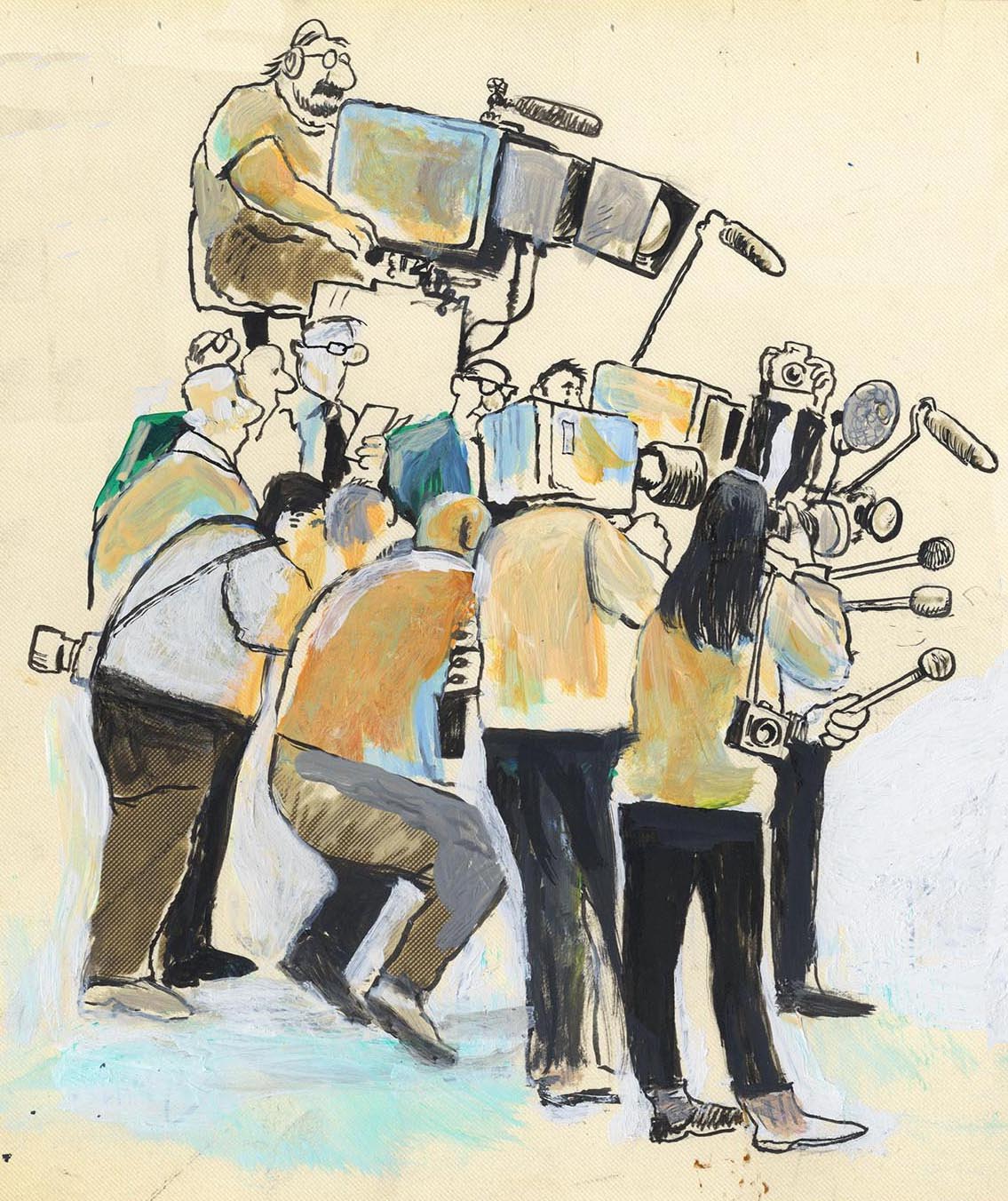
So what changed? Not so much the newspapers, except for closings. What really changed, I believe, was the political and social environment.
First it was the advent of cable news and the rescission of the Fairness Doctrine (though that really only affected broadcast TV), and the conflation by many of the scandals of television news with the everyday work of newspapers. Then came the Internet and social media and the idea that anybody can be a journalist (there’s a reason that, when I was in college, everyone in the College of Communications had to take Communications Law and Ethics; an awful lot of Internet “citizen journalists” and podcasters would do well to learn about libel, for example). Add in countless partisan media sites and a politician/businessman who can’t stand for the truth to be told about him and you get what we have today: a world where it doesn’t matter how middle-of-the-road and factual a newspaper’s news coverage is (remember, news and opinion are separate in larger newsrooms, i.e., those that generally have more than five or so employees, and only the editorial page can be considered to be the newspaper’s opinion), because some will refuse to believe it as they perceive reality as unfair to their beliefs.
This is why I continue to flog the need for better media literacy. Yes, I know I’m preaching to the choir.
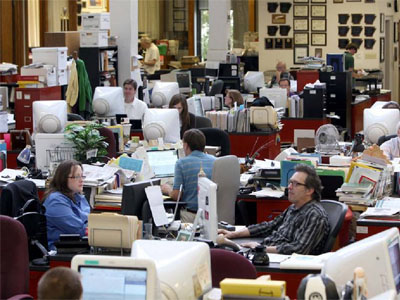
There is likely nothing that we who work for newspapers can do to persuade the doubters that we’re doing the necessary work to provide them with objective, factual news. We can, though, keep doing that work for those who understand the need for facts and context, and who know the difference between facts and opinion (and a news article and an editorial, for that matter; you’ll note that we clearly mark opinion in the newspaper, digital edition and website, so if you’re still confused, well, I dunno …).
Newspapers keep elected officials in check by using the Freedom of Information Act to shine sunlight on perhaps-shady deals. They keep citizens informed on what is going on in their hometowns, their schools, and their government entities. They offer perspective on issues with in-depth reporting that often leads to needed changes, such as in how a state agency oversees juvenile offenders, or expose hidden finances of those claiming to work in the public interest (as my mentor, friend and bonus mom Mary Hargrove did; I’m proud to have been her research assistant when she was at the Democrat-Gazette). They uncover things some might prefer stay hidden, such as sexual assault in high school locker rooms (as Ellen Kreth of the Madison County Record did).
There will always be the odd scandal or three afflicting newspapers, but we’re still here, and still doing the work. We hope you’ll continue to read.