

It’s been a while since I’ve been truly nerdy on the Voices page. OK, gleefully word-nerdy; I have been civics-nerdy recently, such as my column on democracy a couple of weeks back (that was a little word-nerdy, but serious).
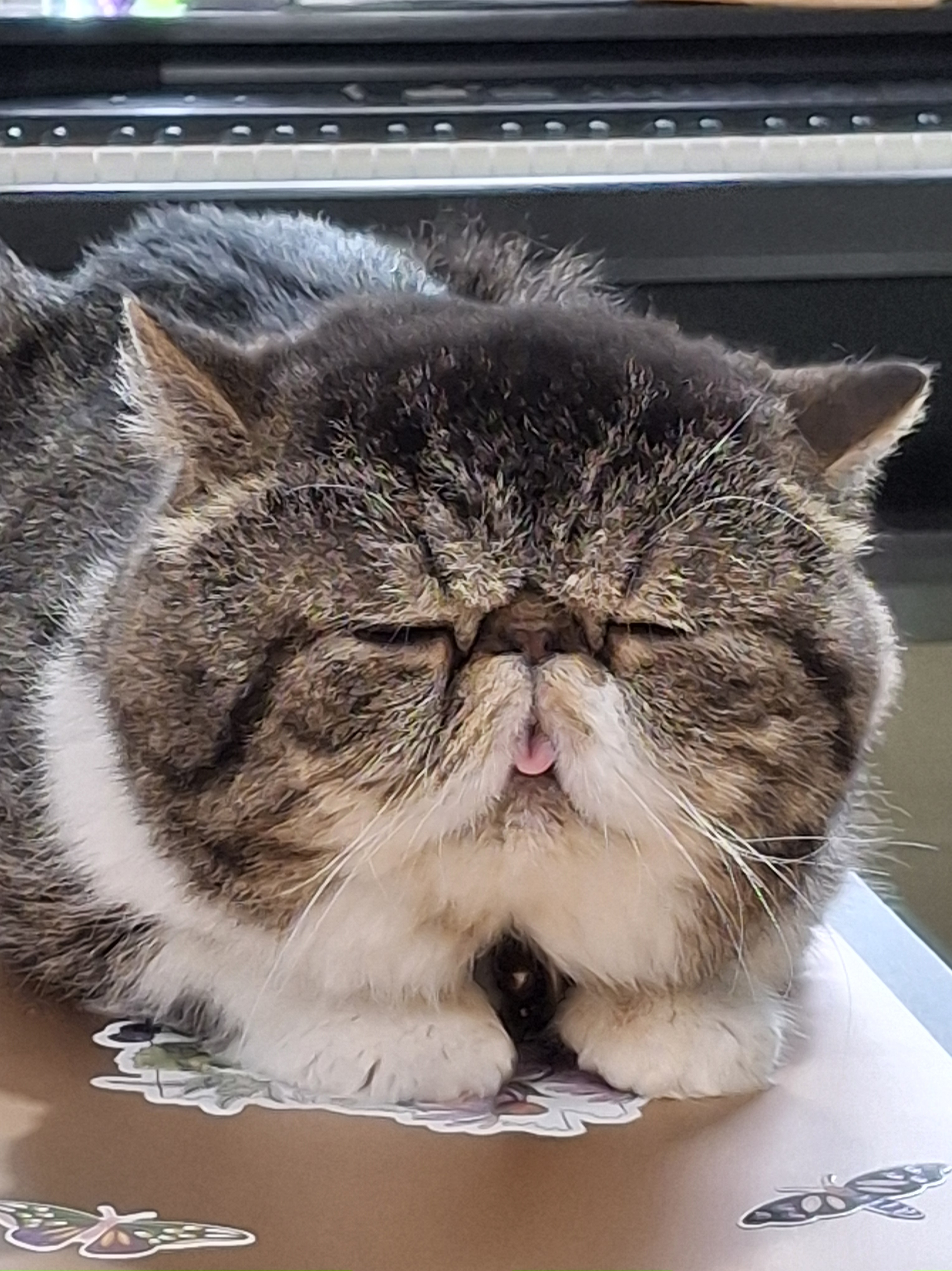
But a recent visit with a friend and one of my fur-nephews introduced me to a type of speech I knew but didn’t have a name for: malaphors.
You’ve seen and heard them as well; there was one in letters last week, from Harry Herget of Little Rock: “This isn’t rocket surgery.”
Stewart Edelstein of Word Smarts writes: “We’ve all done it: You’re thinking about one thing, and then you decide to say another, creating a mishmash of words and syllables. Perhaps you were thinking “surprised” and then “excited,” so it came out of your mouth as “exprised.” Extend it to full phrases, and that’s how we get the humorous figure of speech called the malaphor.”
(If that word thing rings a bell, you may be recalling William Archibald Spooner, for whom spoonerisms were named, but that specifically refers to sounds being switched between words, such as “belly jeans” instead of “jelly beans,” rather than a combination of two words; the correct word for this would be probably be metathesis. Not as much fun as spoonerisms, but there ya go.)
You might think it sounds familiar, and you’d be right. It’s a portmanteau of “metaphor” (a figure of speech in which a word or phrase is applied to an object or action to which it is not literally applicable) and “malapropism” (an unintentional misuse of a word or phrase, usually to humorous effect; the name comes from Mrs. Malaprop in Richard Brinsley Sheridan’s 1775 play “The Rivals”).
Edelstein notes: “‘Malaphor’ is a literary term that combines ‘mal-,’ meaning ‘bad,’ with the Greek pherein, meaning ‘to carry, bear.’ Put together, these two elements literally mean ‘to carry two distinct things, and doing so badly.’ The word was coined by Lawrence Harrison in a 1976 Washington Post article titled ‘Searching for Malaphors.’”
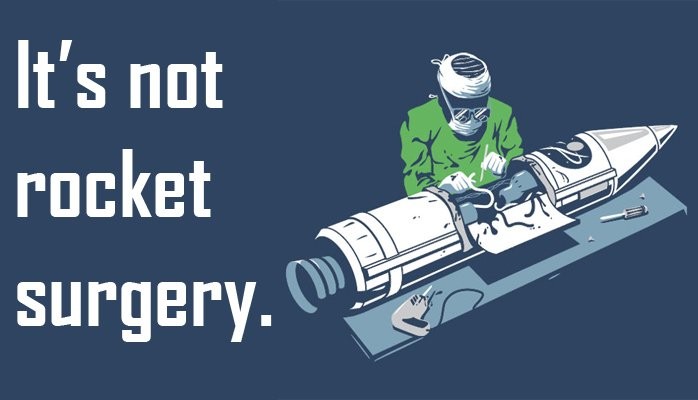
While a malapropism substitutes an incorrect but similar-sounding word for the correct one in a phrase (one of Mrs. Malaprop’s lines was “He is the very pineapple [pinnacle] of politeness”), a malaphor combines two or more idioms, such as the aforementioned “It’s not rocket surgery” (coming from the phrases “It’s not rocket science” and “It’s not brain surgery”).
Lexicographer and etymologist Susie Dent writes in an intro to a list of her favorite malaphors (don’t come at me because it says top 10 and there are only nine; I didn’t write it!): “As recent events have proved all too clearly, language can become a battleground that reinforces division and distrust. And so it’s worth reminding ourselves of its capacity for joy as well as hate, and of its endless potential for comedy, not least when we or others get our words a little bit wrong. … The beauty of a malaphor is that it tends to sound entirely plausible, seducing the brain into believing that this is the entirely standard phrase or expression.”
Her list of course includes “It’s not rocket surgery” (at No. 1), as well as malaphors such as “like lemmings to the slaughter,” “you hit the nail on the nose,” and “you can’t teach a leopard new spots.”
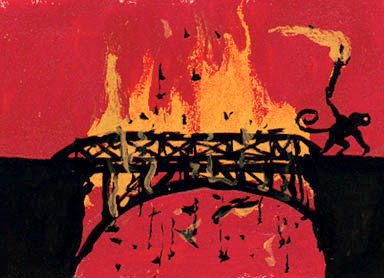
Oddly, “We’ll burn that bridge when we come to it” wasn’t on the list. Maybe it was supposed to be the erstwhile No. 10. I know it’s one of my favorites.
While closely related to mixed metaphors—the blending of two incompatible metaphors in the same thought (like “That’s the tip of the iceberg in a can of worms”)—malaphors typically happen when someone misremembers the endings of common idioms and splices two or more together. Like with democracy and republic, mixed metaphors are the broader category; malaphors are a type of mixed metaphor, but employ commonly known idioms that may or may not be related.
Michael Bedford of The Editing Company blog found malaphors had an earlier name, and like malapropism, that name was from a play. “[A] little digging around on Wiktionary.com reveals that malaphors went by a different name in the 19th century. Referring to Lord Dundreary, a malaphor-afflicted character from Tom Taylor’s 1858 play ‘Our American Cousin,’ the term ‘dundrearyism’ was part of common usage by 1878, and likely well before.”
True nerds also know that “Our American Cousin” was the play Abraham Lincoln was watching when he was shot by John Wilkes Booth.
And suddenly the mood has shifted. Funny how threats to democracy can do that.

But I digress when what the world needs now is a little escapism, fraught as matters are with politics, division and war. So … let’s pick on politicians a bit.
Politicians are not immune from malaphors (or just inadvertently mixing up multiple words to create new ones, like George W. Bush’s “misunderestimate,” among others). Among them:
🍃 Barack Obama, in the second presidential debate of 2008 with John McCain, said, “Now, Senator McCain suggests that somehow, you know, I’m green behind the ears and, you know, I’m just spouting off, and he’s somber and responsible.” Obama went on to say, “Senator McCain—this is the guy who sang, ‘Bomb, bomb, bomb Iran,’ who called for the annihilation of North Korea. That, I don’t think, is an example of speaking softly. This is the person who, after we had—we hadn’t even finished Afghanistan, where he said, ‘Next up: Baghdad.’” (I think this might be part of the reason my mom didn’t like McCain, and would get mad when I used Luke’s full name, Luke McCain Looper, despite the fact he was named after the mall where he was found, not John McCain.)
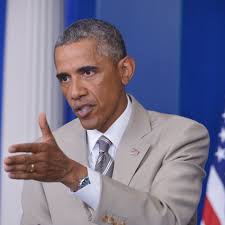
⭐ In 2013, Obama offended sci-fi nerds when he said, “I’m presenting a fair deal, the fact that they don’t take it means that I should somehow, you know, do a Jedi mind-meld with these folks and convince them to do what’s right.” How dare!!!! Everyone knows that Jedi mind tricks are from Star Wars, and the Vulcan mind meld is from Star Trek. Somehow he survived, even though it was clearly a greater offense than wearing a tan suit or having mustard on a burger.
ﮩـﮩﮩ٨ـ🫀ﮩ٨ـﮩﮩ٨ـ Donald Trump got confused (really? shocking!) in 2015 when talking about how tuned in to his supporters he was, saying, “I have a pulse to the ground … I think I know what’s wrong with the country, and I think I’ve been able to portray that in a way that people agree with.” It should have been “ear to the ground” or “finger on the pulse.” What’s worse is that his statement readily described how he’s been able to make horrible behavior OK with his followers, making them excuse just about anything as long as he’s the offender.
👄 Herman Cain, who often used what he called a “powerful pause” to consider questions to him, would sometimes defend that pause by saying, “Before I shoot from the lip, I gather my thoughts.” More people should consider their words before saying them, but they definitely shouldn’t shoot from the lip. The recoil from the gun … sheesh …
🐮 Alabama state Rep. John Rogers, talking to Alabama columnist John Archibald in 2012 about efforts to keep a hospital open, said, “We’ll be here till the cows come to Capistrano.” Cows, swallows … same thing, right?
🥄 The late Ann Richards, who would later become governor of Texas, said of then Vice President George H.W. Bush at the 1988 Democratic convention, “Poor George, he can’t help it. He was born with a silver foot in his mouth.” While it was scripted and intentional, it would be a crime not to include this one.
Sometimes I really miss Ann and her good down-home humor. Would that more people were inclined toward gentle wordplay than to the brand of political “humor” we have now. When all you have are playground insults and rude nicknames, you really need a lesson in great political humor, and in how to take a joke without looking and acting like a spoiled brat.

 Serenity is a fuzzy belly
Malaphors. I love it, it’s a horse of a different sound!
LikeLiked by 3 people
Your column today is what we all need now and then to make us happy campers in a crocodile zoo, where we sometimes live in pieces. Thank you.
LikeLiked by 2 people
In Chicago in 1968, Mayor Daley said the police were there to “preserve disorder”.
LikeLiked by 1 person
I lived in Chicago from July 1968-July 1969 (including throughout the 1968 Democratic Convention), and during the convention, in the afternoon, I’d drive home from work going north on Lake Shore Drive and see a gathering of police cars just off the drive, where there was a 90 degree turn and they were on the lake side of the drive. I cannot remember the name of the spot!
LikeLiked by 2 people
I was born and raised on the south side of Chicago. I do remember going around that ninety degree turn on Lake Shore Drive a few times. That infamous turn was just south of where Lake Shore Drive crosses the Chicago River and where this Drive has its intersection with Wacker Drive.
LikeLiked by 1 person
When I was a child and living in Chicago, myself and my friends and my sisters liked to jokingly refer to Wacker Drive as “Wacky Drive”.
LikeLike
When I lived there, I worked at three Ilinois State Employment offices, one of which was on Halsted, a bit north of 63rd. It was quite a ride from my apartment, about 1/2 mile south of Addison, and two blocks west of the lake.
LikeLiked by 1 person
We lived on Fifty-Fourth Place in the Hyde Park Neighborhood a few blocks from the University where my father was employed doing weather research. Living this close to the University made it easy for him to get to work no matter how bad the weather was.
LikeLike
Although it isn’t rocket surgery or rocket science, maybe it is actually “Rocket Surgery Science”?
LikeLiked by 1 person
In 1978, when some friends were talking about going camping, I jokingly reminded them not to forget to take their “beeping slags” with them. Their response was two definitions of a “beeping slag”. Either a melted Volkswagen or one of the Stormtroopers in Star Wars actually had such good aim that he hit R2D2 and turned R2D2 into a pile of melted metal.
LikeLiked by 1 person
Are there too many people who seem to be shooting themselves in the nose to spite their face instead of shooting themselves in the foot?
LikeLiked by 1 person
After reading this, I am trying to picture the tip of a worm in a can of icebergs.
LikeLiked by 1 person
Lenda Brooper (or Blenda Rooper?) you shouldn’t have made that comment about picking on a politician because now this musician is desperately fighting the temptation to respond with a bad joke about certain instruments of musical destruction.
LikeLiked by 1 person
For the record, I like to eat both mustard and mayonnaise on my hamburgers and cheeseburgers.
LikeLiked by 1 person
Well, now I have a name for those funny mangled English expressions I sometimes hear. Thank you!
LikeLiked by 2 people