What I ended up writing in last week’s column was far more serious than the topic I originally intended, for good reason. The reactions from men to news of the civil suit against Cornell and the men involved in the alleged sexual assault, and to my column last week, proved once again why women don’t feel safe around a lot of men, and why so often we stay quiet when we’re sexually assaulted and/or harassed. It’s not just the trauma itself, but being revictimized by the reaction to the airing of the trauma.
(There’s a very good reason many rape survivors, especially in notorious cases, are “Jane Does,” including the threats to their lives when allegations go public. Watching the men trying to dox the Cornell Jane Doe has been frightening and infuriating, and even worse are the men showing off their cruelty and cluelessness about the common denominator in rapes, One of my abusers is still alive, and because of the familial relationship, I’ve not revealed it to anyone but therapists, Were I to call him out, it would not be pretty. But I was 4 and 5. There are an awful lot of us Jane Does out here.)
But let’s leave that behind for a little while, remembering that the criminal investigation into the Cornell assault must be allowed to proceed, as well as the civil case, and that the courts will have the last word.

Speaking of last words, there are those who are bound and determined that they should have the last word in any argument, thinking that makes them look strong. Actually, it often makes them look petty.
We all have fits of pettiness at times, especially when we feel personally slighted (how dare that person not recognize my brilliance!!!), but when we let it take over, we run the danger of just looking like someone holding a grudge because someone was mean to us. (Not a good look if you’re a columnist, but some can’t seem to help themselves.)
Seriously, some people need to learn the difference between honest, civil debate/fact-checking and sniping just to snipe. The burden of proof is on the accuser (as it is in the Cornell case, but there’s police work to do, so the burden is on the state generally), which means that if you make a claim, you have to provide evidence. If your answer to calls for evidence is along the lines of, “shut up, you idiot,” you’ve lost and proved that all you were interested in was the opportunity to peacock for your friends.
And if you consistently insult those who disagree with you (not really answering their critiques but instead talking around them, like maintaining that your multi-hyphenated rant was not as many words as a professional writer/educator said it was) while patting yourself on the back for your “witty” repartee … oof. That’s just embarrassingly petty. I can’t count how many times I and my fellow students in the College of Communications at ASU were advised to get a thick skin because the media, even then, was constantly being criticized for one thing or another, and if we took everything personally, we’d never get anything done.
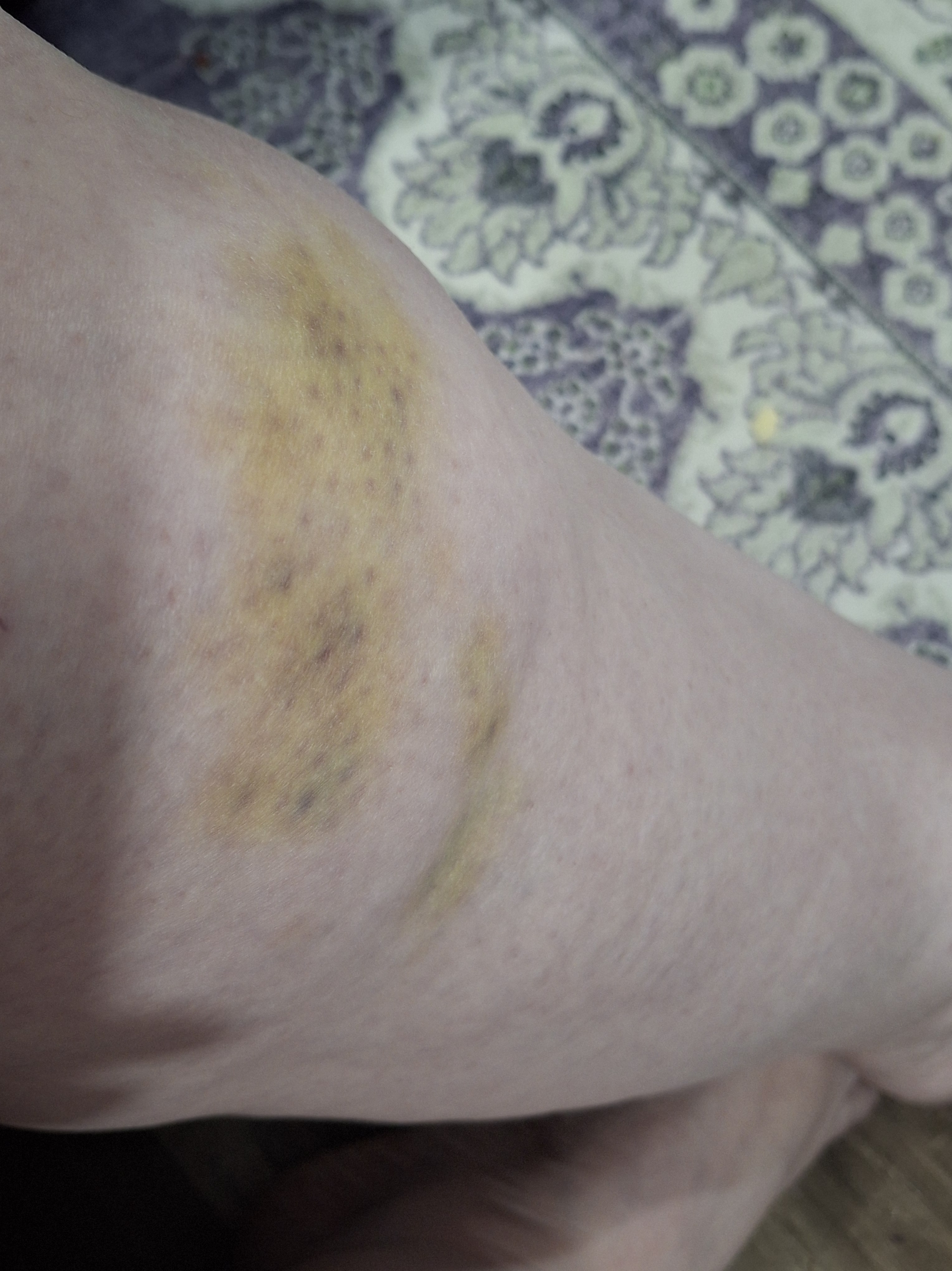
That still applies. I have enough already making it hard to get things done; I don’t need thin skin adding to the list (and literal thin skin is already on the list; aging sucks … and where the hell did that bruise come from???).
It’s not that we in journalism, especially those of us who went to school or otherwise learned the trade through years of work, are impervious to slings and arrows from critics. We learn much from our critics, and sometimes those lessons are put to good use. Still, the words can hurt sometimes (though male trolls would do well to stop calling women journalists stupid bimbos, as we tend to dig in harder and fight back).
When the criticism is fair (hey, you said this about the Second Amendment, but left out the part about a “well-regulated militia,” or hey, you left out vital context in that quote you cited from General McFancyPants), the reaction should be, well, thank you for bringing up that point, and here’s why I didn’t mention it initially … (though in a column, the amount of space a writer has is a big factor, something the armchair experts tend to forget when they opine on why something wasn’t included).
When the criticism isn’t fair and veers into the personal for no good reason (your mother was a hamster and your father smelt of elderberries), at most thank the critic for their comment, and move on. (I prefer to ignore unless there’s something that must be corrected.) There’s no reason to get into a shouting match that will make both of you look like idiots.
And yes, you will both look like idiots. The degree doesn’t really matter.
Now if you decide to answer fair criticism with name-calling and further insistence that you’re right and anyone who doesn’t see that is a big doodyhead … well, just know that it makes you look exceedingly thin-skinned and petty.
Nobody wants to hang out with someone like that. And eggs are still a little too expensive for us to be walking on eggshells all the time.
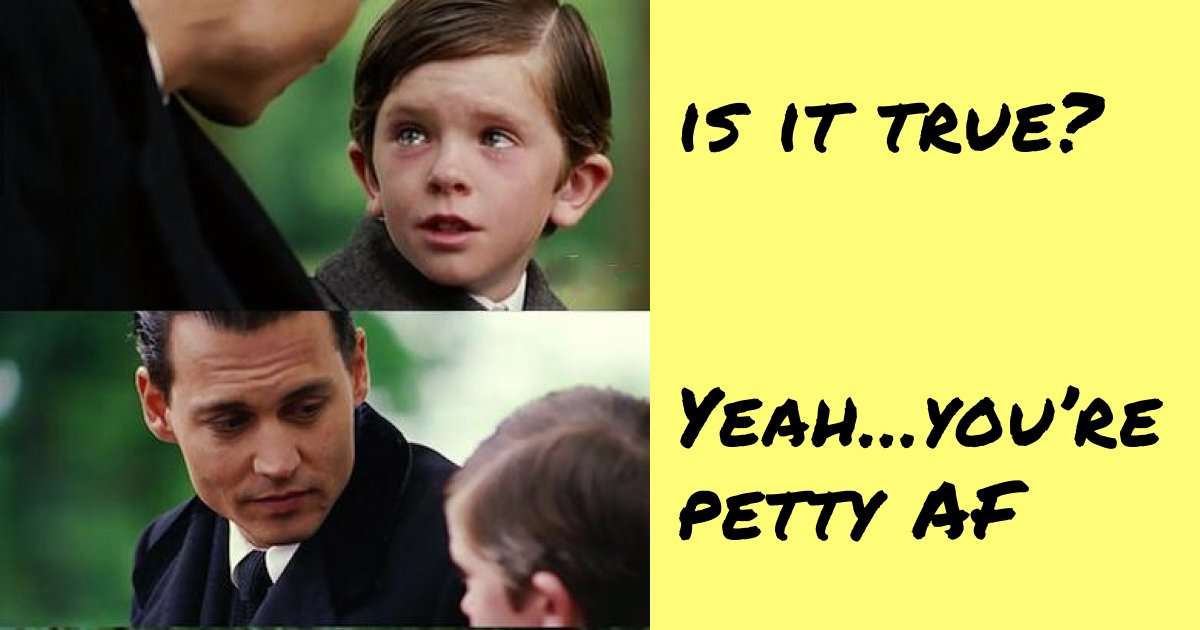
Petty people tend to be insecure and hold grudges, even for tiny things they created in their own minds rather than something that actually happened (there are people/trolls who swear I said and did things I never did; they’ve yet to produce proof). They nitpick, are easily offended, passive-aggressive, vindictive, and often show a lack of empathy.
Not. Fun. People. Imagine being related to them.
While we all can have a few petty feelings every once in a while, most of us in decent emotional health are cognizant enough to know when we’re going too far and will stop and rethink what we’re doing because we recognize that others could be negatively affected by our words and actions. (Shocking, I know, to consider other people!_
So what should we do when confronted with petty people? Psychologists advise, among other things, keeping your distance if possible, setting healthy boundaries (don’t tell the petty person what they are, though, because they’ll take it as a challenge; just walk away when they cross them), avoiding defensiveness, not taking things personally, practicing empathy, and not stooping to their level.
Of course, for some of them, it truly doesn’t matter what you say or how you say it; they’ll find a way to nitpick and make it all about them.
Then? Walk away. Let them scream into the void. Your blood pressure will thank you.