Women are understandably furious right now. It’s not just the fact that we’ve had to fight for our rights and face losing them (not only reproductive choice, but also voting rights as the SAVE Act threatens those of married women, trans women, those who’ve changed their names and poor women with onerous requirement for voter registration) while men have them by virtue of birth, or that we constantly have to contend with political rhetoric meant to divide us (please, trans women just want to pee in peace). It’s that we keep getting served evidence that we don’t really matter to institutions.
And before you decide that I’m a man-hater, know that it’s not men I despise; it’s systems of oppression. That includes systemic discrimination baked into institutions, the criminal justice system and society as a whole that often leaves women, people of color, LGBTQ+, the poor and others on the outside looking in.
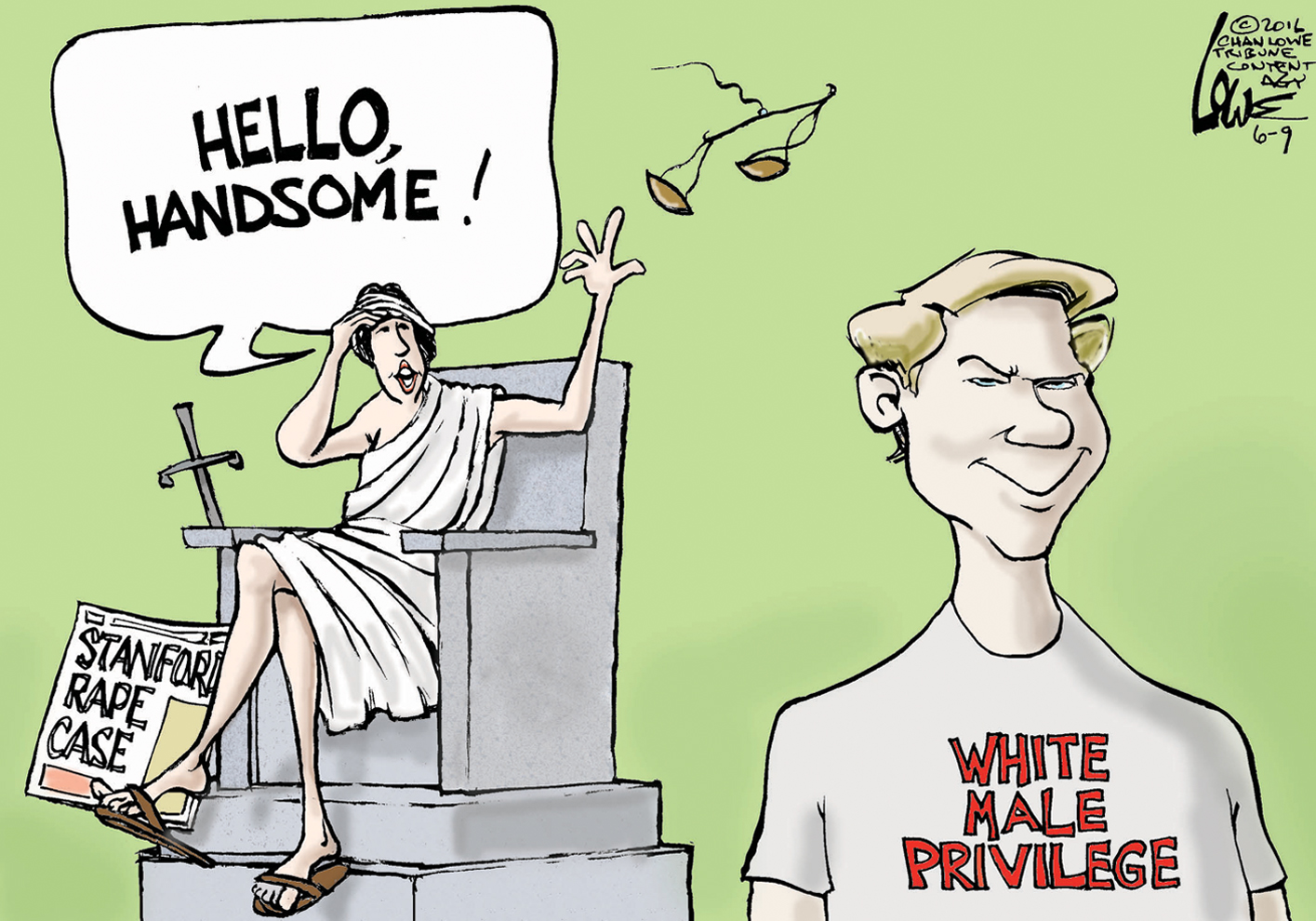
The events at Cornell University and the reaction to them by men online are just further proof that women need to stand up for themselves. I won’t pretend to know all the specifics of the case, but I’m reminded of the Brock Turner case and the judge’s justification of not wanting to ruin a young man’s life as reasoning for the lenient sentence given to Turner after his conviction on three counts of felony sexual assault in 2016.
In the Cornell case, a woman filed a civil lawsuit earlier this month alleging that she was drugged, assaulted and gang-raped by seven members of a Cornell fraternity. The university barred the fraternity from campus after an administrative investigation in 2024, and the woman’s lawsuit claims that the university’s Title IX investigation resulted in inadequate disciplinary actions against the fraternity members, including suspensions and writing essays (the university denies that essays were a “sole consequence,” but has been opaque on exactly what punishments were meted out). New York Gov. Kathy Hochul said in a statement that “there are also serious questions about Cornell’s campus culture and its systems for prevention, reporting, and response. That is why I am calling for outside counsel to conduct a transparent, independent review of the university’s response to determine whether Cornell met every obligation to protect its students and pursue justice.”
The woman had initially filed her report with the Cornell campus police three weeks after the assault (which is not that unusual, unfortunately), and the Tompkins County district attorney’s office, which was provided with the complaint at the time, didn’t pursue it. However, now the office is reopening the case in light of the civil suit. Whatever happens now is up to the courts, both civil and criminal.
(The same day the criminal investigation was reopened, the Trump administration announced it was removing changes in Title IX added by Joe Biden, thus weakening protections for survivors of sexual assault and harassment. Nice timing. In other news, many are recommending that assault victims should file with off-campus police departments rather than the campus police, who are generally more interested in protecting the university; it’s good advice.)
And now is when some will bring up the 2006 Duke case, wherein members of the university’s lacrosse team were falsely accused of rape. One distinction here is that the Duke case was actually investigated, and that comes with its own issues, one being that women are often reluctant to file charges. The percentage of false charges filed is estimated to be between 2 and 10 percent, so it’s not like it’s common, no matter how many times people try to convince you otherwise (the existence of high-profile reports doesn’t prove that it’s common, just that the stories were newsworthy; not every case reported makes the news).

Thomas P. Giuffra, attorney for Jane Doe, the alleged victim, told ABC News, “In my experience, speaking with an abuse survivor requires delicacy, understanding and specialized training. An average University Police officer would not have these skills. It would be the role of a specially trained detective or district attorney. However, Ms. Doe was never contacted by anybody with those skills.”
Perhaps if she had been, there wouldn’t be a civil suit now.
And by the way, kudos to the reporters and editors at the Cornell Daily Sun, who have pursued the case for two years and have shone light on the university’s actions. It reminds me of the coverage of the John Mangieri scandal at ASU by the Herald and ASU-TV. Student journalists often have much to teach even old hands.
The Brennan Center for Justice reports that, according to data analyses from the Department of Justice, roughly 20 to 30 percent of sexual assaults against women are reported, leaving up to 80 percent unreported. Why? I’d say victim-blaming has a lot to do with it.

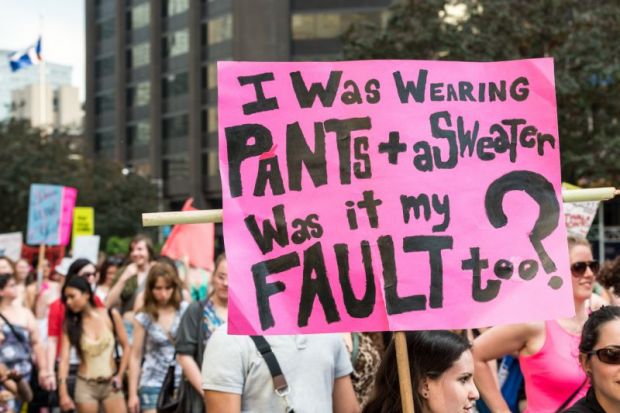
The way our society has treated sexual assault is broken. The conversation isn’t “teach boys the meaning of consent,” but is instead “teach girls not to tempt boys,” which puts the responsibility for assault not on the perpetrator, but on the victim. When rape cases go to trial, the defense’s emphasis is usually not on the defendant, but on what the victim was wearing, if she was drinking, and if she was out late by herself.
Does the defendant not have self-control? Is he truly helpless to fight his urges and unaware that “no” actually means “no”?
Seriously, is there no culpability for the defendant in a sexual assault case? Based on how much more weight is often put on the victim’s actions, it sure seems not.
Pardon me if I get a little exercised when sexual assault is defended in such a manner. An estimated one in five women in the U.S. experiences attempted or completed sexual assault in their lifetime, and you probably know at least one such survivor (I am one of them). Even more women (about 60 percent or more, depending on the source) report having been sexually harassed (again, I’m one of them). Still, so many of us remain silent.

Why? Because when we speak up, we’re further harassed. Photographer Kelsey Combe is one very good example, posting on Threads, “Teach your sons what consent is. Educate your sons.” In response, she’s received rape threats, been called names (“dumb street whore” was especially imaginative … that’s sarcasm) and harassed mercilessly by men.
Gosh, why wouldn’t we want to stand up for ourselves?
At least one of Kelsey’s harassers has had his Threads account removed after numerous reports were filed against him for his comments to her and other women, though he’s still active but has switched accounts to private on other platforms (meanwhile, he was also apparently stalking and harassing another woman since she started investigating him). Another guy, who, apparently unironically, complained that he didn’t consent to having his comment pinned on another post, first took his account private, then either deleted it or had it removed by Meta, not being able to handle angry women and the consequences of his actions.
Awww, poor guy …

Still, that’s just a drop in the vast ocean of misogyny women put up with every day, and the consequences for men are slight. Unless law enforcement is involved, it’s likely that little will be done to punish the men who harass and assault women … because that’s just the way our society treats women. Lord help any woman who reports sexual assault or harassment at a major university or well-known company, because the character assassination will begin immediately to muddy the waters of the potential jury pool.
Boys shouldn’t be taught that they can do what they want with impunity. Girls shouldn’t be taught that they’re less than boys. (Gender roles are a social construct anyway, and don’t always apply.) All children should be taught what consent is, that actions have consequences, and that boundaries must be respected. Another good lesson to teach all kids is that might doesn’t make right (that’s just laying groundwork for abusers and bullies).

Those lessons should be reinforced by our legal system. The idea of “we don’t want to ruin this young defendant’s life” should not be a major consideration in any criminal case. If charges are filed, let the investigation proceed, fairly and fully. If a conviction is properly obtained, let the punishment be appropriate (probation for violent acts should never be an option). If there’s an acquittal, let the defendant hang his hat on that. Sure there will be stigma attached to having faced such charges, but hey, it’s not like high political office is off-limits anymore.
Survivors of sexual assault deserve a fair hearing of the evidence, without being treated as the criminal (that alone might result in more cases being filed sooner, when evidence collection is key). That will take a shift not only in our legal system, but even earlier in how we approach what we teach our children (and hey, comprehensive sex education in high school that includes lessons on consent and refusal skills/violence prevention has been shown to reduce the risk of sexual assault, as well as reduce unintended pregnancies and abortion; abstinence-only sex education is basically worthless, IMO).
Or we could just keep doing what we’re doing. It’s not like victims’ lives are ruined, right? (Yes, that’s sarcasm again.)