

It’s been a while since I’ve talked about cognitive biases. Considering that Monday is Memorial Day and we have people going around claiming the United States, for which military members and others have fought and died, is not a democracy, perhaps it’s time I talked about the Dunning-Kruger Effect.
Psychologists David Dunning and Justin Kruger identified the bias in 1999; it’s the tendency of people with low ability in specific areas to overestimate their knowledge. Psychology Today writes: “The pair tested participants on their logic, grammar, and sense of humor, and found that those who performed in the bottom quartile rated their skills far above average. For example, those in the 12th percentile self-rated their expertise to be, on average, in the 62nd percentile.
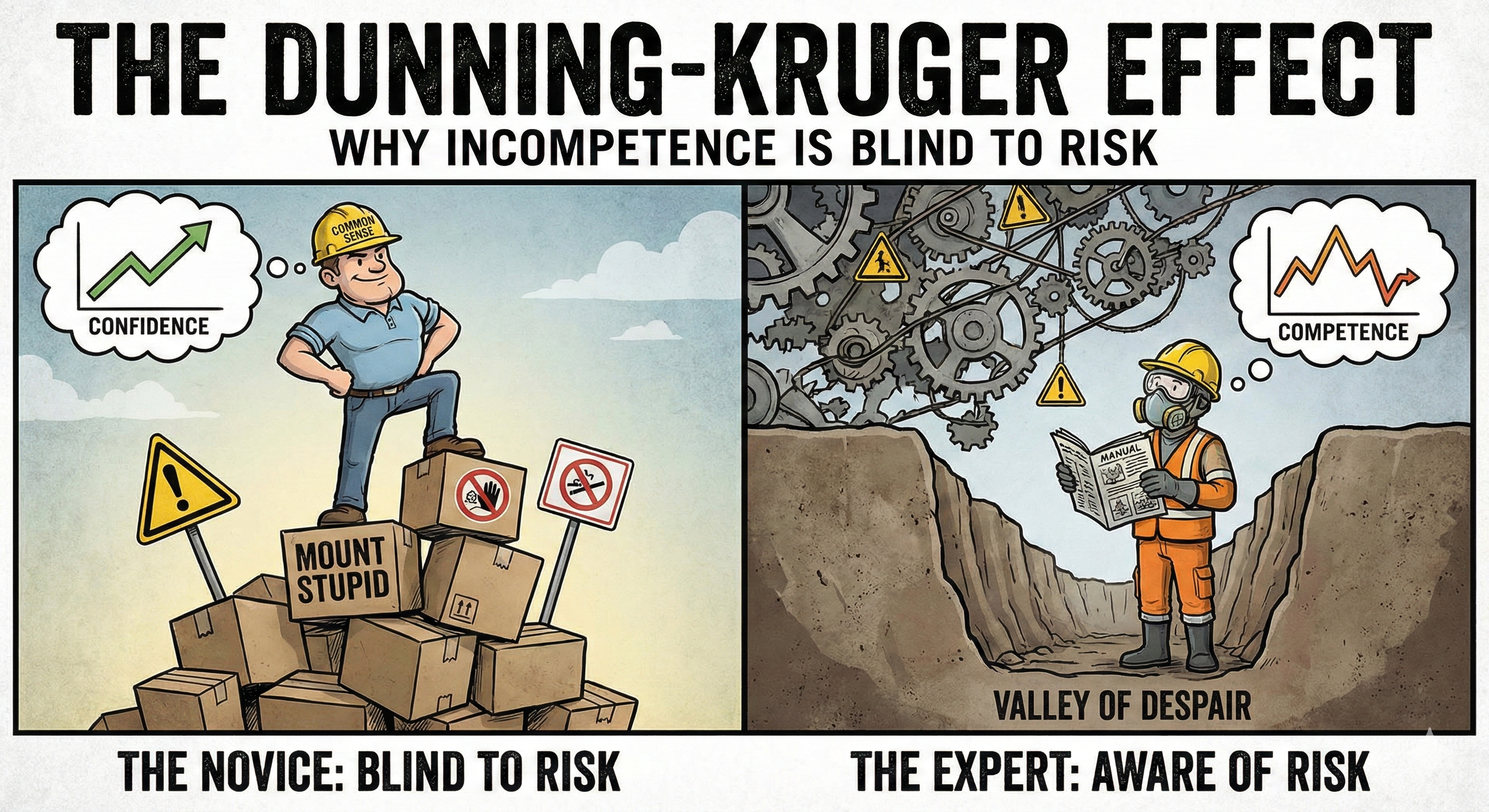
“The researchers attributed the trend to a problem of metacognition—the ability to analyze one’s own thoughts or performance. ‘Those with limited knowledge in a domain suffer a dual burden: Not only do they reach mistaken conclusions and make regrettable errors, but their incompetence robs them of the ability to realize it,’ they wrote.”
We saw that during the pandemic with all the armchair epidemiologists (many of whom died) who decided they knew better than doctors of virology and epidemiology, all because they were seeing the scientific process in real time and they didn’t understand that even dealing with a novel virus involves trial and error. (Yeah, if you don’t have the research knowledge to interpret data, all the raw data in the world isn’t going to make you an expert. Experts, meanwhile are more aware of what they don’t know, which sort of feeds their drive to learn more.)
We’re seeing it again now with a whole phalanx of constitutional “experts” who are anything but weighing in on gerrymandering (sorry, but as history and my high school civics teacher taught, it’s wrong for any reason; let’s let independent boards in each state draw maps, not political appointees), emoluments, executive power and a lot of other issues they can’t admit they’re not knowledgeable about because ’Murica, by God!

So let’s tackle the whole democracy thing. It happens on the Arkansas Democrat-Gazette Voices page, on social media and just about anywhere you can think of: Someone says our nation is a democracy, and someone else yells back (usually in a hostile manner) that it’s a republic. A lot of that, I believe, has to do with hyperpartisanship and the current tendency to despise whatever seems to indicate the opposing party (democracy equals Democrats and republic equals Republicans in their minds), when really, the form of government we have has nothing to do with party. (There’s a reason there are more independents than Republicans or Democrats in the U.S.; we’re sick of the parties. As far as a lot of us are concerned, the fringes have taken over, especially in the GOP, where there are apparently no longer true conservatives, having been run out on a rail by MAGA.)
The U.S. is a democracy; that’s the over-arching term for “rule by the people,” according to Merriam-Webster. However, it’s also a republic, which is a form of democracy.
Merriam-Webster notes: “Democracy and republic both refer to government in which supreme power resides in its citizens. This was the important distinction at the time of the founding of the United States, as such a government is in direct contrast with monarchy, in which supreme power belongs to the king or queen alone. In part because that context was clear to everyone involved in the American Revolution, democracy and republic were used interchangeably in the late 1700s. Both words meant that the power to govern was held by the people rather than a monarch, as in England.
“This shared meaning persists, but the words are distinct, as their historical uses and etymologies demonstrate. Democracy comes from a Greek word meaning ‘rule by the people,’ and in its original use it referred to what is also called a direct democracy, as in ancient Greece. In a direct democracy, the people vote directly against or in favor of each decision, policy, law, etc. … Today most democracies (including the United States) are representative democracies, in which elected representatives vote in the people’s stead. Note that both direct democracies and representative democracies are considered democracies: They are both government by the people.”
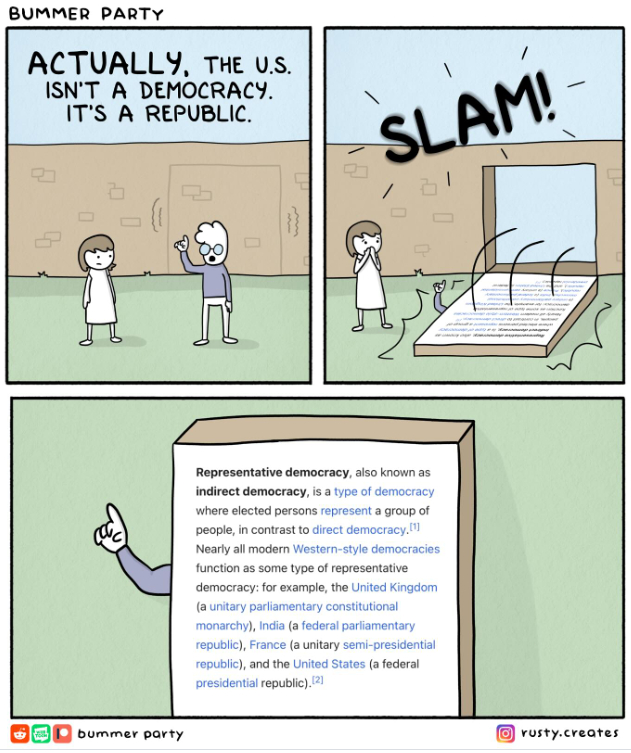
Republic, the dictionary says, can be translated as “public good” and “public affair,” and was used in ancient Rome to mean “state” or “country” with reference to the Roman republic’s representative democracy. Congress is a contemporary form of this.
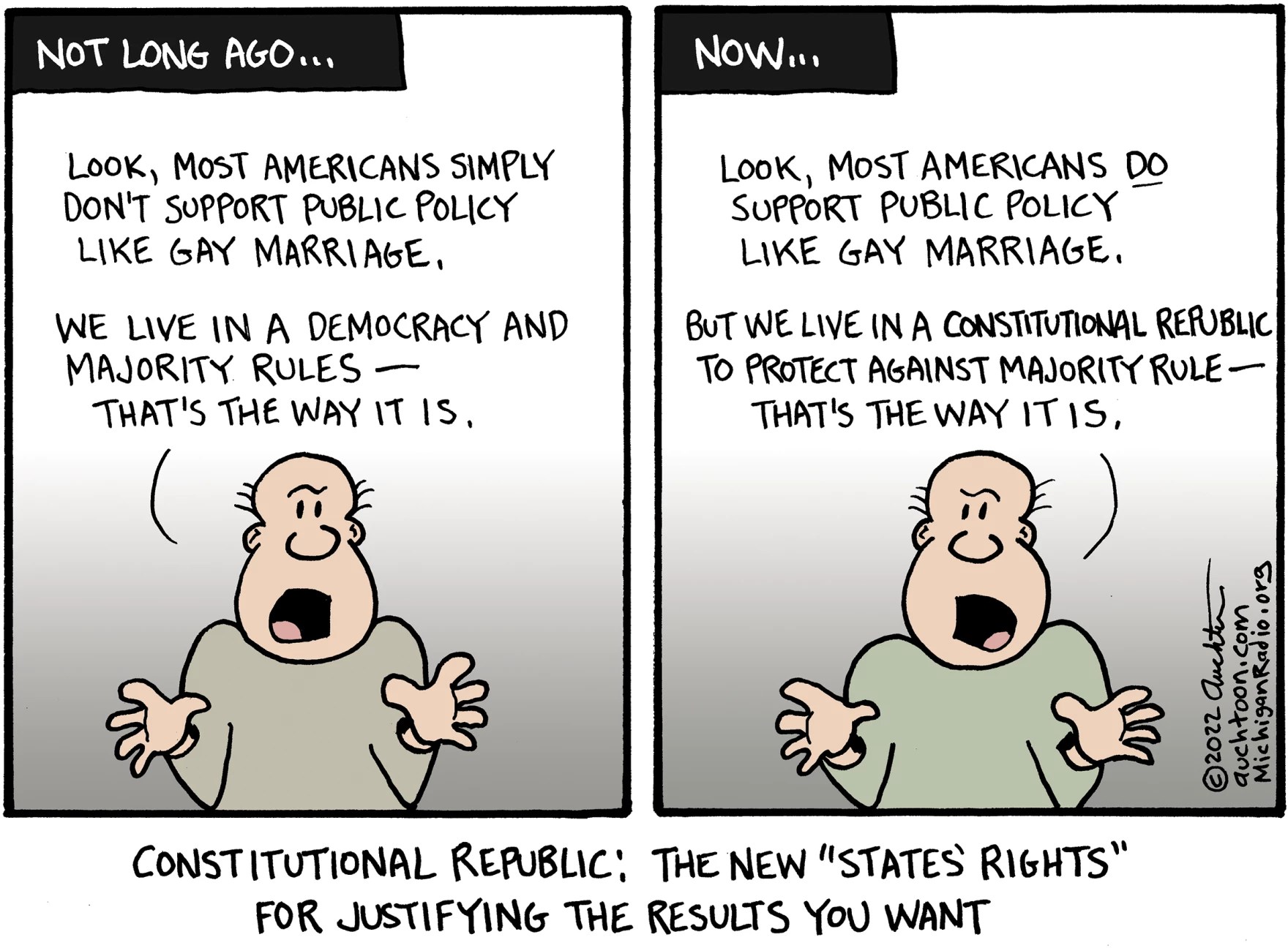
Further, the dictionary says, “Because democracy is an abstract name for a system and republic is the more concrete result of that system, democracy is frequently used when the emphasis is on the system itself. We could say that democracy is to republic as monarchy is to kingdom.
“Neither democracy nor republic is mentioned in the Declaration of Independence, a document that nevertheless expresses clearly that governments should be established ‘deriving their just powers from the consent of the governed.’ Those words read like a definition of both democracy and republic. In Article IV Section IV of the Constitution, the term republican is used as an adjective in its ‘relating to a republic’ meaning: ‘The United States shall guarantee to every State in this Union a Republican Form of Government.’”
So … when people refer to the U.S. as a small-d democracy, they’re referring to the system itself. A republic is a form of that, so claiming the U.S. is a republic but not a democracy just doesn’t make sense.
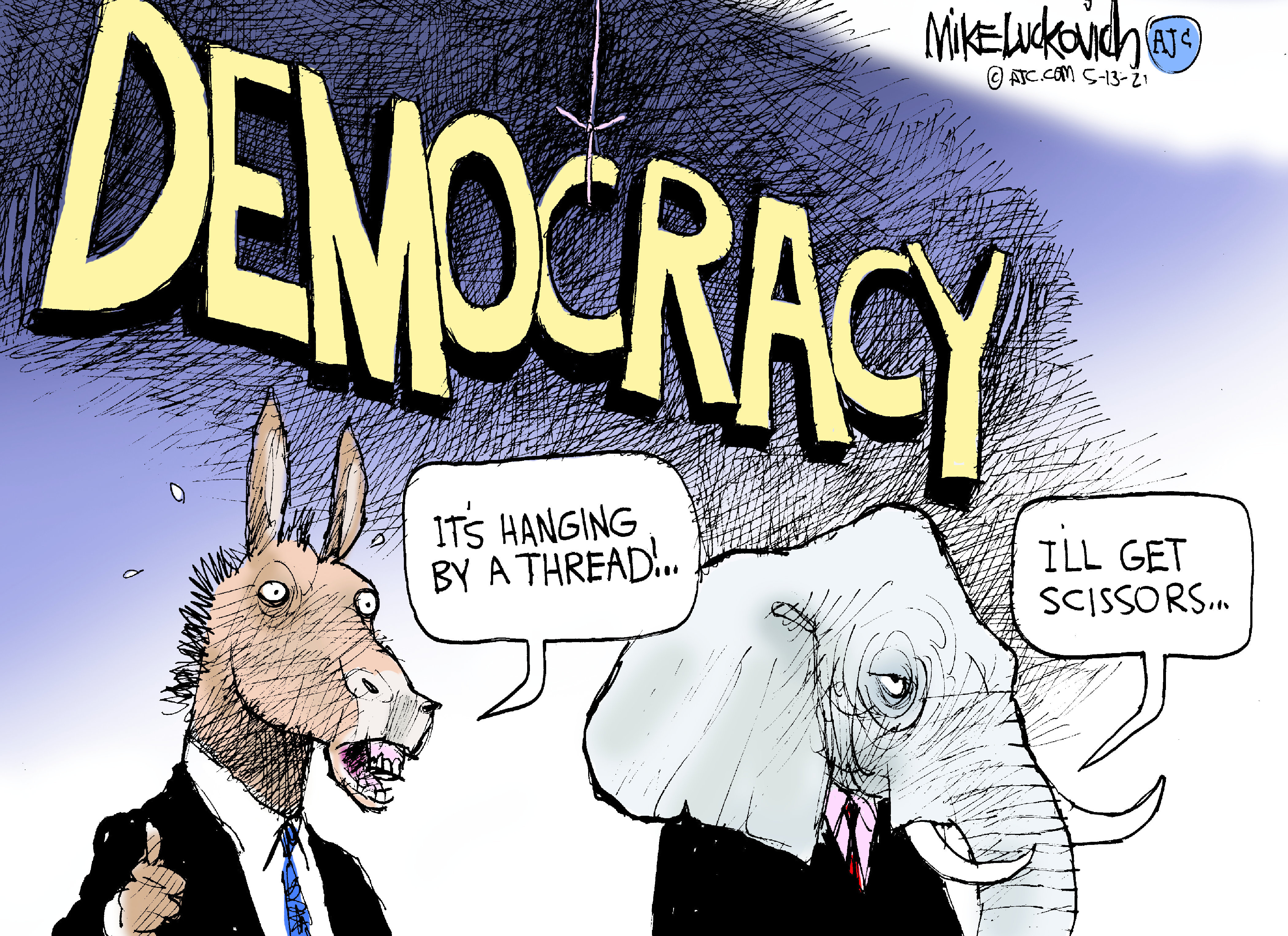
Then again, not a lot makes sense anymore. (I tend to call us a constitutional democratic republic for specificity, but that’s me. And no, the Constitution isn’t calling for the Republican Party to rule; it didn’t exist in 1787.)
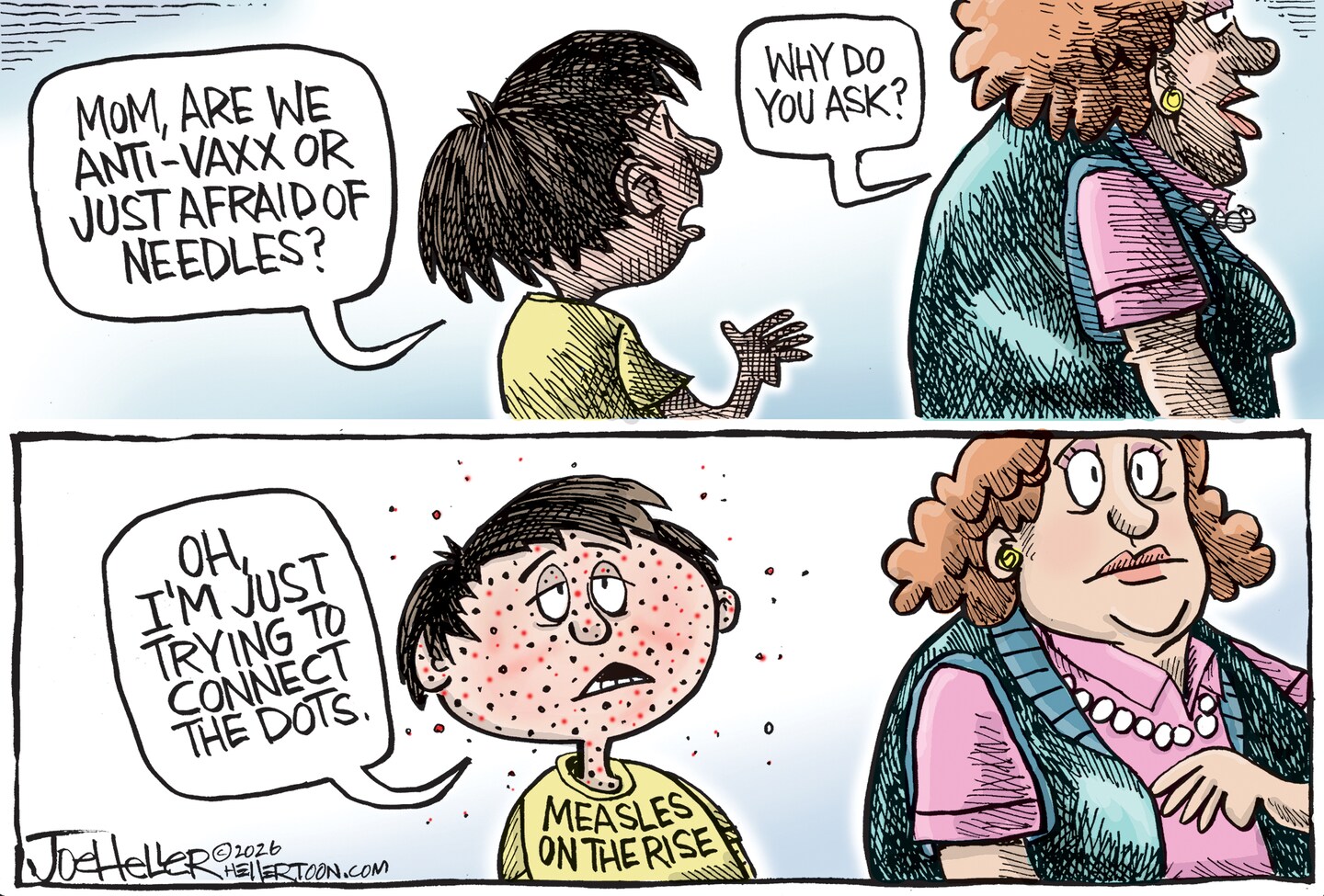
So what does that have to do with Dunning-Kruger? More than you might think. We have an awful lot of people out there convinced they know more than they actually do, and they’re holding forth on the regular on online forums, podcasts, social media and elsewhere. They’re redefining words to mean what they want them to, usually because of politics, and they claim to know exactly what the Constitution says about this and that when they really don’t (some First Amendment hot takes out there right now are truly frightening, as are the folks calling for the 14th and 19th Amendments to be repealed). They’re telling people that vaccines will kill their children, which has led to outbreaks of diseases once believed eradicated due to herd immunity, and those diseases are killing people.
I defer to constitutional/legal scholars on matters of law, doctors on matters of medicine, and actual experts in any field over Joe Blow down on the corner who flunked history and civics, has no knowledge of even basic hygiene, and gets his information from the “experts” on the Internet. There’s a reason people are experts in their fields: They’ve spent a lifetime studying and practicing in those fields, so of course they are more trustworthy to speak on those subjects. You probably wouldn’t want an epidemiologist giving you landscaping advice (unless landscaping is his hobby) any more than you’d want the guy mowing your yard giving you advice on vaccination schedules.
It’s fine to have an opinion (everybody does), but it’s better that opinion be based on facts. With as many people as we have now apparently afflicted with Dunning-Kruger, it’s getting harder for facts to find their way out to us.
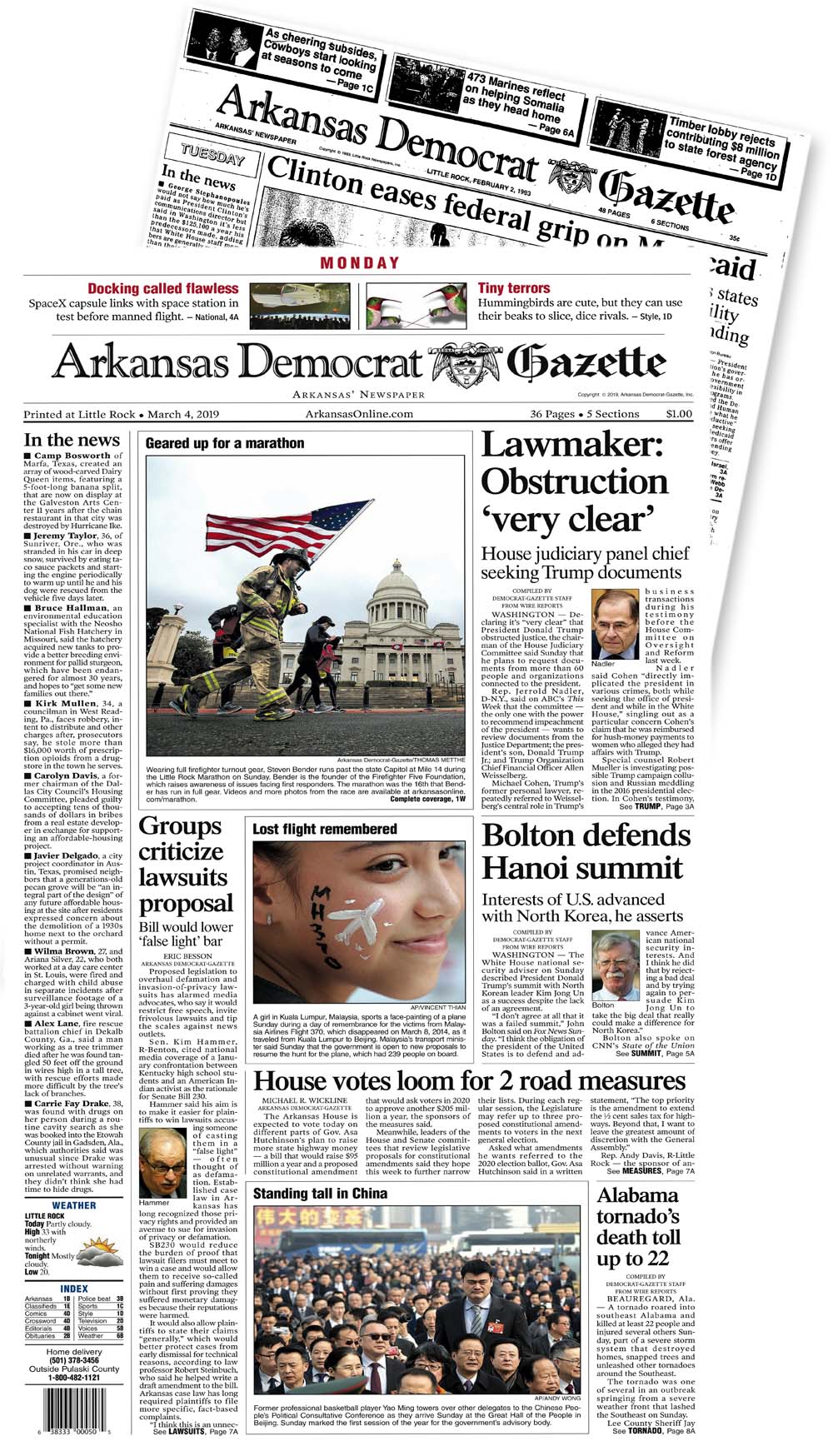
If only there were reputable news sources like newspapers to get facts out …


We need a vaccine which will cure the Dunning-Kruger Effect.
LikeLike
It does help if you know what you do not know.
LikeLike
There are too many people like my late sister-in-law who try to use their religion and their beliefs to hide how incompetent and uneducated and under-educated and cognitively impaired they are. Like her these people would overestimate how much they knew on a particular subject and they did not realize how much they actually do not know. Nor did they realize or notice their level of incompetence. As for “rule by the people”, these people are probably Christian Nationalists who believe that the only people who should be allowed to vote for our rulers ought to be real, genuine Christians like themselves. They probably think that history is boring and unimportant as well as believing that the United States was originally founded and meant to be a Christian Nation. And the Republican Party was already in existence in 1787.
LikeLike
Somewhere in there are the willfully ignorant. They are the ones that really make me crazy.
LikeLiked by 1 person
One of the “willfully ignorant” was removed from this world last year when my former sister-in-law died and became my late sister-in-law.
LikeLike
This comment is a bit longer than usual, as it takes some space to make a point linked to the column. It has collected and combined what has been said in the past about knowing what’s not known. Enjoy!
Several similar sayings exist in English and, according to Quote Investigator, can be traced back to the seventeenth century. Many of these were reported as translations of an “old eastern proverb.” One of the best known attempts is attributed to the famous explorer Sir Richard Francis Burton (1821–1890) and was included by his widow in his posthumous biography:
He who knows not, and knows not that he knows not, is a fool; shun him.
He who knows not, and knows that he knows not, can be taught; teach him.
He who knows, and knows not that he knows, is asleep; wake him.
He who knows, and knows that he knows, is a prophet; follow him.
The statement about needing to “know what we don’t know” in the context of the Vietnam War is widely attributed to former U.S. Secretary of Defense Robert McNamara. [
The “What We Didn’t Know” Framework:
In the documentary The Fog of War, McNamara reflected on the intelligence failures and blind spots of the Kennedy and Johnson administrations during the Vietnam War. He famously listed one of his primary “lessons” as: “We must know what we don’t know.” He argued that U.S. leaders failed by relying on assumptions rather than fully understanding the history, culture, and political realities of Vietnam.
Did our leaders learn anything from McNamara? Well, in deciding about invading Iraq more than 20 years later, then Secretary of Defense Donald Rumsfeld thought about it and then twisted it:
Instead of focusing on humility and seeking to find out more, Rumsfeld threw up his hands and used the fear of “unknown unknowns” to justify war:
“Look, we know what our intelligence tells us about Iraq and Saddam. It clearly shows the man has no weapons of mass destruction (WMD). He’s barely hanging on to power. That’s based on real data. We looked; we found nothing. But, then again, there are always things we don’t know and we don’t even know that we don’t know them. So, hypothetically, he could have such weapons. As such, I’m going to ignore all the available data and instead believe the exact opposite! Be afraid, be very afraid of what you don’t know. Better safe than sorry. Bomb them to smithereens! Shock and awe! Let’s go to war!”
Sound familiar??
LikeLike